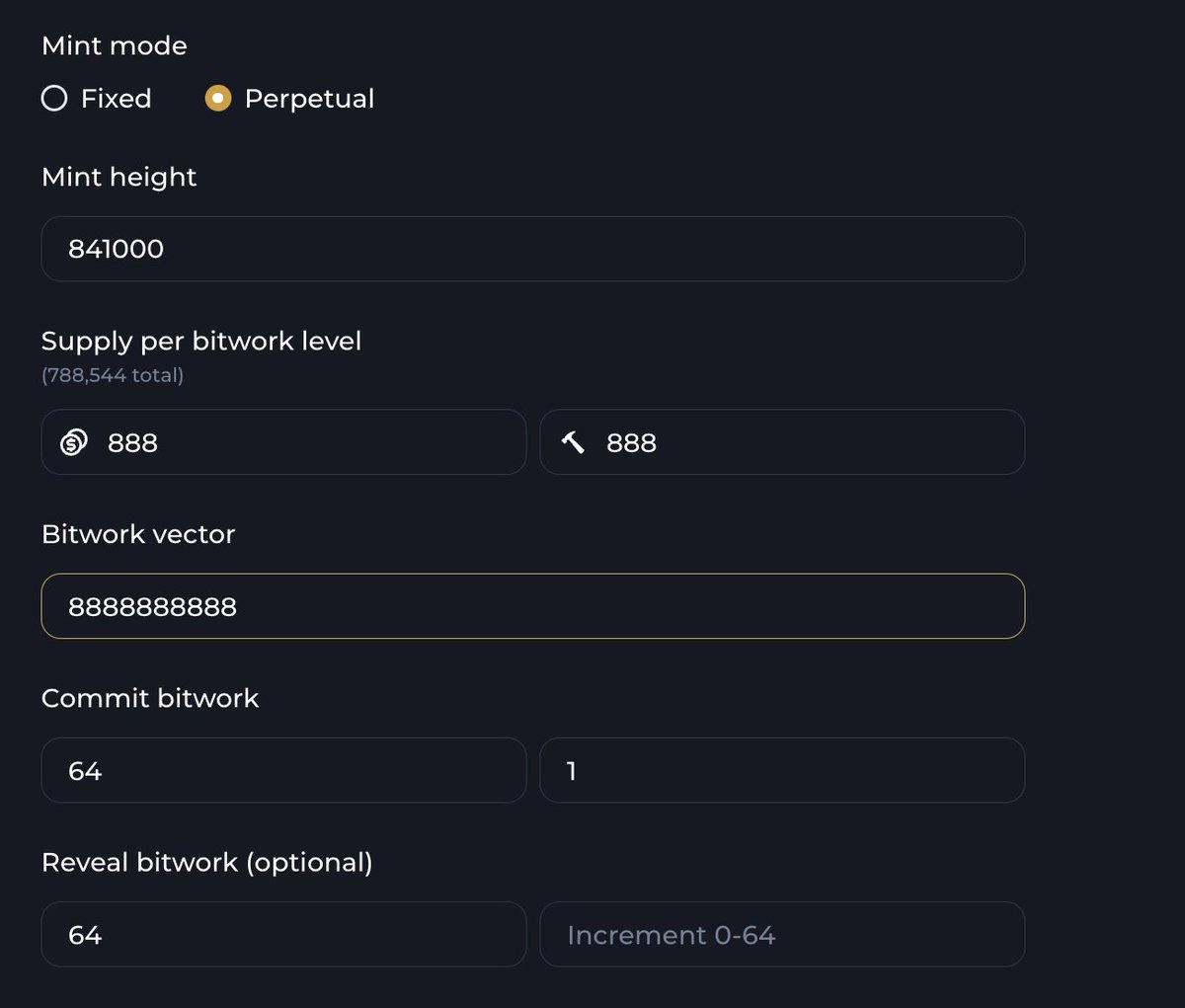
Bitcoin Diamonds encompasses nearly all technical features of the #Atomicals Protocol: #ARC20, Perpetual, #Realm, subrealm, #DMINT, container collection, payment claim, and the upcoming #AVM. If you want to truly understand the Atomicals Protocol, get a Diamond. @atomicalsxyz
I recently delved deeply into Hacash and discovered that it's far more complex than I originally thought. Initially, I assumed it was just another cryptocurrency, but its unique philosophy really impressed me.
Hacash was primarily designed to address the limitations of Bitcoin as a payment method. Bitcoin is more akin to gold, serving mainly as a store of value rather than being suitable for everyday transactions. With this in mind, the founder of Hacash developed a system where HAC focuses on payment functionalities, HACD on value storage, and additionally, it allows for the irreversible process of cross-chain Bitcoin transfers to the Hacash network to create corresponding BTC.
In the Hacash network, there are three types of currency: HAC for payments, HACD for value storage, and Hacash-BTC. After studying Hacash's vision, I couldn’t help but admire how the founder transformed these ambitious ideas into functional code. From the 2018 whitepaper to the 2019 mainnet launch, it now has a history of five to six years and has built up a significant user base.
Particularly noteworthy is HACD, or Hacash Diamonds, the first NFT to utilize a POW mechanism. Its creation is linked to the mainnet's difficulty level, which makes it increasingly difficult to produce as difficulty rises, and it also uses NFT technology to design its rarity, making it highly suitable as a store of value.
Honestly, I was seriously planning to mine HAC and HACD. Although the mainnet has been live for five years, it still seems to be in its early stages with low network hash rate, and it hasn't been listed on major exchanges yet.
However, a new idea formed in my mind: the concept of an NFT that becomes harder to mine as difficulty increases and expanding Bitcoin's application layer could be achieved through the Atomicals protocol I'm involved in building! Moreover, the Atomicals protocol is built on the native Bitcoin network, giving it a distinct advantage.
Therefore, I decided to abandon the path of becoming a Hacash miner.
Nonetheless, I remain fascinated by the concept of HACD as a POW NFT, especially its feature of becoming increasingly rare as mining difficulty grows. This reminded me of the concept of perpetual tokens.
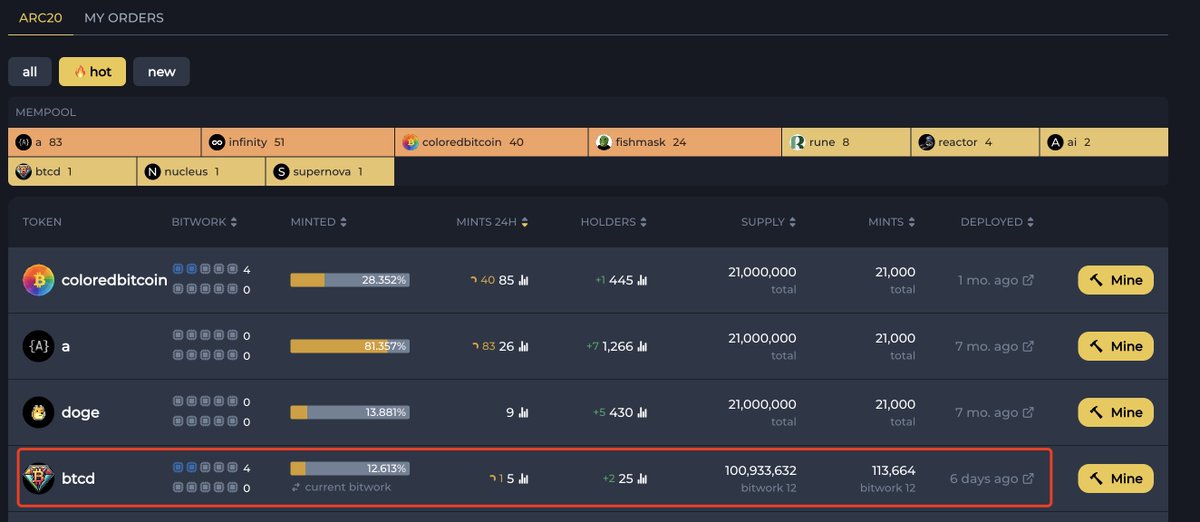
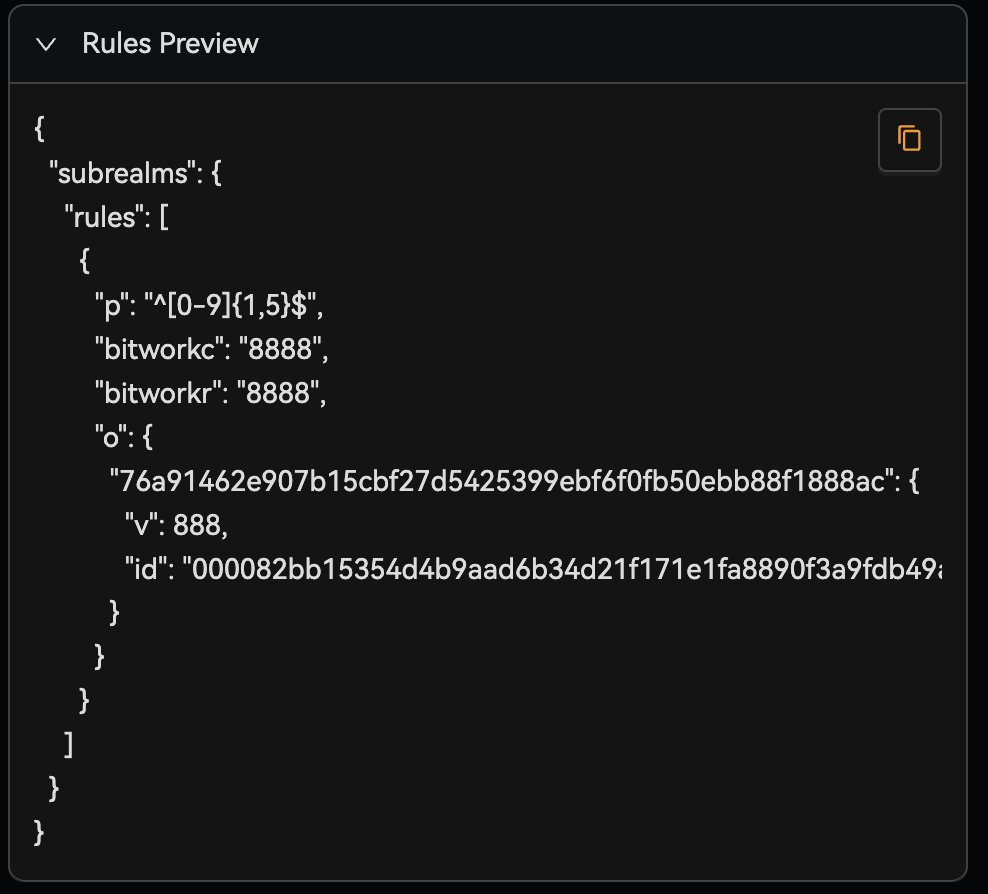
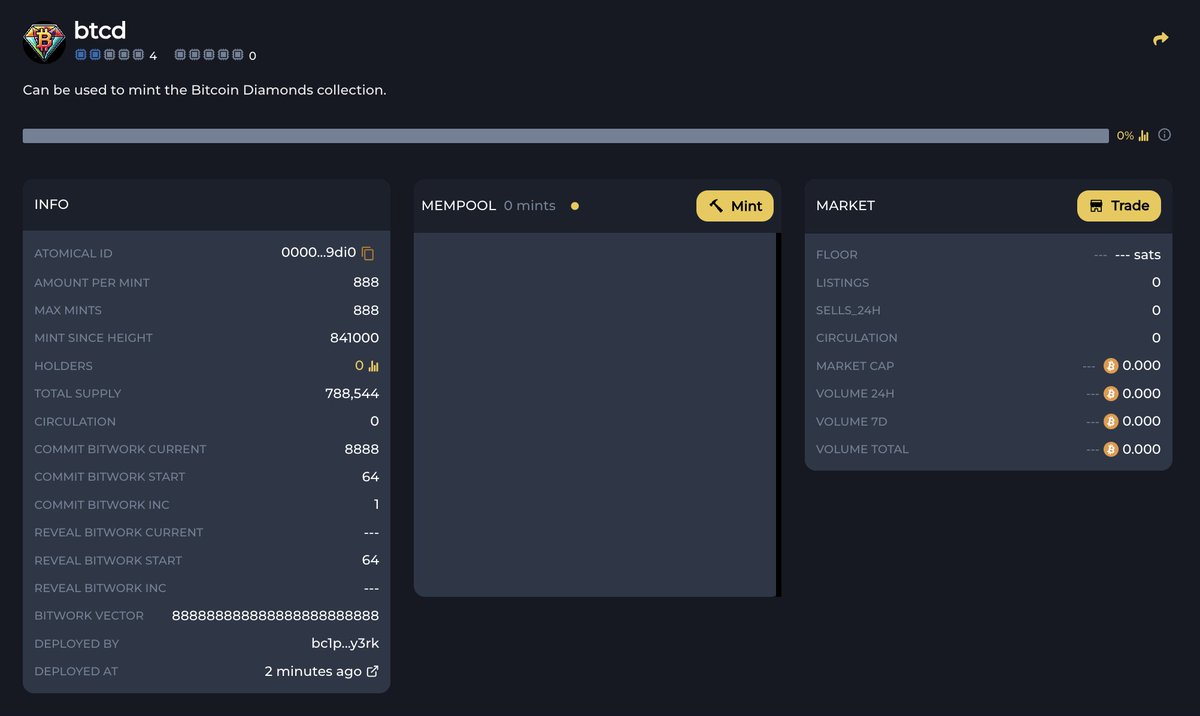
Consequently, I launched the @Diamonds_btc experiment, a collection of value-storage NFTs similar to HACD but with some innovative modifications to fit the Atomicals protocol. We use increasingly difficult $BTCD tokens as mining conditions, with each $BTCD representing 888 units. A single $BTCD can mint one of the 0 to 99999 DMD subdomains, such as +DMD.888, representing a Bitcoin diamond, with a total of 100,000 diamonds.
We activated Bitcoin Diamonds at block 841000, and I welcome friends who are interested in exploring this with us.
Please note that the subdomains are not yet supported for trading on major exchange markets, so please inform each other accordingly.
https://t.co/hre91mxGSB
To mint a Diamond, you need to pay 888 $BTCD. The paid $BTCD will be sent to Satoshi Nakamoto's address 1A1zP1eP5QGefi2DMPTfTL5SLmv7DivfNa and will be permanently destroyed.
In the new era of digital assets, Bitcoin Diamonds presents unique challenges and endless possibilities, waiting for every brave soul to explore. Join us in the stars of Bitcoin to find your diamond!
We invite blockchain enthusiasts, investors, and tech geeks from around the globe to join this unprecedented adventure to collectively define the future of Bitcoin Diamonds.