A Luisa María Alcalde @LuisaAlcalde, ya le hicieron el trabajo.
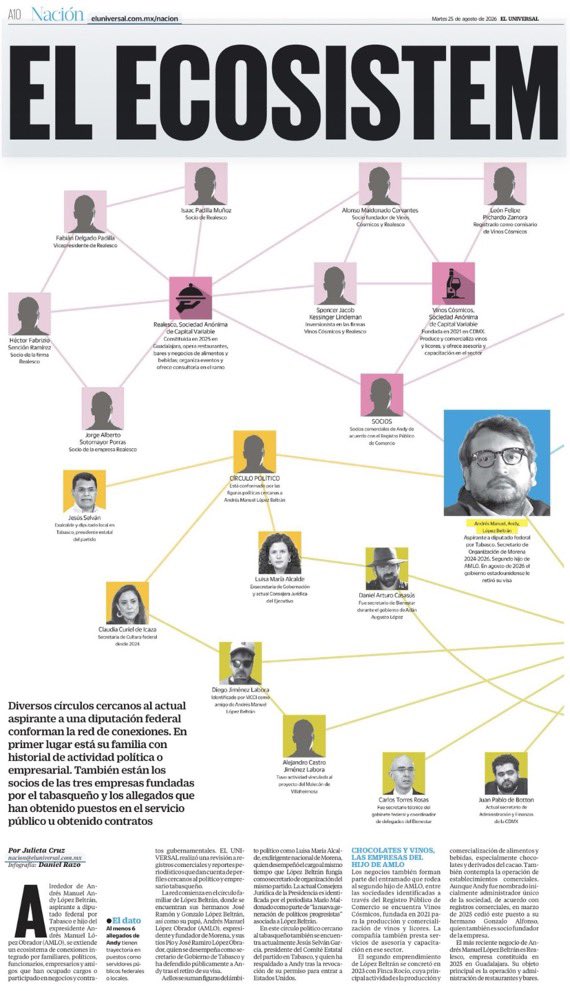
El Universal publicó hoy “El ecosistema de Andy”: una red de vínculos políticos y empresariales alrededor de López Beltrán. (@El_Universal_Mx )
¿Por qué no lo presentas en la mañanera con el mismo entusiasmo con el que exhibiste tu “ecosistema” de periodistas, investigadores y críticos?
Sería interesante conocer si para el gobierno todos los ecosistemas merecen la misma atención.
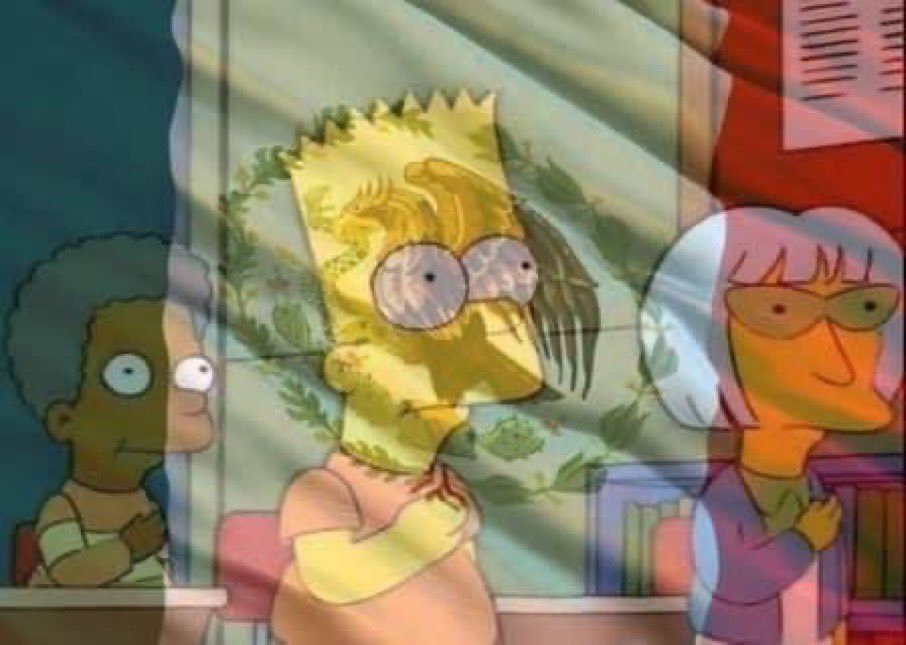
Los Simpson predijeron la actual temporada de LCDLF:
– Bien, ¿a quién le gustaría que los habitantes de LCDLF procuren no entrar en polémicas para no ser funados?
– ¡Sí! ¡Está bien! ¡Me gusta, me gusta!
– ¿Y a quién le gustaría justo lo contrario, verlos en una dinámica muy tóxica!
– ¡A mí! ¡Yo quiero, Televisa!
– ¡Ustedes no saben ni qué quieren! ¡Por eso ven este reality, porque son estúpidos! ¡Solo digan qué es lo que tiene de malo el maldito programa! 😡
In the opening scene of WALL-E (2008), wind turbines and nuclear plants can be seen built atop massive mountains of trash, suggesting that humanity only turned toward cleaner energy after environmental destruction had already gone too far.
Pixar’s WALL-E was originally conceived as a much stranger film. Early versions featured the inhabitants of the Axiom as gelatinous, boneless, legless, translucent beings called “Gels.”
Audiences were initially meant to believe the Gels were aliens, only to discover that they were actually humanity’s descendants after centuries of living in space. The film’s second half was also envisioned as a Spartacus-style rebellion, with WALL-E helping the ship’s servant robots revolt against the Gels. Early concepts even gave them their own society, complete with a royal family and castle.
The idea was eventually considered too complicated, and the Gels were gradually redesigned into the familiar round humans seen in the finished 2008 film.