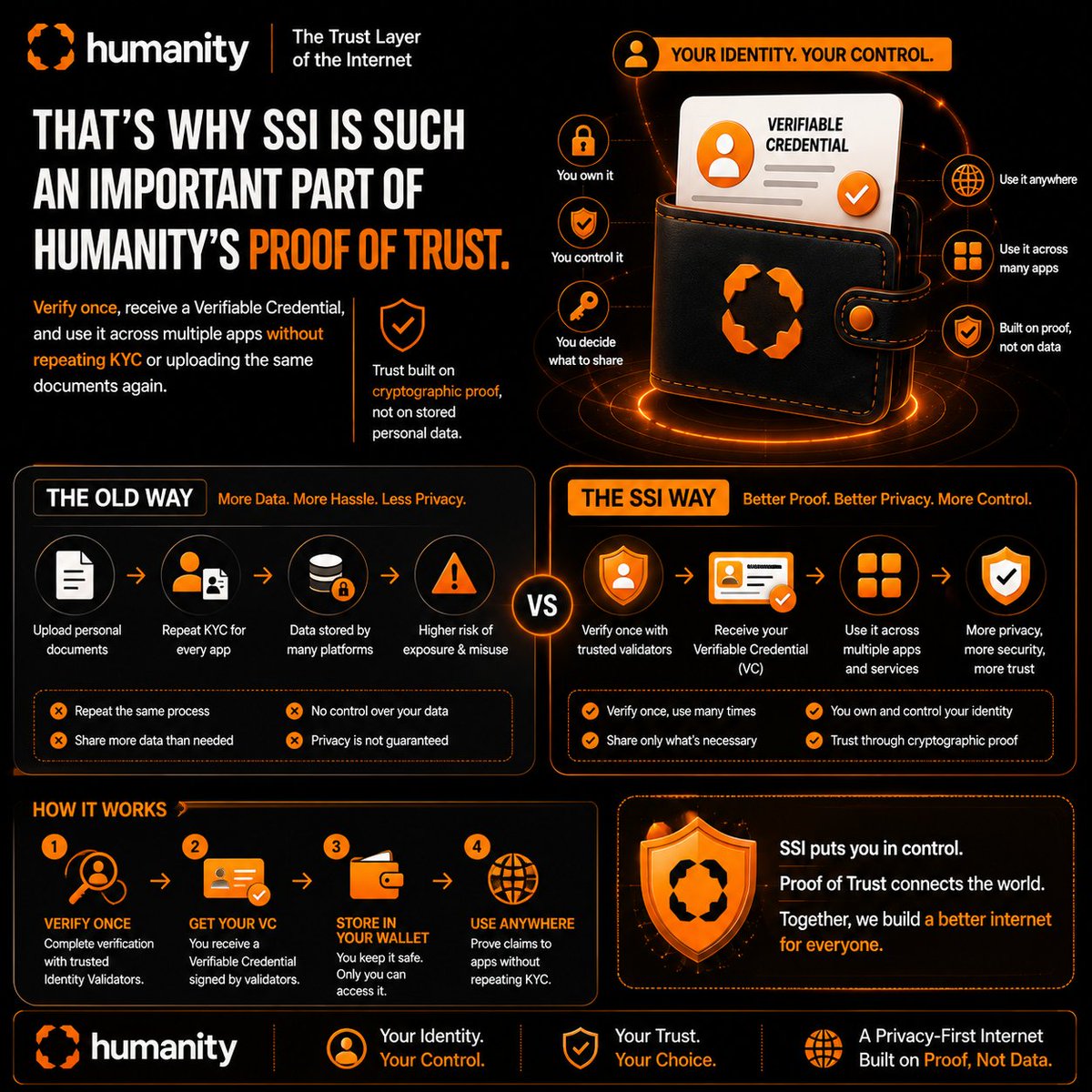
SSI is a key part of Humanity's Proof of Trust. Verify once, receive a Verifiable Credential, and use it across apps without repeating KYC or uploading the same documents. More control, less data shared, and trust built through cryptographic proof.
The more I learn about Self-Sovereign Identity (SSI), the more I realize it's not just about owning your identity. It's about owning your trust. Instead of leaving your data across countless platforms, SSI puts your identity back under your control.
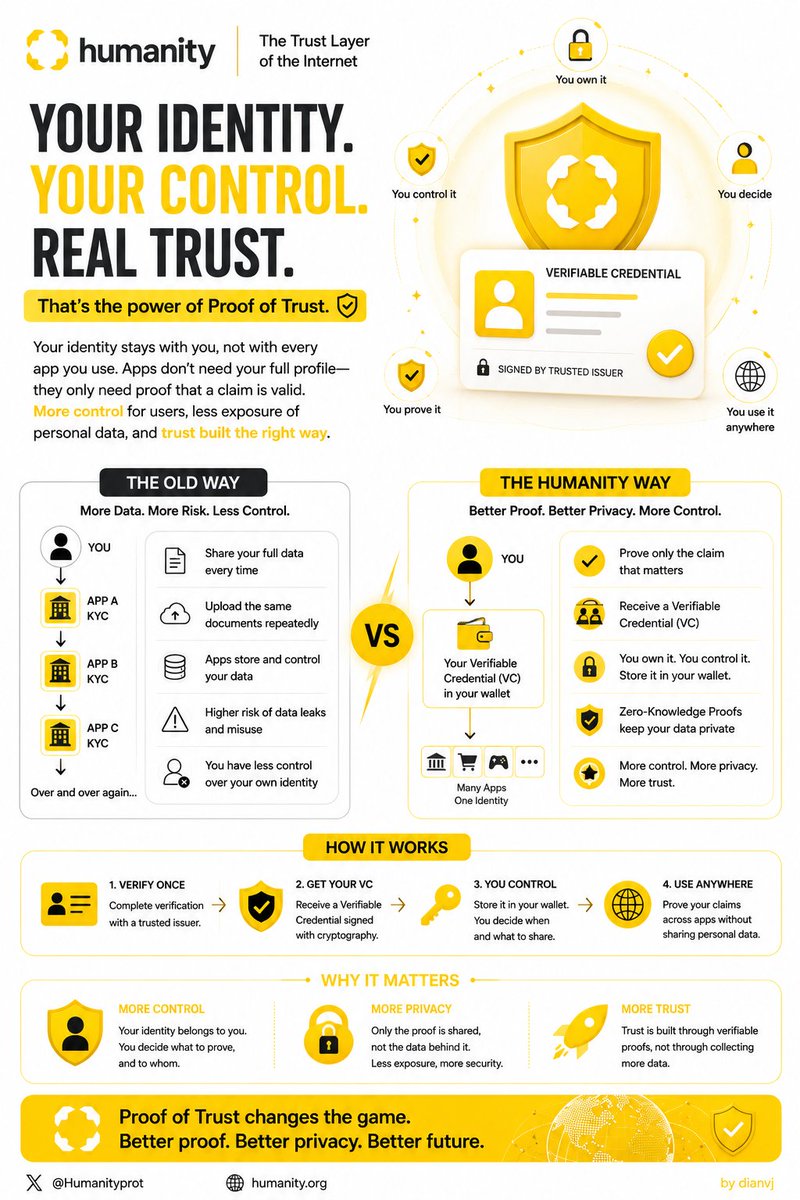
I think that's what makes Proof of Trust so interesting. Your identity stays with you, not with every app you use. Apps don't need your full profile—they only need proof that a claim is valid. More control for users, less exposure of personal data, and trust built the right way.
Most apps still build trust by collecting more personal data. @Humanityprot takes a different approach. Instead of asking for everything about you, it lets you prove only the claim that matters through cryptography. Less data collected. Better proof. Better privacy.
To me, that's one of the strongest ideas behind Proof of Trust. Less repetitive verification, more user control, and stronger privacy by design. It's a smarter way to build a trust-based internet.
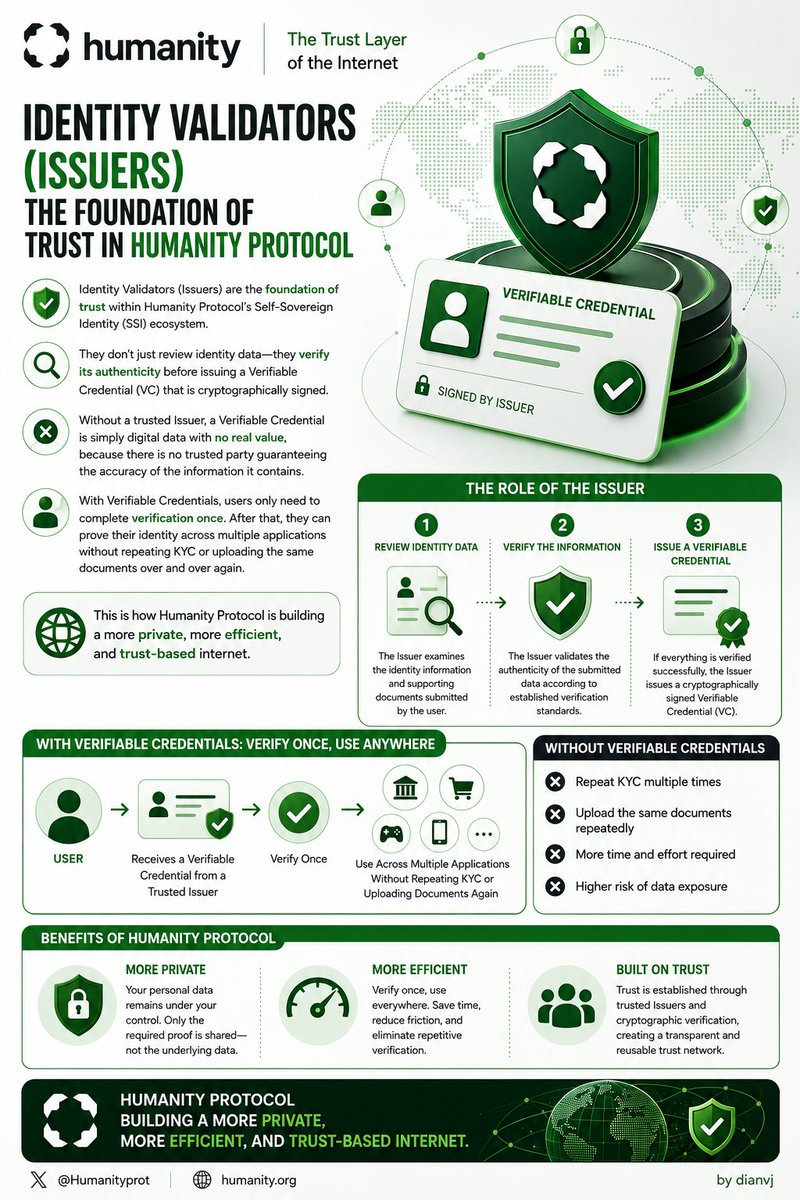
Identity Validators (Issuers) are the foundation of trust in @Humanityprot Protocol's Self-Sovereign Identity ecosystem. They don't just review identity data,they verify its authenticity before issuing a cryptographically signed Verifiable Credential. That's where trust begins.
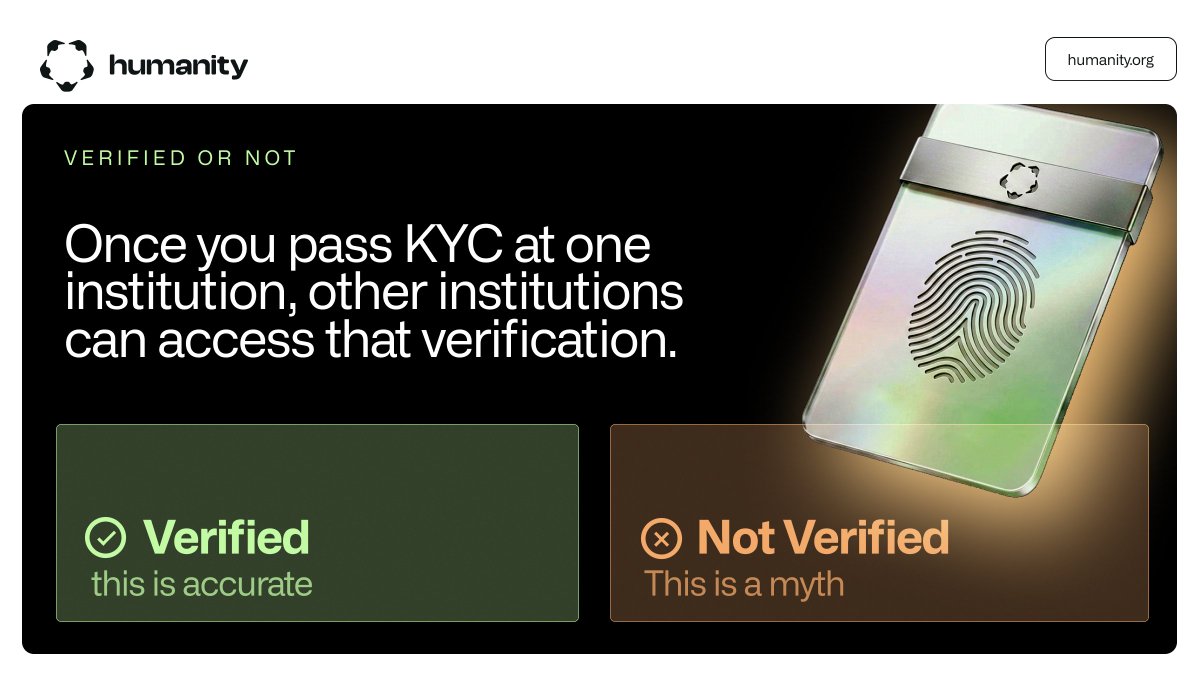
Once your VC is issued, you don't need to repeat KYC or upload the same documents every time you join a new app. Verify once, keep your credential, and use it wherever trusted verification is needed.
Humanity has been building for this moment.
@terencekwok sat down in the Hot Seat with @TheBlockco to explain why identity verification matters more in the age of AI, and where Humanity is headed.
@Humanityprot That's what makes Proof of Trust feel different to me. Apps verify the proof, not your personal data. Your identity stays with you, your privacy stays protected, and trust comes from cryptographic proof instead of oversharing information.
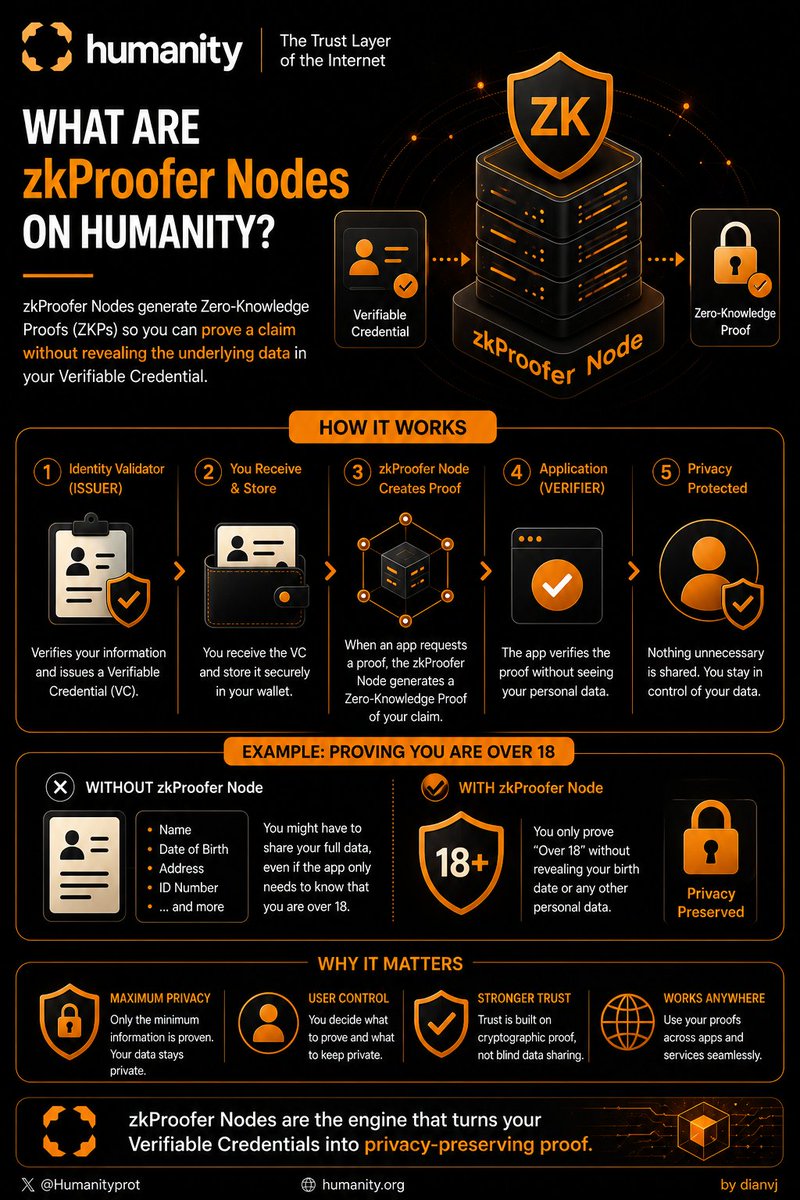
The more I read about @Humanityprot architecture, the more I realize that privacy isn't just a feature, it's built into the process. Verifiable Credentials store trusted information, while zkProofer Nodes make sure you only prove what an app actually needs to know. Nothing more.
That's what makes @Humanityprot's design stand out. Identity Validators verify and issue the credential, while zkProofer Nodes create Zero-Knowledge Proofs whenever they're needed. Apps verify the proof, not your personal data. Less data. More trust.
The more I learn about Proof of Trust, the more I see why zkProofer Nodes matter. A Verifiable Credential stores trusted information, but that doesn't mean every app should see it. zkProofer Nodes generate proofs, not data, so your privacy stays protected.