FEVER + RASH + ARTHRITIS
One of the most important diagnostic patterns in medicine.
When these three features occur together, the differential diagnosis extends far beyond rheumatology and includes infection, systemic inflammatory disease, autoimmunity, and post-infectious syndromes.
Key diagnoses you should never miss:
• Adult-onset Still disease / Systemic JIA
• SLE
• Reactive arthritis
• Viral arthritis
• Disseminated gonococcal infection
• Behçet disease
• Infective endocarditis
• Acute rheumatic fever
Before ordering a large autoimmune panel, ask yourself:
Which diagnosis would I regret missing today?
What would be your first differential when faced with a patient presenting with fever, rash, and arthritis?
Infographic by Dr. Aravind Palraj
#Rheumatology #InternalMedicine #MedicalEducation #MedEd #FOAMed #ClinicalReasoning #DifferentialDiagnosis #AutoimmuneDisease #MedTwitter #RheumTwitter #InfectiousDiseases #MedX #MedicalStudents #Residency #Medicine @IhabFathiSulima@docakx
🫀 The Most Dangerous Moment in the ICU May Last Less Than 60 Seconds
We often think of tracheal intubation as an airway procedure. Physiologically, it is a profound cardiovascular intervention.
Why Do ICU Patients Crash During Intubation?
The problem begins before the laryngoscope enters the mouth.
Many critically ill patients survive on a fragile compensatory state characterized by:
🔹 Endogenous catecholamine surge
🔹 Tachycardia
🔹 Vasoconstriction
🔹 Increased myocardial oxygen demand
What appears to be "stable" hemodynamics may actually represent physiological exhaustion.
The moment induction drugs are administered, this compensatory sympathetic drive disappears.
The result? A sudden reduction in:
• Systemic vascular resistance
• Cardiac output
• Coronary perfusion pressure
• Organ blood flow
This phenomenon has been termed adrenergic collapse.
Intubation Is a Hemodynamic Timeline
The authors propose viewing intubation as a sequence of cumulative threats rather than a single procedure:
1️⃣ Pre-induction adrenergic dependence
2️⃣ Sympatholysis after induction
3️⃣ Apnea, hypoxemia, hypercapnia, and acidosis
4️⃣ Transition to positive-pressure ventilation
5️⃣ Post-intubation ventilator and sedation effects
Each phase adds physiological stress.
Together, they can culminate in cardiovascular collapse.
The Propofol Question
One of the most clinically relevant findings is the growing evidence regarding induction agent selection.
In the INTUBE cohort, propofol was associated with a higher risk of cardiovascular collapse and was the only modifiable risk factor consistently identified.
The review therefore suggests:
✅ Ketamine
✅ Etomidate
as preferred induction agents in patients at risk of hemodynamic instability, while propofol should be used cautiously in shock states.
Positive Pressure Ventilation: The Forgotten Hemodynamic Challenge
Once the tube is secured, many clinicians relax.
The physiology is only beginning.
Positive-pressure ventilation:
🔹 Reduces venous return
🔹 Increases intrathoracic pressure
🔹 Raises right ventricular afterload
🔹 May precipitate right ventricular failure
This is particularly relevant in ARDS, pulmonary hypertension, pulmonary embolism, and severe hypoxemic respiratory failure.
Reference 📚
Kotani Y, Koroki T, Hayashi Y, Russotto V. The hemodynamics of tracheal intubation in critically ill patients: a narrative review. Journal of Intensive Care. 2026;14:42. DOI: 10.1186/s40560-026-00877-4.
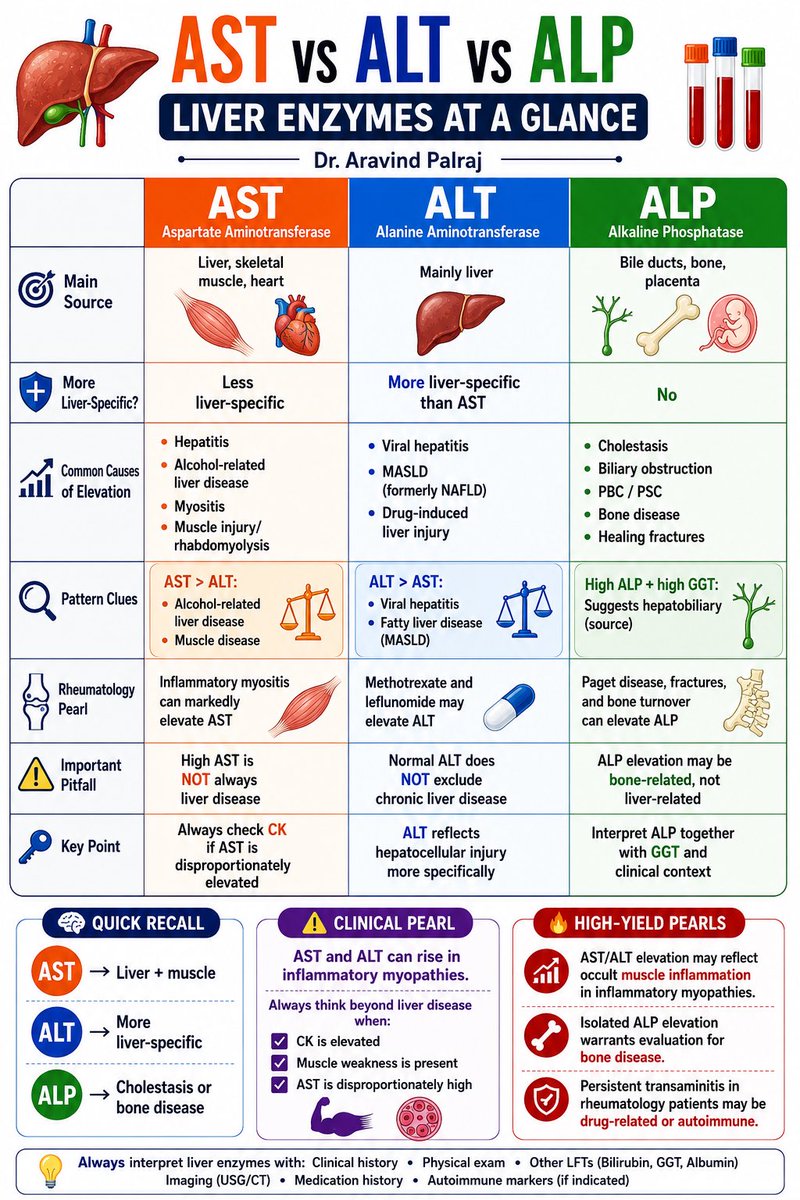
🧪 AST vs ALT vs ALP
Quick recall:
🟠 AST → Liver + muscle
🔵 ALT → More liver-specific
🟢 ALP → Cholestasis or bone disease
High-yield pearls:
• AST > ALT → alcohol liver disease OR muscle disease
• ALT > AST → viral hepatitis/MASLD
• High ALP + high GGT → hepatobiliary source likely
⚠️ Rheumatology pearl:
AST/ALT can rise in inflammatory myopathies.
Always check CK if AST is disproportionately elevated.
#MedTwitter #Rheumatology #Hepatology #Myositis #MedicalEducation #ClinicalPearls #AST #ALT #ALP #FOAMed
This blog post lives rent free in my mind
I always saw myself as a doer, less so as someone who can do research. It felt reserved to a class of people I didn't belong to.
But actually, you can just research things!
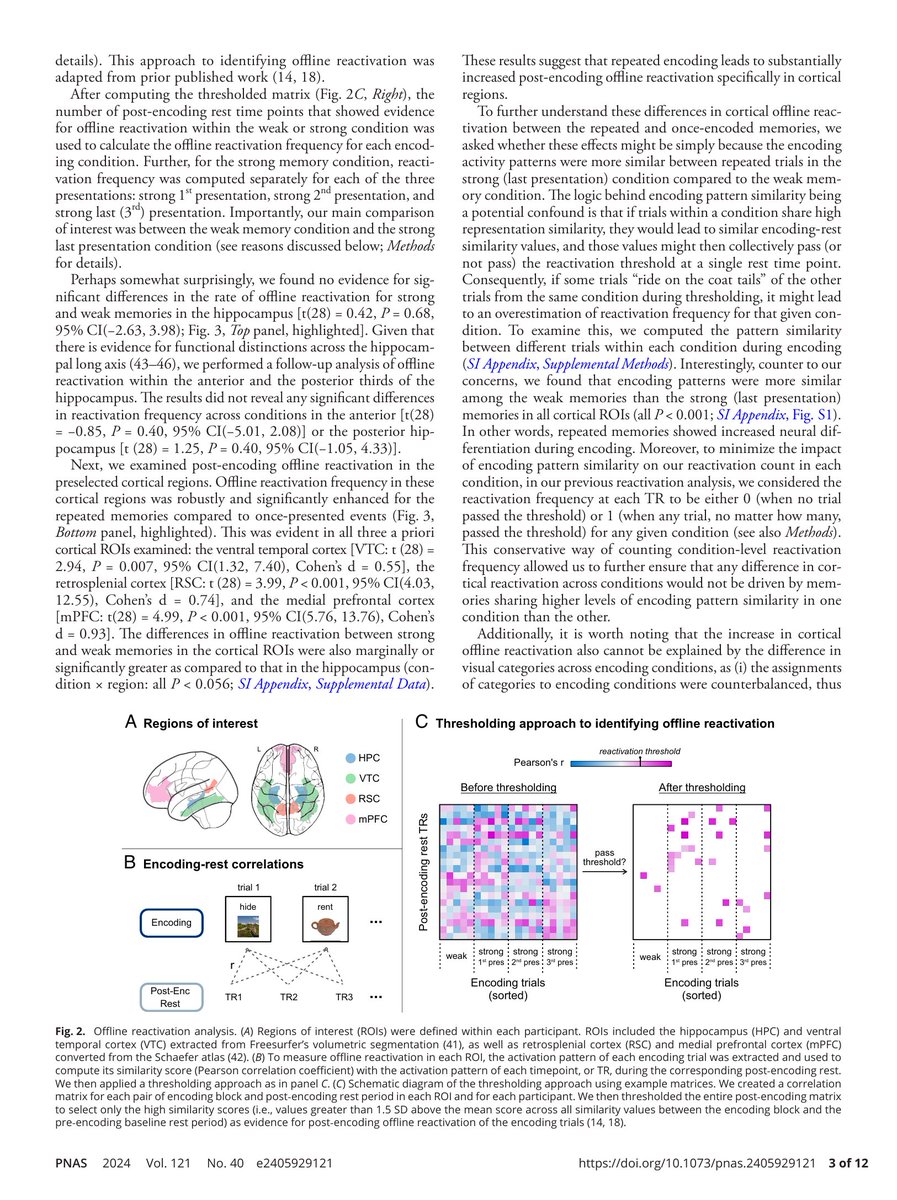
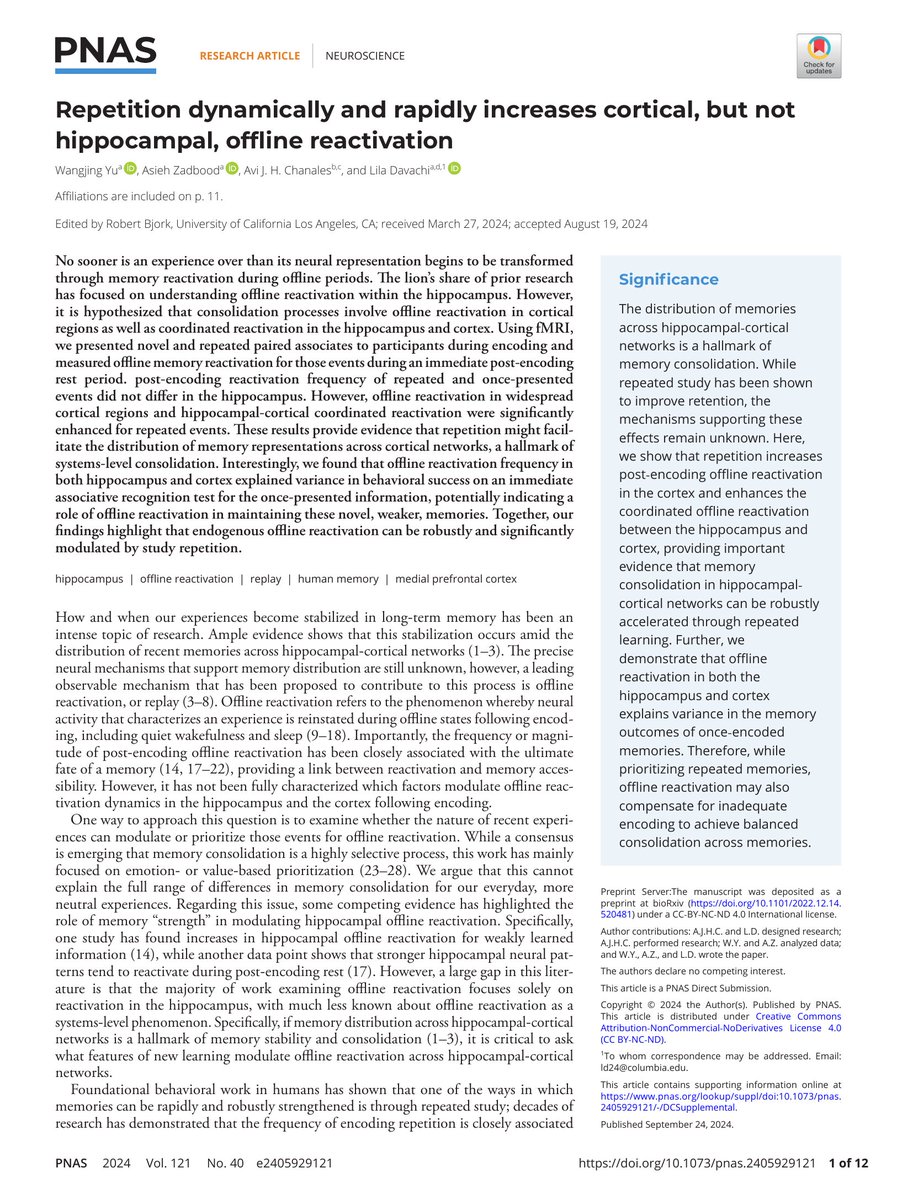
Repetition changes your brain.
Repetition changes your brain.
Repetition changes your brain.
Repetition changes your brain.
Repetition changes your brain.
Repetition changes your brain.
Repetition changes your brain.
That’s why it works.
🫀Heart failure in 2026: we are no longer treating symptoms. We are redesigning the disease.
The latest evidence update reminds us of something profound:
Heart failure is no longer a single entity.
It is a spectrum, and now, finally, we are treating it as one.
Several paradigm shifts stand out.
1. SGLT2 inhibitors are no longer “add-on” therapy.
They are foundational across the entire EF spectrum.
From HFrEF to HFpEF, the data are now consistent.
Not just symptom improvement, but hard outcomes.
This may be the most important unifying therapy in modern HF.
2. HFpEF is no longer a therapeutic desert.
For the first time, we have real disease-modifying options:
Finerenone → outcome reduction across EF ranges
GLP-1 / dual incretin therapies → targeting the obesity phenotype
Structural and metabolic mechanisms are finally being addressed
We are moving from “HFpEF frustration” → HFpEF phenotyping.
3. Acute heart failure is no longer about stabilization.
It is about early transformation.
The new paradigm:
Start GDMT in-hospital
Optimize rapidly
Treat beyond congestion
Decongestion is still important, but it is no longer the goal.
Disease modification starts on day 1.
4. Decongestion is becoming precision medicine
Urine sodium-guided therapy
Early escalation of loop diuretics
Sequential nephron blockade
Not just “give furosemide”, but measure, adjust, and target response.
5. Devices are no longer rescue therapy, they are integrated care
TEER expanding from mitral → tricuspid
Pulmonary artery pressure monitoring reducing hospitalizations
Remote hemodynamics shaping outpatient management
The boundary between ICU, ward, and home is dissolving.
6. The biggest problem is no longer evidence.
It is implementation.
We already have:
Quadruple therapy
Proven outcome benefits
Yet many patients never reach target doses.
The gap is no longer science.
It is execution.
🤓Final message
Heart failure care has entered a new era:
Mechanism-based therapy
Early aggressive optimization
Phenotype-driven treatment
And perhaps most importantly:
We are no longer chasing symptoms.
We are altering the trajectory of the disease.
📃Reference
Liori S, et al. Heart failure evidence update 2026. Heart Failure Reviews. 2026. https://t.co/T4MVjK0vGd
When you care for someone unconditionally, it means:
You care without calculating what you get back
You stay even when it’s not easy
Their happiness matters to you, not because you need them — but because you genuinely want them to be okay
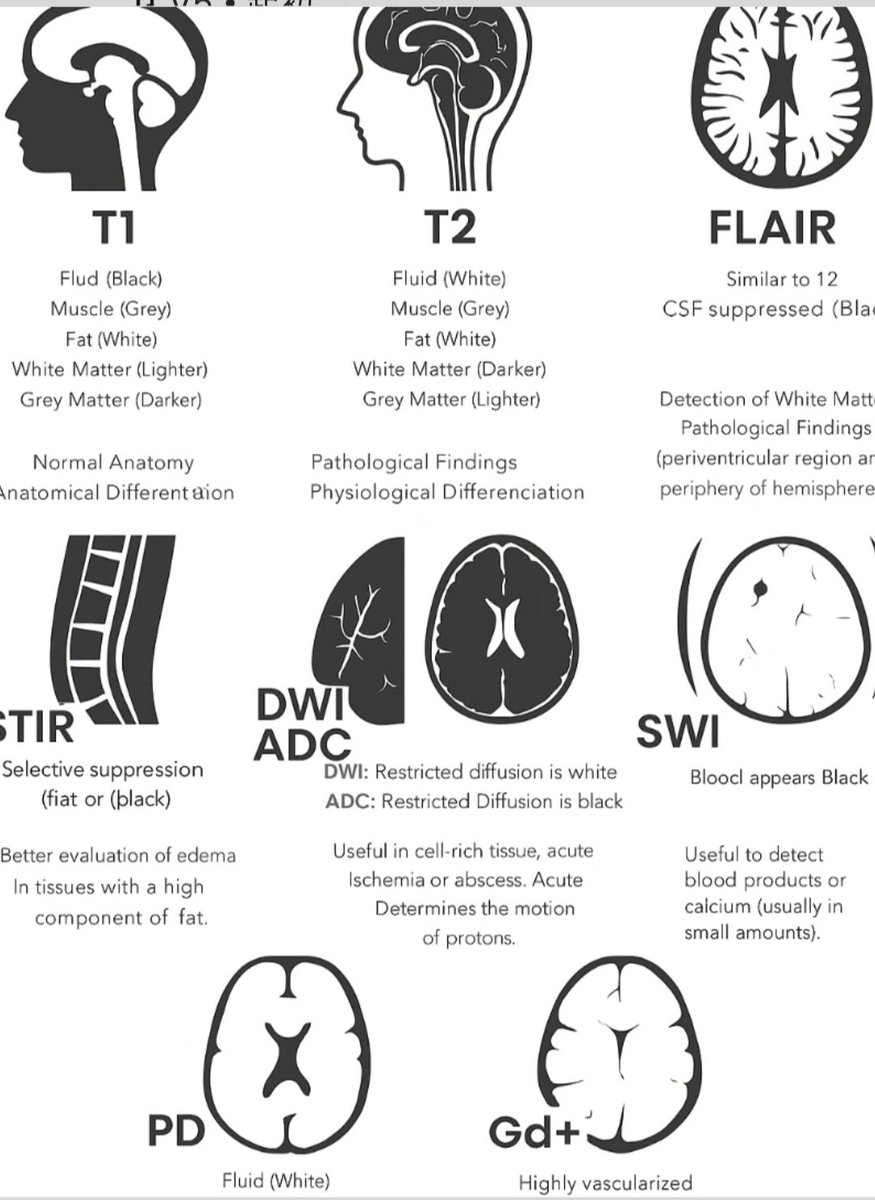
A reference chart for different types of magnetic resonance imaging (MRI) sequences and their uses.
It explains the appearance of various tissues and pathological findings on T1, T2, FLAIR, STIR, DWI ADC, SWI, PD, and Gd+ scans.
https://t.co/6QxZ3KBqug