Diegesis in Mind aims to encourage and support the use of cognitive (‘mind’) science to study ancient narrative (‘diegesis’). We intend to be an intellectual nu
Gregory Membrez uses Conceptual Metaphor Theory to unpack Aristotle's use of "dwelling in a household" as a metaphor of "metaphor" in our latest blog post https://t.co/4VXUhNB4Ud
New season kickoff! Check out Eve Sweetser's interview with Historian Line Cecile Engh @UniOslo & Cognitive Scientist Mark Turner @turnermarkb on how vivid physical metaphors in medieval monastic training manuals helped novices to form "blended selves." https://t.co/REaE49Ooh9
4th & final part of interview with @PeterJStockwell on biggest obstacles to interpreting ancient texts, how cognitive poetics an help, and the extent to which we can apply matters of modern psychology to the ancient mind https://t.co/UIX9hMd0KU via @YouTube
As we approach the close of inaugural year, take a look at this video/photo mashup from first D/M recording, 17-21 July '22 at Intl SBL in Salzburg. Feat. Anna-Lena Senk, @koendetemmerman, @BarSiegal, and @oe_nicole.
https://t.co/SjMUbJI1dk
Part 3 of my interview of @PeterJStockwell, Prof of English @UniofNottingham, on the payoff of using a cognitive approach to literature. View here: https://t.co/gMQNZGKM6z and find 1st 2 interviews at https://t.co/XacZogiICW
Just dropped! 2nd part of interview with @PeterJStockwell, @UniofNottingham English Prof, on ‘cognitive poetics’ and how cognitive science has changed the landscape of language and literature study. View this & 1st part at https://t.co/XacZogiICW
June special! 1st of 4 instalments w @PeterJStockwell, Prof of English @UniofNottingham & author of Cognitive Poetics: An Introduction. He describes how he began to use of cognitive science to study literature & how cog sci entered literary studies.
https://t.co/wtcwabMQY7
Had a very interesting conversation this morning with @LizzieShively on cognitive poetics and ancient texts. It’ll be up on the @DiegesisInMind podcast once she edits me to appear articulate!
Douglas Cairns (@uniofedinburgh) brings many emotions to our research – “I’m especially interested in narrative concepts of mind and emotion, narrative approaches to other-understanding, and the presentation of mind and emotion in narrative.”
https://t.co/0VZpWCerJj
Why would someone use cognitive science to read narratives? Victoria Pöhls, @koendetemmerman, and Kirsten Marie Hartvigsen share their answers.
https://t.co/cUBaaqguXB
Piano, Pindar, and pragmatics… Anna Bonifazi (@UniCologne) brings a lot to the D/M team! Her core interests include the performative side of oral traditions & the multimodality of storytelling. Read her blog on blended classic joint attention in Pindar.
https://t.co/U0eIidT1iy
Chris Porter (University of Divinity) explains how cognitive science informs his work on religious and social identity. @porterblepeople
https://t.co/3pvVbDyZmc
Victoria Pöhls explores ways cognitive approaches to ancient narrative help us understand the thoughts and feelings ancient readers may have experienced when engaging with stories.
https://t.co/kl4jPS9KNg
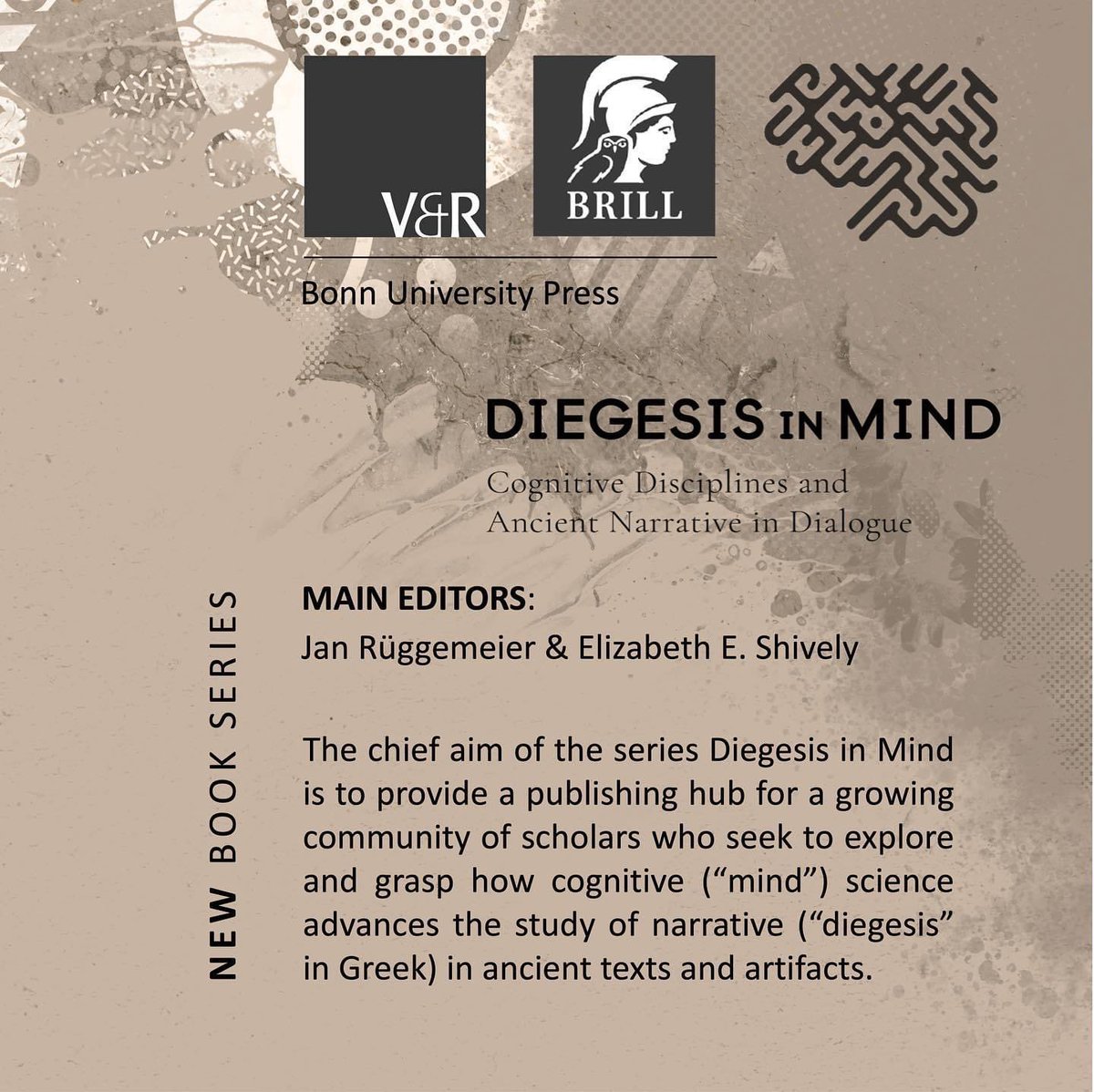
We are so excited to announce our new book series, Diegesis in Mind: Cognitive Disciplines and Ancient Narrative in Dialogue. 🎭🏛️🏺Main editors: @JanRueggemeier & @LizzieShively
Bonn University Press
Vandenhoeck Ruprecht Verlage
@BrillPublishing
LAST CHANCE TO GET A PAID PHD POSITION!
The official deadline has passed but I will consider applications for these two paid (!) PhD positions that reach me over the coming days because I am disappointed with the number of applications - especially by female students, especially on the topic of apocryphal literature ...
Because the link is no longer active, here is the job description:
About us:
The international junior research group “Focalization in Early Christian Texts: Retelling the Story of Jesus from Different Perspectives” conducts research at the intersection of narratology and exegesis of the New Testament and other early Christian writings. The narratological concept of narrative perspective is applied to early Christian accounts of Jesus Christ, which still shape our culture today. Such an endeavor is important because understanding narratives is not only about what is told, but also about how it is told. The group is part of the Faculty of Protestant Theology and associated with the International Doctoral Program Philology. It is funded by the Bavarian Elite Network, which aims to enable international cutting-edge research at Bavarian universities. The head of the junior research group is Dr. Christoph Heilig.
We are looking for you:
Doctoral researcher (m/f/x)
in Munich
Your tasks and responsibilities:
There are TWO positions available, both of which investigate the narratological category of narrative perspective using different text corpora.
(1) Dissertation on the Pauline epistles: The Pauline epistles contain a variety of “miniature narratives” about Jesus Christ. Differences between the various versions have been controversially discussed in the past (e.g., community traditions, part of an overarching narrative structure, etc.). This doctoral project should examine the extent to which differences can be attributed to different choices of narrative perspective.
(2) Dissertation on apocryphal literature: Apocryphal literature contains numerous retellings of canonical texts. This project aims at examining how the retelling in new contexts is associated with differences in narrative perspective. The topic can be chosen quite freely within this broad framework.
BENEFITS:
-Up to four years of funded doctoral study (66% TV-L E13; progress review after three years to determine funding for the fourth year).
-Generous funds for research materials, conference participation, a two-month research stay at a leading international university, open-access publications, further education, etc.
-Research context at the highest international level. The LMU Munich is one of thirteen universities of excellence in Germany. It regularly achieves excellent results in international rankings. For example, in the Times Higher Education World University Ranking 2023, it comes out as the best German university for the Arts and Humanities. It regularly ranks high in other international rankings as well. Dr. Christoph Heilig is an expert in the field of New Testament and narratology. In addition, with Prof. Loren Stuckenbruck and Prof. Jan Heilmann, the doctoral students will have two leading New Testament scholars at their disposal for advice and support- The libraries in Munich provide access to scholarly literature that is second to none.
CONTACT:
Expressions of interest, including a CV, a brief statement on the applicant's qualifications and experience, and a brief project outline (for the position related to apocryphal literature), should be sent by email to [email protected] by March 31, 2023