📊 List of famous economists and their contribution in economics 📕
1. 🇬🇧 Adam Smith (1723–1790) 📖 Famous book: The Wealth of Nations (1776) 💡 Major theories/concepts: Absolute Advantage, Division of Labor, Invisible Hand, Free Markets ⭐ Key contributions: Father of Economics. Laid the foundation of modern economics and classical liberalism. Emphasized free trade, competition and limited role of government.
2. 🇬🇧 David Ricardo (1772–1823) 📖 Famous book: On the Principles of Political Economy and Taxation (1817) 💡 Major theories/concepts: Comparative Advantage, Rent Theory, Diminishing Returns ⭐ Key contributions: Developed theory of comparative advantage. Explained distribution of income (rent, profit, wages). Strong advocate of free trade.
3. 🇬🇧 Thomas Malthus (1766–1834) 📖 Famous book: An Essay on the Principle of Population (1798) 💡 Major theories/concepts: Population Theory, Malthusian Trap ⭐ Key contributions: Argued that population grows faster than food supply. Highlighted poverty and checks on population growth.
4. 🇬🇧 John Stuart Mill (1806–1873) 📖 Famous book: Principles of Political Economy (1848) 💡 Major theories/concepts: Utilitarianism, Harm Principle, Role of State in Economy ⭐ Key contributions: Combined classical economics with social reform ideas. Supported individuality, education and limited government intervention.
5. 🇩🇪 Karl Marx (1818–1883) 📖 Famous book: Das Kapital (The Capital) (1867) 💡 Major theories/concepts: Labor Theory of Value, Surplus Value, Class Struggle, Historical Materialism ⭐ Key contributions: Critiqued capitalism and explained exploitation of labor. Father of Marxian socialism and communist theory.
6. 🇬🇧 Alfred Marshall (1842–1924) 📖 Famous book: Principles of Economics (1890) 💡 Major theories/concepts: Supply and Demand, Consumer Surplus, Elasticity of Demand ⭐ Key contributions: Founder of modern neoclassical economics. Integrated demand (utility) and supply (cost) analysis.
7. 🇬🇧 John Maynard Keynes (1883–1946) 📖 Famous book: The General Theory of Employment, Interest and Money (1936) 💡 Major theories/concepts: Aggregate Demand, Fiscal Policy, Multiplier Effect ⭐ Key contributions: Father of macroeconomics. Argued for government intervention to manage demand and employment.
8. 🇺🇸 Milton Friedman (1912–2006) 📖 Famous book: Capitalism and Freedom (1962) 💡 Major theories/concepts: Monetarism, Quantity Theory of Money, Free Market Capitalism ⭐ Key contributions: Advocated limited government, free markets and low inflation. Emphasized role of money supply in the economy.
9. 🇦🇹 Joseph Schumpeter (1883–1950) 📖 Famous book: The Theory of Economic Development (1911) 💡 Major theories/concepts: Innovation, Creative Destruction, Entrepreneurship ⭐ Key contributions: Highlighted role of entrepreneurs and innovation in economic development. Introduced concept of “creative destruction”.
10. 🇮🇳 Amartya Sen (1933–) 📖 Famous book: Development as Freedom (1999) 💡 Major theories/concepts: Capability Approach, Welfare Economics, Social Choice Theory ⭐ Key contributions: Nobel Laureate (1998). Focused on human development, freedom and reducing inequalities.
11. 🇦🇹 Friedrich Hayek (1899–1992) 📖 Famous book: The Road to Serfdom (1944) 💡 Major theories/concepts: Market Order, Spontaneous Order, Limited Government ⭐ Key contributions: Warned against central planning. Advocated individual liberty and free-market order.
12. 🇺🇸 Paul Samuelson (1915–2009) 📖 Famous book: Economics (1948) 💡 Major theories/concepts: Neoclassical Synthesis, IS-LM Model, Public Economics ⭐ Key contributions: First American Nobel Laureate in Economics (1970). Integrated micro and macro economics.
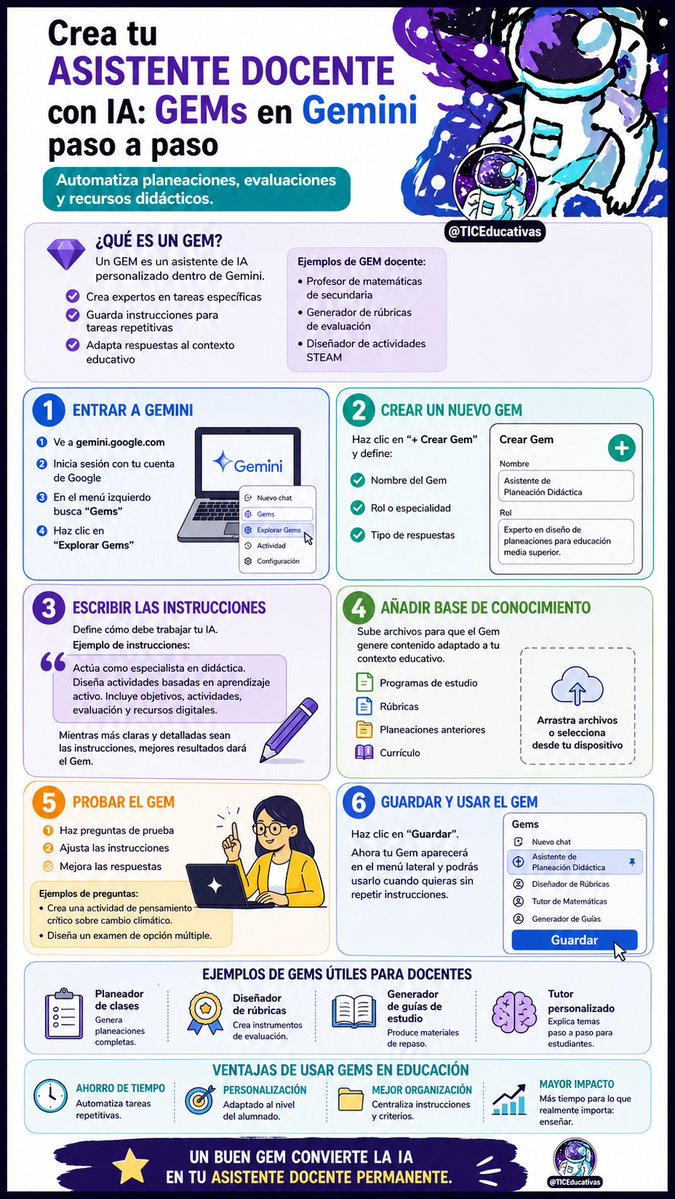
🚀 Profes: ¡el futuro es hoy! Imaginen tener un asistente que automatice planeaciones, rubricas y actividades. Con los GEMs de Gemini es posible. 🦾👨🏫
No es magia, es #IA al servicio de la #educación. Ahorra tiempo, personaliza tus clases y enfócate en lo que importa: tus alumnos. 👇
#EdTech #TIC #InnovaciónEducativa #Gemini
Google ofrece varias herramientas de IA potentes y gratuitas.
Son útiles para profesionales, creadores y empresas que quieren usar IA.
Desde contenido hasta visuales y código, simplifican tu trabajo y potencian tu creatividad.
Aquí tienes 11 herramientas de IA gratuitas de Google (y cómo usarlas):
[recuerda guardar este post para más tarde]
1. Firebase Studio: Usa IA para crear y lanzar rápidamente sitios web o apps.
2. Veo (Generación de vídeo): Crea clips de vídeo o animaciones a partir de prompts simples.
3. Gemini Ask on YouTube: Chatea con vídeos para obtener respuestas rápidas, capítulos e insights.
4. Gems en Gemini: Crea asistentes de IA personalizados usando archivos, datos e instrucciones.
5. Nano Banana (Edición): Edita y mejora imágenes de IA en nuevas variaciones creativas.
6. Gemini en Google Sheets: Genera texto, fórmulas e insights dentro de hojas de cálculo.
7. Google App Builder: Crea apps rápidamente con prompts o plantillas (sin código).
8. Media Generation (Imagen/Nano Banana): Crea imágenes con prompts cortos y simples para visuales instantáneos.
9. Gemini Live (Stream): Organiza chats de IA en vivo con pantalla compartida para reuniones y presentaciones.
10. Google AI Studio: Prueba modelos de Google, ajusta configuraciones y compara resultados de prompts lado a lado.
11. NotebookLM: Convierte fuentes en resúmenes, mapas mentales, vistas generales en audio/vídeo y cuestionarios para aprender.
No pagues de más por herramientas de IA. Usa las herramientas gratuitas de Google.
Empieza a construir, crear y explorar hoy.
Anthropic ha lanzado Mythos, una IA tan potente en programación y hacking que detecta vulnerabilidades que humanos no vieron en décadas. Creadores no la liberan por peligrosa. El acceso es limitado a desarrolladores para corrección preventiva. #IA#Ciberseguridad#Tecnología
El Gobierno sale a inyectar pesos con un doble objetivo: darle un envión al consumo y sacar del piso al dólar. Les dejo mi nota ahora en @infobae👇 https://t.co/qf28ZpljyO



![PolicarBizar's tweet photo. Google ofrece varias herramientas de IA potentes y gratuitas.
Son útiles para profesionales, creadores y empresas que quieren usar IA.
Desde contenido hasta visuales y código, simplifican tu trabajo y potencian tu creatividad.
Aquí tienes 11 herramientas de IA gratuitas de Google (y cómo usarlas):
[recuerda guardar este post para más tarde]
1. Firebase Studio: Usa IA para crear y lanzar rápidamente sitios web o apps.
2. Veo (Generación de vídeo): Crea clips de vídeo o animaciones a partir de prompts simples.
3. Gemini Ask on YouTube: Chatea con vídeos para obtener respuestas rápidas, capítulos e insights.
4. Gems en Gemini: Crea asistentes de IA personalizados usando archivos, datos e instrucciones.
5. Nano Banana (Edición): Edita y mejora imágenes de IA en nuevas variaciones creativas.
6. Gemini en Google Sheets: Genera texto, fórmulas e insights dentro de hojas de cálculo.
7. Google App Builder: Crea apps rápidamente con prompts o plantillas (sin código).
8. Media Generation (Imagen/Nano Banana): Crea imágenes con prompts cortos y simples para visuales instantáneos.
9. Gemini Live (Stream): Organiza chats de IA en vivo con pantalla compartida para reuniones y presentaciones.
10. Google AI Studio: Prueba modelos de Google, ajusta configuraciones y compara resultados de prompts lado a lado.
11. NotebookLM: Convierte fuentes en resúmenes, mapas mentales, vistas generales en audio/vídeo y cuestionarios para aprender.
No pagues de más por herramientas de IA. Usa las herramientas gratuitas de Google.
Empieza a construir, crear y explorar hoy.](https://pbs.twimg.com/media/HGx34GAWcAABSx8.jpg)