🚨 BREAKING:
Iran didn't respond to US bombs with missiles.
They responded with GAME THEORY.
And in doing so, they may have just fired the most dangerous shot at the US dollar in 52 years.
Here's the move most people completely missed: 🧵
(Read this slowly. Share it widely.)
Jimmy Carr just gave teenage boys (and honestly, a lot of grown men) the rawest dating truth they need right now:
Girls aren’t looking for looks — they’re looking for competence.
He breaks it down with zero filter:
“You think because you look for looks in a girl, she’ll look for looks in you. She’s not. What women like is competence. And it takes a while to get competent.”
That’s why billionaires and boiler-fixers both turn heads — both demonstrate mastery. Both get shit done.
Carr’s direct advice to any young guy still figuring it out:
“Get your shit together. Stop asking what you want in the world and start thinking about what you can offer.”
No pickup lines. No games.
Just brutal, timeless clarity.
Fellas — what’s one skill or area of competence you’re actively building right now to become that guy?
@Daractenus Loop hole Section 122 of the Trade Act of 1974 gives the president authority to impose tariffs of up to 15% for up to 150 days to address trade deficits or dollar crisis. As it operates under a separate legal authority from IEEPA,
today's Supreme Court ruling does not affect it.
Ted Lieu’s Epstein files story broke about Trump raping and threatening to kill children and the WH, and media are totally *CRICKETS* says it all.
This story should be headlining every news outlet across our nation and the world.
#PedoProtectors
@Devan_Kaney AI Overview:
The most efficient, scientifically proven way to seat a plane is the Steffen method, which boards passengers back-to-front in alternating rows, focusing on window seats first, then middle, then aisle.
@thejackhopkins What gets me is the number of people who have seen said files,whether US, French, British. Under“normal “conditions I would expect this to be brought to the local law , local state, federal,interpol for investigation.
It’s a moral/ethical obligation to bring to law Enforcement.
Google is so powerful that it "hides" other search systems from us. We just don't know the existence of most of them.
Meanwhile, there are still a huge number of excellent searchers in the world who specialize in books, science, other smart information.
Here's a list of sites you may have never heard of!
https://t.co/hLHSvB1Joo - Academic Resource Search. More than a billion sources: encyclopedia, monographies, magazines.
https://t.co/tzsXqbrCJD - a search for the contents of 20 thousand worldwide libraries. Find out where lies the nearest rare book you need.
https://t.co/Fm78bG5hyH - access to more than 10 million scientific documents: books, articles, research protocols.
https://t.co/JvTczb6j6o is a library of scientific bioscience journals published in developing countries.
https://t.co/ZtsaKUl9Jy - volunteers from 102 countries have collected almost 4 million publications on economics and related science.
https://t.co/aBLUtUW6a8 is an American state search engine on 2200+ scientific sites. More than 200 million articles are indexed.
https://t.co/IAzkF2ErNt is one of the most powerful researches on academic studies texts. More than 100 million scientific documents, 70% of them are free
https://t.co/6ujFPDG4AQ
Ecosia is a not-for-profit tech company that plants and protects trees. By dedicating 100% of its profits to the planet, Ecosia has planted over 214,229,374 million trees since its founding in December 2009
https://t.co/ZrIBFqf207
Yandex is a technology company that builds intelligent products and services powered by machine learning. Our goal is to help consumers and businesses better navigate the online and offline world. Since 1997, we have delivered world-class, locally relevant search and information services.
https://t.co/Duwc39PTkx
Project Gutenberg is a library of over 75,000 free eBooks
https://t.co/hOuRZFcDao
“Protection. Privacy. Peace of mind. Get our browser on all your devices.
Search and browse with the DuckDuckGo browser for more protection. Unlike Chrome and other browsers, we don't track you.”
https://t.co/hIAOHavGYB
Presearch is a community-powered, decentralized search engine that provides better results while protecting your privacy and rewarding you when you search.
https://t.co/BoWNlciH7N
Reliable information for all kinds of research
https://t.co/tPY4FcMJDR
Startpage is a global privacy technology company built around the principle of always putting privacy first. Our suite of easy-to-use privacy products helps anyone around the world to protect their personal data online.
from Christopher Seymore
Everyone is watching one city. That’s the trick:
If you’re only watching the loud version of the ICE crackdown…you’re missing the real story.
Because the crackdown isn’t loud anymore.
That’s not a failure. That’s the upgrade.
While cameras fixate on one high-profile city…press conferences…protests… predictable outrage…ICE has been quietly shifting how it operates elsewhere.
Faster pickups. Fewer uniforms. Less paperwork. More discretion. More fear.
This is what enforcement looks like when it matures.
Not raids that spark headlines. But ambient pressure…that changes behavior…without announcing itself.
Courthouse arrests. Check-in detentions. Traffic stops that aren’t really about traffic.
No spectacle. No warning. Just enough uncertainty…that entire communities start self-policing.
That’s not accidental. It’s design.
Here’s the part most coverage misses: when enforcement becomes quiet… it also becomes harder to resist.
There’s nothing obvious to protest. No single villain. No viral video…that captures the moment the line was crossed.
Just a constant background hum of risk.
People stop going to court. They stop reporting crimes. They stop driving their kids to school.
Fear does the work…the state…no longer has to do.
And notice the timing.
Courts have blocked the blunt instruments: mass defunding of cities sweeping policy ultimatums.
So the pressure migrates. It always does. When one lever breaks…power doesn’t retreat. It reroutes.
This…is that reroute.
If you’re wondering why this feels different than 2017…that’s why. Back then…enforcement was theatrical. It needed to announce itself.
Now…it’s procedural. It hides inside routine. That’s more dangerous.
Because procedural power feels “normal.” And normal is harder to fight than shocking.
The public conversation is stuck arguing about whether this is a “crackdown” or “just the law.” Meanwhile, the actual effect is psychological: a broad chilling of daily life that never requires a single new statute.
This is how systems consolidate control without declaring it.
Quietly. Incrementally. With plausible deniability baked in.
If you care about civil liberties, this is the moment that matters more than any press-friendly standoff. Not when the state shouts—but when it whispers.
Because whispers travel farther.
Here’s what I want you to notice: when enforcement gets quieter, documentation becomes more important.
When discretion expands, so does the need for witnesses, records, and local counter-infrastructure. That’s where power still has friction.
I often see posts from people wondering where McDonald's gets all its beef and speculating it is not beef. Here are some numbers. BTW, I am not a fan of McD burgers and I can't remember the last time I ate there. Also, my wife is a food safety scientist and worked with them to develop an ecoli test. She assures me their patties are 100% beef.
An average beef cow yields about 225 pounds of ground beef from portions typically used for hamburger. Because McDonald’s hamburgers are 100% beef that’s about 900 quarter-pound (4 ounce) patties per animal.
It is estimated that McDonald’s sells more than 6 million 4 ounce hamburgers a day (Big Macs, the most popular burger, are 3.2 ounces, but we’ll stick with 4 ounces as an average for this exercise), that 6,667 cattle per day or 2,433,333 animals per year. In an average year, 34 million cattle are slaughtered in the US so McDonald’s uses only about 7%. In addition the US imports about 4.5 billion pounds of beef a year. That’s billion not million. Brazil, Canada, and Mexico are major suppliers.
People complain that they never see herds of cattle large enough to supply McDonald’s. Most cattle feedlots in the US, called Concentrated Animal Feeding Operations (CAFOs), hold thousands of head and are usually connected to slaughterhouses where the carcasses are butchered and the meat cuts are packaged for shipping to stores and restaurants. Most are in Texas, Nebraska, Kansas, Iowa, and Colorado. These states hold about 60% of the nation's cattle. They are not usually visible from major highways or cities, and because they need lots of land and they smell, they are usually isolated. But they are out there.
I modified my backyard telescope to capture the sun for 6 hours yesterday, to watch how this giant sunspot is behaving.
Our star doing star things will never not be fascinating.
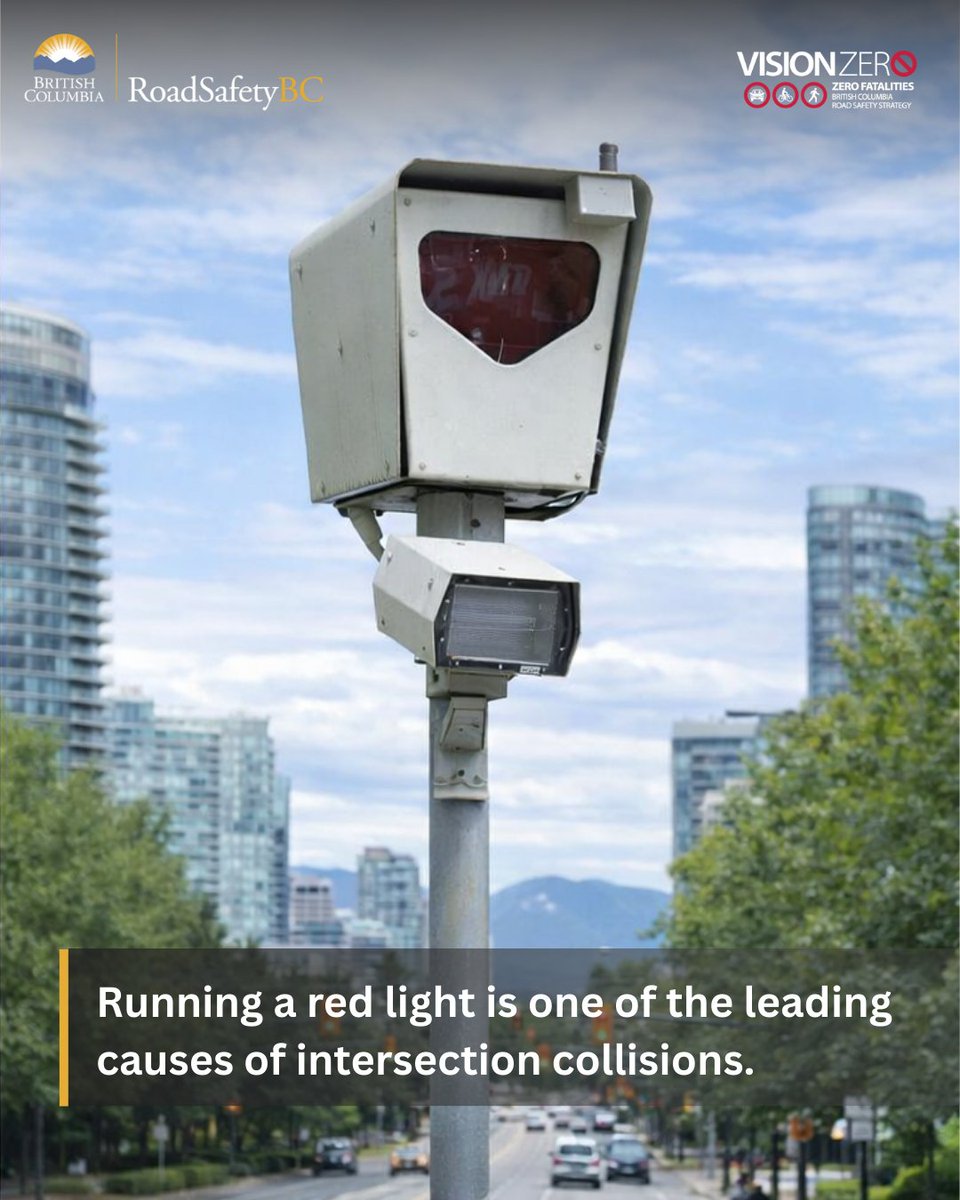
Most crashes happen at #intersections.
In 2024, more than 80,000 red light camera violation tickets were issued. Running a red light is one of the leading causes of intersection collisions.
✅ Stop at the light.
✅ Save lives.
#IntersectionSafetyCamerasBC