I'm actually loving GTA 6!
I honestly never liked the old games. All the violence and prostitutes just aren't my thing.
But I love how Lucia takes the lead and Jason is such a sweet boyfriend. Getting her flowers, bringing home groceries, and building furniture for her is so cute.
I've always loved The Sims, so it's nice to finally have another game I can get into.
There's still a little too much crime for my liking, but hopefully Rockstar keeps listening to female gamers like me and gets rid of that stuff entirely in GTA 7.
@shagbark_hick Came to love deep winter in North Country.
Ice fishing in Sackets Harbor followed by fish fries and dragging you sled to the pub with a bunch of augers leaning against the wall outside.
The local pizza place would deliver wings to your fishing hole on the ice.
If someone asks you how much a single family's life is worth to the United States Navy, tell them the exact price: ten million dollars of steel.
On April 29, 1975, as Saigon fell, a tiny two-seat wooden-and-fabric Cessna plane with almost no fuel left circled desperately above the American aircraft carrier USS Midway.
Inside that tiny cockpit, a father named Major Buang-Ly had crammed his wife and five small children, including a baby. He scribbled a note on a map, wrapped it around his pistol so it would not blow into the ocean, and dropped it onto the carrier deck.
A young American sailor picked up the crumpled paper and ran it up to Captain Lawrence Chambers.
The note read: "Can you move these helicopter to the other side, I can land on your runway, I can fly 1 hour more. Please rescue me. Major Buang, Wife and 5 child."
The flight deck of the USS Midway was completely jammed from bow to stern with military helicopters. A Cessna has no tailhook to catch carrier wires, and its pilot had never landed on a ship in his life.
By every military regulation, Captain Chambers had been in command for only five weeks. Throwing millions of dollars of U.S. government aircraft into the sea without permission from Washington could end his career in a court-martial.
Chambers looked up at the tiny plane circling in the wind with five children inside. He did not call an accountant in Washington.
"Clear the deck," the captain ordered.
Hundreds of young American sailors in yellow and green jerseys ran to the edge of the ship, put their shoulders against massive Huey helicopters, and shoved ten million dollars worth of machinery straight off the cliff into the South China Sea.
Captain Chambers turned the giant carrier into the wind at twenty-five knots. The tiny Cessna came down, bounced once on the steel runway, and rolled to a safe stop with feet to spare.
When the cockpit door opened and five small children stepped out onto the deck, three thousand American sailors roared so loud it drowned out the engines, and immediately passed around a hat to collect cash for the family's new life in America.
When the math says a child's life is too expensive, an American throws the math into the ocean.
Final tally of Montana wildlife encounters and captures from the last six days:
✅ Grizzly sow + two cubs
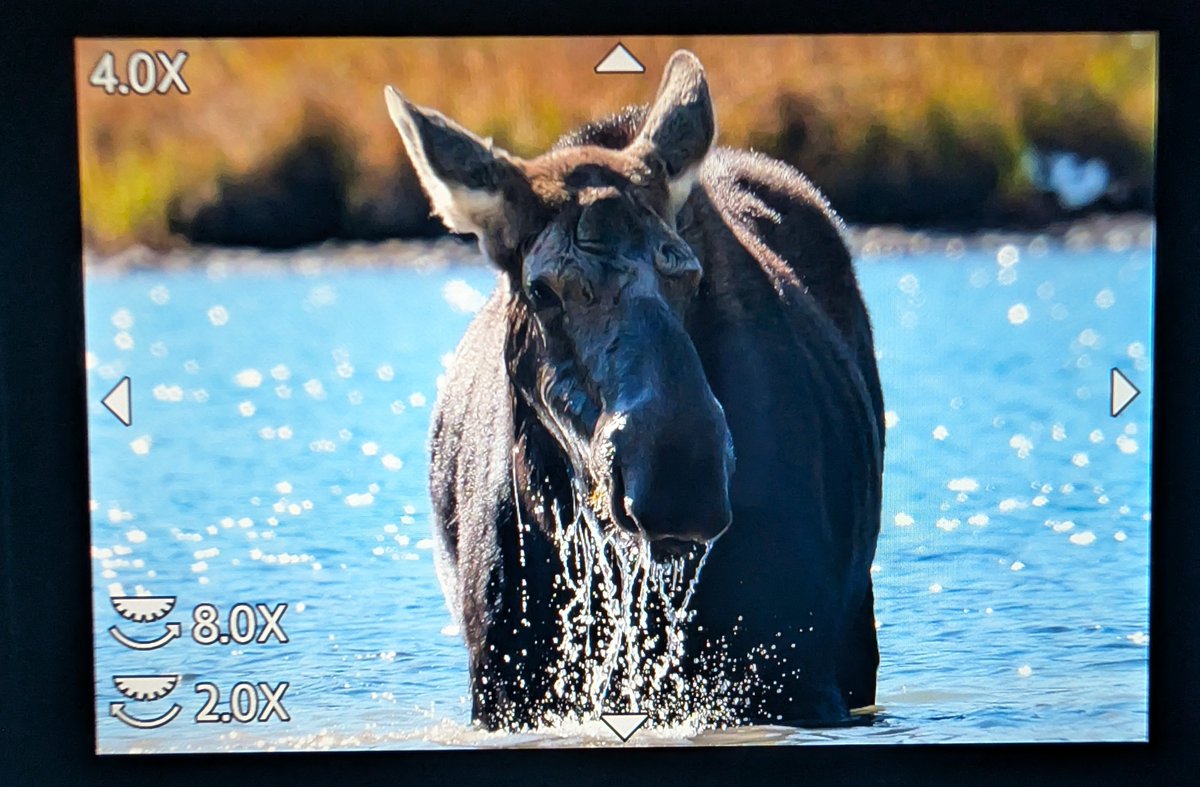
✅ Moose cow and calf
✅ Bighorn ram
✅ Bighorn sheep
✅ Mountain goats
✅ Pronghorn bucks
✅ Cinnamon black bears
✅ Red foxes
✅ Bald eagles
✅ Grouse
✅ Stellar's jay
✅ Turkey
✅ Mountain bluebird
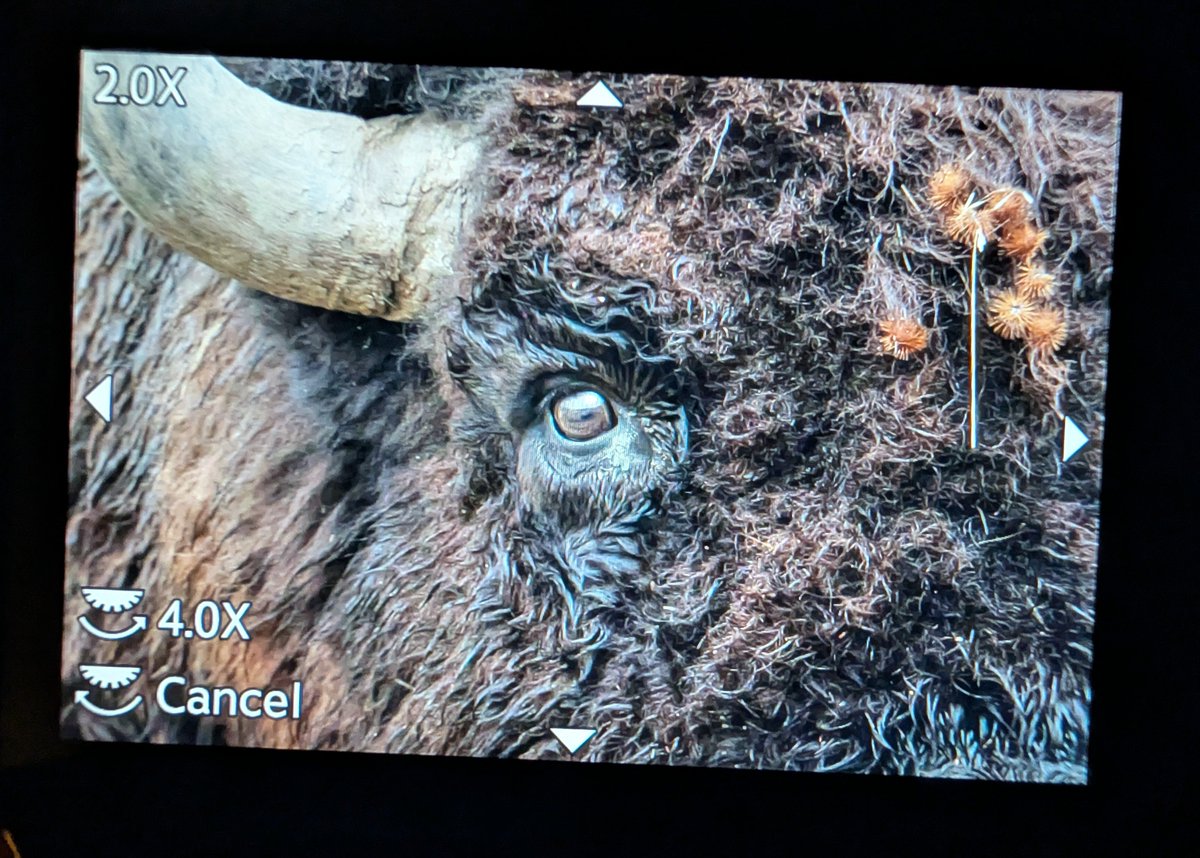
✅ Bison
✅ Bull elk x2 + harem
✅ White-tailed deer
✅ Mule deer
✅ Red squirrel
✅ Columbian ground squirrel
✅ Yellow-pine chipmunk
We made the most of every hour. All previews off my Lumix S1RII screen!
No, this isn't the new Taylor Swift album cover. I've cleaned-up this remarkable colour photo, taken 113 years ago in August 1913, a year before the First World War. It is a portrait of 16-year-old Christina Bevan at Durdle Door in Lulworth, Dorset. It was taken by Lt-Colonel Mervyn O’Gorman using an early colour glass-plate process and isn't colourised.
This was one of the first Autochromes I cleaned up for Twitter and I share it again with you because it is such a beautiful image 😍
Wife is gone for the weekend.
Kids get the Pantera wake-up for breakfast followed by sprints at the track before martial arts class.
Spooky arts and crafts in the afternoon.
The most interesting thing about the HANX is it was designed by a Marine.
SGT Henry Volpe designed this 3D printed drone on his own. The USMC decided to take his innovation & put it into action across the formation.
More on the HANX in this link below👇
https://t.co/yO7Zeq1ynl
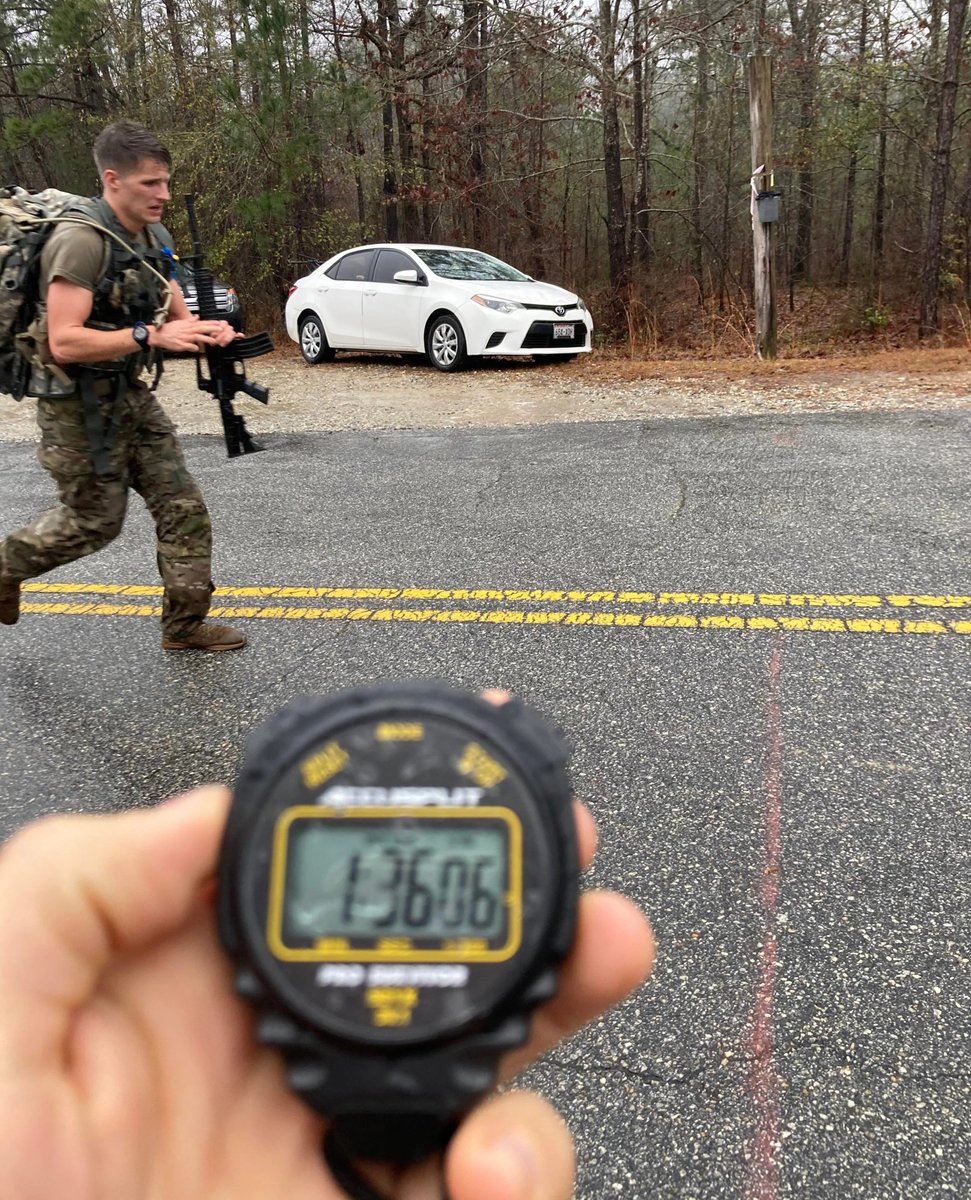
US Army 75th Ranger Regiment. A military intelligence officer with the Regimental Military Intelligence Battalion (RMIB) finishes his 12 mile ruck (35lbs+).
He finished in 1:36:06, which averages out to just over an 8 minute mile pace.
Von Miller reveals after Texas A&M coach Mike Sherman suspended him, he packed everything he owned into his truck and started driving to Florida to transfer, when he called his he dad told him not to quit, so he turned around and led the nation with 17.5 sacks the next season
“I had everything I owned in this blanket, and I went to my car. I threw it in the back and I’m driving home. I called my daddy. I’m like, ‘Daddy, man, I’m leaving. Coach Sherman kicked me off the team. I ain’t coming back until I do this and that.’”
“I’m thinking my dad is going, ‘All right, we’re going to find something else.’ He said, ‘Pull that truck over, turn around, and go back to school. You’re not quitting.’”
“I was like, ‘That was not the answer I was looking for.’ He was like, ‘You’re not just about to quit when it gets hard. You’re going to turn that truck back around. You’re going to go back to school and you’re going to fix it.’”
“I had tears going down my face. I was like, ‘Man, this is going to be so hard to fix all of this.’ I turned around. We had a meeting. Coach Sherman told my dad the exact same thing that he told me, and my dad agreed with Coach Sherman.”
“There was nowhere I could go. I just had to face the music. I had to face the truth. That spring was a hard one, but I got my grades up. I made it to all my classes. I went through the checklist of everything Coach Sherman wanted me to do.”
“That following year, my junior year, was the best year that I had up until that day. I led the nation in sacks. I had 17 and a half sacks. My life had totally changed. That was all a testament to running straight through the storm. The shortest way through the storm is straight. I put my head down and I worked, and my life totally changed that offseason.”
@thealepalombo I hiked from Soverato to Pizzo through the mountains with just my backpack and a hammock. My favorite pic is my campsite between Petrizzi and Monterosso.
August is peak mosquito breeding season. You can crash your yard's mosquito population without spraying a single chemical by hijacking their breeding instinct and turning it against them.
It's an entomologist-approved method called the Mosquito Bucket of Doom. It's cheap, it's simple, and it's backed by research.
Fill a 5-gallon bucket about two-thirds with water. Drop in a handful of grass clippings, leaves, or hay. That step is important, don't skip it. Mosquitoes prefer to lay eggs in buckets that have some organic leafy matter in it.
Let it sit for a day, then drop in a Bti dunk (sold at any hardware store as "mosquito dunks," about $10 for six). Bti is a naturally occurring soil bacterium that produces a toxin that kills mosquito, blackfly, and fungus gnat larvae only.
This method doesn't harm bees, butterflies, fireflies, fish, frogs, birds, pets, or people. BTI dunks are EPA-approved for organic use and safe in animal water troughs and birdbaths. Lay hardware cloth over the bucket to prevent animals from drowning.
One dunk lasts about 30 days. Top off the water as it evaporates. Cover with 1/2-in Mesh Hardware Cloth to prevent animals from getting trapped and put the bucket somewhere shady where pets and kids won't get into it.
The bucket becomes a mosquito magnet with a deadly dead end for the next generation. Compare that to fogging the entire yard with pyrethroids, which kills every insect in it, including the predators that eat mosquitoes.
The more buckets in a neighborhood, the bigger the dent in their numbers. One bucket per yard is a great start. 3 is even better.
Nobody in Walton County knew who was buying up the Panhandle. Timber companies sold him tract after tract. Sod farms. Played-out peanut fields. Pine that had been cut and cut again. The buyer was a timber and oil commodities trader, and he never told a single seller what he wanted it for.
He was buying it so it could NEVER be developed again.
Marion Clifton Davis grew up on the wrong side of the tracks in the Florida Panhandle. He summed up the whole childhood in one sentence: "I grew up with five other people in 300 square feet in a wore-out trailer on a dirt road."
He gambled his way out, hustling pool and poker from the time he was 16 until he was 30. It paid for a political science degree and then a law degree. He moved the winnings into land and mineral rights, and they turned into hundreds of millions of dollars.
He had spent his entire life climbing out of that trailer, and he got all the way to the top of it. Then he said this: "I finally made some money and it wasn't what it was advertised to be."
What changed him was a traffic jam. Stuck in a line of cars going nowhere, he read a high school marquee advertising a presentation on the Florida black bear. He pulled out of the line and walked in.
"I hate to confess to this. I didn't know Florida even had black bears at the time." He gave the two women running the presentation enough money to keep going for another two years, then asked them for a reading list and spent the next year working through Thoreau, John Muir, and a Harvard biologist named E.O. Wilson.
In 2000, he started buying. He spent roughly $90 million assembling more than 50,000 acres along the Choctawhatchee River, tract by tract, never tipping his hand until each deal closed. He named it Nokuse. It is the Muscogee word for black bear.
Then he did the thing no land man does. He took it apart. His crews thinned 22,000 acres of pulpwood pine and hand-planted EIGHT MILLION longleaf seedlings across 24,000 acres, scattered in deliberately random patterns so the forest would never come back in rows. They burned about 10,000 acres a year on purpose, because longleaf needs fire.
He told people it was a 300-year project.
In 2009 he spent $12 million of his own money on a 28,000-square-foot science center for Panhandle schoolkids. He named it for E.O. Wilson. Not for himself.
In November 2014, doctors found stage 4 lung cancer. He kept working. That June he sat down with a national radio crew and said it plainly: "I'm dying, as we all are. It's well advanced."
He got 15 years of the 300.
M.C. Davis died on July 11, 2015, eight months after the diagnosis. Not one tree he planted had grown tall enough to matter yet.
He spent thirty years learning how to take. He spent the rest putting it back.
Around here, thousands of Panhandle fourth graders get loaded onto a school bus and driven out to that center. Almost none of them ever find out who paid for the trip.
Then the bears came back.
They cross under US 331 now, through three wildlife underpasses finished in 2012, funneled in by a mile and a half of fence on both sides of the four-lane highway. The man who did not know Florida had black bears built them a way under the road. They den on land named after them.
Nokuse Preserve is 56,258 acres today, endowed and permanently protected, the largest private conservation project east of the Mississippi River. More than 3,800 gopher tortoises pulled off Florida development sites have been released there since 2006. In 2025 the E.O. Wilson Biophilia Center took in 5,500 students from 56 schools, and it charged none of them a dollar.
A longleaf pine can live 400 years. The seedlings put in the ground in 2004 are barely out of childhood, and the forest he was actually aiming at will not stand until sometime around the year 2300. He knew that when he wrote the checks.
M.C. Davis, a poor kid from a dirt road, spent everything he ever won on a forest he would never walk through.
Every time egg prices spike, someone posts "just get backyard chickens" like it's a financial hack...except it's not. Your backyard eggs WILL cost you more than store-bought, probably for years (or forever). But chickens might still be one of the best things you ever add to your garden, and the eggs are the least interesting reason why...
Let's do the math first so we can stop pretending this is about saving money:
A basic coop and run for 4 to 6 hens runs $300 to $800 if you build it yourself, easily $1,000+ for a prefab. Mine was $12k but I'm stupid and MAXXED my coop. Chicks cost $3 to $5 each, but they don't lay for 5 to 6 months while you're still getting them through the chick -> pullet -> hen stage
Feed runs about $15 to $20 per 50-pound bag, and a small flock will go through one every month or so. Add bedding, feeders, waterers, a heat lamp for chicks, and the inevitable "I need a better coop" upgrade (you WILL fall prey to this), and your first year is somewhere between $700 and $1,500 before you see a single egg
A laying hen produces roughly 250 to 300 eggs per year in her first two years, then production drops. So your first-year cost per egg, even being generous, lands somewhere around $3 to $5 per egg. Store-bought eggs, even at the crazy prices we saw during the bird flu spike, topped out around $0.50 to $0.75 per egg, MAYBE $1.00
You will never, ever "save money" on eggs with backyard chickens, at least not in the way people mean when they say it
So why do I think more gardeners should have them?
Because chickens are one of the best tools a gardener can have, and almost nobody frames it that way
Start with pest control. A single chicken can eat 150+ bugs a day. Slugs, snails, beetle larvae, aphids, grasshoppers, ticks, earwigs, even small mice (as a flock, at least)
We spend so much energy in the gardening world talking about organic pest solutions, neem oil, diatomaceous earth, companion planting. A small flock of chickens patrolling your yard will outperform much of it. I've watched hens clear a slug-infested bed in an afternoon, scratching and hunting their way through every inch of it
You do need to manage them though. Chickens in a vegetable garden without supervision will eat your seedlings and scratch up your mulch. The move is controlled access: let them into beds AFTER harvest, or run them in a "chicken tractor" (a movable pen) across sections you want cleared. They eat the bugs, scratch up the top layer of soil, and deposit fertilizer as they go
Speaking of fertilizer...chicken manure is one of the highest-nitrogen organic fertilizers available. Fresh chicken manure runs roughly 1.1% nitrogen, 0.8% phosphorus, and 0.5% potassium. For comparison, cow manure is about 0.5% nitrogen, roughly half the concentration. One laying hen produces about 130 pounds of manure per year. That's a LOT of free fertilizer, BUT...
The catch: fresh chicken manure is too "hot" to apply directly. The nitrogen content is high enough to burn plant roots, and raw poultry manure can carry pathogens. You need to compost it first, usually for 3 to 6 months, mixing it with carbon-rich material like straw or wood chips
But here's what makes it all click for a garden: coop bedding (straw and wood shavings mixed with manure) IS your compost. The chicken coop becomes a compost system. Every time you clean the coop, you're building the next season's soil amendment. You stop buying bagged compost and bagged fertilizer. The chickens make it for you
We run a deep-litter method in our coops at the @epicgardening test garden. You layer carbon material on the coop floor, the chickens add nitrogen through their manure, they turn it by scratching, and the whole thing slowly composts in place. Every few months you shovel it out and it's nearly finished compost, ready for a final cure in a pile before going into beds. It's one of my favorite looped systems in the backyard
But to me, the biggest benefit is psychological: chickens give you a reason to go outside every single morning
Checking on the flock, filling water, collecting eggs, making sure nothing got into the run overnight. Takes about 5min. But those 5min pull you into your garden, and suddenly you're noticing your tomatoes need staking, there are aphids on your cabbage, etc. Chickens create a daily rhythm that makes you a better gardener, not because they do something magical, but because they make you show up
So no, backyard chickens won't save you money on eggs.
But they'll eat your pests, make your fertilizer, build your compost, improve your soil, get you outside every morning, and quietly turn you into a more attentive, more connected gardener...AND you'll get some of the most nutritious eggs you've ever tasted...
That's worth a lot more than $4 a dozen :)