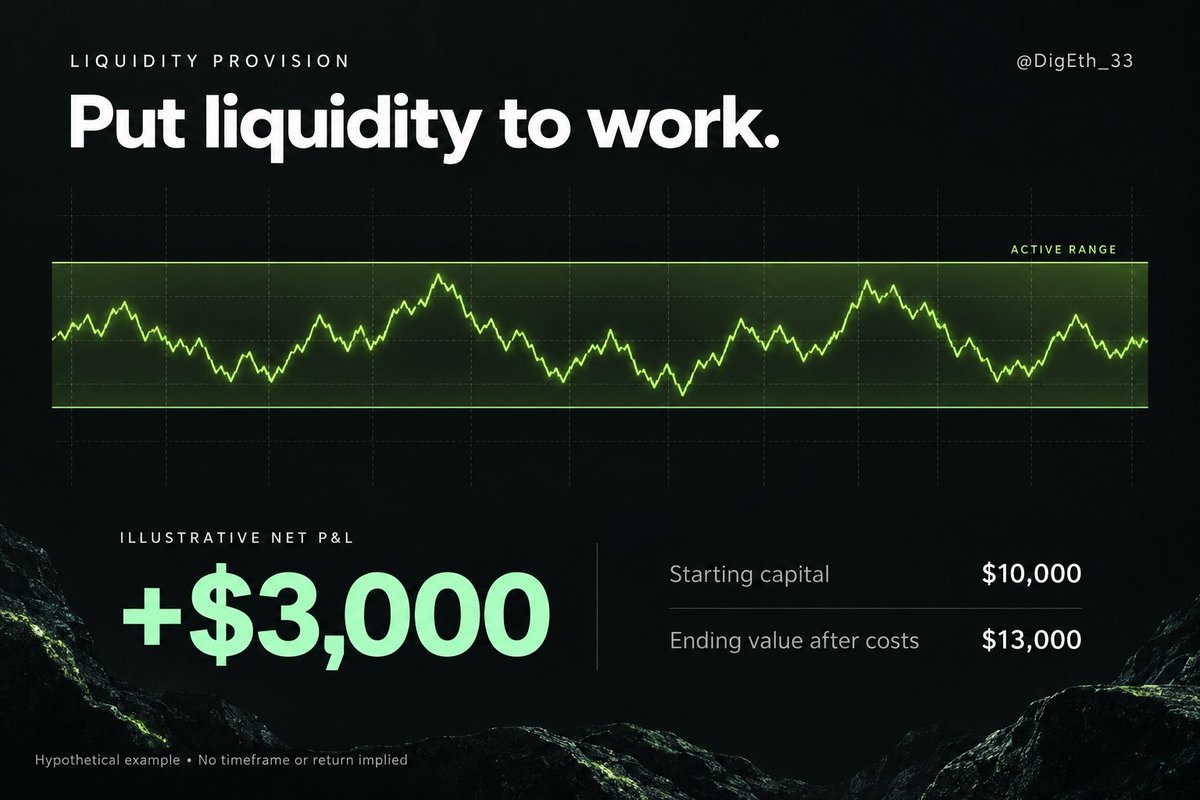
Every LPing fee starts with a trade. Your result also depends on what that trade leaves you holding.
Take an ETH/USDC pool: a smart contract holding assets that traders can swap. By adding liquidity, you supply some of those assets and earn a share of the trading fees.
A trader buys ETH with USDC. USDC enters the pool; ETH leaves it. When that swap uses your liquidity, your position ends up with less ETH and more USDC. When a trader sells ETH, the reverse happens.
That makes LP an active part of the market. What you own changes even when you never click Buy or Sell.
The payment for providing that liquidity comes from swap fees.
Simplified example: a trader swaps 1,000 USDC in a pool charging 0.3%. The swap fee is 3 USDC. That is the total fee for the trade, before any protocol deduction.
The remainder is shared among LPs according to the pool’s rules. On Uniswap v3, your share depends on the active liquidity you contribute at the prices where the swap executes.
A pool may also offer token incentives. Track those separately: trading fees are paid by users, while additional rewards depend on the incentive program.
Then there’s the value of the assets left in your position. It can fall while fees accumulate. It can also rise while fee income is modest.
So start by separating three things: trading fees, token rewards, and the change in your position’s value. Then account for costs, making sure you don’t count the same income twice.
When you provide liquidity, you agree to exchange your assets under the pool’s rules.
Fees are your compensation for participating.
Whether it was worthwhile depends on the position’s full result.
I see liquidity provision (LP) as the biggest opportunity in DeFi right now.
I’m going to break down how to earn from it, starting with the mechanics and working through to managing an actual position.
The idea is straightforward: you deposit tokens into a liquidity pool on a decentralized exchange. Traders swap against that liquidity, paying fees that are shared with the liquidity providers whose capital those swaps use.
That gives you a way to earn from trading activity. But fees are only part of the picture, because those trades also change what you own.
Take an ETH/USDC position. As traders buy ETH from your liquidity, you end up with less ETH and more USDC. When they sell ETH into it, the balance moves the other way. You’re earning fees while your exposure changes, and that combination determines the outcome.
This is where the interesting work begins.
• Which pool actually gets the volume?
• How much other liquidity are you competing with?
• Where should you place your price range?
• What will you be holding if the market moves against you?
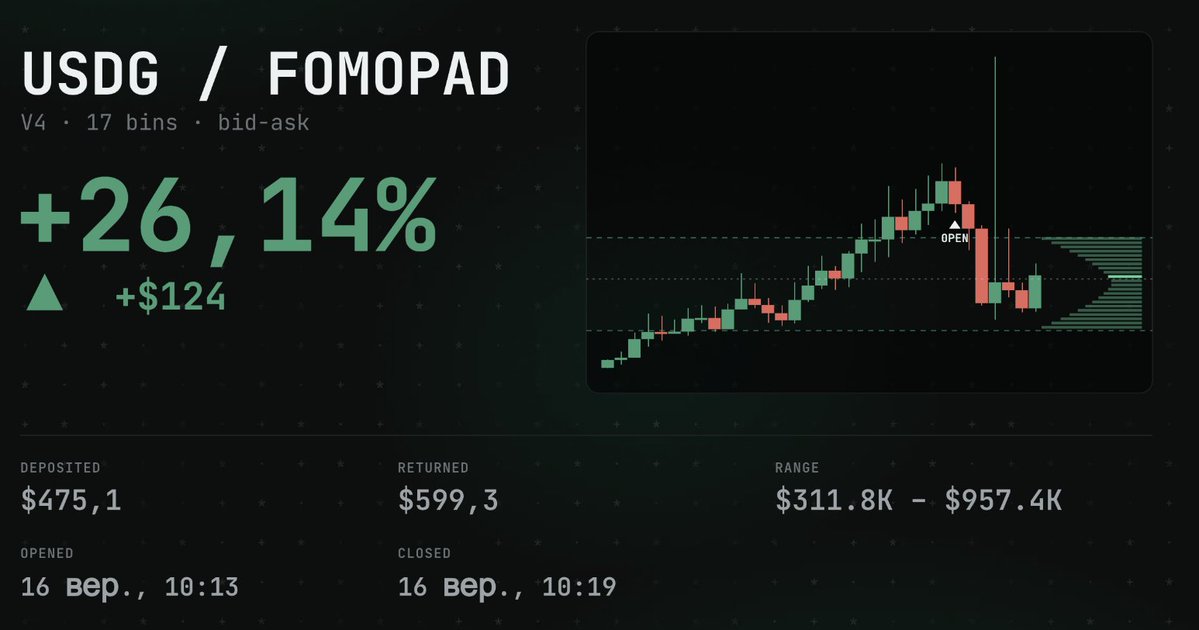
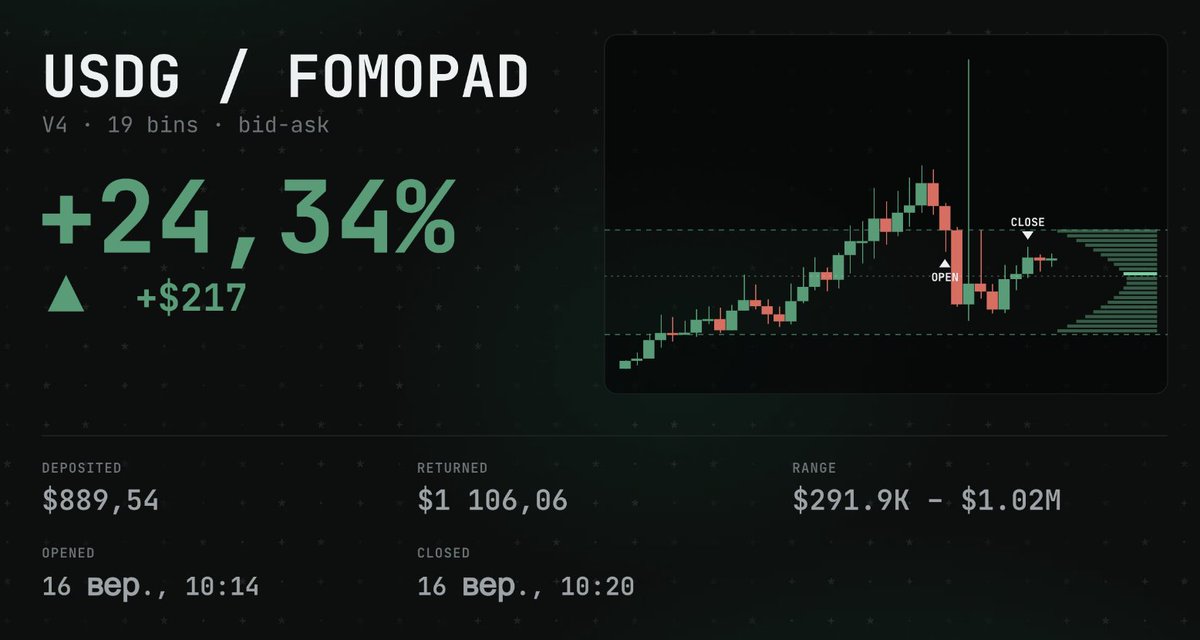
I’ll work through those decisions here with calculations and practical examples across EVM and Solana, including Delta and Meteora. We’ll cover pool selection, impermanent loss, Spot, Curve and Bid-Ask, when to rebalance, and how to calculate profit after costs.
Memecoin pools will be part of it too. Their trading activity can generate substantial fees, but a position can also accumulate a token that keeps falling. Both sides belong in the analysis.
The goal is to give you a process you can use: understand where the income comes from, choose the exposure you want, and check whether providing liquidity actually paid better than simply holding the same assets.
#lping #defi