Check out the Jan '25 Digital Metrology Newsletter. It features a new Notepad Series video on noisy measurements, strategies for "unsolvable" quality problems, predicting fatigue failure, controlling textured plastics...and more!
https://t.co/hxdBJXpnga
Do you (really) know the difference between roughness and waviness? In this video we show you how a Gaussian filter is used to separate roughness from waviness. We’ll also show you the huge importance of the “filter cutoff wavelength.”
https://t.co/TEzY1ejJPU
Surface texture gives pickleball paddles their distinctive grip. How does that texture get there in the first place? We take a look in this Surface Notes blog post—and you can try it for yourself with the data in our Surface Library!
https://t.co/0Rykj8ojQv
A video guide to Gaussian filtering, powerful new features for TraceBoss+ on its one-year anniversary, measurement training opportunities for 2025...read about it all (and more!) in the October Digital Metrology newsletter.
https://t.co/8d3RmKhpQ2
TraceBoss+ now gives you that ability to compare a surface you’re making to a past surface that you know performed well...with a single click! So instead of just honing by numbers you can target the SHAPE that you know is good.
https://t.co/1zCUtJp5F4
The Surface Texture Answer Book is now available in a hardcover edition, to withstand daily use in manufacturing, in a lab, or in a greasy shop...wherever you need this valuable reference! Also available in softcover and e-book formats.
https://t.co/hSdqTRUMzf
Join us for a FREE webinar! On Aug 28, 12:00–1:00 PM (CDT), Digital Metrology's Mark Malburg will present, "Intros and Advancements in Surface Measurement," as part of NCSL International's "Metrology in Motion" Webinar Series. To register visit https://t.co/fCa32ut1dl.
"Measuring microscopes" provide beautiful images and fast measurement of lateral dimensions. But can they also measure surface texture? Learn how to verify whether the roughness data you're seeing is "real" in this Surface Notes blog post.
https://t.co/3xAfYv55kL
Do you know how good your surface measurements really are? Find out how to get the impartial (and sometimes brutally honest!) data you need to be sure, in this Surface Notes blog post.
https://t.co/0MNiQ3BNb2
“Sealing” can’t be measured purely in units of height. A morphological filter, however, can act as a "virtual gasket" to identify areas on a surface that may lead to leaks or other issues. Find out how to use it in this Beyond Average Roughness post!
https://t.co/hIfKDZr4yo
In this Surface Matters newsletter, we're looking back (and ahead!) as Digital Metrology celebrates 25 years of solving measurement challenges. You'll also read about what's "Beyond Average Roughness," see the new Wear Analysis tool, and more.
https://t.co/xbb34MHROD
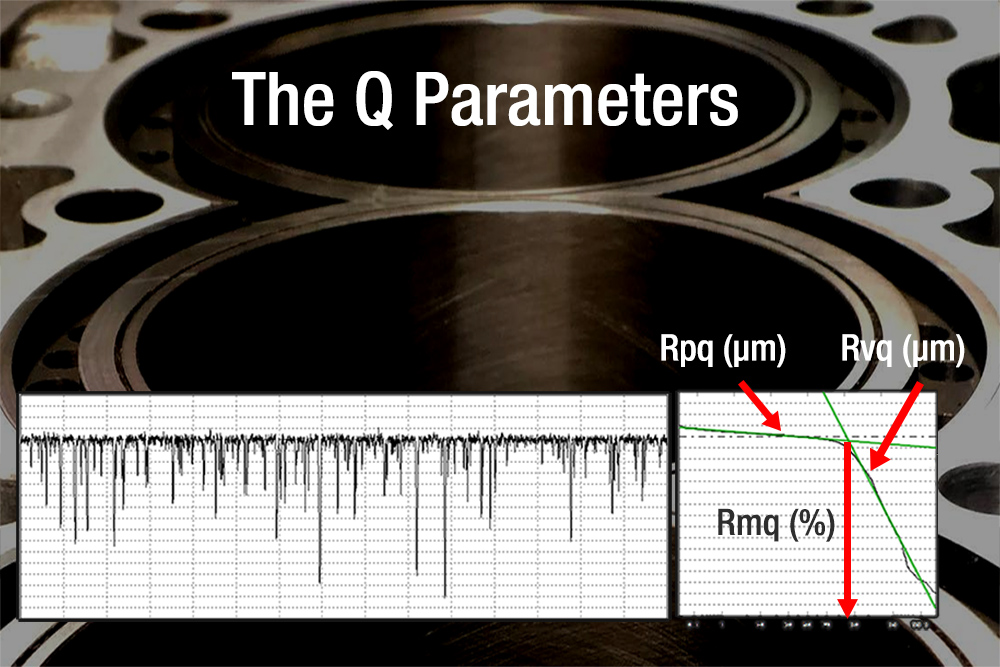
To describe extremely plateaued surfaces like this cylinder bore , we turn to the Rq, or "Q," parameters, based on the Material Probability Curve. Find out more in this "Beyond Ra" post!
https://t.co/MyjNUhAdrf
#metrology#tribology#engines
What "song" is your surface playing? Just like sound, surface texture consists of a spectrum of frequencies/wavelengths. Knowing which wavelengths are standing out is often as important as knowing the overall "volume."
https://t.co/QznH7IMnNH
Analyzing wear depth isn't something you'd usually think of as "fun"...but with the Wear Analysis in OmniSurf3D, it kind of is! In this video we use the Wear Analysis tool to calculate the depth and volume of a wear scar.
https://t.co/GRGYLnaPmn
We had a fantastic time at the Engine Cylinder Honing Class last week, hosted by Rottler Manufacturing, Total Seal Piston Rings, and Digital Metrology. Super presentations and excellent questions all day! Thanks to everyone who participated. Image Straub Technologies.
#engines
Interacting with surface texture data can lead to insights that roughness parameters alone may not provide. Learn more—and check out all the tools we have “beyond Ra” to help us understand what surfaces are telling us.
https://t.co/Zl3DdNO0V4
#metrology#measurement#tribology
You have a worn component...but worn by how much?
The new Wear Analysis tool in OmniSurf3D lets you see the wear and describe it numerically, in just a few clicks. It can even handle your most complex underlying geometries. See it in action in this video!
https://t.co/SWtV8J5ke6
After average roughness (Ra), the 10-Point Average Roughness (Rz) is the most commonly specified texture parameter. Learn about the strengths and shortcomings of Rz, and some important variations in how Rz is defined, in this Beyond Ra post.
https://t.co/LLBkOTX29S
A huge thank you to everyone who's helped Digital Metrology over our first 25 years in business! Got a favorite story from a project with us? Please share it in the comments!
#Measurement#metrology#tribology
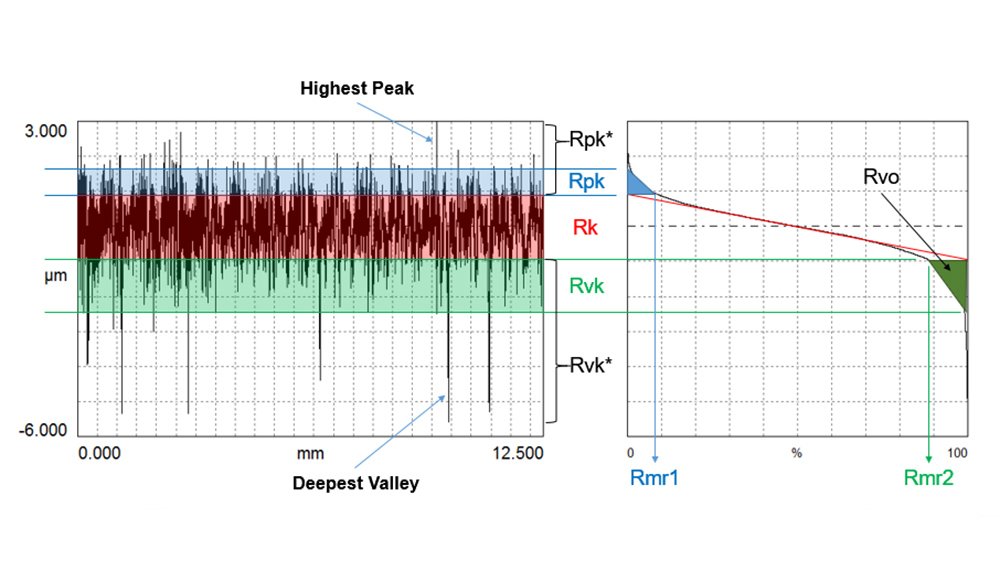
the Rk family of parameters, derived from the material ratio curve, can help predict how a surface will support a load, retain lubrication, and wear. Learn more in this Beyond Ra post!
https://t.co/0gxAem4esv
#metrology#tribology#measurement