You don't lose money because the model was wrong.
You lose money because reality doesn't follow the model.
Execution risk is the variable most investors underestimate and the one we specialise in.
Reach out today & let's pressure-test the plan.
Last 48 hours to enter for @dtvelectronics ’ The Bitforge Nano Bitcoin Miner.
Enter here: : https://t.co/G89w6kktnc
1 Winner will be announced Nov 12th— right here.
Last 48 hours to enter for @dtvelectronics ’ The Bitforge Nano Bitcoin Miner.
Enter here: : https://t.co/G89w6kktnc
1 Winner will be announced Nov 12th— right here.
Still open: Win @dtvelectronics ’ The Bitforge Nano Bitcoin Miner.
Enter in under a minute: https://t.co/G89w6kktnc
Know someone who'd want this? Tag them. 👇
Bitcoin mining economics have been under significant pressure in 2026.
With hashprice falling below $40/PH/day, many operators face a difficult combination of declining revenue per unit of hashrate, and electricity prices that can change dramatically throughout the day.
@Braiins
Miners have focused on securing cheap electricity, acquiring efficient hardware & maximizing uptime. Those fundamentals remain important, but increasingly, the best mining operators are optimizing against a much broader set of variables like hashprice and electricity pricing.
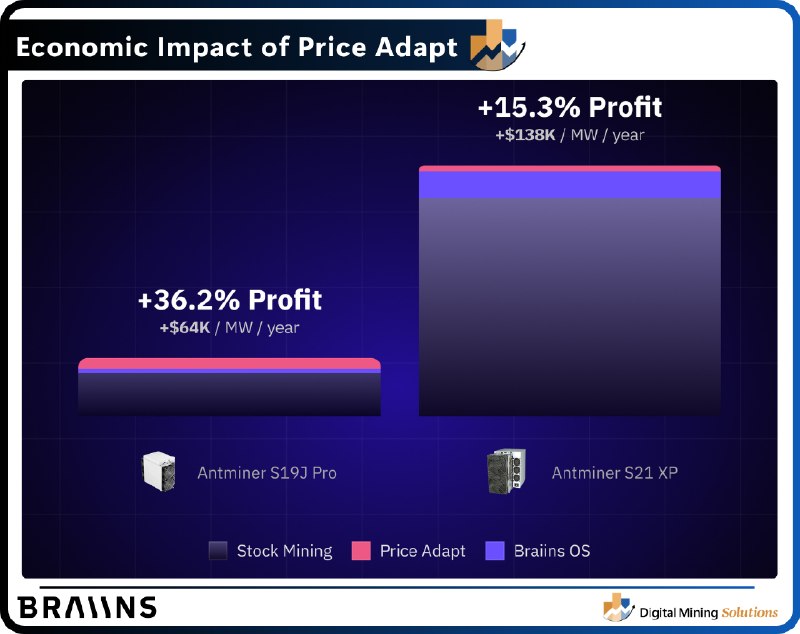
@Braiins modelled the economic impact of Price Adapt using 2025 ERCOT LZ_WEST Day-Ahead electricity prices, a 1 MW mining site, trailing seven-day hashprice, and Braiins OS efficiency curves.
🥳 Congrats to N. Ramasahayam, P. Bingham, W. Dalgauer, P. J. Davies & N. Zouridakis— winners of @Braiins ’ The Ultimate Bitcoin Mining Guide: The Complete Mining Industry, Made Simple.
https://t.co/iSsMqfIOdc
Scale-up refers to the high-speed connections inside a tightly integrated system.
Scale-out begins when separate nodes or rack-scale systems are connected into a larger cluster.
Brought to you by @NiceHashMining https://t.co/9tjMaUCNCp
There is an important distinction between electricity cost and the cost of having mining capacity attached to that electricity.
At 95% availability, 100 MW can consume roughly 832 GWh per year. At 23%, the same infrastructure consumes only around 201 GWh.
@NiceHashMining
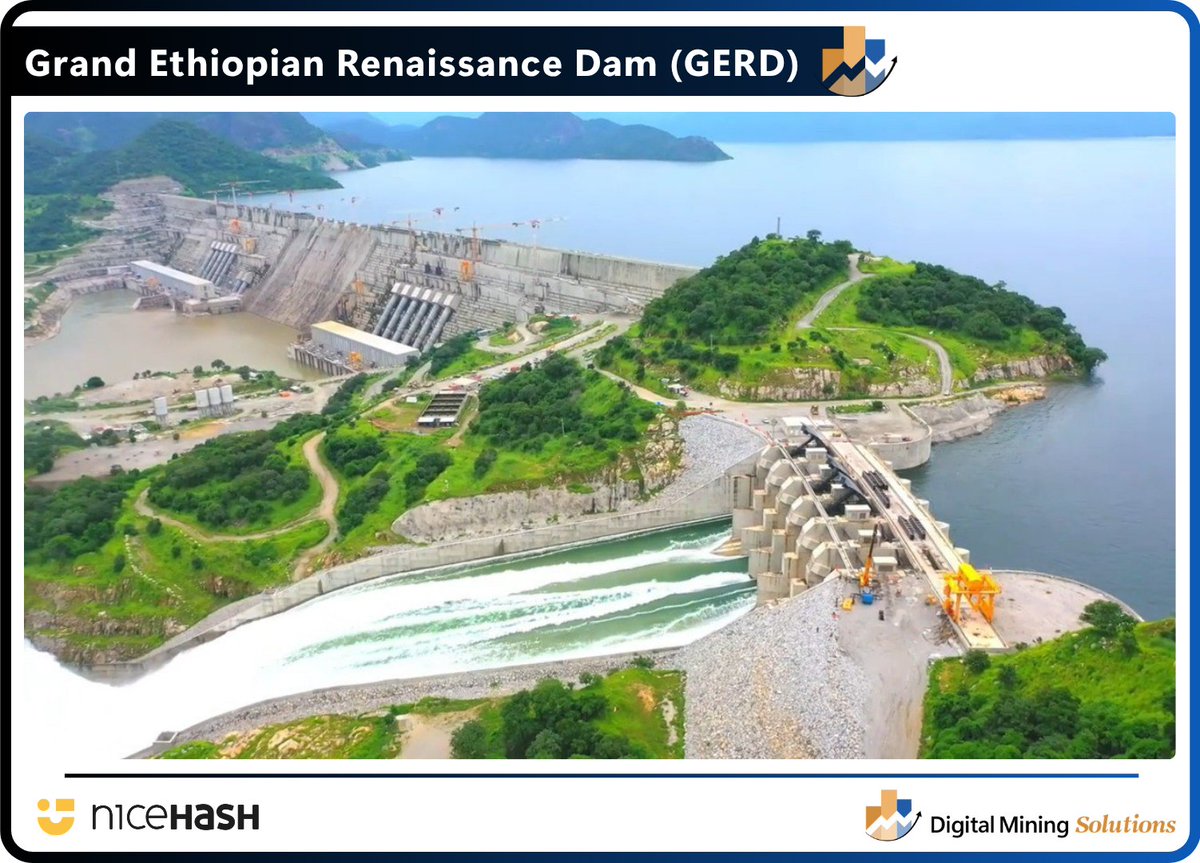
Ethiopia’s rise happened quickly: allowing Bitcoin mining in 2022, although cryptocurrency trading itself remained restricted. By early 2024, containers filled with mining machines were appearing near substations connected to the Grand Ethiopian Renaissance Dam. @NiceHashMining
Last 48 hours to enter for @Braiins ' The Ultimate Bitcoin Mining Guide: The Complete Mining Industry, Made Simple.
Enter here: https://t.co/LJQ0d45UCh
5 Winners will be announced Oct 15th right here.
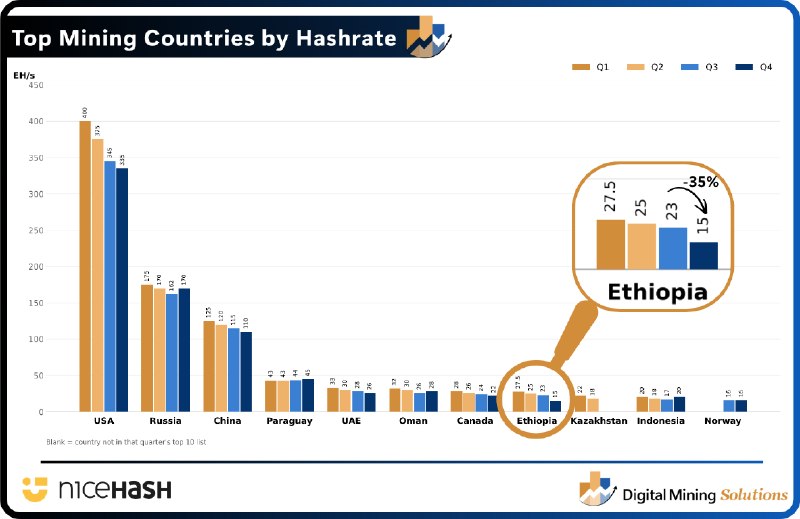
Ethiopia’s miners were promised some of the world’s cheapest hydropower. Now tariffs are rising, available power has fallen sharply, and the country’s hashrate dropped 35% in a single quarter.
@Braiins@fboxdata@NiceHashMining