A fully offline translator, built with @GoogleGemma 4, @Antigravity, and a @Raspberry_Pi 5. 🛠️
The Gemma Translator is a portable AI experiment with a custom interface, printed case, and wired electronics, powered by the smallest Gemma model.
Build your own → https://t.co/lnlMweIObs
🦔Meta CTO Andrew Bosworth told employees that AI productivity gains should go into more work, not more time off. When a staffer asked about bringing back extra vacation days, Bosworth said to spend the time building more products because Meta employees are "doing the most exciting stuff on the planet." He told the employee to stop asking about time off and to ask their parents whether that makes a good career strategy.
My Take
The whole pitch for AI was that it gives workers time back. Bosworth just confirmed that at Meta, the time goes back to the company. An employee who becomes twice as productive with AI does not get to work less or take the gains home. The output doubles, the pay stays flat, and the difference goes to the company. He was blunt about it, but the position is standard across every firm rolling out AI right now.
When AI makes an employee more productive, that extra value has to go somewhere. It reaches the worker through higher pay or more time off, or it reaches shareholders through fatter margins. Bosworth answered which one Meta picked. Median comp at Meta runs around $300,000, so this is not about underpaid staff. It is about who keeps the gains from a technology sold to the public as a way to make everyone's life easier. Every past productivity boom ended the same way, and I see nothing about this one that breaks the trend.
Hedgie🤗
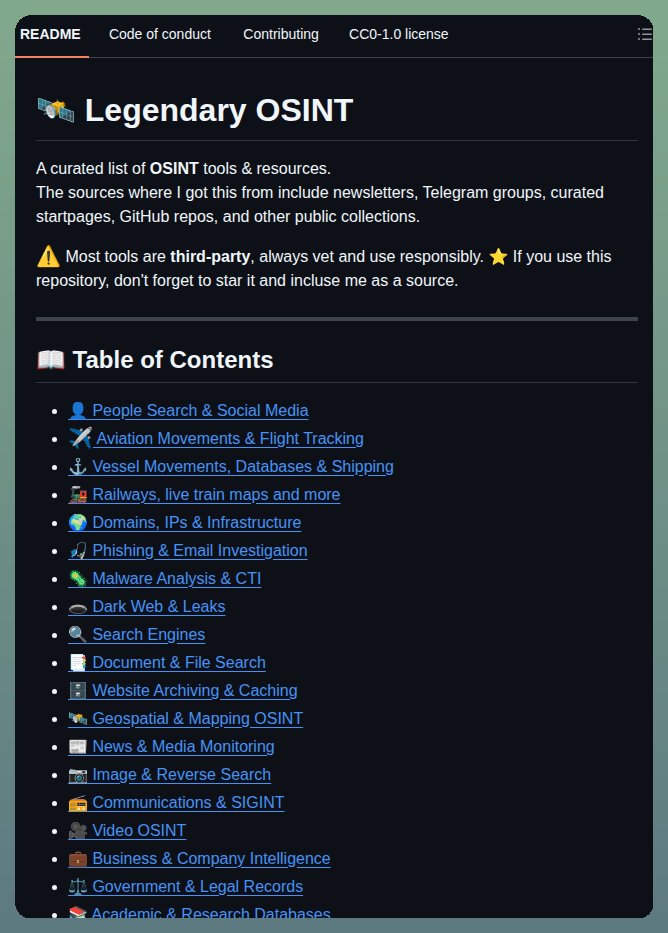
Legendary OSINT is a curated list of tools and resources tailored for fraud investigators, CTI analysts, and KYC teams. It aggregates third-party applications covering categories such as people search, aviation movements, phishing investigation, and dark web leaks.
https://t.co/5mKcFpFnNR
EgressGateway provides stable egress IP addresses for pods accessing external services
It works across CNI networks like Calico and Flannel, offering high availability, fine-grained policy control, and IPv4/IPv6 dual-stack
➤ https://t.co/OYd8dz40FH
Reloader is a Kubernetes controller that monitors changes in ConfigMap and Secrets and triggers rolling upgrades on Pods with their associated Deployment, StatefulSet or DaemonSet
➜ https://t.co/cPGgUbrIgl
hello amazing hacker
you hit a 403 Forbidden and close the tab. don't. that 403 is the app admitting the endpoint EXISTS and matters. it's a door, not a wall - and usually the lock is only on the front.
403 bypass, do this today:
1) PATH tricks - the filter matches /admin exactly, the router doesn't care. try /admin/ , //admin , /admin/. , /./admin , /%2e/admin , /admin..;/ , /Admin , /%61dmin , double-encode /admin%252f. one usually slips the proxy while the backend still routes it.
2) METHOD swap - the rule guards GET. try POST / PUT / HEAD / OPTIONS / PATCH. "GET /admin 403" but "POST /admin 200" is real.
3) HEADER spoof - the app trusts a header for "internal". add X-Forwarded-For: 127.0.0.1 , X-Original-URL: /admin , X-Rewrite-URL: /admin , X-Custom-IP-Authorization: 127.0.0.1. the last two re-route past some front-end ACLs.
4) LAYER confusion - the 403 comes from the CDN/WAF, the backend has no check at all. reach the origin directly (raw IP / staging host) and the guard disappears.
report on IMPACT, not the trick. "403 bypassed" = meh. "read + changed every user's data" = paid. PoC || GTFO.
the trap: beginners read 403 as "not allowed, move on." it actually means "allowed for someone, guarded in ONE place." test every 403 and 401 you meet.
free lab to try it today: https://t.co/jLmNLzsTlZ
want the full path from stuck-at-403 to paid bounties? my Big Beautiful Bug Bounty Bundle walks the whole methodology (a discount applies via the link): https://t.co/tHmVgNttnE
hunt like a rat ;-)
🐀 Everyone tells you to "automate your recon." Nobody teaches you the Bash to actually do it.
So we fixed that.
Bad Bash! takes you from zero → writing your own hacking scripts:
1️⃣ Core commands, pipes, grep/awk/sed
2️⃣ Loops for mass hunting
3️⃣ Wordlist & payload engineering
4️⃣ curl + networking internals
16 modules. 39 lessons. Beginner-friendly, hacker-minded. Built with @ikajakam.
Right now it's €4. Yes, four. 🔥
👉 https://t.co/VgJNgqNug9
Much love <3 #bugbounty #infosec #bash
Prowler automates cloud security and compliance across AWS, Azure, GCP, and Kubernetes with thousands of pre-built checks.
- Open-source platform with 1000+ ready-to-use security checks
- Covers compliance frameworks like CIS, PCI-DSS, HIPAA, and SOC2
- Real-time monitoring with customizable remediation guidance
- Integrates with CI/CD pipelines and existing security tools
Explore it here:
https://t.co/ln1j9jyW8m
KubeVPN is a tool that seamlessly connects to your Kubernetes cluster network, allowing you to access cluster resources from your local machine
➤ https://t.co/OfFxI1wky5
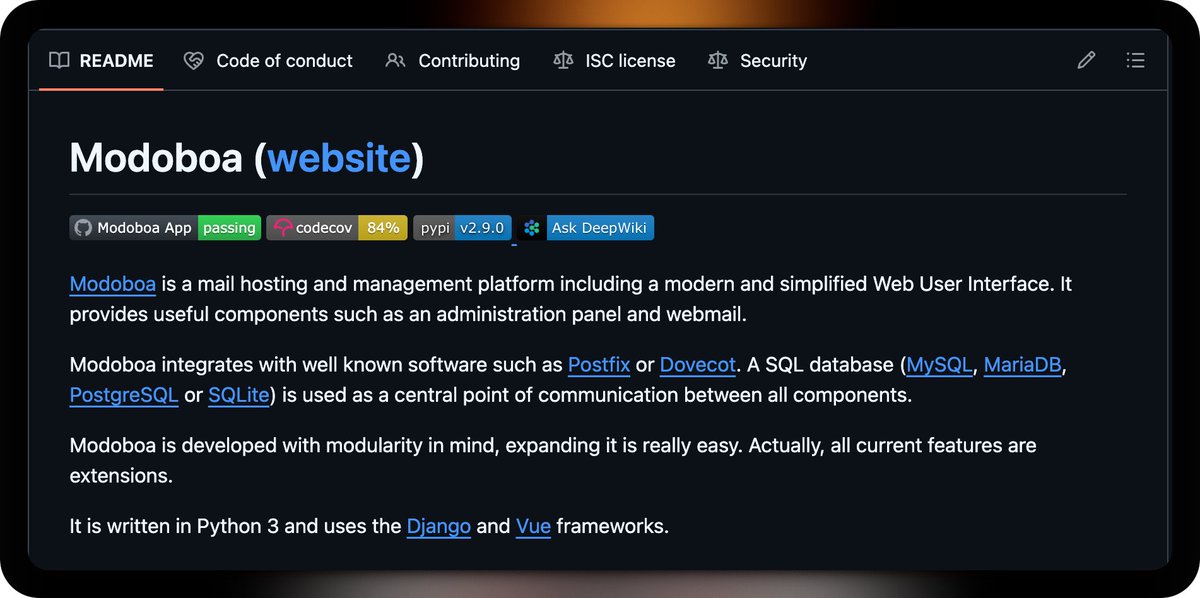
Modoboa bundles Postfix, Dovecot, and Django into a self-hosted mail platform with a Vue-based UI. It includes a webmail, calendar, and DMARC reporting, all modular via extensions.
Explore it here:
https://t.co/tw7GfMKwpg
If you are serious about LLM inference, study FlashAttention.
It's one of the most important optimizations behind modern transformer performance.
Learn:
⚡ IO-aware attention
⚡ Tiling & kernel fusion
⚡ SRAM vs. HBM memory hierarchy
⚡ Online softmax
⚡ KV cache optimization
⚡ Warp-level parallelism
⚡ CUDA kernels
⚡ Tensor Cores
⚡ Memory bandwidth optimization
⚡ Long-context inference
⚡ FP16, BF16 & FP8 optimization
GitHub: https://t.co/KfCbtN3PTZ
FlashAttention Paper: https://t.co/lpIp9Bb4Cw
FlashAttention-2: https://t.co/HZ8e6ucAGv
FlashAttention-3: https://t.co/5pmgT91XQf
FlashAttention reduces GPU memory traffic by avoiding large intermediate attention matrices, delivering 2–4× faster attention and enabling longer context windows without changing the Transformer architecture.
If you want to become an AI Infrastructure Engineer, CUDA Engineer, or LLM Inference Engineer, FlashAttention is essential reading.