InterLink Migration: Let's Talk Economics, Not Fear
As June is the month of Private mainnet. Recently, a lot of YouTubers and influencers have been claiming:
"Only a few selected people will get tokens."
"Most users will get nothing."
"Everyone else is being scammed."
Before jumping to conclusions, let's understand how large blockchain ecosystems actually work.
🟠 Migration Is More Than Just Sending Tokens
Many people think migration simply means pressing a button and distributing tokens to everyone instantly.
In reality, large-scale blockchain migrations involve multiple layers:
➡️Identity verification
➡️Human verification
➡️Wallet validation
➡️Reward calculations
➡️Security checks
➡️Distribution mechanisms
➡️Tokenomics management
Migration is not just a technical process. It is also a security, operational, and economic process.
🟠 Why Don't Large Projects Make Everyone Fully Liquid On Day One?
This is one of the most misunderstood topics.
Could a project technically distribute tokens to a large number of wallets? In many cases, yes.
But the more important question is: Should every participant become fully liquid on Day One?
Large blockchain projects typically consider several factors:
🔹 Verification & Security
Projects need to ensure rewards are going to verified users and not duplicate, fraudulent, or compromised accounts.
🔹 Operational Complexity
Millions of users may have different mining histories, referral structures, verification statuses, lockup choices, and reward calculations. Managing this responsibly often requires phased execution.
🔹 Tokenomics & Market Stability
Imagine millions of users receiving fully liquid tokens on the same day. Many would immediately sell before understanding the ecosystem. This could create extreme sell pressure and unstable price discovery before utility develops.
This is why projects use mechanisms like:
Vesting
Locking
Staking
Phased migration
Controlled token releases
🔹 Ecosystem Readiness
A blockchain is not just a token. It also includes wallets, exchanges, liquidity, businesses, applications, and users. Distribution strategies are designed around the readiness of the broader ecosystem.
🟠 Infrastructure Capacity Is Only One Piece
Even with a high-performance blockchain, projects still need to balance:
➡️Security
➡️Verification
➡️Liquidity
➡️Tokenomics
➡️Ecosystem growth
➡️Market stability
🟠Tokens Are Not Cash
This is the biggest misunderstanding.
Many influencers are saying: "You'll only get few bucks"
Migration is not a cash distribution event.
Nobody is being handed fixed rupees. People are being allocated TOKENS.
Token value is not fixed. It depends on:
➡️Adoption
➡️Utility
➡️Liquidity
➡️Demand
➡️Ecosystem growth
The market determines value over time — not a YouTube thumbnail.
🟠Final Thought
No migration process guarantees success. No token guarantees value.
The real questions are:
➡️Can the ecosystem create real utility?
➡️Can businesses and users adopt it?
➡️Can sustainable demand be generated?
Those questions matter far more than calculating hypothetical rupee values on Day One.
If someone is only focused on “How many bucks will I get tomorrow?”, they may already be looking at free-mining projects the wrong way.
These projects distribute tokens, not salaries.
Fear sells on YouTube. Understanding economics doesn’t.
#InterLink #ITLG #ITL
@inter_link@kv_interlink@reina_itl@itlx_defi@itl_fdn@scott_itlg
InterLink Migration: Let's Talk Economics, Not Fear
As June is the month of Private mainnet. Recently, a lot of YouTubers and influencers have been claiming:
"Only a few selected people will get tokens."
"Most users will get nothing."
"Everyone else is being scammed."
Before jumping to conclusions, let's understand how large blockchain ecosystems actually work.
🟠 Migration Is More Than Just Sending Tokens
Many people think migration simply means pressing a button and distributing tokens to everyone instantly.
In reality, large-scale blockchain migrations involve multiple layers:
➡️Identity verification
➡️Human verification
➡️Wallet validation
➡️Reward calculations
➡️Security checks
➡️Distribution mechanisms
➡️Tokenomics management
Migration is not just a technical process. It is also a security, operational, and economic process.
🟠 Why Don't Large Projects Make Everyone Fully Liquid On Day One?
This is one of the most misunderstood topics.
Could a project technically distribute tokens to a large number of wallets? In many cases, yes.
But the more important question is: Should every participant become fully liquid on Day One?
Large blockchain projects typically consider several factors:
🔹 Verification & Security
Projects need to ensure rewards are going to verified users and not duplicate, fraudulent, or compromised accounts.
🔹 Operational Complexity
Millions of users may have different mining histories, referral structures, verification statuses, lockup choices, and reward calculations. Managing this responsibly often requires phased execution.
🔹 Tokenomics & Market Stability
Imagine millions of users receiving fully liquid tokens on the same day. Many would immediately sell before understanding the ecosystem. This could create extreme sell pressure and unstable price discovery before utility develops.
This is why projects use mechanisms like:
Vesting
Locking
Staking
Phased migration
Controlled token releases
🔹 Ecosystem Readiness
A blockchain is not just a token. It also includes wallets, exchanges, liquidity, businesses, applications, and users. Distribution strategies are designed around the readiness of the broader ecosystem.
🟠 Infrastructure Capacity Is Only One Piece
Even with a high-performance blockchain, projects still need to balance:
➡️Security
➡️Verification
➡️Liquidity
➡️Tokenomics
➡️Ecosystem growth
➡️Market stability
🟠Tokens Are Not Cash
This is the biggest misunderstanding.
Many influencers are saying: "You'll only get few bucks"
Migration is not a cash distribution event.
Nobody is being handed fixed rupees. People are being allocated TOKENS.
Token value is not fixed. It depends on:
➡️Adoption
➡️Utility
➡️Liquidity
➡️Demand
➡️Ecosystem growth
The market determines value over time — not a YouTube thumbnail.
🟠Final Thought
No migration process guarantees success. No token guarantees value.
The real questions are:
➡️Can the ecosystem create real utility?
➡️Can businesses and users adopt it?
➡️Can sustainable demand be generated?
Those questions matter far more than calculating hypothetical rupee values on Day One.
If someone is only focused on “How many bucks will I get tomorrow?”, they may already be looking at free-mining projects the wrong way.
These projects distribute tokens, not salaries.
Fear sells on YouTube. Understanding economics doesn’t.
#InterLink #ITLG #ITL
@inter_link@kv_interlink@reina_itl@itlx_defi@itl_fdn@scott_itlg
InterLink Migration: Let's Talk Economics, Not Fear
As June is the month of Private mainnet. Recently, a lot of YouTubers and influencers have been claiming:
"Only a few selected people will get tokens."
"Most users will get nothing."
"Everyone else is being scammed."
Before jumping to conclusions, let's understand how large blockchain ecosystems actually work.
🟠 Migration Is More Than Just Sending Tokens
Many people think migration simply means pressing a button and distributing tokens to everyone instantly.
In reality, large-scale blockchain migrations involve multiple layers:
➡️Identity verification
➡️Human verification
➡️Wallet validation
➡️Reward calculations
➡️Security checks
➡️Distribution mechanisms
➡️Tokenomics management
Migration is not just a technical process. It is also a security, operational, and economic process.
🟠 Why Don't Large Projects Make Everyone Fully Liquid On Day One?
This is one of the most misunderstood topics.
Could a project technically distribute tokens to a large number of wallets? In many cases, yes.
But the more important question is: Should every participant become fully liquid on Day One?
Large blockchain projects typically consider several factors:
🔹 Verification & Security
Projects need to ensure rewards are going to verified users and not duplicate, fraudulent, or compromised accounts.
🔹 Operational Complexity
Millions of users may have different mining histories, referral structures, verification statuses, lockup choices, and reward calculations. Managing this responsibly often requires phased execution.
🔹 Tokenomics & Market Stability
Imagine millions of users receiving fully liquid tokens on the same day. Many would immediately sell before understanding the ecosystem. This could create extreme sell pressure and unstable price discovery before utility develops.
This is why projects use mechanisms like:
Vesting
Locking
Staking
Phased migration
Controlled token releases
🔹 Ecosystem Readiness
A blockchain is not just a token. It also includes wallets, exchanges, liquidity, businesses, applications, and users. Distribution strategies are designed around the readiness of the broader ecosystem.
🟠 Infrastructure Capacity Is Only One Piece
Even with a high-performance blockchain, projects still need to balance:
➡️Security
➡️Verification
➡️Liquidity
➡️Tokenomics
➡️Ecosystem growth
➡️Market stability
🟠Tokens Are Not Cash
This is the biggest misunderstanding.
Many influencers are saying: "You'll only get few bucks"
Migration is not a cash distribution event.
Nobody is being handed fixed rupees. People are being allocated TOKENS.
Token value is not fixed. It depends on:
➡️Adoption
➡️Utility
➡️Liquidity
➡️Demand
➡️Ecosystem growth
The market determines value over time — not a YouTube thumbnail.
🟠Final Thought
No migration process guarantees success. No token guarantees value.
The real questions are:
➡️Can the ecosystem create real utility?
➡️Can businesses and users adopt it?
➡️Can sustainable demand be generated?
Those questions matter far more than calculating hypothetical rupee values on Day One.
If someone is only focused on “How many bucks will I get tomorrow?”, they may already be looking at free-mining projects the wrong way.
These projects distribute tokens, not salaries.
Fear sells on YouTube. Understanding economics doesn’t.
#InterLink #ITLG #ITL
@inter_link@kv_interlink@reina_itl@itlx_defi@itl_fdn@scott_itlg
InterLink Migration: Let's Talk Economics, Not Fear
As June is the month of Private mainnet. Recently, a lot of YouTubers and influencers have been claiming:
"Only a few selected people will get tokens."
"Most users will get nothing."
"Everyone else is being scammed."
Before jumping to conclusions, let's understand how large blockchain ecosystems actually work.
🟠 Migration Is More Than Just Sending Tokens
Many people think migration simply means pressing a button and distributing tokens to everyone instantly.
In reality, large-scale blockchain migrations involve multiple layers:
➡️Identity verification
➡️Human verification
➡️Wallet validation
➡️Reward calculations
➡️Security checks
➡️Distribution mechanisms
➡️Tokenomics management
Migration is not just a technical process. It is also a security, operational, and economic process.
🟠 Why Don't Large Projects Make Everyone Fully Liquid On Day One?
This is one of the most misunderstood topics.
Could a project technically distribute tokens to a large number of wallets? In many cases, yes.
But the more important question is: Should every participant become fully liquid on Day One?
Large blockchain projects typically consider several factors:
🔹 Verification & Security
Projects need to ensure rewards are going to verified users and not duplicate, fraudulent, or compromised accounts.
🔹 Operational Complexity
Millions of users may have different mining histories, referral structures, verification statuses, lockup choices, and reward calculations. Managing this responsibly often requires phased execution.
🔹 Tokenomics & Market Stability
Imagine millions of users receiving fully liquid tokens on the same day. Many would immediately sell before understanding the ecosystem. This could create extreme sell pressure and unstable price discovery before utility develops.
This is why projects use mechanisms like:
Vesting
Locking
Staking
Phased migration
Controlled token releases
🔹 Ecosystem Readiness
A blockchain is not just a token. It also includes wallets, exchanges, liquidity, businesses, applications, and users. Distribution strategies are designed around the readiness of the broader ecosystem.
🟠 Infrastructure Capacity Is Only One Piece
Even with a high-performance blockchain, projects still need to balance:
➡️Security
➡️Verification
➡️Liquidity
➡️Tokenomics
➡️Ecosystem growth
➡️Market stability
🟠Tokens Are Not Cash
This is the biggest misunderstanding.
Many influencers are saying: "You'll only get few bucks"
Migration is not a cash distribution event.
Nobody is being handed fixed rupees. People are being allocated TOKENS.
Token value is not fixed. It depends on:
➡️Adoption
➡️Utility
➡️Liquidity
➡️Demand
➡️Ecosystem growth
The market determines value over time — not a YouTube thumbnail.
🟠Final Thought
No migration process guarantees success. No token guarantees value.
The real questions are:
➡️Can the ecosystem create real utility?
➡️Can businesses and users adopt it?
➡️Can sustainable demand be generated?
Those questions matter far more than calculating hypothetical rupee values on Day One.
If someone is only focused on “How many bucks will I get tomorrow?”, they may already be looking at free-mining projects the wrong way.
These projects distribute tokens, not salaries.
Fear sells on YouTube. Understanding economics doesn’t.
#InterLink #ITLG #ITL
@inter_link@kv_interlink@reina_itl@itlx_defi@itl_fdn@scott_itlg
InterLink Migration: Let's Talk Economics, Not Fear
As June is the month of Private mainnet. Recently, a lot of YouTubers and influencers have been claiming:
"Only a few selected people will get tokens."
"Most users will get nothing."
"Everyone else is being scammed."
Before jumping to conclusions, let's understand how large blockchain ecosystems actually work.
🟠 Migration Is More Than Just Sending Tokens
Many people think migration simply means pressing a button and distributing tokens to everyone instantly.
In reality, large-scale blockchain migrations involve multiple layers:
➡️Identity verification
➡️Human verification
➡️Wallet validation
➡️Reward calculations
➡️Security checks
➡️Distribution mechanisms
➡️Tokenomics management
Migration is not just a technical process. It is also a security, operational, and economic process.
🟠 Why Don't Large Projects Make Everyone Fully Liquid On Day One?
This is one of the most misunderstood topics.
Could a project technically distribute tokens to a large number of wallets? In many cases, yes.
But the more important question is: Should every participant become fully liquid on Day One?
Large blockchain projects typically consider several factors:
🔹 Verification & Security
Projects need to ensure rewards are going to verified users and not duplicate, fraudulent, or compromised accounts.
🔹 Operational Complexity
Millions of users may have different mining histories, referral structures, verification statuses, lockup choices, and reward calculations. Managing this responsibly often requires phased execution.
🔹 Tokenomics & Market Stability
Imagine millions of users receiving fully liquid tokens on the same day. Many would immediately sell before understanding the ecosystem. This could create extreme sell pressure and unstable price discovery before utility develops.
This is why projects use mechanisms like:
Vesting
Locking
Staking
Phased migration
Controlled token releases
🔹 Ecosystem Readiness
A blockchain is not just a token. It also includes wallets, exchanges, liquidity, businesses, applications, and users. Distribution strategies are designed around the readiness of the broader ecosystem.
🟠 Infrastructure Capacity Is Only One Piece
Even with a high-performance blockchain, projects still need to balance:
➡️Security
➡️Verification
➡️Liquidity
➡️Tokenomics
➡️Ecosystem growth
➡️Market stability
🟠Tokens Are Not Cash
This is the biggest misunderstanding.
Many influencers are saying: "You'll only get few bucks"
Migration is not a cash distribution event.
Nobody is being handed fixed rupees. People are being allocated TOKENS.
Token value is not fixed. It depends on:
➡️Adoption
➡️Utility
➡️Liquidity
➡️Demand
➡️Ecosystem growth
The market determines value over time — not a YouTube thumbnail.
🟠Final Thought
No migration process guarantees success. No token guarantees value.
The real questions are:
➡️Can the ecosystem create real utility?
➡️Can businesses and users adopt it?
➡️Can sustainable demand be generated?
Those questions matter far more than calculating hypothetical rupee values on Day One.
If someone is only focused on “How many bucks will I get tomorrow?”, they may already be looking at free-mining projects the wrong way.
These projects distribute tokens, not salaries.
Fear sells on YouTube. Understanding economics doesn’t.
#InterLink #ITLG #ITL
@inter_link@kv_interlink@reina_itl@itlx_defi@itl_fdn@scott_itlg
InterLink Migration: Let's Talk Economics, Not Fear
As June is the month of Private mainnet. Recently, a lot of YouTubers and influencers have been claiming:
"Only a few selected people will get tokens."
"Most users will get nothing."
"Everyone else is being scammed."
Before jumping to conclusions, let's understand how large blockchain ecosystems actually work.
🟠 Migration Is More Than Just Sending Tokens
Many people think migration simply means pressing a button and distributing tokens to everyone instantly.
In reality, large-scale blockchain migrations involve multiple layers:
➡️Identity verification
➡️Human verification
➡️Wallet validation
➡️Reward calculations
➡️Security checks
➡️Distribution mechanisms
➡️Tokenomics management
Migration is not just a technical process. It is also a security, operational, and economic process.
🟠 Why Don't Large Projects Make Everyone Fully Liquid On Day One?
This is one of the most misunderstood topics.
Could a project technically distribute tokens to a large number of wallets? In many cases, yes.
But the more important question is: Should every participant become fully liquid on Day One?
Large blockchain projects typically consider several factors:
🔹 Verification & Security
Projects need to ensure rewards are going to verified users and not duplicate, fraudulent, or compromised accounts.
🔹 Operational Complexity
Millions of users may have different mining histories, referral structures, verification statuses, lockup choices, and reward calculations. Managing this responsibly often requires phased execution.
🔹 Tokenomics & Market Stability
Imagine millions of users receiving fully liquid tokens on the same day. Many would immediately sell before understanding the ecosystem. This could create extreme sell pressure and unstable price discovery before utility develops.
This is why projects use mechanisms like:
Vesting
Locking
Staking
Phased migration
Controlled token releases
🔹 Ecosystem Readiness
A blockchain is not just a token. It also includes wallets, exchanges, liquidity, businesses, applications, and users. Distribution strategies are designed around the readiness of the broader ecosystem.
🟠 Infrastructure Capacity Is Only One Piece
Even with a high-performance blockchain, projects still need to balance:
➡️Security
➡️Verification
➡️Liquidity
➡️Tokenomics
➡️Ecosystem growth
➡️Market stability
🟠Tokens Are Not Cash
This is the biggest misunderstanding.
Many influencers are saying: "You'll only get few bucks"
Migration is not a cash distribution event.
Nobody is being handed fixed rupees. People are being allocated TOKENS.
Token value is not fixed. It depends on:
➡️Adoption
➡️Utility
➡️Liquidity
➡️Demand
➡️Ecosystem growth
The market determines value over time — not a YouTube thumbnail.
🟠Final Thought
No migration process guarantees success. No token guarantees value.
The real questions are:
➡️Can the ecosystem create real utility?
➡️Can businesses and users adopt it?
➡️Can sustainable demand be generated?
Those questions matter far more than calculating hypothetical rupee values on Day One.
If someone is only focused on “How many bucks will I get tomorrow?”, they may already be looking at free-mining projects the wrong way.
These projects distribute tokens, not salaries.
Fear sells on YouTube. Understanding economics doesn’t.
#InterLink #ITLG #ITL
@inter_link@kv_interlink@reina_itl@itlx_defi@itl_fdn@scott_itlg
InterLink Office - Exposed 😳
For months, people have been questioning and spreading negativity about InterLink’s office address. Especially YouTuber Sachin Bhatt, who was previously an ambassador and KOL for InterLink, has been targeting the project without solid reasons.
➡️Let me be very clear.
In startups, especially crypto startups, having a big physical office is not as important as people think. Most projects use virtual or serviced offices, exactly like InterLink is doing.
My purpose is not to say InterLink will make you a millionaire or guarantee its success. Success will always depend on execution, adoption, and market conditions.
But blindly calling everything a scam or spreading negativity without checking facts is also not right.
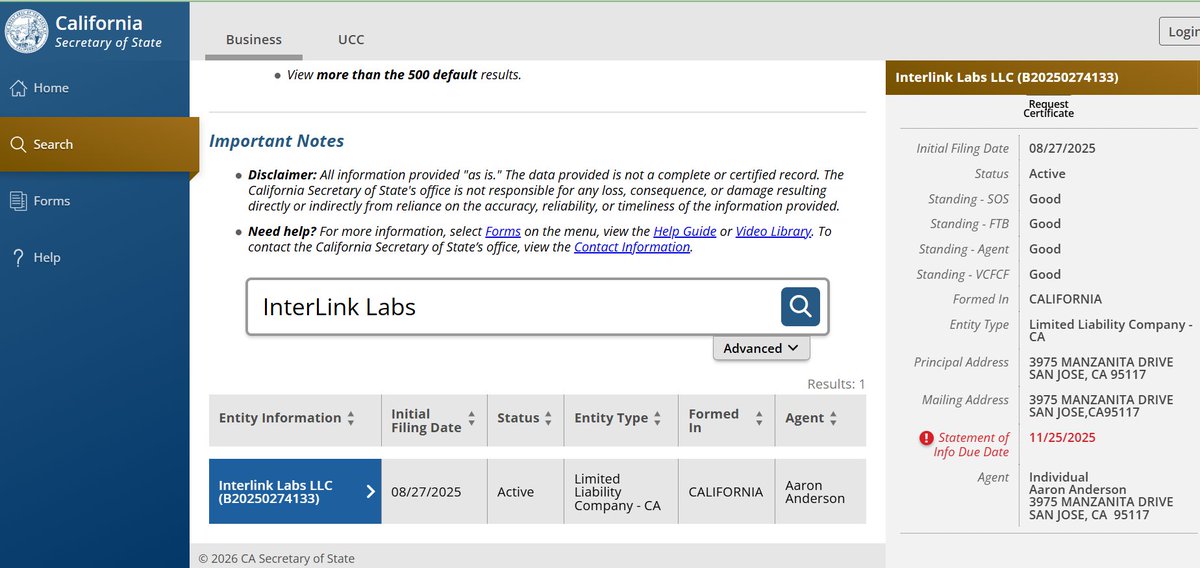
Recently, many are claiming that “InterLink is not registered in the USA.” This is completely false.
Here are the official government records:
🟠California Secretary of State (SOS) Business Search:
https://t.co/u0jDBWAftc
🟠California Franchise Tax Board (FTB) Status:
https://t.co/CrZs8WwBic
Just search “InterLink Labs” , you will see the company is Active and legally registered in California.
➡️The address 895 Dove Street, Suite 300, Newport Beach is a Regus virtual/serviced office.
This is a very common and legitimate practice used by thousands of startups and crypto projects worldwide.
It provides a prestigious address, mail handling, and legal compliance without the huge cost of a full physical office.
People like Sachin Bhatt are saying InterLink created hype about its office. I have also gone through the posts. The hype was created for the event, not for the office.
He needs to improve his English reading skills. Here is what the original post actually said:
"A global event will be held at InterLink Labs Office Newport Beach, California and live on the official InterLink Youtube channel."
Original post link:
https://t.co/wzXFQ8Pr8k
And yes, I also did not like the way the hype was created for the event and how it was executed. So I did criticise InterLink for the same.
My opinion on the event:
https://t.co/b3iRQxkC0n
Just to prove InterLink a scam, you cannot use illogical reasons and influence the community in a negative direction.
Let’s discuss with facts, not just emotions.
What do you think?
#InterLink #ITLG #ITL
@inter_link@kv_interlink@reina_itl@itlx_defi@itl_fdn@scott_itlg
@CryptoPrideID_ Now you are showing your real frustration. You have the problem with the people not with the project 😀.. no worries bro.. keep mining 😜
InterLink Office - Exposed 😳
For months, people have been questioning and spreading negativity about InterLink’s office address. Especially YouTuber Sachin Bhatt, who was previously an ambassador and KOL for InterLink, has been targeting the project without solid reasons.
➡️Let me be very clear.
In startups, especially crypto startups, having a big physical office is not as important as people think. Most projects use virtual or serviced offices, exactly like InterLink is doing.
My purpose is not to say InterLink will make you a millionaire or guarantee its success. Success will always depend on execution, adoption, and market conditions.
But blindly calling everything a scam or spreading negativity without checking facts is also not right.
Recently, many are claiming that “InterLink is not registered in the USA.” This is completely false.
Here are the official government records:
🟠California Secretary of State (SOS) Business Search:
https://t.co/u0jDBWAftc
🟠California Franchise Tax Board (FTB) Status:
https://t.co/CrZs8WwBic
Just search “InterLink Labs” , you will see the company is Active and legally registered in California.
➡️The address 895 Dove Street, Suite 300, Newport Beach is a Regus virtual/serviced office.
This is a very common and legitimate practice used by thousands of startups and crypto projects worldwide.
It provides a prestigious address, mail handling, and legal compliance without the huge cost of a full physical office.
People like Sachin Bhatt are saying InterLink created hype about its office. I have also gone through the posts. The hype was created for the event, not for the office.
He needs to improve his English reading skills. Here is what the original post actually said:
"A global event will be held at InterLink Labs Office Newport Beach, California and live on the official InterLink Youtube channel."
Original post link:
https://t.co/wzXFQ8Pr8k
And yes, I also did not like the way the hype was created for the event and how it was executed. So I did criticise InterLink for the same.
My opinion on the event:
https://t.co/b3iRQxkC0n
Just to prove InterLink a scam, you cannot use illogical reasons and influence the community in a negative direction.
Let’s discuss with facts, not just emotions.
What do you think?
#InterLink #ITLG #ITL
@inter_link@kv_interlink@reina_itl@itlx_defi@itl_fdn@scott_itlg
@CryptoPrideID_ And brother I analysed your X account and found that, you are promoting A Network and posting everywhere that "A Network is the real airdrop"
Please tell me how much they have paid you. You can be shy, because it's a matter to be shamed 😀
No need to say sorry 😀.... I could not prove myself in 2020, 2021, 2022, 2023, 2024, when people were blaming similar about PI network.
Look brother, free mining is a gamble. Even companies cannot guarantee success even if they are doing everything right.
What we have in our hands is to analyse and decide.
Company has so many core Ambassadors. I am just a community builder. Why would company go for me instead of them.😀
@Gamzezorlubenim He is just taking the average. Some will get more, some will less and some will not get in the first phase.
This is how a free mining project works.
This question should have been asked before joining the project. Because it was mentioned in the white paper that only 50% will be distributed. So, If you have joined this project that means you already agreed to that.
So, instead of company's 5 billion let's concentrate on community's 5 billion.