Hey @Google@GoogleIndia Found an interesting bug in Google Search 👀
The search box UI behaves unexpectedly during interaction, that doesn’t match the user action
Small bug but a good reminder that even heavily used products can have unexpected edge cases
#viralㅤㅤ
Most AI models are built to talk.
But what if your AI doesn't need to talk?
It just needs to decide.
I wrote about Jev — a non-autoregressive AI model designed for fast, structured decisions instead of generating paragraphs.
LLMs generate. Jev decides.
https://t.co/d4w6FkHINF
The hardest part isn't always writing the code.
Sometimes it's proving what you were actually asked to build.
The requirement wasn't clear.
I asked where it should map.
Got an answer.
Built it.
Later, the expected behavior changed.
#jioshield#LaCasaDeLosFamososMéxico
Hey @Google@GoogleIndia Found an interesting bug in Google Search 👀
The search box UI behaves unexpectedly during interaction, that doesn’t match the user action
Small bug but a good reminder that even heavily used products can have unexpected edge cases
#viralㅤㅤ
Hey @Google@GoogleIndia Found an interesting bug in Google Search 👀
The search box UI behaves unexpectedly during interaction, that doesn’t match the user action
Small bug but a good reminder that even heavily used products can have unexpected edge cases
#viralㅤㅤ
The hardest part isn't always writing the code.
Sometimes it's proving what you were actually asked to build.
The requirement wasn't clear.
I asked where it should map.
Got an answer.
Built it.
Later, the expected behavior changed.
#jioshield#LaCasaDeLosFamososMéxico
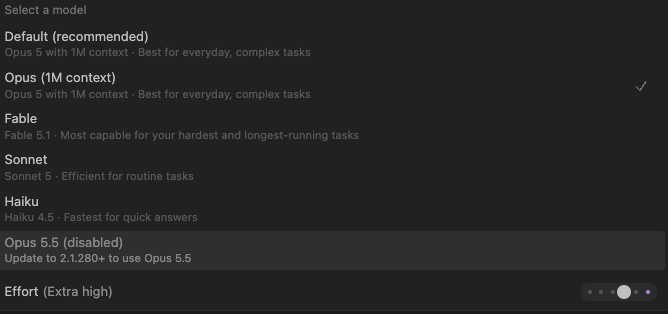
Used Claude Opus 5.5 in Claude Code today and honestly… it surprised me.
Not just the quality — the efficiency.
Fewer turns, less token usage, and less going in circles.
The real test? How it handles messy, real-world codebases.
So far, I’m impressed. 👀
#claude#grok
Used Claude Opus 5.5 in Claude Code today and honestly… it surprised me.
Not just the quality — the efficiency.
Fewer turns, less token usage, and less going in circles.
The real test? How it handles messy, real-world codebases.
So far, I’m impressed. 👀
#claude#grok
12 May Challenge.
I’m working a full-time job while giving myself until 12 May to level up as a stronger Full-Stack + AI Software Engineer.
The focus:
→ DSA & problem solving
→ Frontend
→ Backend & System design
→ AI / GenAI
→ Real-world projects
AI is changing how we write software.
I don't want to just get better at prompting AI.
I want to get better at understanding, building, debugging, and engineering software myself — and use AI as a tool, not a replacement for fundamentals.
I'll share what I build, what I learn, what breaks, and what I improve along the way.
Full-time job. Limited time. One goal.
See you on 12 May. 🚀
Connect with me to grow #devs
Fixed multiple bugs yesterday.
But some weren’t really code bugs.
They came from unclear or changing requirements between Dev, QA, and Product.
Sometimes, better alignment saves more time than better code.
Fixed multiple bugs yesterday.
But some weren’t really code bugs.
They came from unclear or changing requirements between Dev, QA, and Product.
Sometimes, better alignment saves more time than better code.
Most AI models are built to talk.
But what if your AI doesn't need to talk?
It just needs to decide.
I wrote about Jev — a non-autoregressive AI model designed for fast, structured decisions instead of generating paragraphs.
LLMs generate. Jev decides.
https://t.co/d4w6FkHINF
@0xTobiasDev Yes, every model seems to outperform others on benchmarks, but when it comes to handling real-world bugs and issues, that’s where you can actually see the real difference in a model’s capabilities.
Opus 5.5 just landed in Claude Code. 👀
Anthropic claims better performance on long-running coding tasks, while being faster and more token-efficient.
Let’s see how much of a difference it actually makes on real codebases.