Adam\Alexander - Health first, Greatness Follows. — In the end, respiration and burning are equivalent; the slight delay in the middle is what we know as life.
Case report:
"We report the case of a 35-year-old African American woman with recurrent chest pain . . . Despite intensive lipid-lowering therapy and optimal LDL-C levels, coronary disease progression was observed."
https://t.co/m8HzgCzVv7
"In conclusion, our findings identify ox-HDL-C, ox-LDL-C, and ox-Lp(a) as independent predictors of MACEs in patients with T2DM and coexisting CHD."
Also, ApoB and LDL-C were not associated with increased atherosclerotic burden.
https://t.co/WMt4HMJAe1
I highly recommend this film.
Dave Feldman is a friend of mine, but that's not why I'm recommending it.
The film is about cholesterol, obviously. Specifically it's about the fact that many people who follow a ketogenic diet when they are lean see very high levels of LDL cholesterol in the backdrop of otherwise universally acknowledged excellent heart disease risk factors.
In the film we follow the personal stories of several people who found extraordinary health benefits from a ketogenic diet who were then faced with the dilemma of not knowing whether high LDL was safe. We also follow the story of Dave's work in spearheading a scientific study to shed more light on the phenomenon.
I recommend the movie because I want people to understand the breadth of conditions that ketogenic diets can treat, including serious mental illness, as in my own case, and to see that in these poignant stories.
And I recommend it because I think Dave is a hero and seeing what he has gone through in the medical academic world is very interesting.
I think it's only three bucks on Amazon. Please give it a watch!
https://t.co/oMxbpu12Iy
The most successful rebranding of agricultural runoff in modern history.
- Oats are a grain. Oat milk is oats liquefied with enzymes and then diluted until they pour.
- The primary ingredient, after water, is a starch slurry. You are paying premium prices for warm starch water.
- The enzymatic processing converts starch to maltose. A glass of oat milk triggers roughly the same glycaemic response as a glass of Ribena. The barista version has added oil.
- That oil is usually rapeseed or sunflower. Seed oil. In your morning coffee. Presented as the health-conscious choice.
- Oats contain avenin, a prolamin protein structurally similar to gliadin in wheat. Cross-reactivity with gluten sensitivity: documented.
- Phytic acid content binds zinc and iron. The trace minerals on the label are largely unavailable. The bioavailability of plant iron from oats versus haem iron from beef: approximately 3% versus 25%.
- Most commercial oats are glyphosate-desiccated prior to harvest. Residue testing in oat products has been consistent enough to generate several rounds of investigative journalism and at least one class action.
The grain that spent six thousand years as livestock fodder is now the ethical breakfast.
The cow that ate it is the problem.
2/ Lately, I see doctors with zero plaque and good metabolic health bragging that they are taking 1 or 2 meds just to lower their LDL to near nonexistent.
We need to be clear: these people are acting on opinion/religion, not science. And that’s the point. We need to know more before we commit millions of healthy people to decades of polypharmacy.
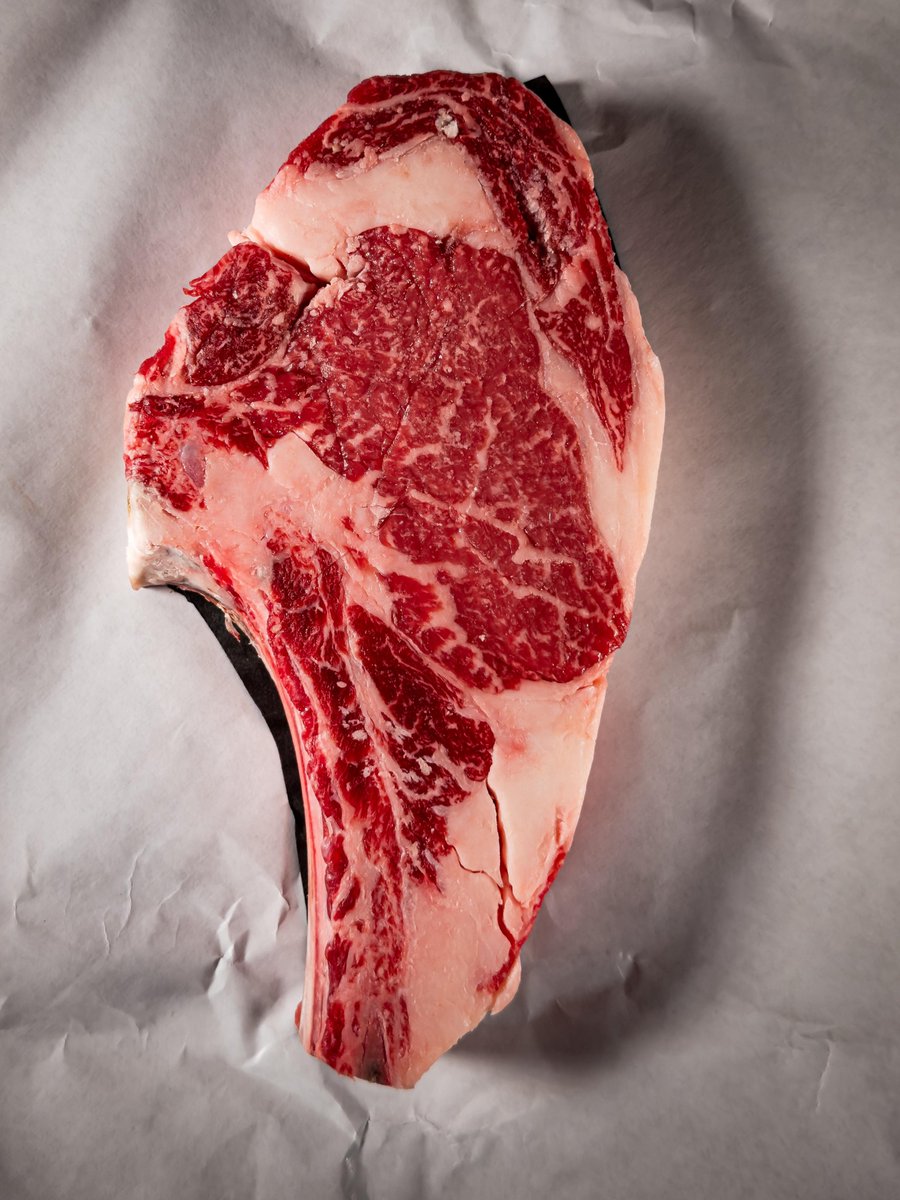
Two and a half million years of eating animals.
Sixty years of being told not to.
One of these timelines produced the human brain.
The other produced the obesity epidemic.
“Cardiovascular disease is all about cholesterol”
Oh, wait, there’s now immensely profitable drugs for metabolic disease?
“Cardiovascular disease is about metabolic health”
Just amazing how corrupt the academic system is, even in so-called independent testing facilities such as Cleerly, who fraudulently unblinded the lean mass hyperresponders study data and then altered it, making it appear as if there was an increase in cardiovascular plaque when in fact there was an overall reduction in the entire cohort. Just amazing as they were being paid to do an objective job, but for some reason they decided to corrupt the data for their own purposes. These people should be sued into oblivion, and hopefully will be.
So again to everybody who thinks that ketogenic and ketogenic carnivore diets with so-called elevated LDL and total cholesterol but high HDL, low triglycerides, and massive improvement in every other biomarker and physical marker are somehow at risk for developing cardiovascular disease, the evidence is in: ketogenic diets, like a carnivore diet, reduce arterial plaque, even with elevated LDL and ApoB. And in fact, both data sets, even the corrupted one, show that there is NO association whatsoever between plaque progression and LDL or ApoB. None. Zip. Zilch. Nada. Sorry cholesterol bros, you're wrong again!
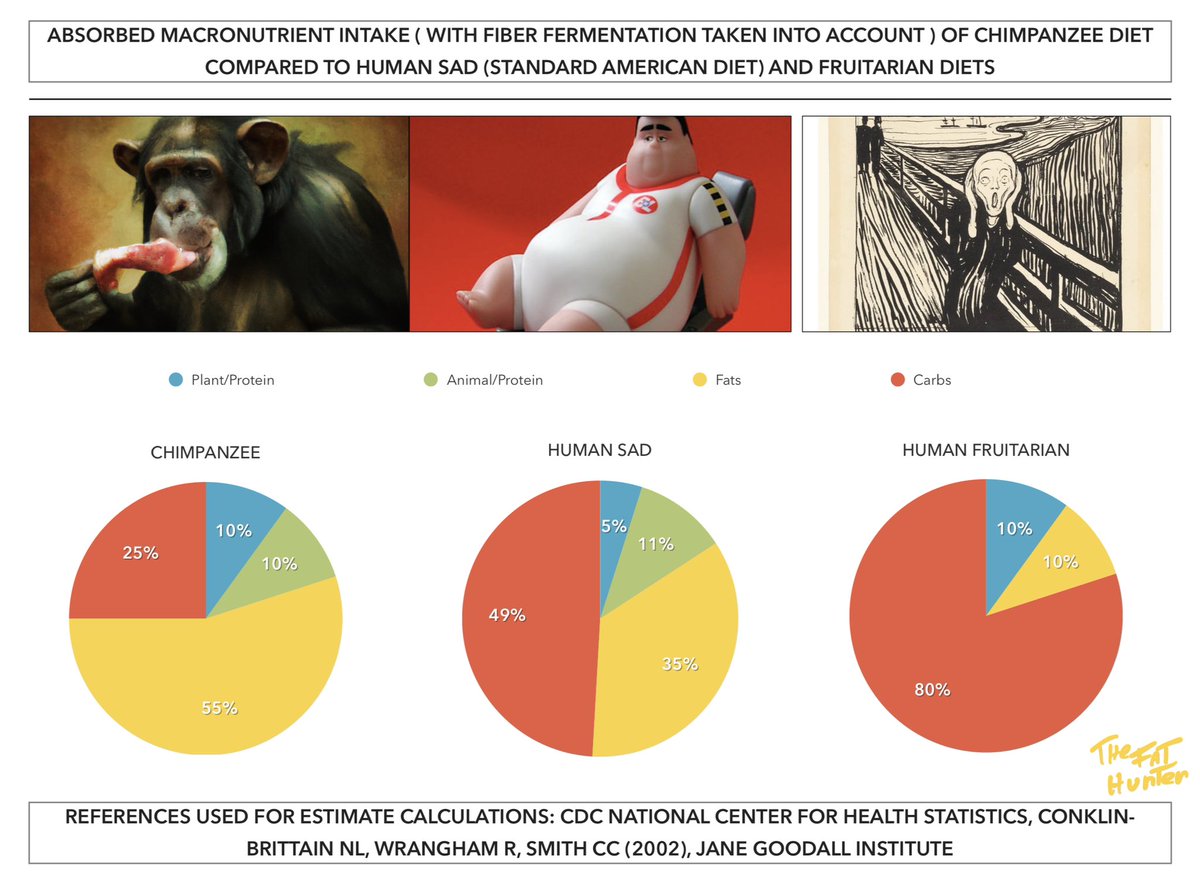
Humans are obligate carnivores.
See the omega-3 and vitamin B12 items in that chart. Only animal foods have what we need.
That doesn't mean we should eat nothing but meat, but it does mean we have to eat some meat (milk is a meat-substitute).
The only natural populations we know of that appeared to eat a totally plant-based diet had to resort to cannibalism.
@KetoCarnivore
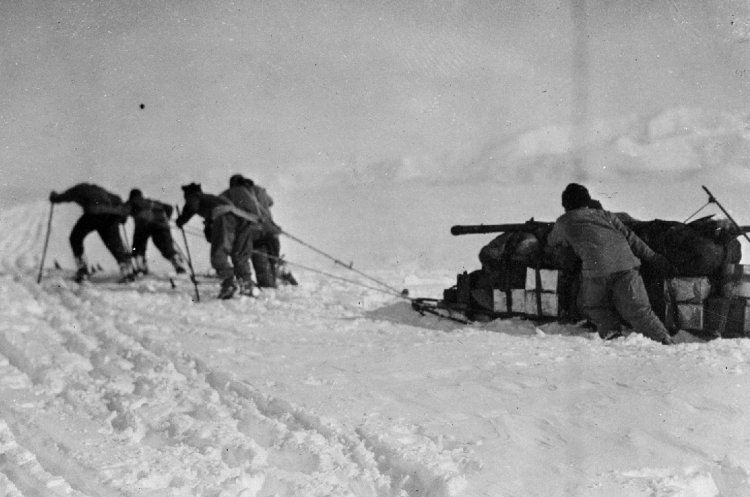
1911. Two expeditions race to be first to the South Pole. Robert Falcon Scott leading the British team. Roald Amundsen leading the Norwegian team. Same goal. Same destination. Completely different dietary approaches.
Scott's provisions: British naval traditions. Pemmican, yes, but less than Amundsen. More biscuits (hardtack). More lean tinned meats. More carbohydrates. The "balanced" approach.
Amundsen's provisions: High-fat focused. More pemmican - the fattiest mix they could make. Chocolate with added butter for extra fat. He'd learned from his previous Arctic expedition: fat is non-negotiable in extreme cold.
November 1911: Both teams depart for the pole.
December 14, 1911: Amundsen reaches the South Pole first. His men are in good health. They have food remaining. The dogs (which they'd also fed high-fat pemmican) are in decent condition. They return safely to base camp.
January 17, 1912: Scott reaches the pole, 34 days after Amundsen. His men are already exhausted. They're rationing food despite being barely halfway through the journey. On the return, they begin deteriorating rapidly.
The Scott expedition's journals document it: Constant hunger despite eating their rations. Extreme fatigue. Frostbite setting in more severely than expected. They're supposed to have enough food. They're eating regularly. But they're starving.
March 1912: Scott and his remaining men die, just 11 miles from a supply depot. They had food left. One of his last journal entries mentions hunger and weakness despite eating.
Why did Amundsen succeed where Scott failed?
Nutrition researchers who've analyzed both expeditions' rations have calculated the macros:
Scott's rations: About 4,500 calories daily, roughly 30-35% from fat.
Amundsen's rations: About 4,500 calories daily, roughly 50-60% from fat.
Same total calories. Massively different fat content. Massively different outcomes.
In extreme cold doing hard physical labor, the body burns through glucose quickly. If you're relying on protein and carbs for energy, you're constantly depleted. If you're using fat as primary fuel, you're stable.
Scott's men were eating enough calories but not enough fat. In Antarctic conditions, that caloric approach killed them.
Amundsen knew: Fat is survival. Not just in the food, but in his body. His men returned with enough fat stores remaining that they could have sustained themselves longer if needed.
Scott's men burned through their limited fat stores. Then burned through muscle. Then died.
Same Antarctic conditions. Same human bodies. Different macronutrient ratios. The difference between life and death.
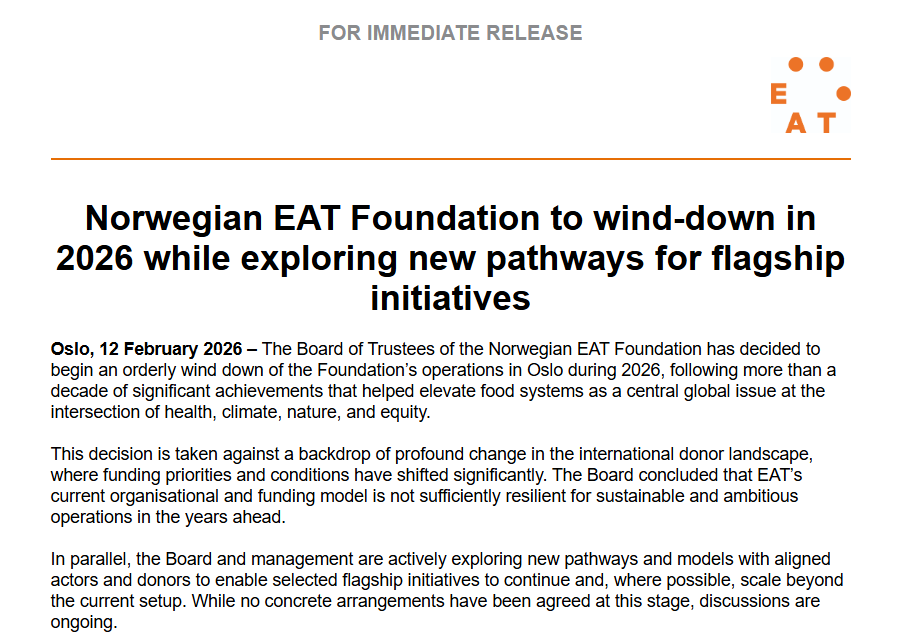
"This decision is taken against a backdrop of profound change in the international donor landscape, where funding priorities and conditions have shifted significantly." 👀
The EAT Foundation is going bankrupt. This group tried to impose a quasi-vegan, nutritionally deficient diet on the world. An anti-human diet. Good riddance!
https://t.co/fPPALlHI9o
About 4600 years ago, the population of Britain was replaced by a people who brought Bell Beaker pottery with them. Now, ancient DNA has uncovered the murky story of where these people came from https://t.co/HwcDecwYq2
Cholesterol Debates in the Era of Medical Mistrust
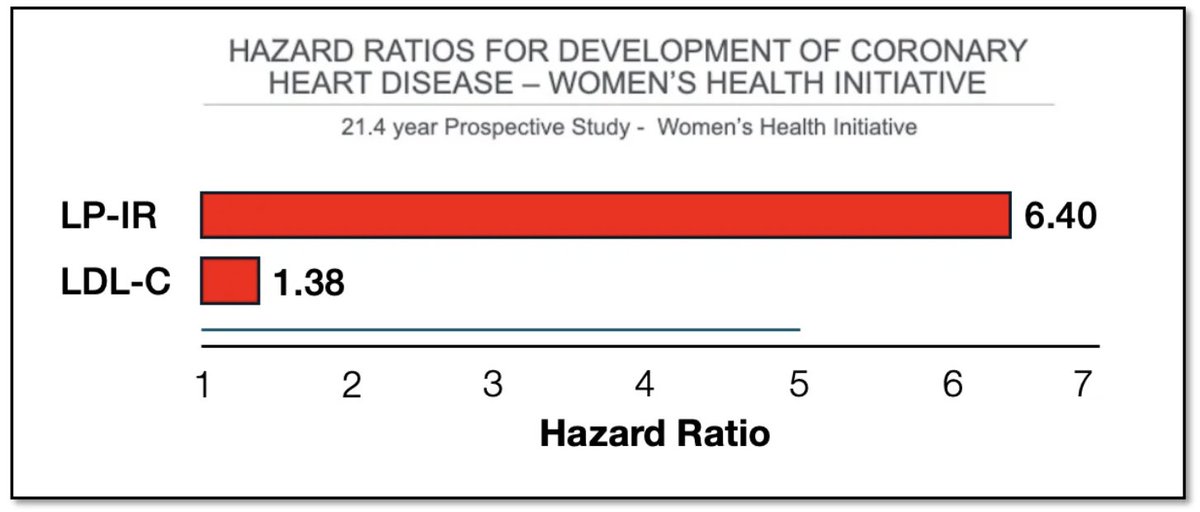
1/4) This graph shows the hazard ratio for coronary heart disease associated with insulin resistance score (LP-IR) versus LDL cholesterol.
It’s not even close. Insulin resistance dwarfs LDL—with a >14-fold difference in relative risk.