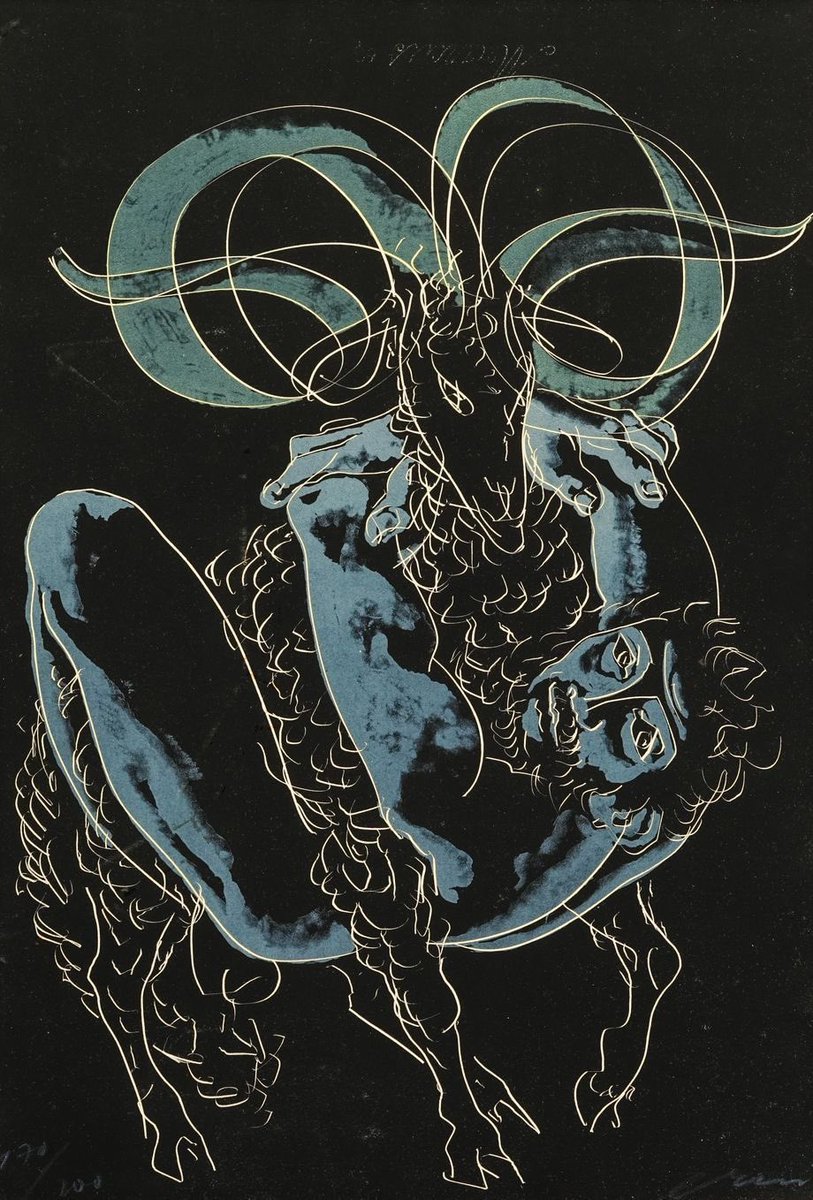
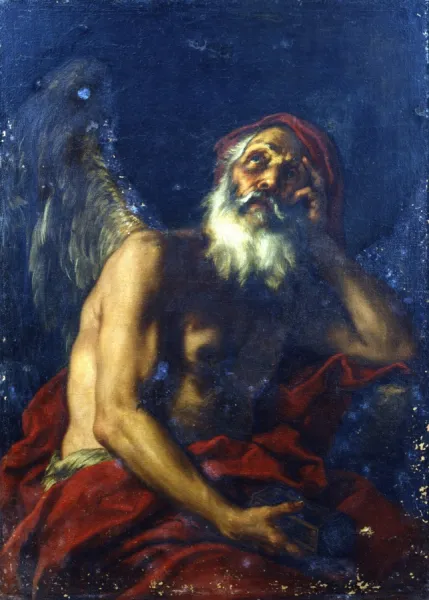
Gente bella, este viernes comienza ya el Primer Nivel de la Formación en Astrología. Vamos a tener todo un año de aprendizajes muy profundos y muy bellos, diseñados para ayudarnos a entender mejor tanto quién somos y lo que vivimos, como lo que queremos y podemos ser.
Última llamada para subirse al barco!!
O Kronos, you who restrain the thumos of all mortals.
I call you, the great, holy, the one who created the whole inhabited world, against whom transgression was committed by your own son, you whom Helios bound with adamantine fetters lest the universe be mixed together, you hermaphrodite, father of the thunderbolt, you who hold down those under the earth.
AIE OI PAIDALIS PHRENOTEIKHEIDÔ STUGARDÊS SANKLEON GENEKHRONA KOIRAPSAI KÊRIDEU THALAMNIA OKHOTA ANEDEI
PAIDOLIS MAINOLIS MAINOLIEUS
Come, master, god, and tell me your mysteries for I am the one who revolted against you.
Appear before me calm and speak about the things I ask. Help me to understand your mysteries for I am like unto you a part of Aion a creature of chaos seeking knowledge in order that the universe be maintained.
Be gracious to me lord.
The Demiurge is not Saturn.
Kronos/Saturn is the First God, the primordial Monad, the self-contemplating Nous who abides in perfect unity. He holds the Ideas within Himself in undivided potential. He is the Father who imparts Limit and definition, but He does not descend to mix the Logoi with hyle or actively order the cosmos from chaos. That work belongs to His Son Zeus.
The Demiurge is Solar ("[The sun is] The eye of Zeus, seeing all and understanding all..." per Works and Days). Zeus-Helios is the true Celestial Demiurge, the genuine Son of the Good, appointed by Aion the Pre-Essential Demiurge. He receives creative power from above and shapes the World Soul, directs the Logoi into matter, and brings harmonious order to all below. The visible Sun is His material vehicle and eye through which He perfects, generates, and unifies. There are distinct Demiurges for their proper spheres: Aion at the pre-essential summit, Zeus-Helios as celestial Demiurge, and the sublunar demiurge expressed in Dionysos and Asklepios who divide, purify, and restore souls in the realm of generation.
This Saturn = Demiurge idea floating around the internet is a sloppy neo-Gnostic mashup. It ignores the hierarchy and the procession of powers, and turns a paternal abiding principle into the active craftsman. Plotinus refuted this millenia ago in "Against the Gnostics":
"They fabricate these things as if they did not have contact with the ancient Hellenic tradition, even though the Greeks understood such matters clearly and spoke without pretense about ascents from the cave and the gradual progress toward a truer and truer contemplation. In general, some of their doctrines have been taken from Plato, while they have invented others with a view to establishing their own philosophy, and we have found these to be far from the truth. For the judgments and rivers in Hades and the reincarnations also come from Plato. And creating a plurality in the intelligible world, i.e. Being, Intellect, and the Demiurge who is different from Intellect and Soul, this is taken from what is said in the Timaeus, since he said: 'The maker of this universe intended that it should possess all the forms that Intellect perceives in the real Living Being.' But these people did not understand and took there to be one intellect at rest that contains all reality within itself, and another intellect next to it that contemplates, and another one that reflects. With them, it is often the creative soul that takes the place of the intellect that reflects. And they think that according to Plato this is the Demiurge, since they are far from knowing who the actual Demiurge is."
He calls their whole setup absurd and blasphemous. The cosmos is not the flawed product of a rebellious or ignorant artisan born from a fall. It is the beautiful, ordered image of the intelligible, crafted by a benevolent King whose rays extend providence through every level. The Demiurge fills us with love [Love being the first creation of Zeus and he fills every soul with "deep eros" per the Chaldean Oracles], is wholly good, and creation is a good thing: the fairest of creations by the best of causes, sung into harmonious existence from pre-existent chaos through the eternal direction of the Logoi. No dualistic prison, no evil black cube lord binding souls in karma rings. That is modern invention layered over symbols without respect for the actual philosophy, mythology, and metaphysics which preceded their own fabrications.
"The Essence of Kronos is to Remain (or Abide), but Rhea has the Power to cause Him to Proceed beyond Himself. However, He must eventually Revert to His Essence to preserve His Identity. In this way the determining, form-imparting power of the Monad emanates outward to inform Matter, but it preserves its form by looking back toward its origin. For if this Procession were to continue without Limit, all Form would be lost in the dark abyss of indefinite chaotic Matter.
Kronos' essence is to remain Himself, but Rhea has the power to create another, and so from Them Zeus is born. Thus the three phases, Remaining, Proceeding, Reverting, create the Tridynamos, the Threefold Power of the Triune Godhead - Kronos, Rhea, and Zeus - and we read in the Chaldean Oracles (fr. 26):
'The World, which saw Thee, Threefold Monad, worshipped Thee.'
This means that the Monad contains the Triad of Father, Mother, and Son.
The Ideas (Forms) exist in unity in the mind of Kronos, for He is the Monad, but Rhea has the power to multiply them, for She is the Indefinite Dyad. Therefore in the mind of Their Son Zeus the Ideas are distinctly articulated, and become the Logos by which He creates the world. The Forms or Ideas have their origin in Kronos, the Father; they multiply without bound by the power of Rhea, the Mother; and the Ideas become active in the Mind of Zeus the Son. Thus the Gods of the Tridynamos govern the three levels: Being (On), Life (Zôê), and Mind (Nous). Referring to the Monad, the Chaldean Oracles (fr. 4) say,
'For with Him is the Power, but from Him is the Nous.'"
-John Opsopaus, "Pythagorean Theology"
"But who is this god of friendship? We may say that men usually apply this title to Zeus, since, as he is called god of strangers and suppliants, so also he is called god of friendship; and presumably it is reasonable to make the reference to Zeus, as exhorting one who has preferred an authoritarian kind of life to follow in attendance upon Zeus. We may also say that Love is the god of friendship, since Love, being "guardian of beautiful youths," is the cause of friendship, as Socrates himself observes in the Phaedrus.
But it is better to combine both accounts, for love is contained within Zeus, since: "Counsel is first begetter and much-delighting Love," and Love both proceeds from Zeus and co-exists primarily with Zeus among the intelligibles; for in the world above is "all-seeing Zeus" and "delicate Love," as Orpheus says.
They are therefore related to, or rather united with, each other, and each of them is concerned with friendship. Socrates refers the young man as a leader to Zeus, but as his beloved to Love: his activity is twofold, both as a philosopher and at the same time as a lover; in the one capacity he strives upward towards Zeus, in the other towards Love."
-Proclus, "Commentary on Plato’s Alcibiades I"
'Eros pleads Zeus for Help' (from 1518) - by Raphael, Villa Farnesina
La visión cruda de la realidad que me tocó como destino, me hizo desconectarme y desconfiar de la idea de que el orden y consciencia universal son intrínsecamente bondadosos. Pero la curiosidad y apertura me dejan claro, por lo menos ahora, que si que lo son.