Over the past few weeks, I've been experimenting with ways to make software testing more efficient using AI.
The objective wasn't to replace QA engineers or generate test cases with a prompt.
It was to reduce the repetitive work that consumes a significant part of a tester's day.
By combining AI with product knowledge and controlled access to testing capabilities, tasks like understanding the application, preparing test data, and creating validation scenarios become much faster and more context-aware.
The biggest benefit isn't writing more automation.
It's giving engineers more time to focus on exploratory testing, critical thinking, and improving software quality.
This is something I've been building recently, and I'll be sharing the complete architecture, implementation, and lessons learned in an upcoming thread.
I'd also love to hear from the community:
What's the most repetitive task in your testing workflow that you'd like AI to handle?
#QA #SDET #SoftwareTesting #AI #AutomationTesting #GenAI
@TiedtRusse82421@Savita091 Same here.. Claude code has been goto tool for coding and debugging. It understands the context really well and Skills(.)md file that I have created plays big role in it.
Over the past few weeks, I've been experimenting with ways to make software testing more efficient using AI.
The objective wasn't to replace QA engineers or generate test cases with a prompt.
It was to reduce the repetitive work that consumes a significant part of a tester's day.
By combining AI with product knowledge and controlled access to testing capabilities, tasks like understanding the application, preparing test data, and creating validation scenarios become much faster and more context-aware.
The biggest benefit isn't writing more automation.
It's giving engineers more time to focus on exploratory testing, critical thinking, and improving software quality.
This is something I've been building recently, and I'll be sharing the complete architecture, implementation, and lessons learned in an upcoming thread.
I'd also love to hear from the community:
What's the most repetitive task in your testing workflow that you'd like AI to handle?
#QA #SDET #SoftwareTesting #AI #AutomationTesting #GenAI
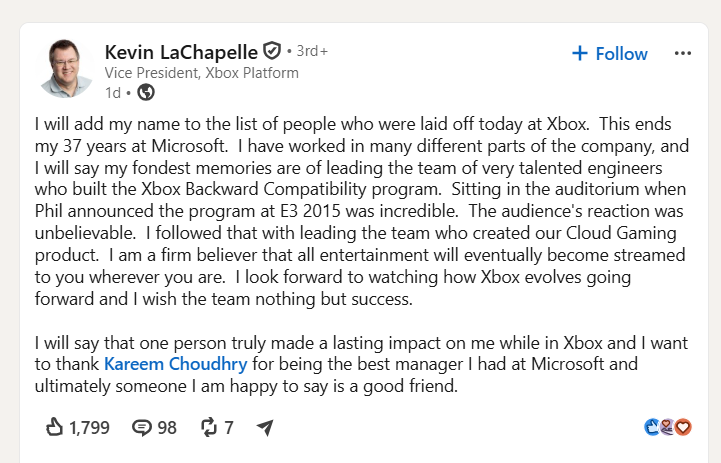
Seeing posts like this always makes me pause.
Imagine dedicating 37 years of your life to one company. Building products, mentoring people, celebrating milestones, and contributing to its success. Then one day, you're part of a layoff because the business has changed.
This isn't about blaming the company. Businesses evolve, priorities shift, and difficult decisions happen.
But it's an important reminder that while you should always be committed to your work, your biggest investment should be in your skills, your network, and your ability to adapt.
Companies can't promise lifetime employment. The only thing you truly own is the experience, knowledge, and relationships you build along the way.
Work hard. Be loyal to your values. But never stop learning, because your career belongs to you , not your employer.
Over the past few weeks, I've been experimenting with ways to make software testing more efficient using AI.
The objective wasn't to replace QA engineers or generate test cases with a prompt.
It was to reduce the repetitive work that consumes a significant part of a tester's day.
By combining AI with product knowledge and controlled access to testing capabilities, tasks like understanding the application, preparing test data, and creating validation scenarios become much faster and more context-aware.
The biggest benefit isn't writing more automation.
It's giving engineers more time to focus on exploratory testing, critical thinking, and improving software quality.
This is something I've been building recently, and I'll be sharing the complete architecture, implementation, and lessons learned in an upcoming thread.
I'd also love to hear from the community:
What's the most repetitive task in your testing workflow that you'd like AI to handle?
#QA #SDET #SoftwareTesting #AI #AutomationTesting #GenAI