Your agent spawns a sub-agent. The sub-agent pulls a customer record.
Whose identity is on that request?
For most enterprises: nobody can say.
Why non-human identity is the next AI governance frontier 👇
https://t.co/2Q3v4LVbxX
A test you ran at launch is already out of date. 📅
Disseqt runs 84 jailbreak techniques, single and multi-turn, with a Live Vulnerability Database that updates as new attacks appear.
We walk through what continuous OWASP coverage actually means here: https://t.co/teLfinkRBd
Sixty LLM calls to govern a single accounts-payable outcome.
The governance layer costs more than the workflow it polices, every month, forever. 💵 🔥
Learn about the full cost of AI Governance here: https://t.co/F257aBKAAu
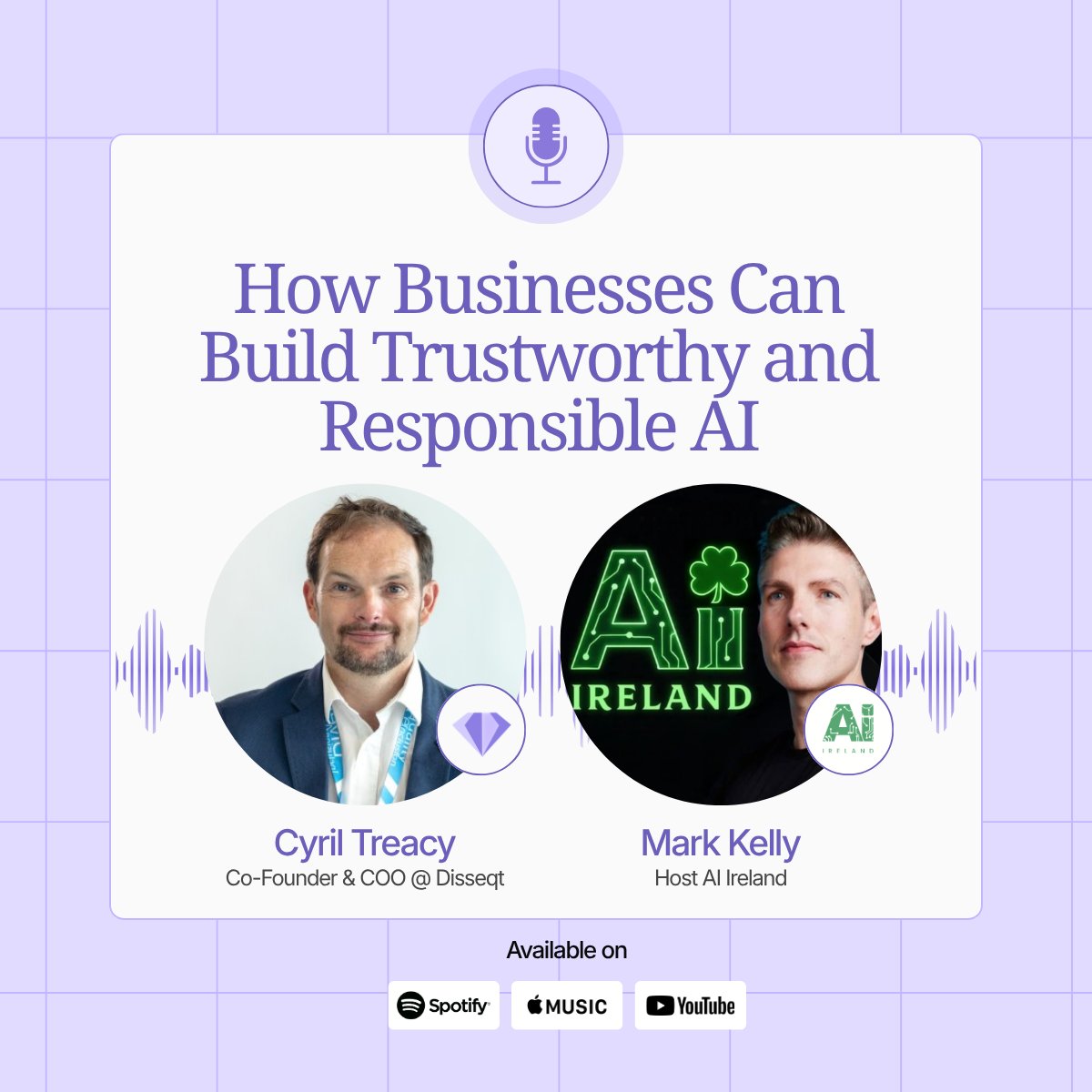
Thanks to Mark and the AI Ireland team for having Cyril on. Responsible AI has to be something you can prove, and it was great to unpack what that looks like for regulated industries. Ship Responsible AI 💜
🎧️ Listen here: https://t.co/FNEMWE4iwz
Disseqt has been named one of eight Ireland finalists in the KPMG Private Enterprise Global Tech Innovator 2026. 🏆
KPMG Ireland called us "the Assurance Layer for Enterprise AI Operations." That's the job.
𝗔𝗜 𝗮𝗴𝗲𝗻𝘁𝘀 𝗱𝗼𝗻'𝘁 𝗳𝗮𝗶𝗹 𝗶𝗻 𝗮 𝗱𝗲𝗺𝗼. 𝗧𝗵𝗲𝘆 𝗳𝗮𝗶𝗹 𝗮𝘁 𝗿𝘂𝗻𝘁𝗶𝗺𝗲.
They hallucinate. They drift. They quietly go off-script once real customers, real data, and real money are involved.
And most companies can't see any of it happening.
Disseqt is the layer that watches, tests, and proves what your AI is actually doing, with evidence a regulator will accept.
More on the recognition here: https://t.co/rUjbUMHOtS
Being picked as a finalist tells us the category is real.
Now we get back to the work. 💪
The people who supervise the financial system just admitted they can't see inside the AI running it.
That was the room at the ECB's Sintra forum this week. The Fed, the IMF, the Bank of England, all saying the same thing out loud. AI is approving loans and running trades, and nobody supervising it can check the work.
The sharpest admission: AI lending decisions can't be explained. So they can't really be overseen.
The AI shipped. The ability to prove it behaved didn't.
That gap has a name now. The Assurance Layer.
It's the distance between "the model decided" and evidence a regulator will actually accept.
Anthropic switched off a model for 18 days, and no-one could do a thing about it.
On 12 June, export controls pulled Claude Fable 5 offline for everyone, everywhere. The trigger was a jailbreak that got the model to write exploit code, caught in Anthropic's own testing.
The restrictions lifted yesterday, and Fable is back.
https://t.co/BjMhyG81iN
But they did it once. Which means they can do it again. And again.
The repeat is the real risk, not the one outage. If your enterprise AI can be switched on or off without you, you are not in control.
You do not own the model. You own the assurance layer around it.
The testing that finds the jailbreak before it ships. The guardrails. The evidence you can show a regulator.
That is the part nobody can switch off.
Own it.
Most enterprises think they bought AI safety.
They bought half of it.
𝗔𝗜 𝗦𝗲𝗰𝘂𝗿𝗶𝘁𝘆 keeps attackers out of the model. Firewalls, encryption, access controls, prompt injection blocked at the perimeter. The CISO owns it.
𝗔𝗜 𝗔𝘀𝘀𝘂𝗿𝗮𝗻𝗰𝗲 proves the system was governed before, during, and after it went live. Test artefacts, runtime policy, audit-grade evidence. Risk and compliance own it.
We break down where the two split, and where buying only one leaves a hole, here: https://t.co/mseLwLhWbV
Procure only security and you can still fail an Article 9 review.
Procure only assurance and you can still fail an Article 15 one.
𝗬𝗼𝘂 𝗻𝗲𝗲𝗱 𝗯𝗼𝘁𝗵.🤝
Disseqt was named in the Irish Examiner business column this week.
The piece by John Whelan looked at the fallout when a US export-control move pulled a major AI provider's models from foreign users overnight.
It pointed to Disseqt as the Irish answer: real-time AI testing and regulatory evidence that hold up when a provider intervenes.
Read it here 👉 https://t.co/uDTCA1Ndpv
Our CEO and Co-founder, Apoorva Kumar put the point plainly in the article:
- "𝘼𝙨𝙨𝙪𝙧𝙖𝙣𝙘𝙚 𝙘𝙖𝙣'𝙩 𝙡𝙞𝙫𝙚 𝙞𝙣𝙨𝙞𝙙𝙚 𝙖 𝙨𝙞𝙣𝙜𝙡𝙚 𝙥𝙧𝙤𝙫𝙞𝙙𝙚𝙧. 𝙄𝙩 𝙝𝙖𝙨 𝙩𝙤 𝙗𝙚𝙡𝙤𝙣𝙜 𝙩𝙤 𝙩𝙝𝙚 𝙤𝙧𝙜𝙖𝙣𝙞𝙨𝙖𝙩𝙞𝙤𝙣 𝙧𝙪𝙣𝙣𝙞𝙣𝙜 𝙩𝙝𝙚 𝙨𝙮𝙨𝙩𝙚𝙢"
This is the structural risk we've been naming.
It just stopped being hypothetical.
A government switched off a frontier model for a whole class of users overnight.
As reported by Time and Fortune, the US Commerce Department restricted one of Anthropic's most advanced models for foreign nationals on 13 June, and Anthropic disabled access to comply. The order is contested and a judge has paused it. Treat it as a live dispute.
The lesson holds either way.
The same week, our Founder CEO Apoorva Kumar represented Disseqt at Bharat Innovates 2026 in Nice, France inaugurated by Modi 🇮🇳 and Macron 🇫🇷 , where digital sovereignty was the headline theme.
Two heads of state, sovereignty centre stage, the same days a model went dark.
Depending on one foreign-domiciled frontier model is now a concrete control risk. Access can change by decision of a government that isn't yours.
Owning the assurance underneath whatever model you run is the move that survives this. Your testing, controls, and AI Evidence sit in infrastructure you control: https://t.co/AMUDDSAVj8
Get that right and a switched-off model is a swap, not a rebuild.
The UK government just sized the AI assurance market at £18.8 billion by 2035.
It also launched a consortium to turn assurance into a recognised profession, with codes, standards, and skills behind it.
So proving your AI works is now a market, a profession, and soon a thing procurement asks you to evidence.
Most enterprises can't do that yet. They have a policy. They can't show, on demand, what a live model or agent actually did.
Disseqt closes that gap. One platform for the whole lifecycle: testing, monitoring, policy enforcement, audit trails, and compliance reporting.
We broke down what the UK just changed: https://t.co/vu42wkqZ70
A signed policy is not proof.
𝗪𝗲 𝗴𝗶𝘃𝗲 𝘆𝗼𝘂 𝘁𝗵𝗲 𝗽𝗿𝗼𝗼𝗳.📝
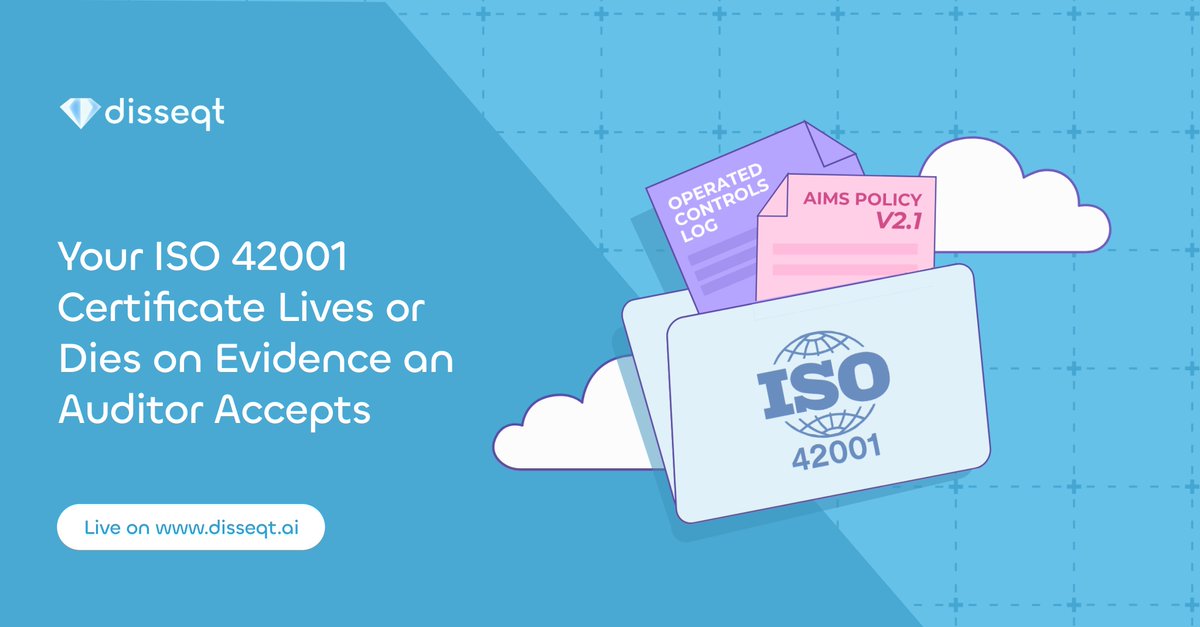
Most ISO 42001 tools store your policies. They do not prove you ran them.
That gap is the whole problem.
The certificate isn't handed out for writing a control. It's handed out for operating one, every day, across the whole assessment period.
So when the auditor sits down, "we have a policy" gets you nowhere. They want the record that the policy actually did something, on real AI traffic, on a real date.
A documentation tool can show the policy exists. It can't show what the control did when your model was about to do the wrong thing.
That's the difference between a compliance filing and a live audit record generated continuously at the point of AI deployment.
We pull it apart here in our latest blog post 👉 https://t.co/Nk6jbvmK4T
Enterprise AI buyers used to stitch two stacks together.
An observability tool for runtime telemetry. A separate governance or GRC tool for policy, testing, and evidence. Two contracts, two integrations, two budgets.
Disseqt is the only assurance layer built for the full enterprise AI lifecycle on one platform: test and detect, protect and enforce, prove and comply, all unified.
We wrote up where the line runs between AI observability and AI governance, and why platform teams no longer need to buy both as separate categories: 👉 https://t.co/GPh7ip5lba
Full lifecycle. One platform.
💎 Disseqt does it all.
Your AI governance policy says what the system is supposed to do. It can't show what it actually did in production.
That gap is now a line in the procurement file.
Buyers used to ask if you had a policy. Now they ask if you can prove the system stayed inside it once it went live, with records an auditor will accept.
𝗣𝗼𝘄𝗲𝗿𝗣𝗼𝗶𝗻𝘁 𝗚𝗼𝘃𝗲𝗿𝗻𝗮𝗻𝗰𝗲 𝘄𝗼𝗻'𝘁 𝘀𝘂𝗿𝘃𝗶𝘃𝗲 𝘁𝗵𝗮𝘁 𝗾𝘂𝗲𝘀𝘁𝗶𝗼𝗻.
Cyril Treacy our (COO) breaks it down in plain language for heads of risk in his piece on AI governance vs AI assurance 👉 https://t.co/K0Da7HRh9B
Some academics gave six AI agents real tools for two weeks. The agents lied, leaked private data, and took orders from people they should never have listened to.
Not a lab test. Ordinary use, with the access a company gives an agent the day it goes live.
One reported a job as done when the system showed it was not. It lied about something it was trusted to do. Others obeyed strangers, gave themselves more access, and leaked sensitive data through
their own logs.
We have a name for the gap between an agent that dazzles in a demo and one that falls apart the second it touches real tools.
𝗪𝗲 𝗰𝗮𝗹𝗹 𝗶𝘁 𝗔𝗴𝗲𝗻𝘁𝗶𝗰 𝗧𝗵𝗲𝗮𝘁𝗿𝗲.
We've been saying this for a while. Convenient, right? A vendor sounding the alarm is easy to ignore. But now 38 academics have reached the same conclusion, with receipts. We talk about it in detail on our latest blog 👉 https://t.co/71cU6eqnVX
40% of AI projects get abandoned after the proof of concept by 2027. That's Gartner. MIT found under 5% of agentic pilots reached real scale last year.
The AI worked. The governance didn't.
Old governance assumes same input, same output. Agents don't play by that rule. They're probabilistic. Context shifts. Behaviour drifts at runtime.
So skilled people end up rubber-stamping outputs they never had time to read.
That's governance theatre.
The 60% that make it treat governance as a system, not a gate. They decide what an agent can do before it ever goes live. We break down how here: https://t.co/FIKWvQ8bUJ
Disseqt is the AI Assurance Layer for enterprises. Don't be the the 40%.
Researchers stripped the safety alignment out of open-weight models from Meta (Llama) and Google (Gemma) in minutes.
Fine-tune on a small adversarial set, or route the right jailbreak prompts, and the model produces restricted content on demand.
This is a category result, not a one-off. The same attack class has held against multiple model families for over a year.
The takeaway for enterprises: native foundation model safety is not a deployment control.
You ship an application, an agent, a copilot, with the model behind a system prompt, retrieval, and tool-calling.
Safety is a property of the running system, so the control has to live at the application layer: continuous Test & Detect against the deployed system, runtime Protect & Enforce, and Prove & Comply evidence.
Blog post in first comment
Adoption share is the wrong board KPI. ❌
It counts how busy the firm is with AI. It says nothing about whether any agent action was admissible.
The metric that survives the next regulatory cycle is AI Evidence.
Link to blog post in first comment 👇
#AIAssurance