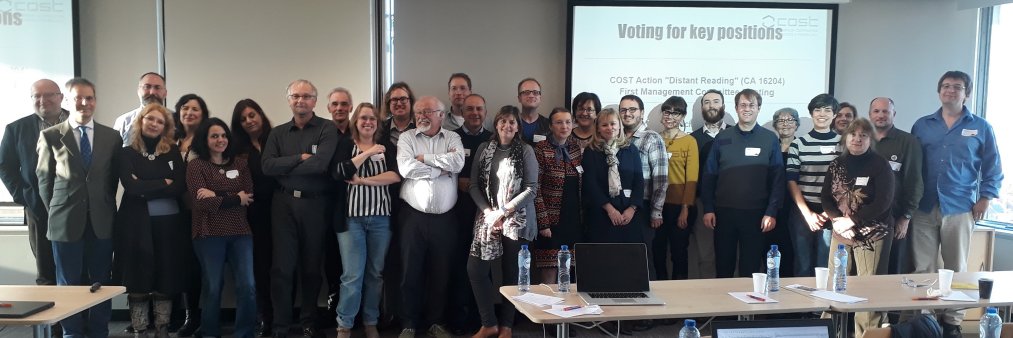
Using #DigitalHumanities to assess & understand European novels in multiple languages. COST Action "#DistantReading for European Literary History" (CA16204)
We are proud to announce release v1.0.0 of #ELTeC (European Literary Text Collection), with 884 novels in 10 languages. Heartfelt thanks to all editors and contributors! Full announcement: https://t.co/G2i2iXJguM Access to the collections: https://t.co/TGSyqP92fa ^cs
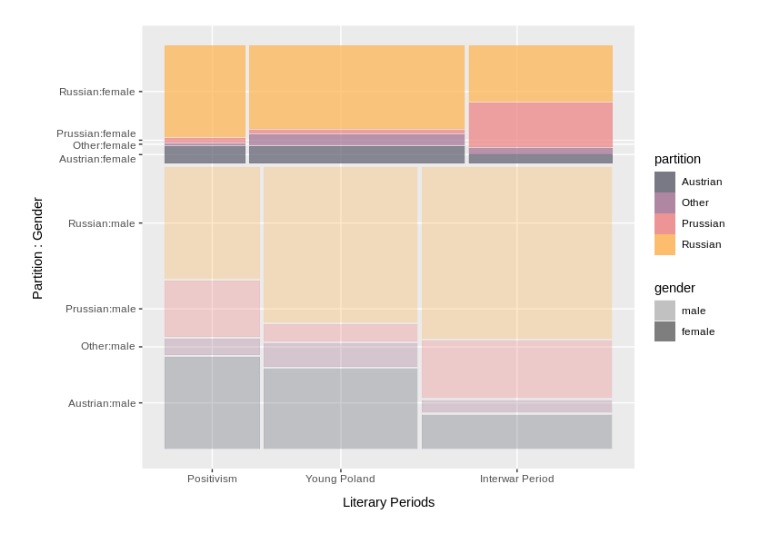
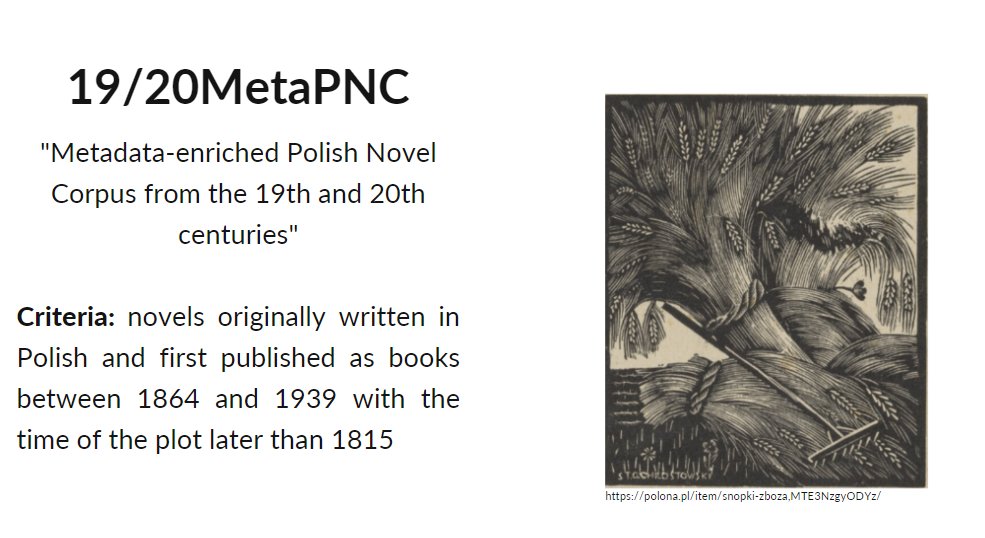
Official premiere of Metadata-enriched Polish Novel Corpus from the 19th and 20th centuries (#1920MetaPNC), first Polish literary corpus balanced not only historically but also geographically we created at @IBLPAN together with @marekkubis and #CLARINPL@bibliodataWG@DARIAHeu
@a_karlinska@Jberenike@IBLPAN@marekkubis@bibliodataWG@DARIAHeu @Grig_gg A presentation on the Metadata-enriched Polish Novel Corpus (#1920MetaPNC) is available at https://t.co/aDUyrGsCdJ. A text describing the work on the corpus and its use in literary research is available at https://t.co/GEhCV4tIpH. We are happy to answer further questions.
@espejolento@wikisource@wikidata@satdeepgill Very cool and glad to see #ELTeC being used! Regarding the issues: only in ELTeC-pol, some post-1920 novels appear to have slipped in, not other languages. And 20-year slots are not "categories", but simply a way to encourage even spread across the period 1840-1920. ^cs
Learn more about "Sab", one of the first European abolitionist novels, written by Gertrudis Gómez de Avellaneda in the new Distant Reading Recommends article from our Action members @rosarioariasUMA and Borja Navarro Colorado.
https://t.co/VYSDrr03nI
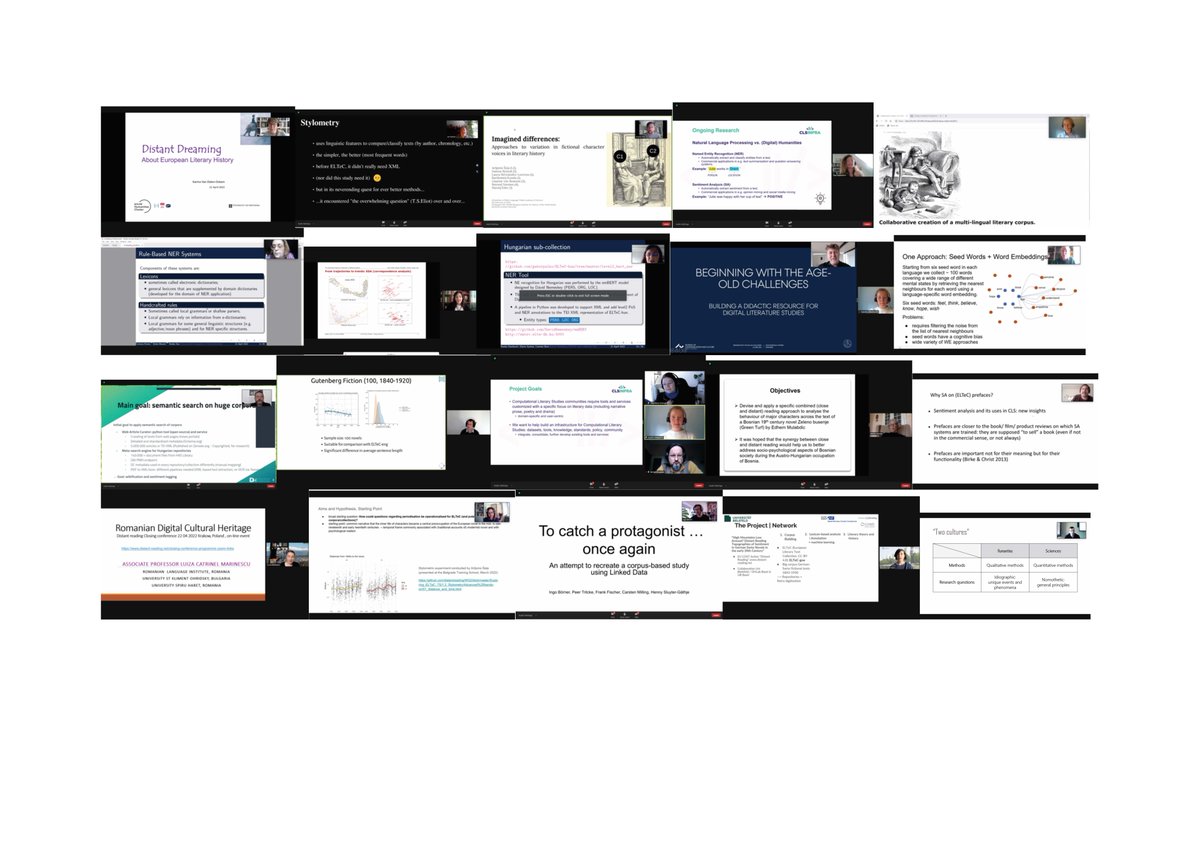
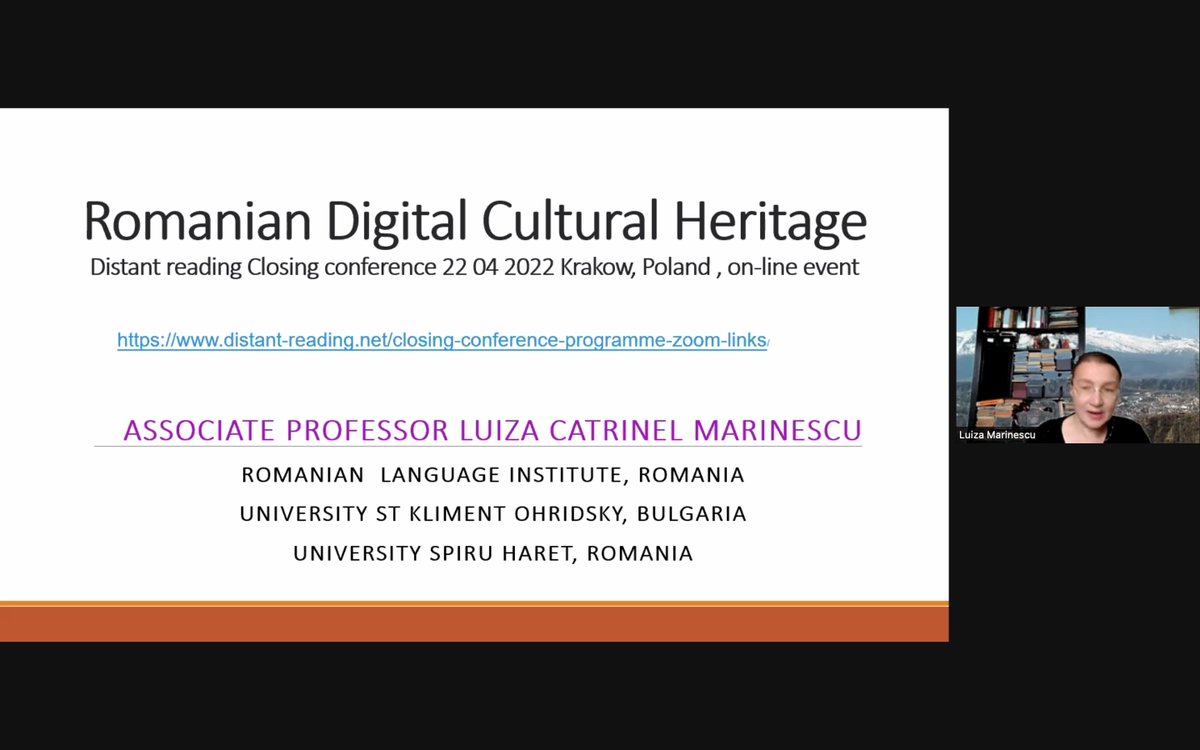
We’ve had the bird’s eye view of latest achievements in DH, up-to date sharings of the most innovative computational methods, a meaningful two day experience. Thank you for attending our closing conference and stay tuned for upcoming events of @CLSinfra.
We’ve had the bird’s eye view of latest achievements in DH, up-to date sharings of the most innovative computational methods, a meaningful two day experience. Thank you for attending our closing conference and stay tuned for upcoming events of @CLSinfra.
The @DistantReading closing ceremony is coming to an end and now the project is being handed over to @CLSinfra. To see what this handover means for the #CLS and #DH communities, take a look at this video by @MaciejEder and @christof77:
https://t.co/G607Gg38Be
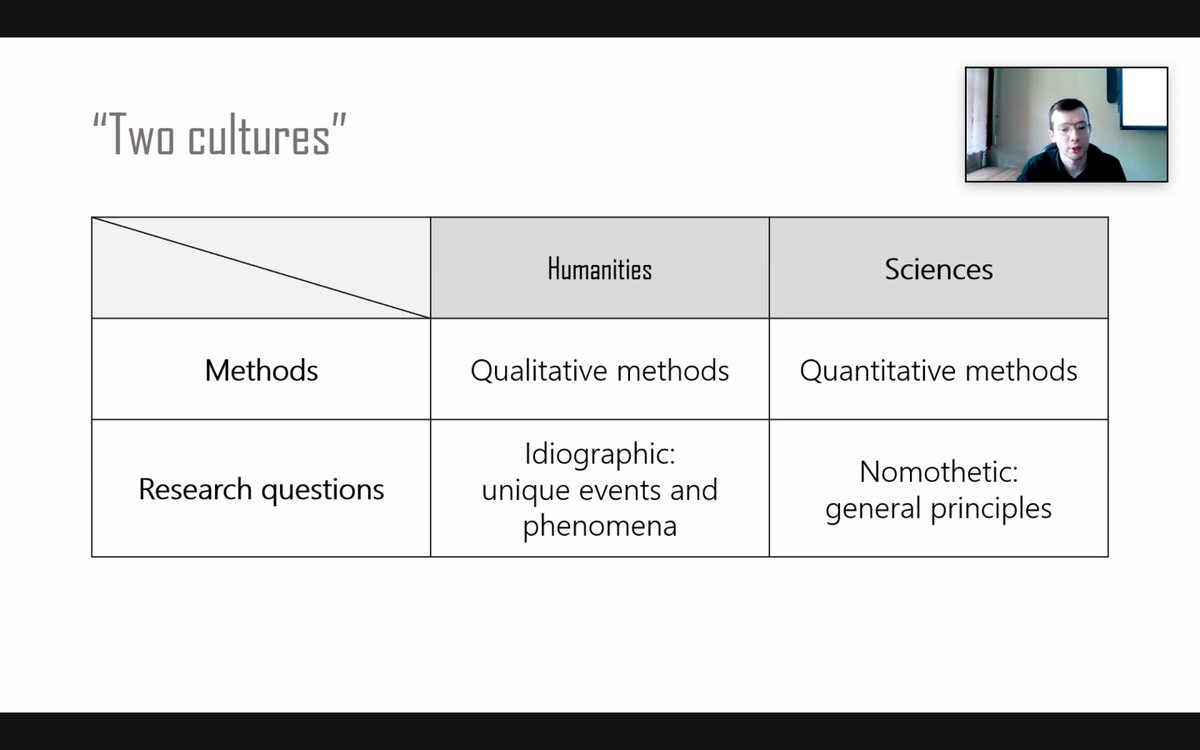
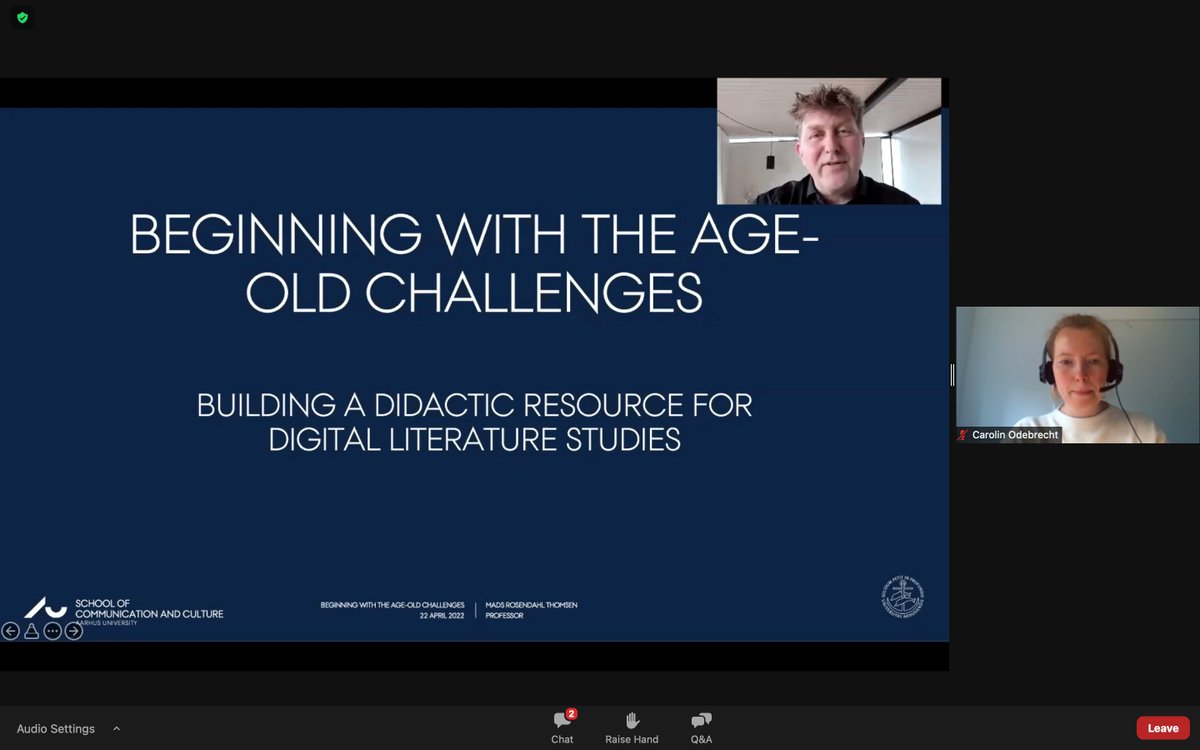
Mads Rosendahl Thomsen (@madsrt) addresses an invitation to scholars and students to consider digital methods as a supplement to their practice, integrating new methods, in order to change the field of literary studies.
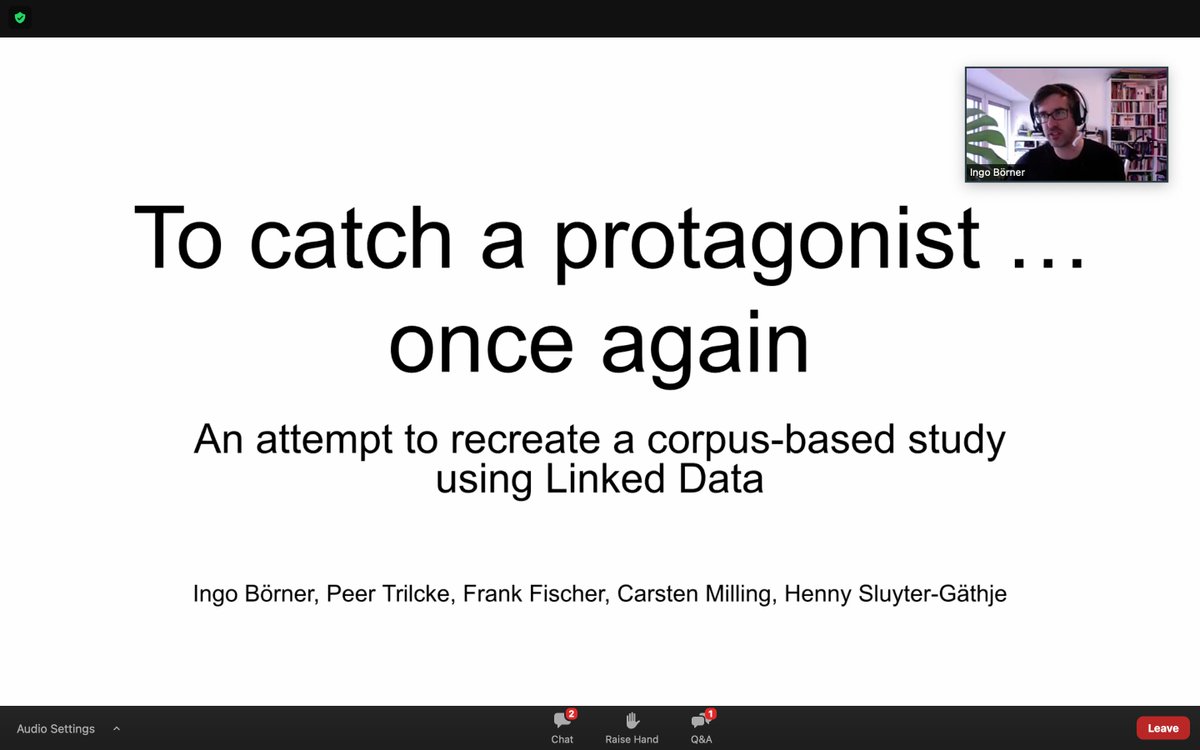
@ingoboerner, Peer Trilcke, Frank Fischer, Carsten Milling, Henny Sluyter-Gäthje are taking the floor To Catch a Protagonist … Once Again. An Attempt to Recreate a Corpus-Based Study using Linked Data.
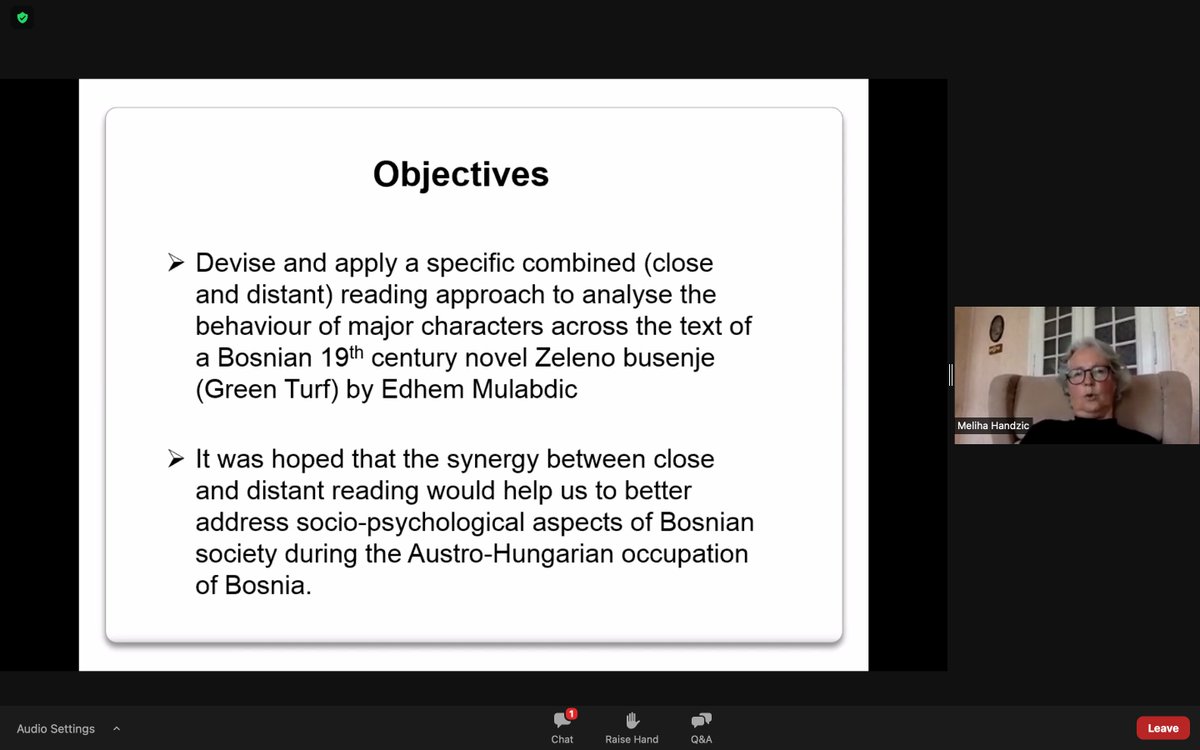
The case study on the 19th century novel Zeleno busenje by E. Mulabdic is valuable fuel for complex interpretations of Bosnian literature, emphasizing the synergy between close and DR, as well as different digital techniques. Listen to M. Handzic and V. Mulavdic.
What does sentiment analysis reveal when related to prefaces? A team of researchers invites us to discover more ... @rosarioariasUMA, J. Fernández-Cruz, I. Galleron, M. García-Gámez, F. Mélanie-Becquet, R. Patras, C. Pérez-Hernández, O. Seminck
New perspectives for the Computational Literary Studies community! @ingoboerner, Vera Maria Charvat, Matej Ďurčo, Michał Mrugalski, Carolin Odebrecht introduce us to a new data inventory providing access to a wide range of literary resources.
Where Natural Language Processing and Digital Humanities collide Tess Dejaeghere, Julie M. Birkholz, Els Lefever, Christophe Verbruggen feature an integrated approach on how NLP tools can apply to literary-historical research
@DejaeghereTess, @juliebirkholz, @Eslefeve, @cvbrugg
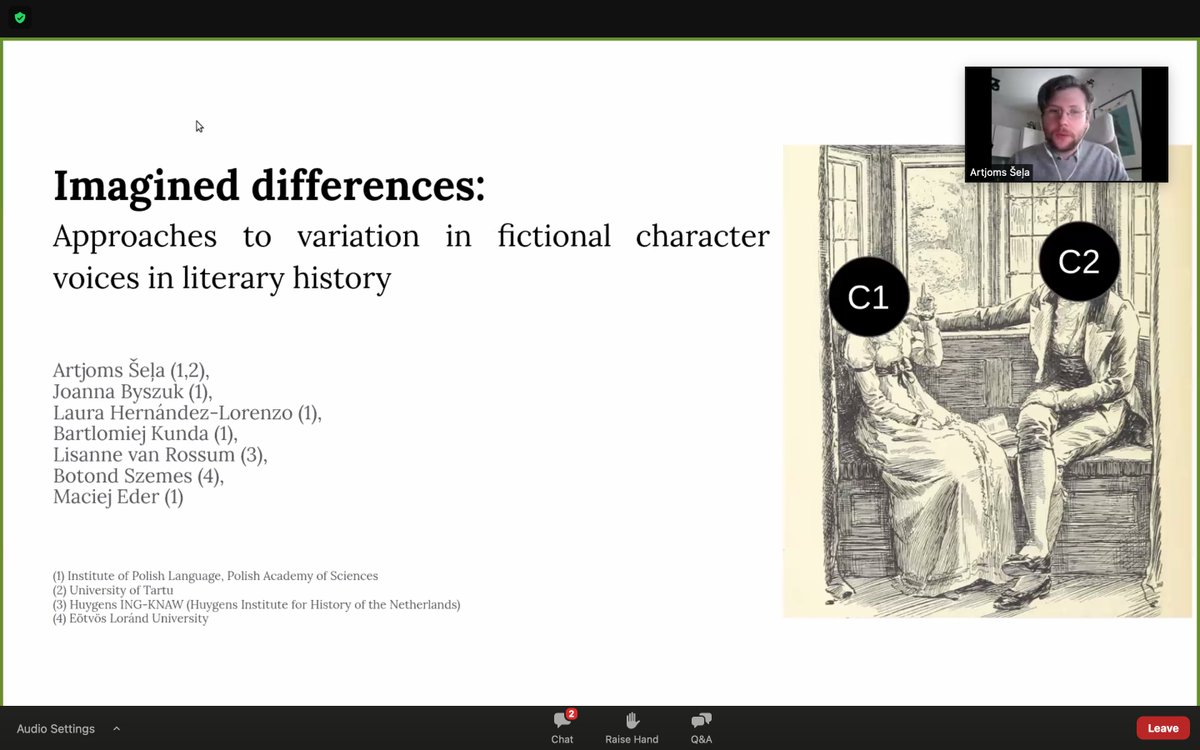
Imagined differences: approaches to variation in fictional character voices in literary history presented by
@artjomshl, @jbyszuk, @BartekKunda, @lamusadecima, @MaciejEder, Botond Szemes and Lisanne van Rossum
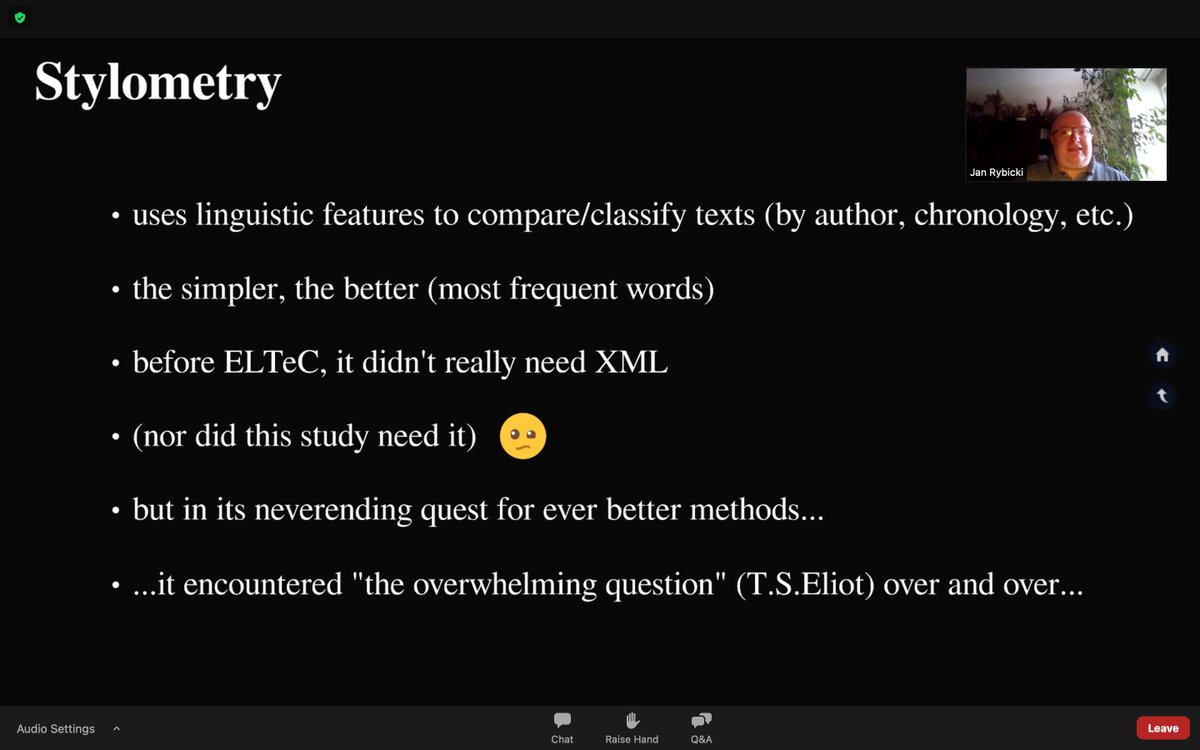
Day 2 of our closing conference. We are delighted to have @Jan_Rybicki presenting his paper ELTeC and Delta in Eleven Languages: Relatively Good News for Stylometrists, which opens the path for a better representation of individual authors.