Fresh out of the oven! 🔥 Published in @InorgChemFront
https://t.co/vU00Kpv1oc
We joined forces with Greb group to show how combining catecholato and biscarboranyl at phosphonium center makes it Lewis superacidic.
Congrats to @itayraz4, @Diab_o7o, @Jaishkuldeep, and Eva Roesky!!!
Using the tether-to-twist approach, we made twisted metallacycles and found that ligand curvature shifts the rhomboid ⇌ hexagon equilibrium.
Now in @J_A_C_S by @Israa_Shioukhi, in collaboration with the Lützen group @UniBonn https://t.co/PcBWq15K98
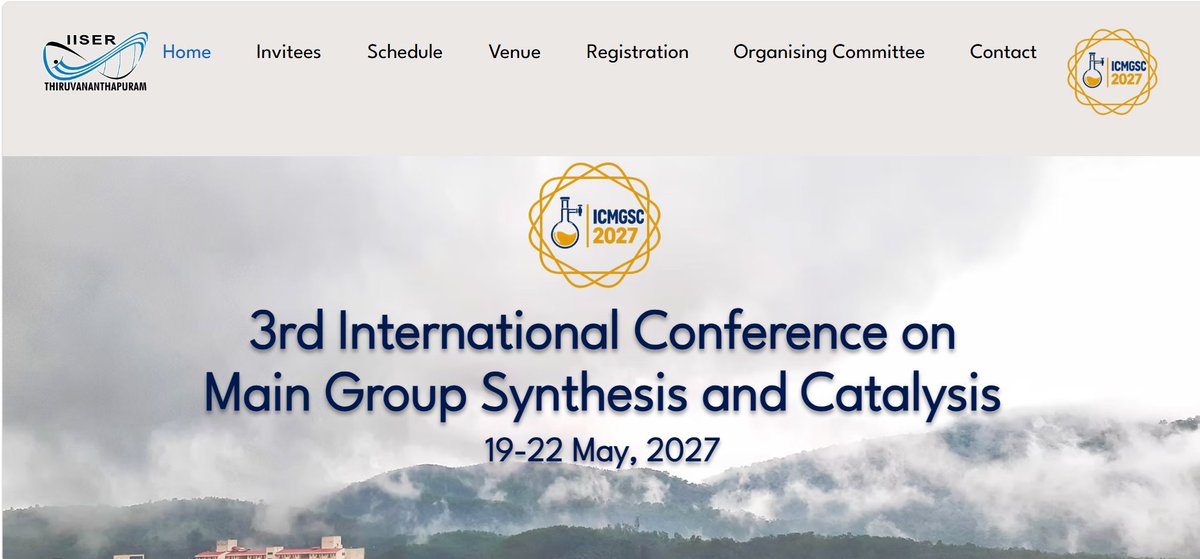
🌐 ICMGSC 2027 website is now LIVE! https://t.co/VcjhOi15PO
Pre-registration for international graduate students & postdocs opens 5 October 2026.
#ICMSGC2027#MainGroupChemistry#Catalysis@tvmiiser
Great conference, great hospitality, great atmosphere! Swadhin, @Debabrata, and @Akkattu, thanks for the invitation and organization of such a wonderful event!
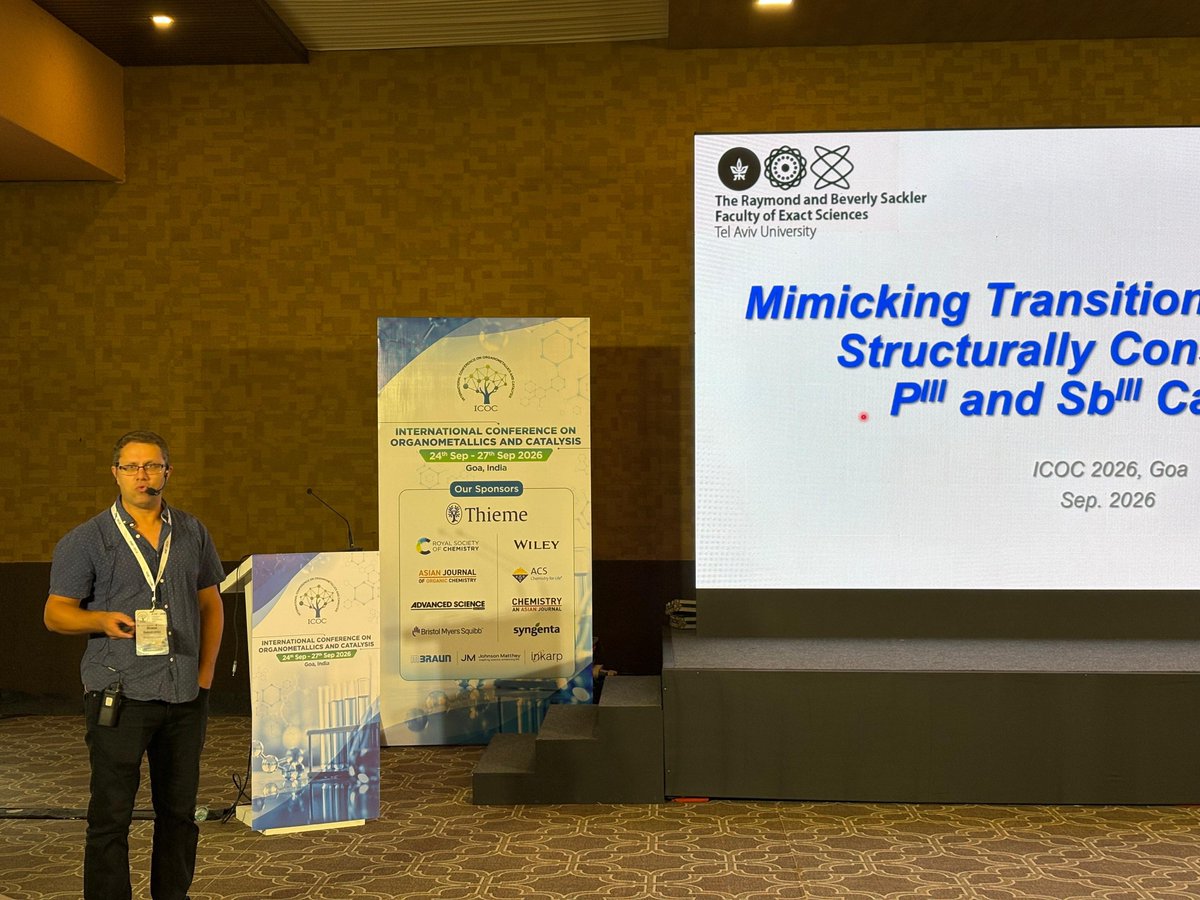
🎤✨ Keynote Lecture in focus at #ICOCIV2026! Prof. Roman Dobrovetsky @DobrovetskyG is sharing exciting chemistry and inspiring ideas with the audience. 🧪🔬
The momentum of ICMGSC 2023 & 2025 has set a historic benchmark! The global main-group chemistry community now looks ahead to ICMGSC 2027—the 3rd edition! Website will be live from 1st Oct 2026.
Pre-registration for international students opens 5 Oct 2026. #ICMGSC2027#MainGroup
Happy to share our latest work in JACS!
@J_A_C_S
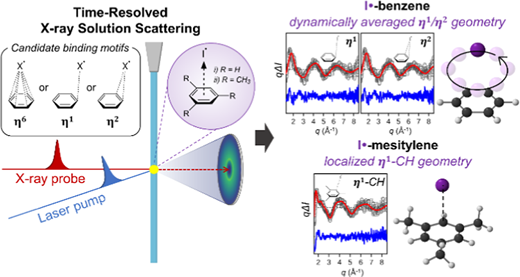
We observe radical–arene contact complexes by time-resolved X-ray solution scattering—long-invoked intermediates in radical reactions with Prof. Kyung Hwan Kim. Congratulations to all our collaborators 🥳
https://t.co/PJ8EMtY30N
What can good old Grignard reagents still surprise us with?
In our latest @J_A_C_S paper, we combine Grignard reagent with N-heterocyclic nitrenium chemistry to turn alkenes into 3D nitrogen heterocycles. Happy to collaborate with @prsgroupjlu
https://t.co/t48xGBEwdH
We, the Weizmann Institute of Science community, deeply mourn the passing of Prof. Ada Yonath of the Institute’s Chemical and Structural Biology Department. Prof. Yonath pioneered the study of the ribosome, the cell’s protein factory, and was awarded the 2009 Nobel Prize in Chemistry for her research in this field. Her decades-long scientific journey led to an understanding of how various antibiotics work, helping pave the way for the development of new antibiotics and the fight against antibiotic-resistant bacteria.
Yonath, the first Israeli woman scientist to win a Nobel Prize, also received dozens of other awards and honors, including the Israel Prize in Chemistry and the Wolf Prize in Chemistry. Prof. Yonath exemplified how scientific vision, the courage to choose a major scientific question and unwavering dedication to its pursuit can lead to extraordinary achievements and expand the boundaries of knowledge for the future of humanity.
May her memory be a blessing.
https://t.co/HXKGqen1k5
If you’d like to see crystalline anionic N-radicals (bonus: the charge and spin are separated), check out our latest article in @angew_chem
Congratulations to everyone involved!
https://t.co/dwDr4au5AN
Our new work is out in JACS! 🌠
@J_A_C_S
We uncover a hidden “dark” reactive state in Ni–Ir metallophotoredox catalysis using femtosecond X-ray spectroscopy. Great collaboration with Prof. Kyung Hwan Kim’s group at POSTECH!
Check it out👇
https://t.co/XWrjQ6BmKA
Our latest paper is now out in @J_A_C_S!
Carbenoid species have had a profound impact on synthetic chemistry and are now indispensable tools for building molecular complexity. Yet one of their smallest main-group relatives, the borylene, has remained notably absent from the synthetic chemist’s toolbox, despite its fascinating and highly unusual electronic structure.
Since starting our group, one of our major goals has been to address this challenge and explore the synthetic potential of borylenes.
In our work, we report an exceptionally mild and modular approach to borylene generation from simple, readily diversifiable precursors. We then use this platform to explore the cycloaddition chemistry of borylenes with alkenes, providing access to unique fused borirane architectures.
This reactivity developed into a chemo- and regioselective strategy for alkene functionalization, with the resulting boriranes serving as versatile synthetic intermediates. We further demonstrate its utility through application to the formal synthesis of natural products.
We believe this work takes borylenes one step closer to becoming practical species for synthetic chemistry, and opens the door to many new transformations yet to be discovered.
https://t.co/SHa4dDLIws
Our latest work using nitrogen photocatalysis for nitrous oxide reduction is now online at @angew_chem : https://t.co/goJk2wF4tt
This was a fun one for me learning about photochemistry and applying it to greenhouse gas reduction, a problem I care deeply about.
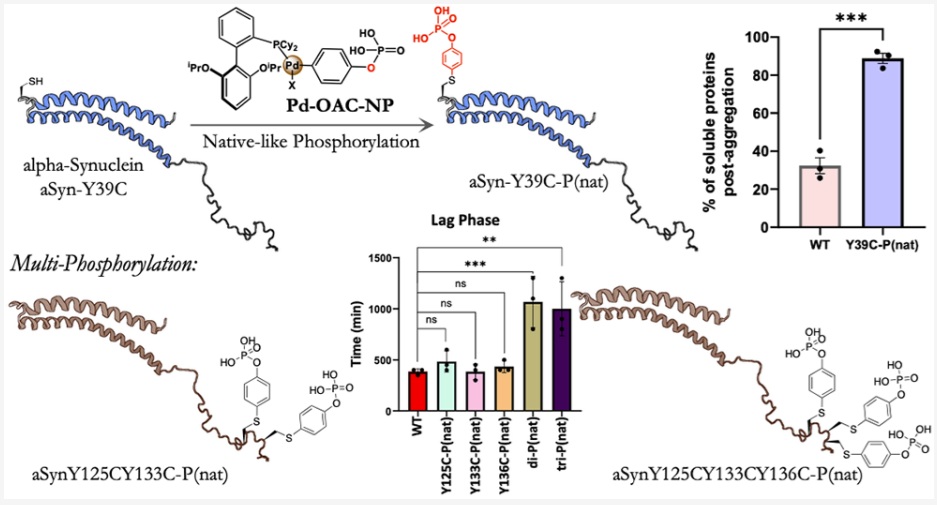
Thrilled to share our work, Organometallic Approach for Installing Tyrosine Phosphorylation Mimics to Decipher the Role of Phosphorylation in α-Synuclein Aggregation and Seeding, published today in @J_A_C_S.
Another great collaboration with @LashuelLab!
https://t.co/ac3R2bZt62
Happy to share our new contribution, now out in @ACSChemRev 🌟
A comprehensive look at triarylborane-catalyzed metal-free reductions of organic molecules (2016–2025): pure/crude H₂, hydrosilanes, Hantzsch esters, ammonia borane & more.
Hope it helps your future borane work‼️
PN cages on surfaces! Our collab with the Ragogna group (@WesternU) is out now in @J_A_C_S!
Kudos to lead author @Lomax_88 from Paul's group on the idea and doing the heavy lifting!
https://t.co/1FEezmWnPz
@chemistryatuvic@DalScience