📄Pleased to share our new paper in @AcademicRad
🧠We explored MRI indices modeling the tumor-edema relationship in meningioma, using logarithmic and scaling-derived formulations, and evaluated their association with histologic grade.
https://t.co/yAFOSSatFI
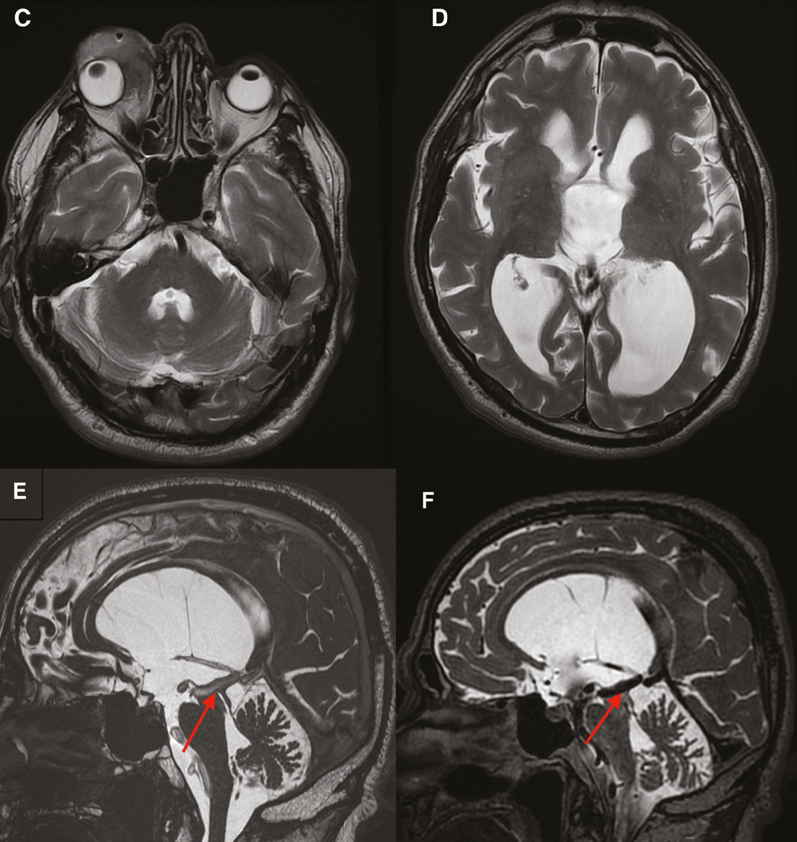
✅Obstructive hydrocephalus due to aqueductal compression by a developmental venous anomaly (DVA).
💡Mesencephalic DVAs can rarely cause aqueductal stenosis. Radially converging medullary veins and a collector draining into the vein of Galen support the diagnosis.
https://t.co/JOd0bMliDG
👳♂️A 65-year-old man with recurrent conjunctival squamous cell carcinoma presents with gait ataxia, cognitive decline, and urinary and fecal incontinence. No history of head trauma.
🧑⚕️What is the underlying cause of his neurological symptoms?
✅Obstructive hydrocephalus due to aqueductal compression by a developmental venous anomaly (DVA).
💡Mesencephalic DVAs can rarely cause aqueductal stenosis. Radially converging medullary veins and a collector draining into the vein of Galen support the diagnosis.
https://t.co/JOd0bMliDG
👳♂️A 65-year-old man with recurrent conjunctival squamous cell carcinoma presents with gait ataxia, cognitive decline, and urinary and fecal incontinence. No history of head trauma.
🧑⚕️What is the underlying cause of his neurological symptoms?
🐸A 45-year-old woman with a 6-year history of severe headaches, intermittent seizures, and right hemiparesis. She reports eating undercooked frog meat 16 years earlier.
🏥What is your differential diagnosis?
👳♂️A 65-year-old man with recurrent conjunctival squamous cell carcinoma presents with gait ataxia, cognitive decline, and urinary and fecal incontinence. No history of head trauma.
🧑⚕️What is the underlying cause of his neurological symptoms?
@ANONYMO54928288 🙏Thank you so much for your kind words!
🌏If even one of the cases I share helps a colleague somewhere in the world, all the effort will have been worth it.
✅Subependymal giant cell astrocytoma (SEGA) associated with tuberous sclerosis complex.
💡A growing or >1 cm lesion near the foramen of Monro suggests SEGA. Look for cortical tubers and subependymal nodules. Calcified subdural hematomas may reflect chronic VP shunt overdrainage.
https://t.co/HI7iedjhym
👨🦱18M with prior intraventricular ependymoma resection and VP shunt placement at age 4. Now presents with headache, vomiting, blurred vision, and gait instability. Examination reveals five hypomelanotic skin macules.
🏥What are the imaging findings and differential?
✅Subependymal giant cell astrocytoma (SEGA) associated with tuberous sclerosis complex.
💡A growing or >1 cm lesion near the foramen of Monro suggests SEGA. Look for cortical tubers and subependymal nodules. Calcified subdural hematomas may reflect chronic VP shunt overdrainage.
https://t.co/HI7iedjhym
👨🦱18M with prior intraventricular ependymoma resection and VP shunt placement at age 4. Now presents with headache, vomiting, blurred vision, and gait instability. Examination reveals five hypomelanotic skin macules.
🏥What are the imaging findings and differential?
👨🦱18M with prior intraventricular ependymoma resection and VP shunt placement at age 4. Now presents with headache, vomiting, blurred vision, and gait instability. Examination reveals five hypomelanotic skin macules.
🏥What are the imaging findings and differential?
Diseño de investigación, interpretación estadística, manejo de bases de datos y publicación científica. El curso de Metodología de Investigación de #FormaciónSERAM ofrece una visión completa y aplicada del proceso investigador en Radiología, incluyendo el papel de la IA y las altmétricas en la investigación actual.
Más información 🔗 https://t.co/FZzYPxnvAl
Before being able to pinpoint pathologies, you must first know normal variants. What is that hole doing in the basilar artery? What benign variant is this?
#FOAMed
✅Neurosyphilis with cerebral and spinal cord involvement.
🕯️Syphilitic gummas may mimic metastases or lymphoma, with nodular or ring enhancement. Lack of diffusion restriction is not specific. Spinal myelitis may show the "flip-flop" or "candle guttering" signs.
https://t.co/Ip19XNTmrw
👱♀️A 48-year-old woman presents with a 1-week history of sudden-onset limb numbness and binocular diplopia. No known malignancy, immunosuppression, or prior neurological disease. HIV negative. Tumor markers within normal limits.
👨⚕️What is your differential diagnosis?
✅Neurosyphilis with cerebral and spinal cord involvement.
🕯️Syphilitic gummas may mimic metastases or lymphoma, with nodular or ring enhancement. Lack of diffusion restriction is not specific. Spinal myelitis may show the "flip-flop" or "candle guttering" signs.
https://t.co/Ip19XNTmrw
👱♀️A 48-year-old woman presents with a 1-week history of sudden-onset limb numbness and binocular diplopia. No known malignancy, immunosuppression, or prior neurological disease. HIV negative. Tumor markers within normal limits.
👨⚕️What is your differential diagnosis?
👱♀️A 48-year-old woman presents with a 1-week history of sudden-onset limb numbness and binocular diplopia. No known malignancy, immunosuppression, or prior neurological disease. HIV negative. Tumor markers within normal limits.
👨⚕️What is your differential diagnosis?
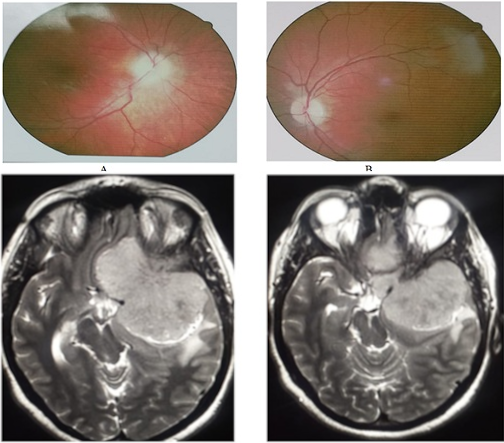
✅Foster Kennedy syndrome secondary to a sphenoid wing meningioma.
💡Assess both optic nerves: unilateral atrophy with contralateral disc swelling can reflect compression plus raised intracranial pressure, or asymmetric bilateral optic nerve compression.
https://t.co/hKWIZjPtiE
👩🦰A 25-year-old woman, 6 months pregnant, presents with 4 months of progressive left-eye visual loss, rapidly worsening over the past week, with new right-eye visual deterioration and frontal headaches.
🧑⚕️Which syndrome do you suspect?
✅Foster Kennedy syndrome secondary to a sphenoid wing meningioma.
💡Assess both optic nerves: unilateral atrophy with contralateral disc swelling can reflect compression plus raised intracranial pressure, or asymmetric bilateral optic nerve compression.
https://t.co/hKWIZjPtiE
👩🦰A 25-year-old woman, 6 months pregnant, presents with 4 months of progressive left-eye visual loss, rapidly worsening over the past week, with new right-eye visual deterioration and frontal headaches.
🧑⚕️Which syndrome do you suspect?