„Die 0,00004712 % sind schlicht BULLSHIT Du Pappkopp! Deutschlands Anteil an den heutigen weltweiten CO₂-Emissionen liegt bei ungefähr 1,5–2 %, nicht bei 0,000047 %. Historisch sind es sogar rund 5,1 % der kumulierten Emissionen seit 1750. Und die angebliche Billion Euro ist ebenfalls keine nachprüfbare Rechnung, solange nicht gesagt wird, welche Ausgaben und welchen Zeitraum man überhaupt meint. Eine falsche Prozentzahl mit einer unsauberen Kostenschätzung zu multiplizieren und daraus ‚Klimapolitik ist sinnlos‘ abzuleiten, ist schon extrem dreist und dumm. 🖕🏻
Oh man, das ganze Gesocks nervt. Neben der AfD jetzt auch noch die FDP mal wieder. Ist Euch langweilig? 🙄😬
1.) „Andere Kernkraftwerke gleichen es aus“ ist kein allgemeines Prinzip. Wenn mehrere Kraftwerke gleichzeitig wegen Hitze oder Trockenheit eingeschränkt sind, können sie sich nicht beliebig gegenseitig ersetzen.
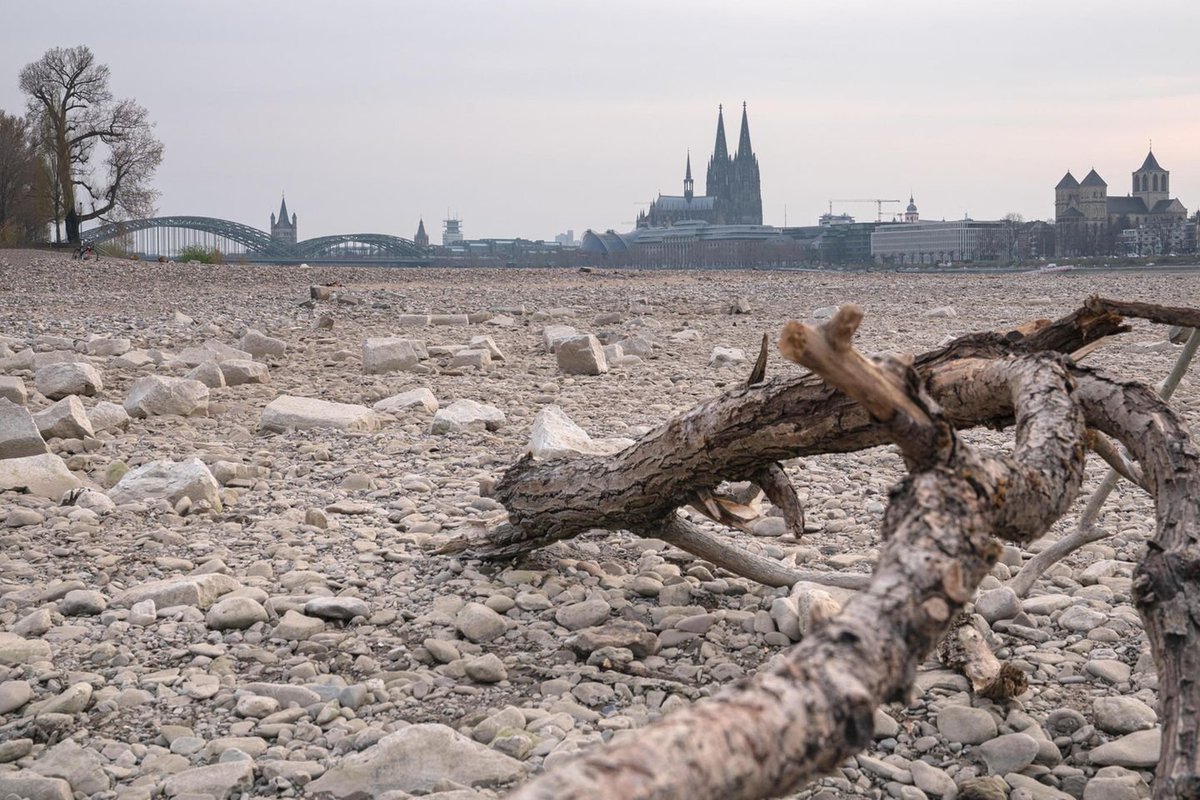
2.) Windkraft geht bei einer „Hitzeflaute“ nicht automatisch gegen null. Hohe Temperaturen bedeuten nicht automatisch Windstille. Wind entsteht durch Druckunterschiede, nicht durch niedrige Temperaturen.
3.) PV produziert nachts nichts – das stimmt. Dafür produziert sie gerade an heißen Sommertagen tagsüber sehr viel Strom. Und wieviel Anträhe für Grosspeicher liegen derzeit den Netzbetreibern vor? Na?!
4.) Frankreich „rettet uns“ nicht regelmäßig mit Kernkraft. Deutschland handelt Strom mit seinen Nachbarländern in beide Richtungen. Frankreich importiert beispielsweise bei hoher eigener Nachfrage ebenfalls Strom.
5.) Entscheidend ist deshalb nicht, ob eine einzelne Technologie jederzeit 100 % liefert. Entscheidend ist, wie das gesamte Stromsystem mit Netzen, Speichern, flexiblen Kraftwerken, Importen und verschiedenen Erzeugern ausgelegt ist.
𝗪𝗲𝗿 𝗯𝗲𝗶𝗺 𝗞𝗹𝗶𝗺𝗮𝘀𝗰𝗵𝘂𝘁𝘇 𝗮𝘂𝗳 𝗱𝗶𝗲 𝗕𝗿𝗲𝗺𝘀𝗲 𝘁𝗿𝗶𝘁𝘁, 𝘂𝗺 𝘃𝗲𝗿𝗺𝗲𝗶𝗻𝘁𝗹𝗶𝗰𝗵 𝗚𝗲𝗹𝗱 𝘇𝘂 𝘀𝗽𝗮𝗿𝗲𝗻, 𝗯𝗲𝘁𝗿𝗲𝗶𝗯𝘁 𝘃𝗼𝗹𝗸𝘀𝘄𝗶𝗿𝘁𝘀𝗰𝗵𝗮𝗳𝘁𝗹𝗶𝗰𝗵𝗲𝗻 𝗦𝗲𝗹𝗯𝘀𝘁𝗺𝗼𝗿𝗱 𝗮𝘂𝗳 𝗥𝗮𝘁𝗲𝗻.
Die verblendete Debatte, Klimaschutz sei „zu teuer“, ignoriert die nackte mathematische Realität: Nichtstun ist der wahre Haushaltskiller.
Bis Mitte des Jahrhunderts drohen Deutschland durch verfehlte Politik und ungebremste Extremwetter Schäden von bis zu 900 Mrd € – Geld, das schlicht in zerstörte Infrastruktur, verdorrte Ernten und lahmgelegte Lieferketten fließt, ohne einen Cent Wertschöpfung zu generieren.
Schon heute fressen die Flutkatastrophen und Dürren der letzten Jahre zweistellige Milliardenbeträge auf, während das Verschleppen der Wärmewende im Gebäudesektor und der Verkehrsreform den Steuerzahler über EU-Strafzahlungen bis 2030 zusätzliche 33 Mrd € kosten könnte.
Jeder Euro, der heute aus politischer Feigheit oder fossiler Klientelpolitik verweigert wird, rächt sich morgen als fünffache Schadenssumme.
#Klimaschutz ist längst keine Frage von linker Ideologie oder grünem Lifestyle mehr – er ist knallharte Schadensbegrenzung und die einzig rationale Überlebensstrategie für eine bezahlbare Wirtschaft.
Wer das heute blockiert, bürdet den kommenden Generationen einen unbezahlbaren Schuldenberg auf.
Das Klima wird uns zu schaffen machen, aber die Kosten werden uns auffressen.
Powerful speech by Naturalist Chris Packham speaking alongside Zack Polanski on the subject of Climate Change,
"To the disappointment of many, football didn’t come home this summer, but to the pain and suffering of millions, climate breakdown has. And our government and media response has displayed a total dereliction of duty in a time of extreme crisis."
"As we’ve heard, in May and June there were 3,000 deaths attributed to the heat domes that have hung over the UK. Heat exhaustion, heat stroke, stress on the heart and kidneys, and of course those mental health issues that you’ve just talked about."
"In Europe, the figure is somewhere between 14,000 and 20,000 up until the end of July, and it’s expected to double by the end of this summer. So we’re looking at potentially 50,000 deaths across Europe."
"If these deaths had been the result of terrorism or a pandemic, the government would have cancelled its summer holiday, it would have held COBRA meetings, and there would be public information campaigns the likes of which we saw during COVID, designed to protect us in this time of crisis."
"And yet what do we get? We get rumours of possibly more drilling for oil and gas, and we get articles in the Telegraph which suggest that we ought to adapt to a Mediterranean climate. If that isn’t reckless and irresponsible, I don’t know what is."
"What we do need at this point is to listen to the science, not to the ongoing malevolent raft of mis- and disinformation that’s perpetuated in politics, in public life and certainly across social media."
"If we listen to the science, we see that the climate models that were devised in the 1990s have actually proved to be pretty accurate. But those who do try and transmit the information to us, people like the IPCC, which are often derided as alarmists by the right and the far right, have actually been too cautious."
"What we see, for instance, when it comes to the heatwaves, is that they are occurring more quickly and more regularly than those models suggest. We’re updating the science as it happens. What we also see is that it’s not just a lack of water which is leading to the drought, although that might seem painfully obvious. It’s actually being exacerbated by extremely high temperatures."
"And that has an impact on the environment, the environment that I care so much about and we are all dependent upon. Across the world, there have been 35,000 wildfires. In the UK, there have been 66 major wildfires. But let’s not focus on 66, because that sounds quite a small number. In one fire and rescue service, Berkshire, they’ve attended over 250 outdoor fires so far this summer. So the number of grass fires and so forth is going to be significantly higher than that."
"Drawing upon an underfunded, under-resourced organisation at the front line of dealing with a crisis that is impacting all of us. So lives have been lost, homes have been destroyed, businesses have been ruined. The clean-up cost – just look at Palisades in America – is incomprehensible. We simply can’t afford it."
"And then from my perspective, the damage to wildlife, which has got scant mention, of course, because as ever we put human interest first because they’re most immediate. And you might think, well, Chris is bound to bang on about the wildlife because he loves the birds and the bees. Yes, the birds and the bees, which form resilient ecosystems which allow us to produce the food that we eat. We have to protect nature in order to protect ourselves."
"So you might think, okay, the UK, the wildfires – they’ve all been out there on the heaths in Suffolk, they’ve been burning patches of heathland on the Isle of Wight. Not many homes have been destroyed. Well, the Ordnance Survey say that 1.8 million homes are at risk in the UK by looking at their maps and seeing which homes are adjacent to areas which have significant wildfire risk. 1.8 million homes at risk. So far, compared to Europe, we’ve just got away lightly and we’ve just been lucky."
"How many firefighting planes do you think that we’ve got in the UK? How many firefighting planes in the UK, exactly? Zero planes. Which is why, as Zack said, when that fire was burning at Dunwich, the National Trust had to hire a helicopter and pay for it to drag water out of the sea and dump it on that precious piece of habitat, because there are no firefighting planes."
"Is there a public warning system in place which will tell people when there’s a risk of wildfire so that they can be prepared to evacuate and have evacuation plans in place? Well, do you know what? There is. It’s available to the fire and rescue service, but it isn’t available to the public because it’s deemed to be unreliable. Is it unreliable, or is it just a bit too scary? We couldn’t even instigate a ban on disposable barbecues."
"Okay, there are the problems. What about the solutions? Because look, there’s no point in just pointing out the problems. What we must do at this point is offer people real and accessible opportunities to be part of a solution rather than an ongoing part of the problem."
"Well, the first thing already: we’ve got to enact far more rapidly that transition to renewable energy for energy security, to reduce the cost of energy and its volatility that we’ve seen constantly across the world this year, which is having a significant impact not just on the cost of oil, but on the cost of living and global economic stability. It would also generate jobs, as it has in those countries that have invested significantly in those industries, most notably China. Talk of drilling oil – Rosebank, Blackbird, Jackdaw – is simply madness. We’ve got to just stop oil."
"We also need a transition in the way that we eat. This is intricately important when it comes to protecting the environment, everything that lives there, and ourselves. We need a transition to a plant-based diet. It’s healthier for people. If any of you have had bacon or sausage for breakfast this morning, do you know that you’ve ingested a category A carcinogen? That’s it – as toxic as tobacco. You may not. You may have just enjoyed your sausage and bacon. Why do you not know that processed red meat is actually really bad for you?"
"Animal agriculture is responsible for 12% of greenhouse gas emissions in the UK. It is also the leading driver of biodiversity loss. That biodiversity, that richness of life, that resilience in those ecological communities which we use to produce our food – we’ve got to change the way that we eat and produce that food, and we’ve got to provide sufficient support for farmers through that transition. And at the moment, they’re not getting that. In fact, they’re getting less and less and their life is becoming increasingly difficult."
"We’ve got to address the mis- and disinformation, and we’ve got to do that with positive information campaigns. We’ve got to have people’s minds on the front foot so they know what’s true before they hear the lies. Then they will question the lies. Otherwise we know what happens. If you tell a lie frequently enough, it eventually becomes the truth, and that’s what we’re suffering from. We can’t afford net zero? We can’t not afford net zero. And we’re beginning to see that that’s the case."
"We’ve got to sort out the media. I’ve been fantasising this year that we could perhaps criminalise climate denial. We should certainly criminalise irresponsible journalism. I’ve highlighted the Telegraph, but I’m going to leave you with something that I read on the BBC yesterday: ‘How to survive a heatwave wedding.’ How to survive a heatwave wedding. Point number five: beware of buttercream. This popular wedding cake ingredient is likely to melt if not kept cool. Likely to melt? A bit like my patience and all of our hope."
"It’s time for bold, brave, informed leadership. And we are not getting it. We need Andy Burnham to step up before we and our only home burn down. Thank you."
“It’s time to make oil giants pay up to repair the climate breakdown they’re driving. Think how many fire and flood defences we could build, or how many solar panels we could install, if big oil paid their fair share in taxes.”
https://t.co/fL7PHH4JhI
@rahmstorf This statement was prompted by the devastating bushfires known as the "Black Summer," which destroyed more than 20 percent of Australia's forested area. They raged from September 2019 to March 2020, primarily affecting the states of New South Wales, Victoria, and Queensland.
@rahmstorf Mick Tisbury, a senior Australian firefighter and union leader, coined this phrase:
“You won’t find a climate change denier at the end of a hose.”
Mick Tisbury is a highly decorated Australian firefighter and union leader, Assistant Chief Fire Officer with Fire Rescue Victoria.
@ThalinaNyx@WirktP Interessant, dass Miss Nix nicht übern Tellerrand gucken kann und hier rumpoltert. Die Studie ist längst von der Uni Mainz Peer Review widerlegt.