@bscholl https://t.co/rB2qj4Ef32 A little dated now but a case study on Boom nonetheless.
Absolutely loved writing this and at the time had a strong sense that this was something special. Also did my MBA thesis on the topic of disruptive innovation focussing on Boom 🙏🚀
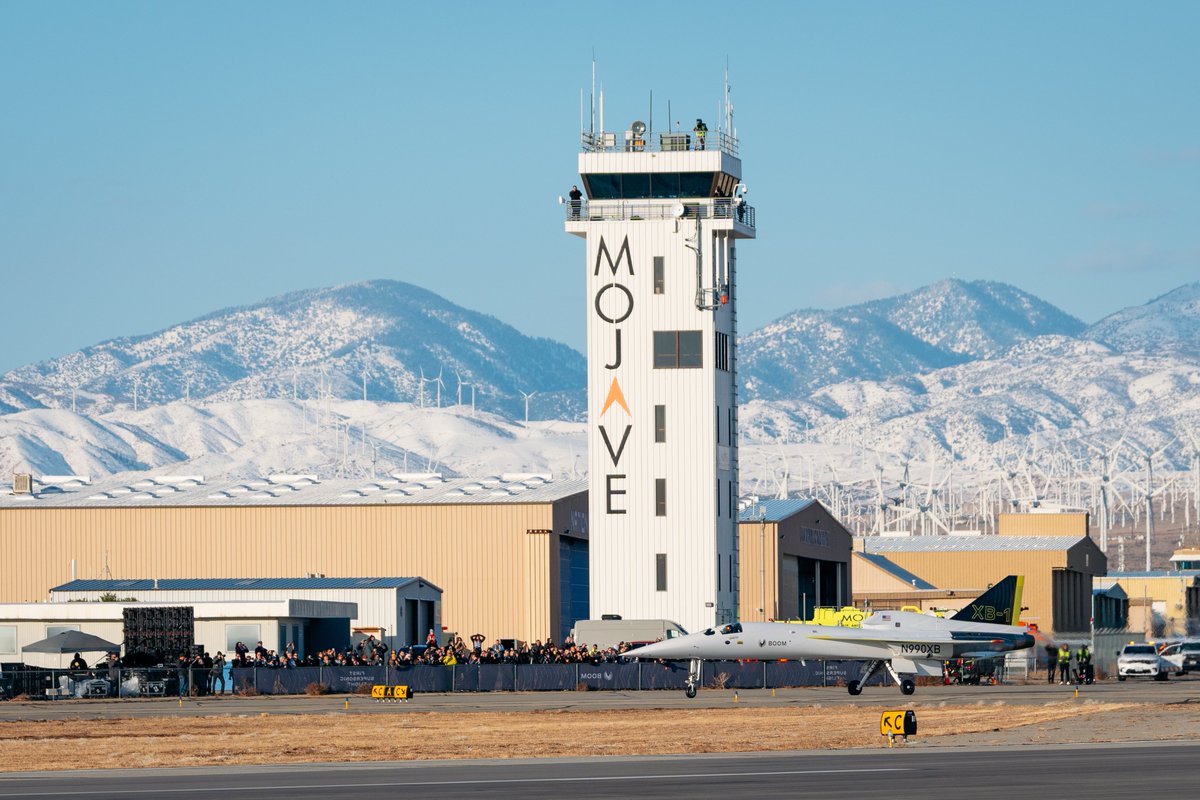
Boom is supersonic. On Jan. 28, 2025 at 8:31am PST / 16:31 GMT, XB-1 broke the sound barrier.
Chief Test Pilot Tristan “Geppetto” Brandenburg safely and successfully achieved supersonic speed in XB-1, the first civil supersonic jet made in America.
��New top speed: Mach 1.122 (652 KTAS)
✅New max altitude: 35,290 ft.
✅Flight time: 34 minutes
✅Airspace: Bell X-1 Supersonic Corridor and the Black Mountain Supersonic Corridor in Mojave, CA
XB-1 demonstrates that Boom has the team, technology, and tools to deliver supersonic commercial travel with Overture, cutting travel times in half.
Congratulations to the Boom team on making aviation history!
I feel the need, the need for speed.
(Below is an essay I wrote ten years ago when I founded @boomsupersonic... but never published until now.)
I grew up in suburban Cincinnati. My maternal grandfather lived just an hour’s drive away in rural Indiana, so we visited easily and often. It’s hard to overestimate the joy he brought into my childhood or his influence on my character. We had countless hours together—in the garden, on his tractor, and in the sandbox. His lessons in self-reliance, everyday joy, and hard work are with me forever.
Today, my family lives near San Francisco. Our kids also have a very special grandfather: he’s one of those self-made investors, who started from little but built a mini empire through hard work, sound judgment, and by treating his employees and customers well. Unfortunately, his home is 14 hours away in Hong Kong. He has so many life lessons to offer, but our kids see him only a couple times a year—far too infrequently for close bonds or real influence.
It’s been 30 years since my childhood. The year is now 2014. Yet, Hong Kong is no more accessible than when I was a child.
Since the Industrial Revolution, we’ve enjoyed ever-improving transportation, each generation increasing the comfort, convenience, safety, and—most crucially—speed available to the average person. In the 1830s, the state of the art for long distance transit was the covered wagon. For a New Yorker, a vacation in the Pacific Northwest was unthinkable. If you were motivated and brave, you might move your family west—a perilous and expensive journey that took months. In 1869, a revolutionary technology was introduced: the transcontinental railroad. A passenger departing New York could reach California in just 83 hours—52 times faster than the wagon and with much greater comfort and safety. If your loved ones had moved to California, they were no longer gone forever—you could visit them. The world was fast becoming a smaller place.
In 1933, just 30 years after the Wright brothers flew, the first transcontinental air service was introduced. You could travel from New York to San Francisco in 20 hours. The trip was uncomfortable with many stops. But for a New Yorker, this meant California could be reached in about the time it takes to get to Hong Kong or Sydney today. The passenger jet age began 26 years later, in 1959, with American Airlines’ service from New York to Los Angeles. The flight took just five hours—nonstop—in greater safety than any automobile and with the comfort of a relatively quiet, pressurized cabin. A long weekend across the country was no longer unreasonable. Some even decided to commute across the country, weekends with family on one coast and work on the opposite.
Fifteen years later, in 1976, the Concorde appeared to open the next revolution in transportation: supersonic flight. It flew at twice the speed of sound, 2.4 times faster than conventional jets. At its speed, passengers could be almost anywhere in the world in under eight hours. One could leave New York in the morning, arrive in London in time for a business lunch & afternoon of meetings, yet still be home in time for dinner with family.
Observers expected the Concorde to usher in an era of supersonic travel. A new generation of supersonic aircraft would displace slower jets, just as those jets had replaced slower aircraft a few decades earlier.
But something went awry: international politics and concerns about sonic boom noise led to a ban of supersonic travel over land. With supersonic routes limited to those mainly over water—about a third of the market—the business case for supersonic became questionable. Congress cut subsidies for supersonic development and private companies elected not to continue without those subsidies. No new supersonic passenger aircraft have flown since the Concorde’s introduction in the 1970s.
In 2003, the Concorde was retired. The apparent cause of death? Public fear after its only-ever fatal accident, a post-9/11 decline in international travel, and increasing maintenance costs for the aging fleet. But the truth is that speed died decades earlier, when high speed development stopped.
For the first time in modern history, humanity got slower and the world got bigger.
What if innovation had continued? Drawbacks of the Concorde—such as high fuel consumption and limited range—could have been solved by successive aircraft. Imagine the life-changing possibilities: A patient waiting for a critical organ transplant might live, because a donor organ can come from farther yet arrive sooner. A California engineer with a factory in China could hear of a production breakdown and troubleshoot it first-hand only a few hours later. A traveling entrepreneur could visit more customers and spend more nights at home with family. Lovers separated by oceans could keep romance alive, thanks to seeing each other every weekend instead of every few months. My own children would see their grandfather every few weeks, perhaps building an irreplaceable relationship for both grandfather and grandchild.
What could faster travel do for you? What friends or family in a distant city could you visit more often? Is there a business trip you’ve been putting off because of the hassle of getting there? Is there a romantic relationship you might be able to make work, if only your partner weren’t so far away? What vacation could you take when the whole world is easily reachable? What could your life be like when travel is so fast and affordable that cities become neighborhoods and the whole world is your domain?
One day, I may have grandkids. I’d like to visit them quickly, easily and frequently—no matter what part of the globe they choose as home.
It’s time for a renaissance in transportation—not just to regain the speed of the Concorde, but to go well beyond.
--
Blake Scholl is founder and CEO at Boom Technology, a transportation startup.
@bscholl@boomsupersonic 👏👏👏 Kudos to you, Blake. You and your team are working miracles!
We did our case study on Boom for our masters students last week and they all loved it... You have lots of international fans willing you guys on!
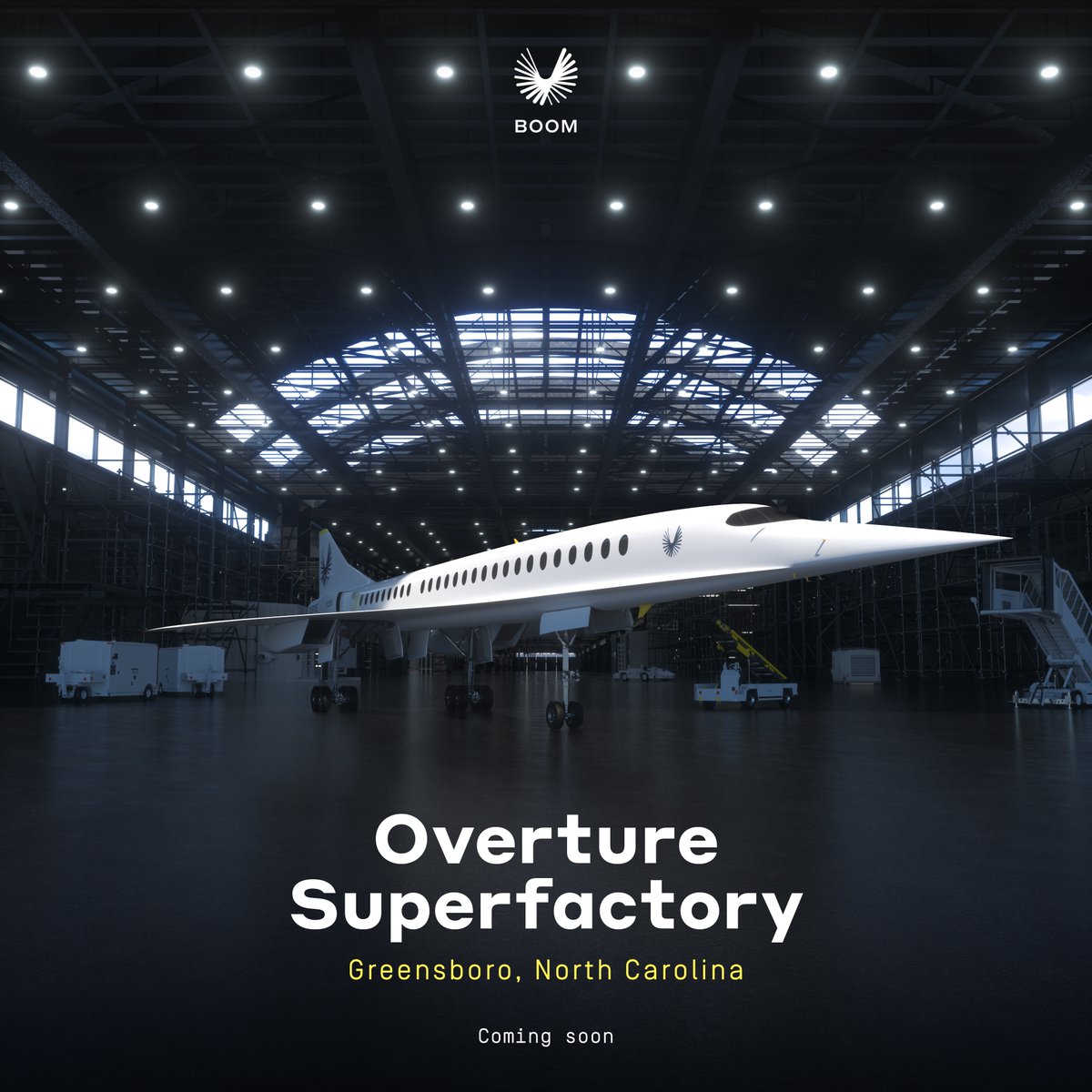
Today @boomsupersonic announced we're building the first #OvertureSuperfactory in Greensboro, at Piedmont Triad International Airport. We're excited that @NCdotGov is going to be first in flight... again!
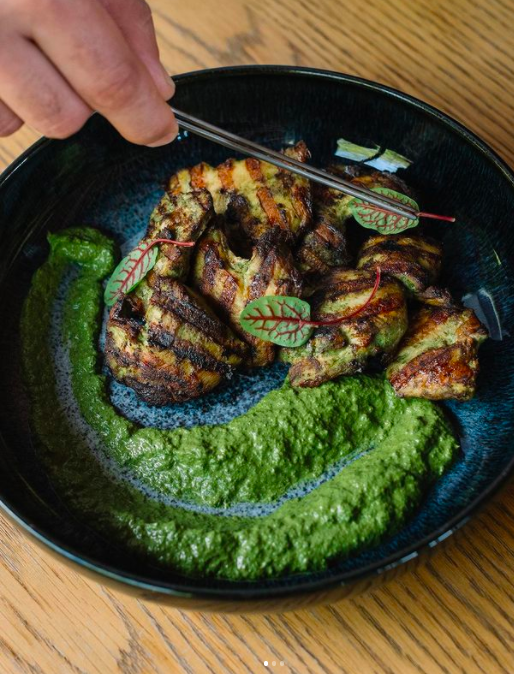
Some smoky grilled chicken with fresh home-made labneh sauce... goes perfectly with a glass of Krakhuna, don't you think?
#georgianwine#exploregeorgia#winepairing
The 5th part of our flash discoveries focuses on Tvishi, made from Tsolikouri grapes of Racha Mountains in Western Georgia. 😍
Tvishi wine has a light straw colour, harmonious tropical fruit and apricot taste with notes of pear, and a pleasant sweetness.
https://t.co/UlGvhYt7wt
Merry Georgian Christmas! Georgians celebrate it on the 7th with a "Chichilaki" - a festive tree made out of dried hazelnuts or walnut branches in the honor of St. Basil Great's beard!
Let's raise a glass for celebration. Cheers everybody!
#georgianchristmas#MerryFreshmas2021
Missing Christmas already? Georgians are celebrating Christmas today. Our Christmas trees are made from dried hazelnut and walnut branches. These "Chichilaki" recall the beard of Saint Basil, a sort of Georgian Santa Claus. We'll be raising a glass of #Georgianwine to celebrate!