At first glance, it's just a brick building. But inside the walls of Independence Hall, a bold idea took shape. Fifty-six men pledged "our Lives, our Fortunes and our sacred Honor," and a new nation was born.
Today, as America celebrates its 250th birthday, we remember the place where the Declaration of Independence was adopted and history changed forever.
Happy Independence Day from where it all started. 🇺🇸
Photo by NPS
How fitting that Morocco 🇲🇦 the first country to recognize American independence, sent home a British commonwealth nation on July 4th, the 250th anniversary of Independence.
Happy Fourth of July—all the way from Taiwan! 🇺🇸🇹🇼
Today, we join Americans across the nation in celebrating 250 years of the United States.
The friendship between Taiwan and the United States is built on our shared democratic values, innovation, and the strong ties between our people.
Here’s to many more years of friendship and cooperation. 🎇🤝🎊
#HappyFourth #Freedom250
On behalf of 1.4 billion Indians, I extend my warmest congratulations to President Trump and the people of the United States on the historic 250th anniversary of your Independence.
India and the United States share more than a strategic partnership. Our shared belief in democracy, rule of law and the limitless potential of our people make our friendship a force for global good.
May the next 250 years bring even greater prosperity, peace and progress for America and take the India-US partnership to new heights.
@POTUS@realDonaldTrump
I extend my heartfelt congratulations to all Americans on the occasion of the 250th anniversary of the signing of the Declaration of Independence. This anniversary stands as an invitation not only to celebrate the nation’s remarkable journey, but also to reflect upon the responsibilities that the sons and daughters of this country bear to one another, and to the generations who will inherit the nation that is being shaped today. https://t.co/jIio4BBg9v
Continental Congress has convened for the day at the Pennsylvania State House.
The doors are shut and the windows shaded to keep the sun out as much as possible - and to keep out eavesdroppers and spies.
The delegates are stifling on the stuffy inside and we, the public, are presently unaware of the machinations occuring within.
America burned Japan's first gift of cherry trees. All 2,000 of them, on President Taft's direct order.
The 1910 shipment arrived in DC crawling with insects and nematodes. Agriculture inspectors condemned the lot, Taft signed off on the bonfire, and the State Department braced for a diplomatic disaster. Tokyo's mayor, Yukio Ozaki, responded by sending 3,020 more, grafted from the famous grove along the Arakawa River.
Those trees have spent a century paying the friendship back.
Four days after Pearl Harbor, vandals chopped down four of them. Park officials renamed the survivors "Oriental" cherry trees for the rest of the war to protect them from axes.
Then came the twist. By 1952 the original Arakawa grove in Tokyo, the parent stock, had nearly died from wartime neglect. Japan asked Washington for help. The Park Service shipped budwood from DC's trees back across the Pacific and restored the grove that created them. When a flood wiped out more Japanese trees in 1982, horticulturists took 800 fresh cuttings from the Tidal Basin.
These 250 new trees solve a real problem too. The Tidal Basin is sinking, and a $133 million seawall rebuild forced crews to rip out roughly 150 trees. Japan offered replacements before anyone asked, timed to America's 250th birthday.
So the genetics run in a loop. Tokyo's grove seeded Washington's. Washington's saved Tokyo's. The saplings going in this spring descend from both.
114 years of diplomacy, running on grafted branches.
Today marks the 250th anniversary of one of humanity's brightest, strongest, and most influential dreams – the American Dream of an independent, free, and prosperous nation that defends people's freedom, faith, and the pursuit of happiness.
That dream has endured many trials. It did not merely survive – it has, for two and a half centuries now, served as an example for other nations and helped the entire humanity stand firm and become freer. This was especially important in the 20th century, when America helped save the world from the rule of tyrants and built the alliances and partnerships that, for the first time, gave a large part of humanity lasting peace and the opportunity to develop in freedom.
Now, in the 21st century, America's influence and importance are certainly no less. And we see that particularly clearly in Ukraine, which is fighting for its independence, freedom, and our people's right to happiness with much the same hope, the same purpose, and the same determination with which Americans won and defended their own independence.
We deeply value the support of the United States, especially now, during Russia's full-scale war against Ukraine. American weapons – from the Javelins that President Trump decided to give to Ukraine to the Patriots that most reliably protect the lives of our people – everything the United States has provided to help us defend our country demonstrates the strength of the American spirit, American resolve, and American technology.
And we know the value of all these words better than anyone. When we ask America for Patriots, we believe that the values of respect for life and for people that prevailed 250 years ago will prevail again today. The world needs the kind of leadership that guarantees protection for freedom and for life.
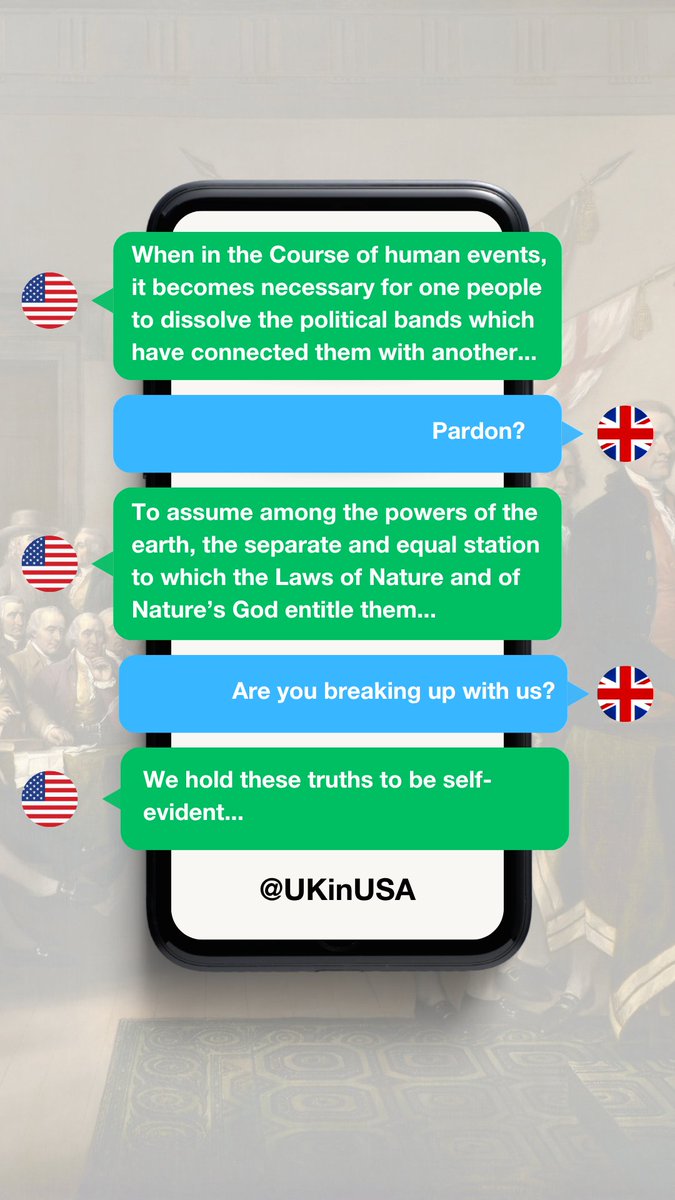
I wish America a happy Fourth of July, the President of the United States and all Americans every success, and all of us around the world who value America – fruitful cooperation. "We hold these truths to be self-evident, that all men are created equal, that they are endowed by their Creator with certain unalienable Rights, that among these are Life, Liberty and the pursuit of Happiness." That is what unites all of us – all who respect America and thank America today.
May the dreams of free people always triumph over the evil and hatred of those who seek to destroy freedom. America, thank you! I am confident that if we're in it together, we'll definitely achieve peace! Congratulations on your Independence Day!
On this day in 1863, Robert E. Lee bet the entire war on twelve thousand men walking a mile across an open field into the center of the Union line, and he did it over the loud objection of the general he trusted most.
Lee had spent two days hammering the ends of the Union army and gotten nowhere. So on the third day he reasoned it out like this. If the enemy had reinforced both flanks to survive all that pounding, then the middle must be thin now. Hit the center, hard, with everything, and break it, and the road to Washington opens up and the South wins its independence in an afternoon. It was bold and it was logical and it was, as it turned out, a catastrophe.
James Longstreet begged him not to do it. Longstreet had walked that ground with his eyes, measured the distance, seen the guns waiting on the ridge, and he told Lee flatly that no fifteen thousand men who ever lived could cross that field and take that position. He said it more than once. Lee heard him and said do it anyway. When the moment finally came to launch the attack, Longstreet was so sick with certainty that it was murder that he couldn't say the word. He just bowed his head and nodded, and the assault went forward on a nod.
First came the guns. The Confederates opened the largest artillery barrage of the entire war on this continent, well over a hundred cannon roaring at once, trying to smash the Union center to rubble before the infantry stepped off. The ground shook for miles. But most of the shells sailed just a little long, screaming over the heads of the front line troops and blowing up the rear. When the smoke drifted off, the Union center was battered but very much alive, and the gunners there were waiting, loaded, and furious.
Then the infantry came out of the tree line, and even the men about to kill them said it was one of the most beautiful and terrible things they ever saw. About twelve thousand Confederates, dressed in neat parade lines nearly a mile wide, battle flags up, stepping off in perfect order into the open like it was a drill. They had almost a mile of naked field to cross, uphill, in the July heat, with nowhere to hide.
The Union artillery went to work on them the whole way. First long range shells punched holes clean through the marching ranks, whole files of men vanishing at a time. The survivors closed up the gaps and kept coming, which somehow made it worse to watch. As they got closer the cannon switched to canister, basically giant shotgun blasts that scythed men down in swaths. Then the rifles opened up from behind the stone wall. The neat lines dissolved into a struggling mob still pushing forward into the storm.
And they almost, almost did it. A few hundred men under a general named Lewis Armistead actually reached the wall, Armistead out front with his hat jammed on the tip of his sword so his men could see him in the smoke. He climbed over, put his hand on a Union cannon, and for one heartbeat the Confederacy was physically inside the Union line at the very center. That spot is called the High Water Mark now, because it is the farthest the tide of the Confederacy ever reached. Armistead was shot down right there, dying a few feet past the wall. The handful who got over with him were killed or captured in minutes. The breach slammed shut.
And that was it. That was the whole war, decided in about an hour. The survivors streamed back across that awful field, and Lee rode out among them with his hat off, saying over and over, it's all my fault, it is all my fault. He told Pickett to rally his division for a possible counterattack, and Pickett looked at him and said, General Lee, I have no division. It was gone. Roughly half of the men who made that charge were dead, wounded, or captured.
The next day was the Fourth of July. Lee started his beaten army on the long, rainy retreat back to Virginia, and he would never invade the North again. And far away on that same Fourth of July, the river fortress of Vicksburg surrendered out west, cutting the Confederacy in two. The high tide had crested and broken on the same little Pennsylvania ridge, and from here on the water only ran one way.
Thomas Jefferson was 33 years old when his draft of the Declaration of Independence reached Congress on June 28, 1776. A week later, the delegates went through it line by line and cut almost a quarter of what he had written.
He had not worked alone. A committee of five delegates, including Benjamin Franklin and John Adams, was asked to write a statement of independence, and they handed the job to Jefferson. He did it in about 17 days, in a rented room on the second floor of a house in Philadelphia. He wrote on a portable lap desk he had designed himself: mahogany, about the size of a modern laptop, with a fold-down board and a drawer for ink and paper. It sits in the Smithsonian now.
What he handed over on June 28 was very different from the version we honor today. Franklin and Adams had already marked it up before it reached the floor. In all, the text went through 86 changes.
The biggest single cut was a long passage that blamed King George III for the slave trade. Delegates from South Carolina and Georgia wanted it gone, and Congress removed it to keep them on side.
Jefferson sat through the edits and hated them. Franklin, sitting next to him, tried to cheer him up with a story about a shopkeeper named John Thompson, whose sign once read "John Thompson, Hatter, makes and sells hats for ready money," with a picture of a hat. One friend after another cut a word they thought was pointless, until the sign simply said "John Thompson" next to a drawing of a hat. That, Franklin told him, is what happens when a committee gets hold of your words.
For the rest of his life, Jefferson kept copying out his first draft by hand and sending it to friends, so they could read what he had written before Congress changed it.
The parchment behind glass at the National Archives, the one more than a million people line up to see every year, is the edited text adopted on July 4, not the draft from June 28. Centuries of sunlight and travel have faded it so badly that much of it now reads as blank parchment. The heading and John Hancock's signature are about all you can still read.
Jefferson called it "an expression of the American mind." It was never just one man's work. Many people argued over it, cut it down, and signed it, and the country it founded is still standing 250 years later.
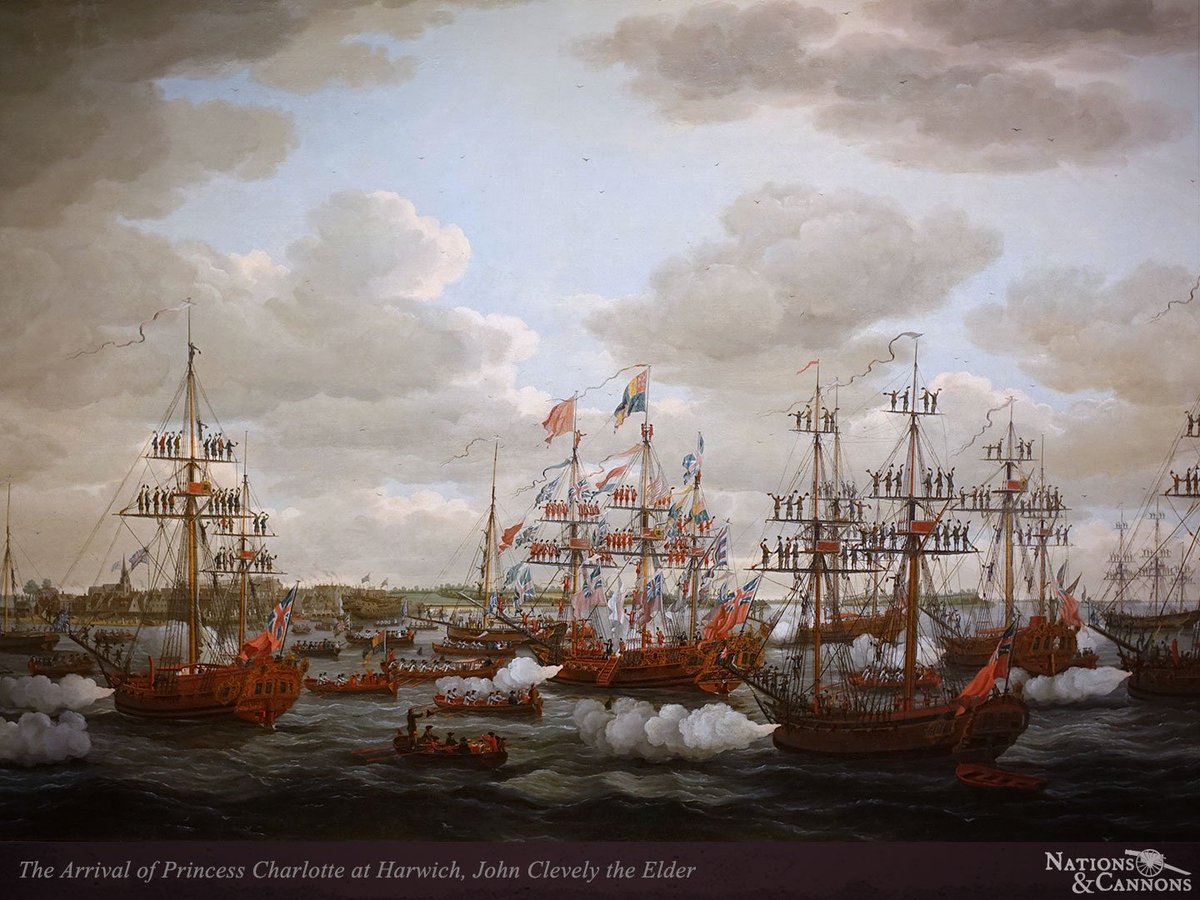
250 years ago today, on June 29, 1776, New Yorkers looked out at the water and saw a nightmare on the horizon. The British fleet had arrived, and so many ships filled the bay that witnesses said the masts looked like "a forest of pine trees" growing out of the sea. The timing could not have been more brutal.
This was the empire's answer to the rebellion, and it was overwhelming. The first wave of around 45 warships and transports dropped anchor off Sandy Hook and Staten Island carrying General William Howe and roughly 10,000 troops. Within days it kept growing. Then his brother Admiral Richard Howe arrived with more. It would eventually swell into one of the largest seaborne invasion forces of the entire 18th century, hundreds of ships and tens of thousands of professional soldiers and German mercenaries, aimed at one city.
Now sit with the timing. While that forest of masts was filling the harbor, delegates down in Philadelphia were in the final days of debating whether to declare independence. They voted for it on July 2 and signed off on the wording on July 4. So at the exact moment America was being born on paper, the most powerful military on earth was already anchored off its coast, getting ready to strangle it in the cradle.
The people of New York understood exactly what they were seeing. Alarm bells rang, panic spread through the streets, and soldiers sprinted to their posts to stare at a force they had almost no hope of matching. Washington's army was outnumbered, outgunned, and about to get badly beaten in the battles for New York that followed.
That's the part that gets lost in the fireworks every Fourth of July. Independence wasn't declared from a position of strength. It was declared with an enemy armada already sitting on the doorstep, knowing full well what was coming. They signed their names anyway.