Montañista escalador de 8000 metros. Médico por La Tierra. Documentalista. Conferencista. Escritor. Creador de “Cumbres del Mundo” y “Deporte y Salud”.
We are all relieved and grateful that Dawa Sherpa has miraculously survived and returned alive after days alone on Mt Everest. But while we celebrate the fact that he is alive, many serious questions remain unanswered.
Why was Dawa Sherpa left behind high on the mountain in the first place? When he failed to arrive at the lower camps, why was there no immediate communication with him? How could a climber remain missing for days on Everest without an urgent rescue initiative being launched? Why was human life seemingly not treated as the highest priority?
Another difficult question must also be asked. If the person left behind on Everest had been a foreign client rather than a Sherpa, would the same thing have happened? Would days have passed without a major search effort? Or would helicopters, rescue teams, and international attention have been mobilized immediately? It is an uncomfortable question, but one that deserves an honest answer.
This case also raises broader concerns about accountability and the growing sense of lawlessness on the world's highest mountain. Where is the Government of Nepal when such incidents occur? Everest operates under permits, regulations, and government oversight. If a climber can be left behind and remain missing for days without apparent accountability, what does that say about the system meant to protect human life? Who is responsible for enforcing the rules, investigating negligence, and ensuring that companies put safety before business?
Dawa Sherpa survived. That is the good news. But survival should not be used as an excuse to avoid questions. The mountaineering community, the public, and Dawa himself deserve answers.
@superstrato1957@EverestToday@jsmontes Herzegovina que fue después Ministro del Deporte en Francia perdió dedos de manos y pies por congelaciones en ese primer ascenso del Annapurna de 1950
For 20 years, students at a strict Catholic school in Los Angeles feared their calculus teacher.
Then they discovered where he spent three nights every week.
His name was Jim O’Connor.
Former Navy veteran.
Math teacher.
Relentlessly demanding in the classroom.
At St. Francis High School, students knew him as the teacher who never accepted excuses.
Discipline mattered.
Effort mattered.
Precision mattered.
Nobody would have described him as soft.
Then one day in 1989, a friend asked Jim to donate blood at Children’s Hospital Los Angeles.
He had Type O-negative blood — the universal donor type.
He gave once.
Then he kept coming back.
Over time, hospital staff noticed something else about him.
After donating blood, Jim would stay.
He learned about a small volunteer group that cared for infants who were sick, abandoned, withdrawing from drugs, or simply alone for long stretches of time.
Babies who needed to be held.
So Jim signed up.
Three days a week.
For 20 years.
After finishing work at school, he’d drive to the hospital, walk into the neonatal ward, pick up whichever baby needed comfort most, and quietly rock them to sleep.
He fed them.
Walked the halls with them late at night.
Sang softly to them.
Held them against his chest for hours.
Nurses said he could calm even the fussiest infants.
And he never told anyone at school.
Not coworkers.
Not students.
Nobody.
For two decades, the toughest teacher on campus spent his evenings comforting fragile newborns in dark hospital rooms.
Then a group of students organizing a blood drive visited the hospital.
The moment they mentioned St. Francis High School, hospital staff lit up.
“Do you know Jim O’Connor?”
The students were confused.
Then they saw the plaque listing the hospital’s top blood donors.
At the very top was their calculus teacher’s name.
Jim O’Connor had donated 72 gallons of blood.
And volunteered with infants for 20 years without ever mentioning it.
When reporters later asked why he kept it secret for so long, Jim looked genuinely confused by the question.
“I wasn’t hiding it,” he said.
“I just didn’t think it was anybody else’s business.”
That’s probably why the story still moves people.
Because real kindness rarely announces itself.
Sometimes the people who seem hardest on the outside are carrying the softest hearts in complete silence.
And sometimes the most extraordinary things a person does are the things they never felt the need to tell anyone about.
Assisti a Rafa, a série da Netflix sobre Rafael Nadal, esperando encontrar a fórmula tradicional dos documentários esportivos: imagens épicas, trilha emocionante e uma sucessão de elogios à genialidade de um atleta extraordinário. E isso até existe na série. Afinal, fala de um homem que conquistou 22 títulos de Grand Slam e transformou Roland Garros em seu quintal particular. Mas logo ficou claro que a proposta era outra.
Rafa não é uma história sobre vitórias. É sobre o preço das vitórias.
Ao acompanhar os últimos anos da carreira de Nadal, a série desloca o foco dos troféus para o desgaste físico e emocional provocado por décadas de busca pela excelência. Exames médicos, sessões de fisioterapia, dores crônicas e dúvidas sobre continuar ou parar ocupam mais espaço do que os momentos de glória.
E aí a série deixa de ser sobre tênis.
Todos admiramos o sucesso, mas raramente refletimos sobre seu custo.
A certa altura, Nadal é menos um campeão e mais um homem tentando negociar diariamente com o próprio corpo. A série mostra como uma condição rara no pé, diagnosticada ainda no início da carreira, desencadeou adaptações que permitiram que ele continuasse competindo, mas que também cobraram um preço crescente ao longo dos anos.
O contraste entre o jovem Nadal, explosivo e aparentemente indestrutível, e o veterano cauteloso, limitado pela dor, é o aspecto mais impactante da narrativa, porque torna sua trajetória mais humana.
Foi impossível assistir sem pensar em quantas pessoas vivem algo parecido fora das quadras. Empresários que sacrificam a saúde para construir empresas. Profissionais que chegam ao topo e descobrem que deixaram relacionamentos pelo caminho. Pessoas que dedicam décadas a um objetivo e, quando finalmente o alcançam, já não sabem quem são sem ele.
Rafa não oferece respostas definitivas. Talvez por isso funcione tão bem. Mais do que um documentário sobre um dos maiores tenistas da história, é uma reflexão sobre excelência, propósito e envelhecimento. Você termina os quatro episódios impressionado pelos títulos, mas muito mais impressionado pelo homem que precisou carregá-los.
@limon_srta Y por las autoridades nepalíes que no quisieron atender a su mujer quien rogaba desde el día de la desaparición de Dawa (29 de mayo) que lo buscaran, pero encontró oídos sordos.
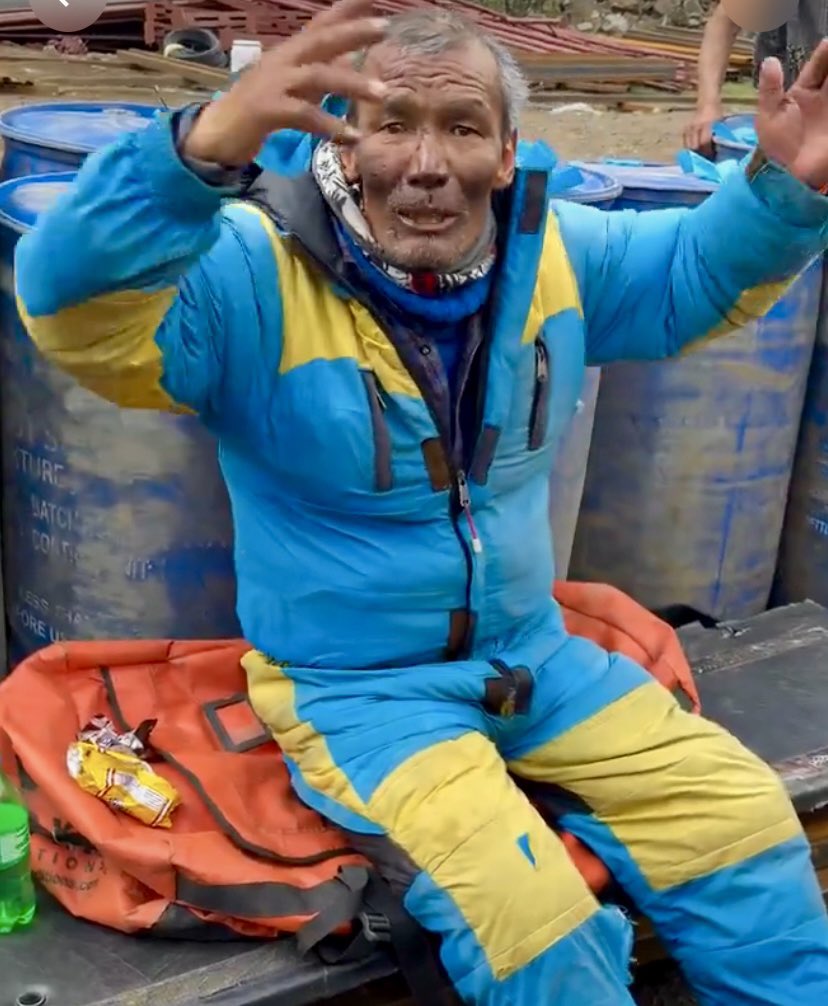
Dawa Hillary Sherpa (52 años, de Okhaldhunga, Nepal), guía sherpa experimentado, fue dejado atrás el 29 de mayo de 2026 (último día de la temporada) durante el descenso del Everest, cerca de la zona de la muerte.
Dawa guiaba a un cliente polaco con Himalayan Traverse Adventure (agencia nepalí). El cliente —que escalaba sin oxígeno suplementario— sufrió congelaciones graves cerca del Collado Sur (Campo 4, 7.950m), por lo que dieron la vuelta.
En el descenso por la Cara de Lhotse (cerca del Campo 3 / Yellow Band, 7.500-7.600 m), Dawa se detuvo a descansar con mochila pesada y les dijo al cliente y a otro sherpa que siguieran. Se separaron.
El cliente y otro sherpa llegaron al Campo 2 (6.400 m), de donde fueron evacuados en helicóptero. Dawa no apareció.
La temporada en el Everest cerraba ese mismo día. Los Icefall Doctors retiraban las escaleras de la Cascada de Hielo del Khumbu poco después (zona 5.500-6.000 m).
Su empresa tardó días en reportarlo y no activó una búsqueda inmediata.
El miércoles 3 de junio subió un helicóptero (de 8K Expeditions, a petición de la familia), pero no lo vio a pesar de buscar desde la Cascada de Hielo hasta Campo 3.
Críticas duras por negligencia y falta de apoyo.
Final milagroso (hoy, 4 de junio): Dawa sobrevivió 6-7 días solo en la montaña (sin oxígeno, sin comida, solo, sin ayuda).
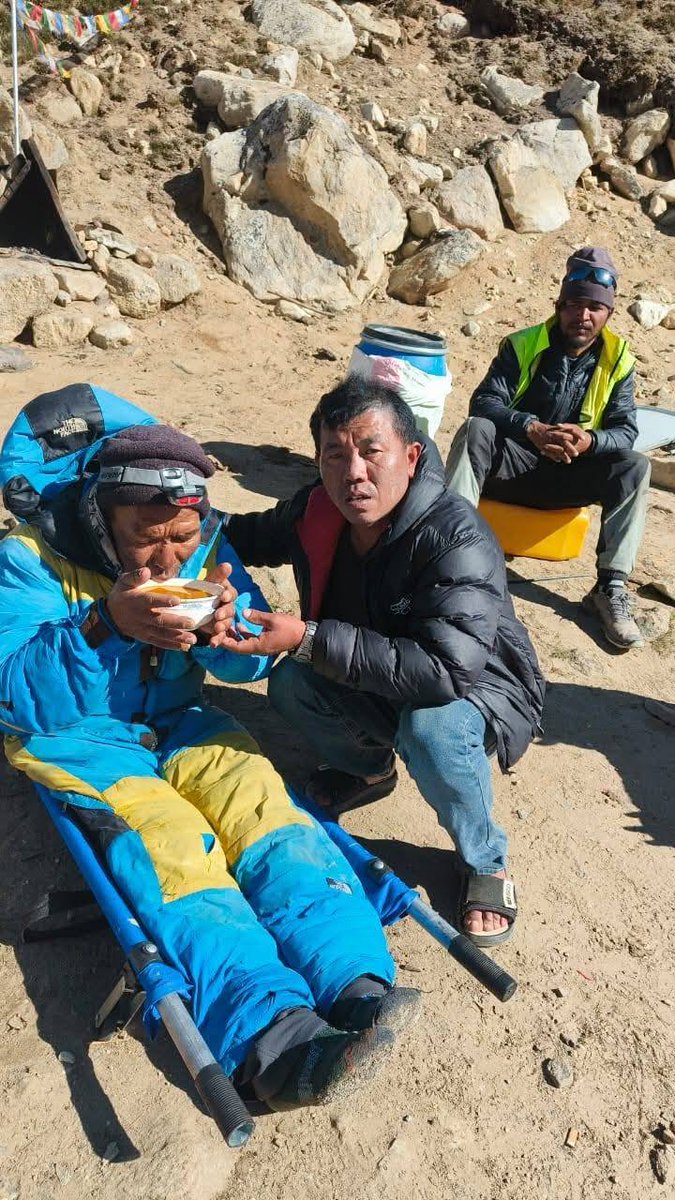
Bajó arrastrándose más de 2.000 m por la vertiginosa Cara de Lhotse, Western Cwm y la peligrosa Cascada de Hielo del Khumbu, arrastrándose hacia el Campo Base . Un equipo de limpieza lo encontró cerca del Crampon Point, consciente pero con graves congelaciones. Dawa hablaba lento y estaba débil. Le dieron una sopa caliente. Fue evacuado en helicóptero a Kathmandu, donde está en el hospital recuperándose.
Su familia ya preparaba los funerales.
Pero como dice la canción de Cheo Gallego:
"Nadie sabe si luego de la muerte podemos vernos,
nunca;
Que si el infierno que resguardas tú
Lo guardas, pero en tu yo interno
NUNCA."
📷Mingmar Sherpa/Capitán Bibek Khadka
Las empresas que lucran con el ascenso del Everest deben hacerse cargo de retirar la basura. El campamento del Collado Sur, a casi 8.000 metros es un basural de carpas, botellas de oxígeno y estiércol.
Hay que pagar e invertir en descontaminar.
Un poco de espíritu!!!