Artist Fulton Leroy Washington, whose "excessive" life sentence for a nonviolent drug offense was commuted by Obama, literally painted himself free; he did The Atlantic cover portrait of C. J. Rice, who is "similarly situated" https://t.co/1MAMTuO6Nb
Family members of Jeffrey Dahmer's victims raise ethical challenges to the Netflix "True Crime" series; One had her victim impact testimony reproduced verbatim: https://t.co/tKjC8tUcFu via @thr
Interested in what producing work that is non-extractive (i.e., equitable and just) through engagement "with, for and about marginalized, vulnerable people"? Check out DAWG's "Framework for Values, Ethics and Accountability in Nonfiction Filmmaking" at https://t.co/Ewnt81xOA9
A Podcast about the Amazing Multimedia Collection of Interviews of 100+ men serving LWOP at Angola by The Visiting Room Project, a Co-Creation of an Innocent Exoneree and a Loyola New Orleans Prof: https://t.co/mLt68itFI1 via @TheTakeaway
Check out #IndustryBlackout, a collective dedicated to changing the industry, and its sharp criticism of Capitol Records' deal with an AI firm and its virtual Black Rapper https://t.co/65CHz3qv91
Art has been an integral part of the Docs&theLaw Program's approach to visualizing injustice and its antithesis. Artists who are directly addressing incarceration are gaining attention. See
https://t.co/SK5u7J2C4w
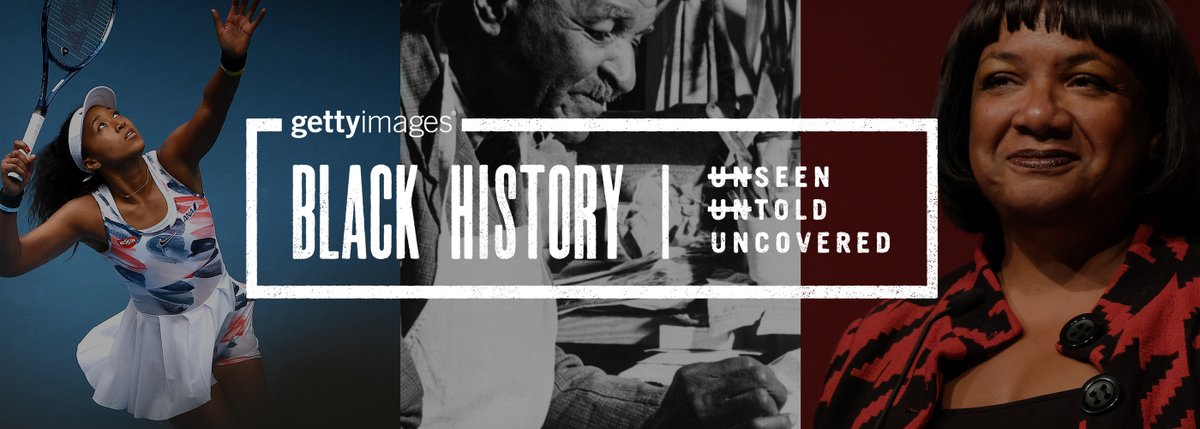
Getty Images announces the launch of its Black History & Culture Collection of 30,000 images of the African/Black Diaspora in the UK and US with a video. See https://t.co/cCdx4b1FnG or https://t.co/HmZxLQ5sPE
We are thrilled to launch the Black History & Culture Collection, providing free, non-commercial access to historical and cultural images from the 1800s-present to educators, academics, researchers and creators. https://t.co/iFwJ1SzJEC #BlackHistoryCultureCollection#BlackHistory
Images of enslaved persons taken as part of "research" on black inferiority may belong to Harvard but the emotional distress caused by what Harvard does with the images and how it deals with the subjects' heirs may be actionable.
NEW: Massachusetts’ highest court ruled that an emotional distress claim against Harvard brought by Tamara K. Lanier — who claims photos of enslaved people housed by the Peabody Museum depict her ancestors — can proceed. https://t.co/pmVjMpIpcG
Thanks to a $300,000 grant from @NBCUniversal News Group, @rcfp will continue to expand its capacity to provide pro bono legal support for journalists of color and newsrooms that are led by journalists of color.https://t.co/nu8ncnZwlO
After the carnage in Uvalde, commentators in major press outlets have questioned the media ethics of not showing what an AR-15 style rifle can do to a child's body. Are descriptions enough to inform the debate over gun safety laws? Sometimes. https://t.co/bmX7bma253
Want to learn more about digital tools for documenting human rights violations? Join WITNESS at RightsCon online, June 6-9 https://t.co/htUMM2ZXuW via @witnessorg
Citizens, public officials and soldiers have posted videos every day of Russia's war in Ukraine.
The Washington Post has verified and catalogued more than 200 videos from the war in Ukraine into a searchable database that will be updated. https://t.co/B4DZM4aKyj
Now Playing in Philly: A Mozart violin duet rewritten via randomness and the mathematics of chance by a "math genius" who was executed after 30+ years on Death Row: https://t.co/VTONJNJr1p
The visual turn in law extends to critiques of the physical spaces, the architecture, where JUSTICE lives and dies. Inga Saffron's review of Philly's new police HQ, former home of the Inquirer, is a prime example of that.https://t.co/u48cIpRK4E
I loved working in the light-filled Philly Inquirer tower. But I would hate to have to work in the warren of windowless spaces created as part of its transformation into the new police department headquarters. My review of how the project went wrong. https://t.co/DUiUCPJ0dD
@IngaSaffron The visual turn in law extends to critiques of the physical spaces, the architecture where JUSTICE lives and dies. Inga Saffron's review of Philly's new police HQ, former home of the Inquirer, is a prime example of that.
To understand Law's reassessment of the contributions of the visual in the struggle for human rights, consider the work of photojournalist Peter Turnley https://t.co/jfInff8p2l via @cbssunday