Pi Network @PiCoreTeam joins RoboPay as a payment partner. Pi will be used to pay for robot services across the Fabric network.
RoboPay was built to enable AI agents to discover, hire, coordinate, and pay robots autonomously onchain, transforming robots from connected machines into autonomous economic actors capable of providing real-world services.
Today, that same infrastructure extends beyond AI.
Tens of millions of Pi users will have access to robot services directly through the use of currency that they already hold. Once available, the anticipated robot services may include requesting a delivery robot to bring groceries, dispatching a security robot to patrol a property, scheduling an inspection robot for industrial facilities, or interacting with humanoid assistants in retail and hospitality. Autonomous labor may become as accessible as any digital service.
This partnership marks a fundamental shift in how humans are able to interact with robotics. Instead of purchasing robots themselves, users will be able to simply purchase outcomes. Physical intelligence becomes an on-demand service that is discoverable, programmable, and instantly payable through a shared economic network.
By connecting humans, AI agents, and robots through the same payment infrastructure, RoboPay and Pi have created the foundation for an open machine economy, where autonomous labor can participate in everyday commerce alongside real people.
The future isn't just AI that can think. It's an economy where humans, AI, and robots are all able to transact, collaborate, and create value together.
Now we have to play against Cape Verde.🇨🇻
If we lose, they'll roast us for losing to Cape Verde. If we win, they'll tear us apart for beating Cape Verde.
Once again, Argentina 🇦🇷 against the world
One of the purposes of the Pi Launchpad test token launches is to introduce Pioneers to new ecosystem token mechanics and educate the community on how to participate with DeFi mechanisms.
The first test token provided useful data and highlighted areas where the Launchpad experience needed improvement.
The updated participation flow is simpler and clearer. Participation is now centered around the commitment amount, which has the direct effect on token acquisition. A Pioneer chooses how much Test-Pi they want to commit, and the Launchpad automatically calculates the related “fair-access hold,” and then shows the commitment amount, hold amount, and total together before confirmation.
The goal is to make it easier to understand and use the Pi Launchpad, and preserve the intended fair-access effect of the hold.
Learn more and test the second SLICE token on Testnet today! The SLICE test token launch will be open for participation until Pi2Day, June 28, 2026.
https://t.co/iTiuc93uFq
Leo Messi historical hat-trick made him the all-time top scorer of the World Cup 🤯🇦🇷
There are simply no words 😶🔟
🇿🇦 Get your World Cup Pass now and watch all FIFA World Cup 2026™ matches on SportyTV YouTube channel here: https://t.co/NAhrEWXxGU
Pi Launchpad has updated its participation flow and model, incorporating data and feedback from the first Testnet token that launched on Pi Day 2026!
The first Launchpad test token attracted over 478,000 participating Pioneers and generated valuable feedback on the Launchpad mechanism. That feedback has now been incorporated into a simpler participation flow, updated Launchpad mechanics, and an improved user experience.
A second test token “SLICE” is now live on Testnet to help evaluate if the updates can achieve these goals, and to give Pioneers another chance to learn the new ecosystem token mechanics. As a reminder, SLICE is a Testnet token and will never go onto Mainnet.
To participate:
• Open Pi Launchpad in Pi Browser
• Review the SLICE test token and project
• Choose a commitment amount in Test-Pi
• Confirm participation
• Engage with the Slice of Pi app and provide feedback
Participation will remain open until Pi2Day on June 28.
Learn more on the Pi home screen!
The Pi Mainnet is upgrading to Protocol 25.
Deadline: June 18.
All Mainnet nodes are required to complete this step before the deadline to remain connected to the network. This upgrade takes longer to complete. Plan accordingly.
Details here: https://t.co/9VehO7hhj1
CiDi Games, a Pi Network Ventures portfolio company, launched their beta app in the Pi Browser!
This brought Pioneers 10 instant-access games along with skill-based tournaments, platform progression through CiDiScore, the Pi ELF companion experience, Elf Continent, and developer infrastructure for Pi-integrated games.
In less than one week after the beta launch, CiDi Games independently attracted over 81,000 Pioneers across 160+ regions and 1.2 million game sessions organically, demonstrating how the Pi Platform can help utility-focused apps reach real users, drive engagement, and monetization, which in turn expands utility across the Pi ecosystem.
Go to the Pi app today to learn more!
@Chilearmy123 Content theft is a losing game.
We already have duplicate detection for videos working in internal testing.
Impressions & engagements on reposts will accrue to the original author.
The United States Indo-Pacific Command submitted a report of an unidentified anomalous phenomenon to the All-domain Anomaly Resolution Office (AARO) consisting of one minute and 39 seconds of video footage from an infrared sensor aboard a U.S. military platform in 2024.
The United States Indo-Pacific Command submitted a report of an unidentified anomalous phenomenon to the All-domain Anomaly Resolution Office (AARO) consisting of one minute and 39 seconds of video footage from an infrared sensor aboard a U.S. military platform in 2024.
n one of the videos released by the U.S. Department of Defense as part of its UFO files disclosure, a star-shaped object can be seen moving erratically across the sky in sharp zigzags. Its origin is not explained in the documents. The video is from 2013.
n one of the videos released by the U.S. Department of Defense as part of its UFO files disclosure, a star-shaped object can be seen moving erratically across the sky in sharp zigzags. Its origin is not explained in the documents. The video is from 2013.
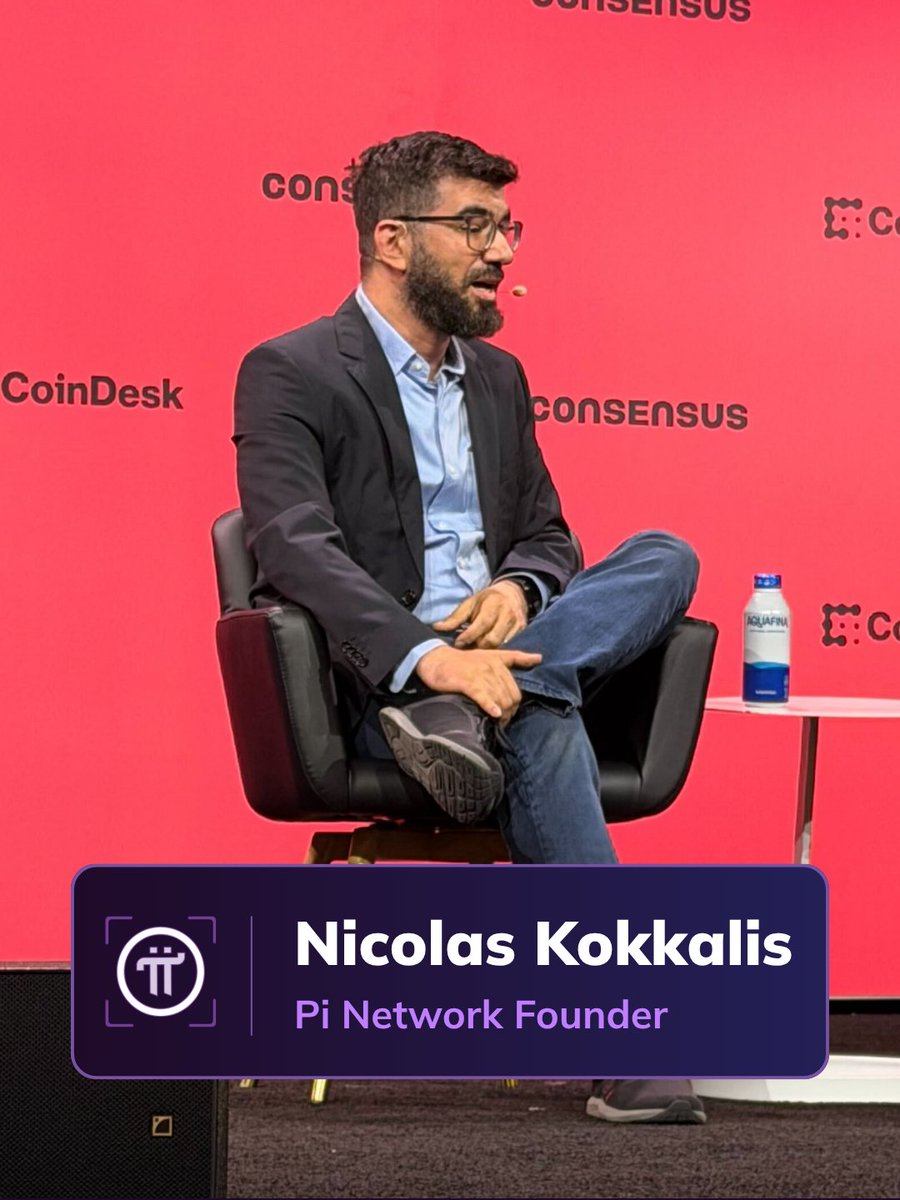
Pi Founder Nicolas Kokkalis spoke today at Consensus 2026 Miami on the panel, “How to Prove You’re Human in an AI World (Without Doxing Yourself).”
The discussion focused on one of the most urgent challenges in the AI era: how to maintain trust and verify real human identity as AI systems become capable of generating convincing bots, profiles, and interactions at scale.
Stay tuned for the full video!
Pi Founder Chengdiao Fan spoke today at Consensus 2026 Miami in her session, “Aligning Web3, AI, and Blockchain for Utility.”
Dr. Fan shared how Pi’s blockchain infrastructure, identity verification, and a globally engaged network can support utility-driven products and businesses in the AI era.
Her talk built on a central challenge in the broader crypto industry: the frequent misalignment between token design and real innovation. While tokens in the industry have often been used primarily as capital-raising tools or quick exits, Dr. Fan discussed Pi’s approach to treat tokens as tools that can support growth, engagement, and long-term utility.
Pi’s approach to ecosystem tokens and launch mechanisms focuses on tokens for user acquisition and integrating token design into the product innovation process. By using tokens to help products acquire real users who can engage, provide feedback, and use those tokens within actual product experiences, this approach connects token design more directly to utility and product development.
More broadly, Dr. Fan’s talk invited discussion on how blockchain can help shape AI-era business models, financial literacy, ownership, and socioeconomic participation. As AI lowers the barrier to building, the focus shifts toward something harder to replicate: real users, real participation, and trusted human input at scale.
Stay tuned for the full session video!