Dog Emotion Lab, currently independent, themes:
#Dog Emotion, Behaviour and Cognition, Dog-Human Communication, #Welfare
Tweets by Anjuli Barber - views her own
Interested in dogs visually and auditory experience their environment and how this is different or similar to us humans? See my latest publications in @CCBRjournal 👇
https://t.co/FwdFAfDR6o
https://t.co/dFHUi9NJHL
Lovely chat with Alexandra Horowitz, who did the original work on the guilty look in dogs -discussing what her work does and does not show. Also chat about dogs' views of the world, the olfactory mirror test etc. https://t.co/65LvqFVIuy or listen : https://t.co/FVCxxGvXWF #dogs
We have 3 exciting roles available in our friendly and dynamic research team working on rehoming and post adoption data to provide insights to our fantastic rehoming centre teams - check out https://t.co/zbOwWn4KCP
🐕The second paper of my PhD has been published!! Based on the responses of 1030 dog owners, we highlight a few activities dog owners do with their dogs which could help improve human well-being. I hope you like it! https://t.co/LQ3Gkr9XwH @niko_kargas@profDSM
Dogs left at home showed low physical and vocal activity, independent from the time being alone. Male dogs in multi-dog households showed a higher vocal activity. Familiar conspecifics do not facilitate coping with separation. https://t.co/XOpdiwjnin
GPS-collared wolves (N=17) were active 44% of the day and traveled 1.21 km/h on average in Russia. The mean duration of subsequent activity periods was 7.36 h. The duration of the subsequent, inactivity period was 10.07 h. https://t.co/EZzTAPpLWK
The canine nose pattern is fully formed at the end of the second month since birth and remains invariant until the end of the eleventh month. Canine nose pattern could be used as a unique biometric marker for each individual dog.
https://t.co/joApCsxuzx
Hi ! Does your dog affect your well-being? Join the last study of my PhD about how dogs impact on our mental health. All you have to do is answer our 20-30 min survey. It is available in 4 languages: English, Spanish, German and Portuguese. Thank you!😄
I have often described Hal Herzog as a "healthy sceptic" of the claims made about the impact of pets on people, he is also a leading figure in highlighting are moral ambiguities towards animals. So glad I got to chat with him the other night. Listen at https://t.co/2oYdtEEYR7
**Save the date**
The @ISAE UK & Ireland Regional Meeting is being held on 30 June 2022 in Edinburgh, straight after @UFAW_1926!
@KeelinODriscoll and I are delighted to announce the ISAE keynote speaker will be Prof Francoise Wemelsfelder! Further details coming soon 😊
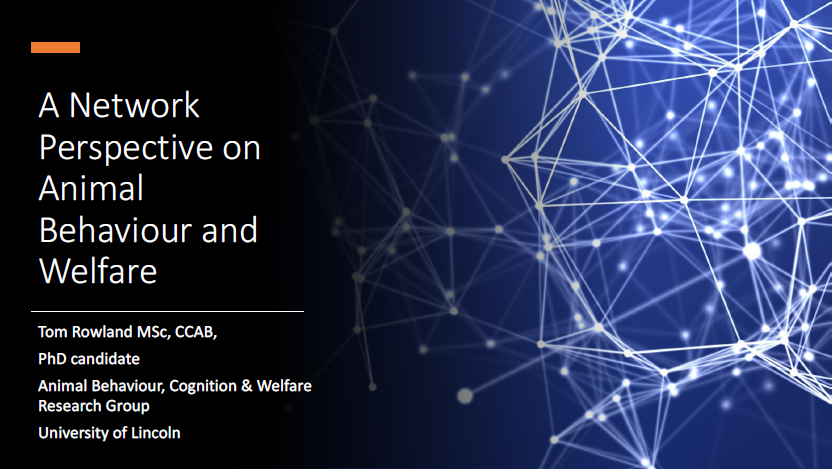
Have you ever thought of animal welfare as a network system?
Find out more in our next webinar when @ThomasRowland90 will share the basics of statistical network modelling applied to animal welfare.
Date: November 15th
Time: 8 pm CET
Register here:
https://t.co/xYh5AtNWX7
Hunting dogs bark differently when they encounter different animal species. Dachshunds and terriers bark toward a wild boar with lower frequency parameters and longer duration. Barks evoked by red fox encounters were similar to rabbits and fowl. #CanineSci https://t.co/OhnfppP1Yv
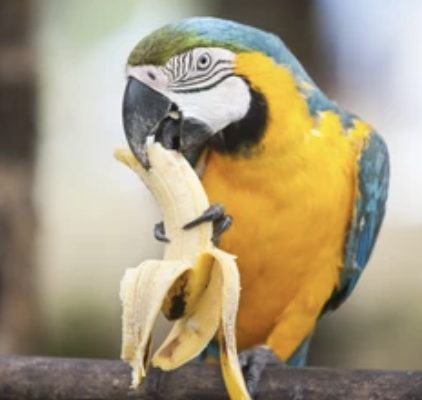
As keepers we spend so much time chopping food for animals, but as this study shows, the animals are often better off with whole food - saves keeper time and improves welfare, win-win!
https://t.co/OekZbt4Q6E
We are recruiting a PhD in Avian Curiosity! The project investigates the causes and consequences of curiosity in kea and toutouwai. It's based @VetmeduniVienna, but with some fieldwork in Aotearoa! Please check out the ad for more details and consider applying (or re-tweeting!)
🚨Are you looking for a paid internship in farm animal behaviour? Look no further!🚨
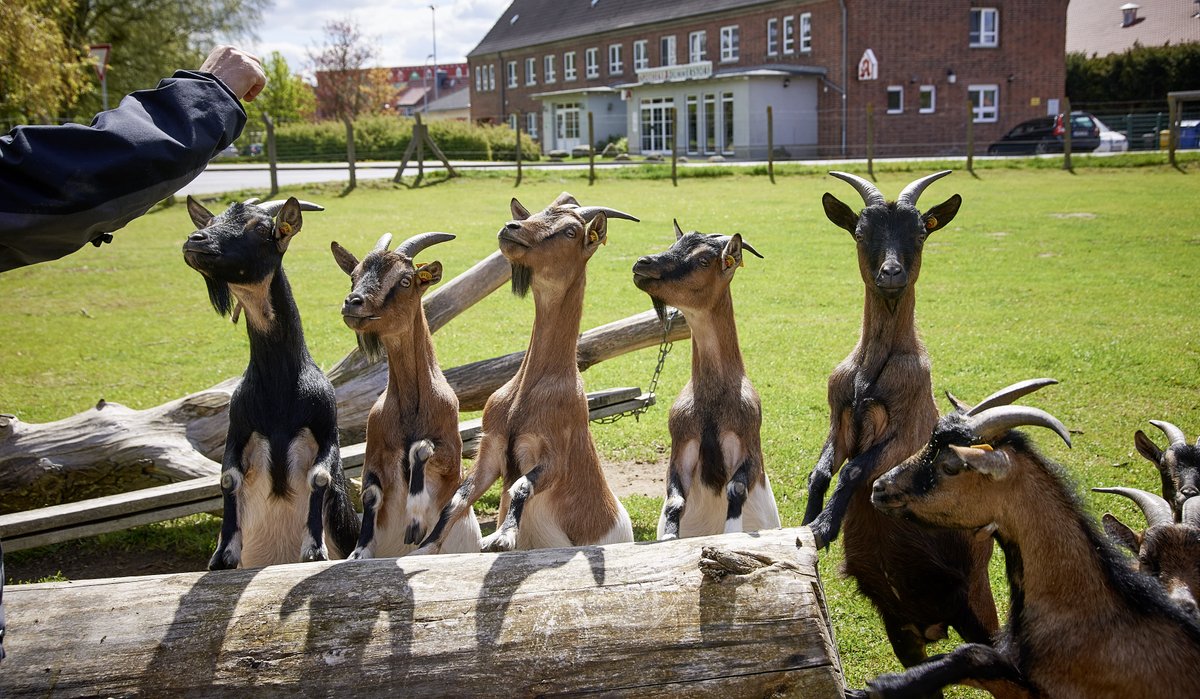
We are looking for an assistant for our new 🐐 cognition studies starting next year!
(restricted to undergrads from North America, UK or Ireland)
Apply here: https://t.co/SNBhM4AAhR