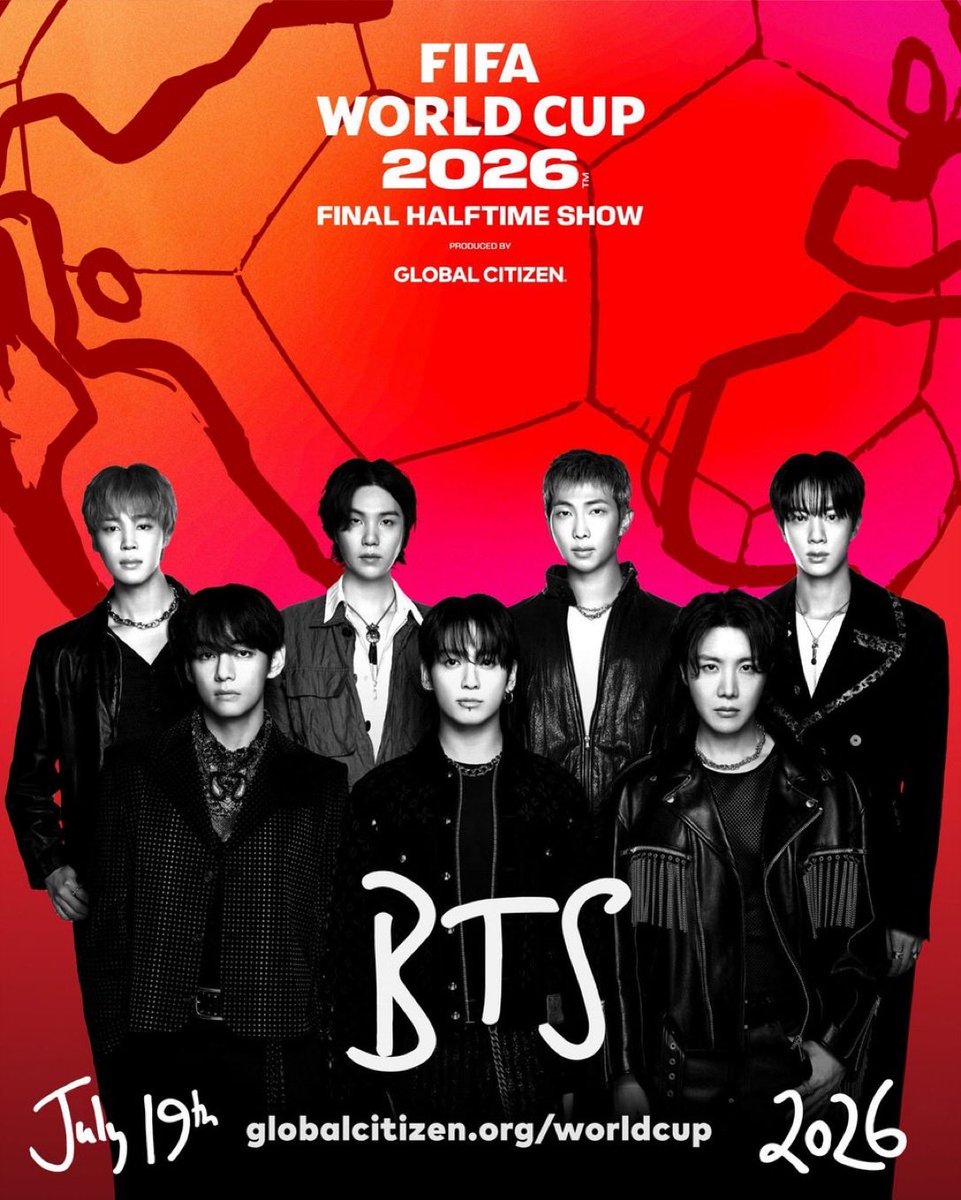
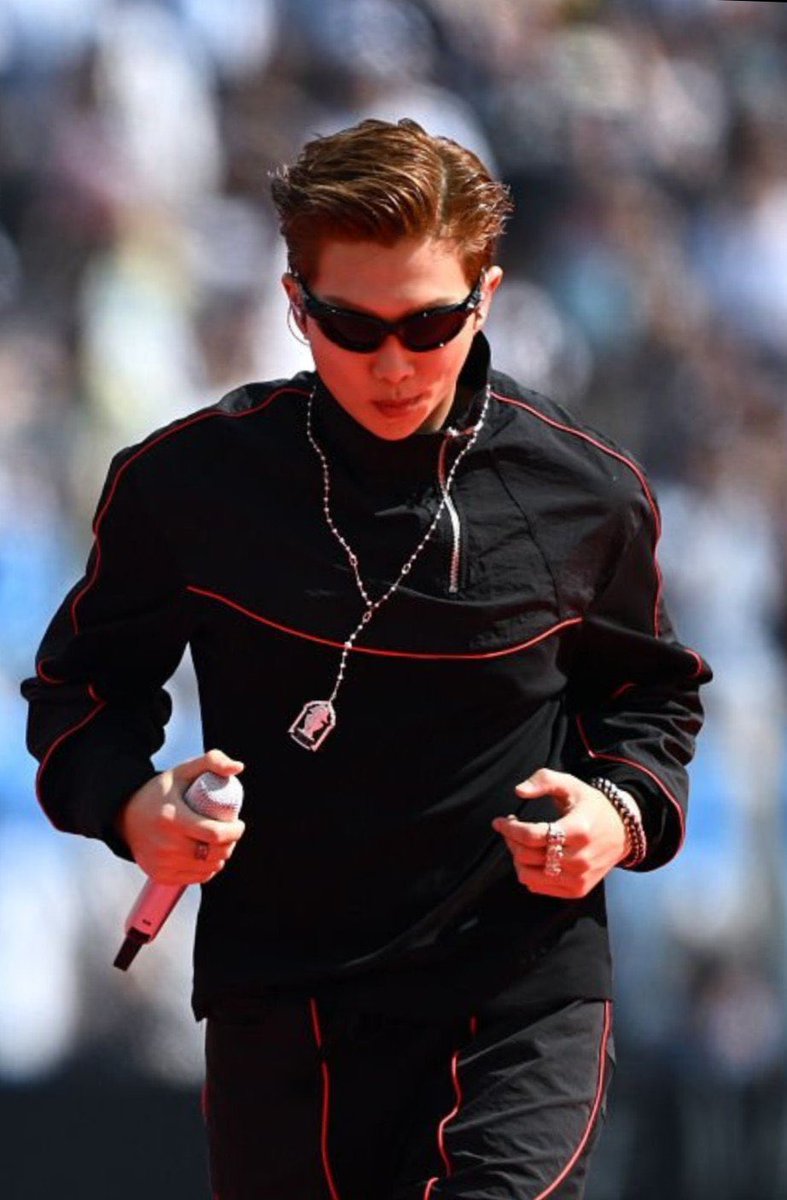
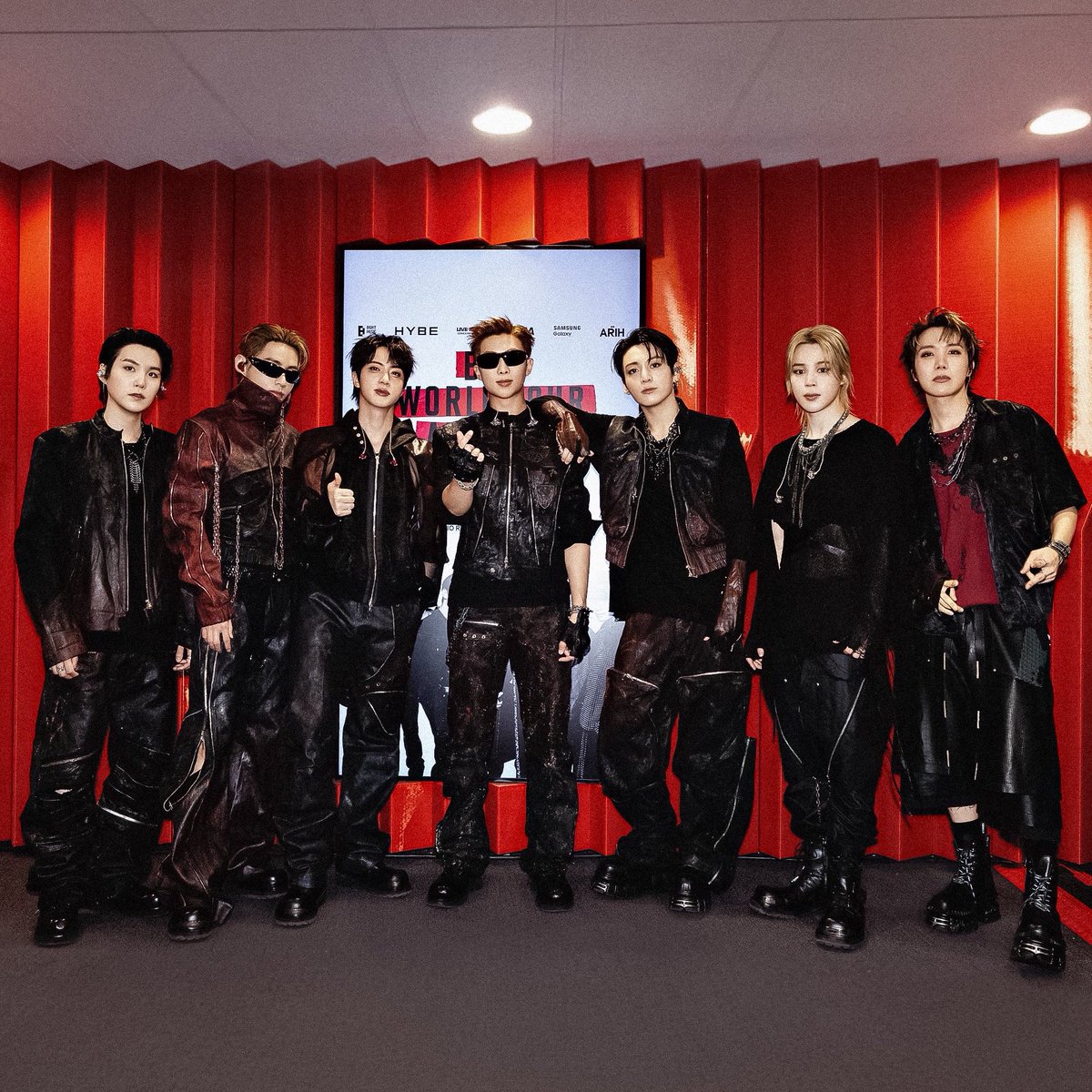
Taehyung cut from BTS’ historic FIFA World Cup Final Halftime Show performance.
Congratulations, Taehyungie! You did so well! We are so proud of you!
TAEHYUNG AT FIFA HALFTIME SHOW
WORLD CLASS PERFORMER V
#VxFIFAWorldCupHalftimeShow#VxWORLDCUP2026
Bighits press release 🔥🔥👏👏♥️
After the performance, BTS shared their thoughts through their agency, Big Hit Music, stating, "It was an honor to stand on the stage for the first halftime show of a World Cup final, which we have enjoyed watching since we were young. It felt like a dream to be able to participate in a performance with such a good purpose. We were able to stand on this stage thanks to the love and influence of ARMYs around the world. We sincerely thank you."🔥🔥🔥🥹🥹🫠🫠♥️😭
So proud of you my goated legends♥️
BTS AT WORLD CUP 2026
#BTSxWORLDCUP2026
#BTSHALFTIMESHOW
https://t.co/RkCjcOilPD
A few years ago, Gene Simmons of the famous 70s metal band KISS was asked whether BTS could become the next Beatles. He dismissed the idea almost immediately. He said he didn't know any BTS songs and asserted that, unlike the Beatles, no one would start a garage band because of BTS. He went even further, saying that boy bands like BTS don't change the world; they simply make teenage girls' hearts flutter before eventually disappearing, and that they have no gravitas.
Why am I suddenly bringing this up? Today, on an online community I frequent—members mostly professionals in their 40s and 50s with progressive political views—a post about BTS really caught my attention.
He said he had finally realized that BTS is 대체불가. This word means "irreplaceable." It describes something so unique that nothing else can truly take its place. Words like singular, peerless, or one of a kind also come close to capture the meaning.
He admitted that he used to believe BTS's success had more to do with the global popularity of K-pop than with BTS themselves. He assumed that groups like BLACKPINK or Stray Kids would eventually replace them. Like most Koreans, he also believed military service would effectively end BTS's career. After all, that's what had happened to previous idol groups. They enlist, newer groups debut, and they never quite regain the same level of popularity.
But over the past few months, simply watching the news about BTS's worldwide concerts, seeing the sold-out stadium crowds, reading international media coverage, and watching presidents, celebrities, and people from all over the world react, he suddenly realized something. No, BTS really is different. He compared them to the Beatles, and now believes that no matter how many new idol groups debut from now on, no one will match what BTS has achieved. 대체불가.
His post has already been read by more than 8,000 people today alone, and among them were people who immediately lost their minds the moment they saw BTS and the Beatles mentioned in the same sentence. Some insisted that BTS could never be compared to the Beatles because there aren't BTS songs that "everyone" can sing along to like "Hey Jude," basically echoing almost exactly what Gene Simmons said a few years ago.
Reading those comments, I couldn't help shaking my head. They are judging BTS using standards from a completely different era. During the Beatles' time, British and American popular music dominated the world in a way that's difficult to imagine today. Radio, a handful of television networks, and record stores were the only ways people discovered music. Also, there were relatively few artists and genres competing for people's attention, and almost everyone was exposed to the same songs over and over again.
You didn't really choose whether to hear "Yesterday" or "Penny Lane." Radio stations played them constantly. Record stores played them constantly. Those songs became part of everyday life because nearly everyone was consuming music through the same limited channels.
Today's world couldn't be more different. There are hundreds of genres, tens of thousands of artists, YouTube, Spotify, Apple Music, TikTok, Instagram, and countless other ways to listen to music. Every listener can build a completely different musical world with just a few taps on a phone. That also means it's much harder for any artist to become a truly universal phenomenon.
Over the past ten years, has there really been a song like "Hey Jude" that almost everyone in the world could sing together? I’m sorry but I can't think of one. In fact, the closest examples I can think of aren't even songs by pop stars. They're one-time phenomena like Disney's "Let It Go" or, more recently, Netflix’s "Golden."
That's why I think comparing BTS and the Beatles simply by asking whether everyone can sing one of their songs misses the point entirely. If anything, becoming a global phenomenon in today's fragmented digital media landscape is much more difficult. That's precisely what makes BTS's extraordinary worldwide popularity all the more incredible. If the Beatles were debuting today, their path to global dominance would have been far more difficult than it was in the mid-1960s.
Another commenter claimed that considering the Beatles' musicality and the sheer breadth of their popularity during their era, suggesting that BTS belongs in the same conversation was preposterous. This commenter says that with complete confidence because, like many other Koreans, he doesn't realize how deeply BTS's music has resonated with people around the world. Nor does he realize how highly respected the members are for their songwriting and producing abilities. That's partly because Korean media rarely discusses those aspects of BTS.
Korean media mostly reports BTS's achievements by talking about sold-out concerts, Billboard rankings, awards, or the number of tourists visiting Korea because of BTS. But I don't remember seeing serious discussions about why BTS became this popular in the first place. Very few journalists or programs explore their musicality, the members' songwriting and producing abilities, or why millions of people around the world feel such a deep connection to them and their music. Journalist Kim Ou-joon and the late music critic Kim Young-dae are the only people I can think of who tried.
To me, BTS isn't just a musical phenomenon. They're a cultural phenomenon. Millions of people didn't simply become fans of seven people. They became interested in Korea itself. They started learning Korean. They began reading Korean literature, visiting Korean museums, eating Korean food, and traveling to Korea. That's an extraordinary kind of influence. People didn't begin learning English because of Taylor Swift, nor did they suddenly become fascinated with Britain because of Coldplay. Their music is loved by many, but BTS became something more than a musical phenomenon.
And finally, BTS is also 대체불가 because ARMY is 대체불가. There has never been another fandom quite like it, and I doubt there ever will be.
Every artist at today’s FIFA World Cup 2026™ Topps Final Halftime Show donated their time for one reason: kids' education.
📚🫶And $60M was raised for the FIFA Global Citizen Education Fund to ensure children everywhere get the opportunity they deserve.
Thank you: Madonna, Shakira, BTS, Justin Bieber, Burna Boy, Gustavo Dudamel, the PS22 Chorus + Coldplay, Emmanuel Kelly, the New York Philharmonic and Venezuela's Simón Bolívar Symphony Orchestra, Uganda’s Ghetto Kids and The Muppets. ⭕
#GlobalCitizen
🚨Just to put it into perspective: the Super Bowl draws around 120-150M+ viewers, while the FIFA World Cup Final reaches over 1.5 BILLION people worldwide! 🔥⚽️🏟️
That’s why #BTS performing at the halftime show is HUGE. 💜 Let’s make some noise and get BTS among the most talked-about artists today! 🔥
#BTSxWorldCup2026
📣 ARMYs de todo el mundo, necesitamos nuevamente de su apoyo.
Seguimos sin recibir una respuesta oficial, por eso volvemos a alzar la voz. Cada publicación, cada repost y cada mensaje nos ayuda a mantener visible nuestra situación.
Por favor, únanse a esta nueva tendencia y utilicen los hashtag
#BTSALNACIONAL #NACIONALPARABTS #NACIONALFORBTS
Compartan, interactúen y ayúdennos a que nuestra voz llegue más lejos.
Gracias por estar con ARMY Chile.