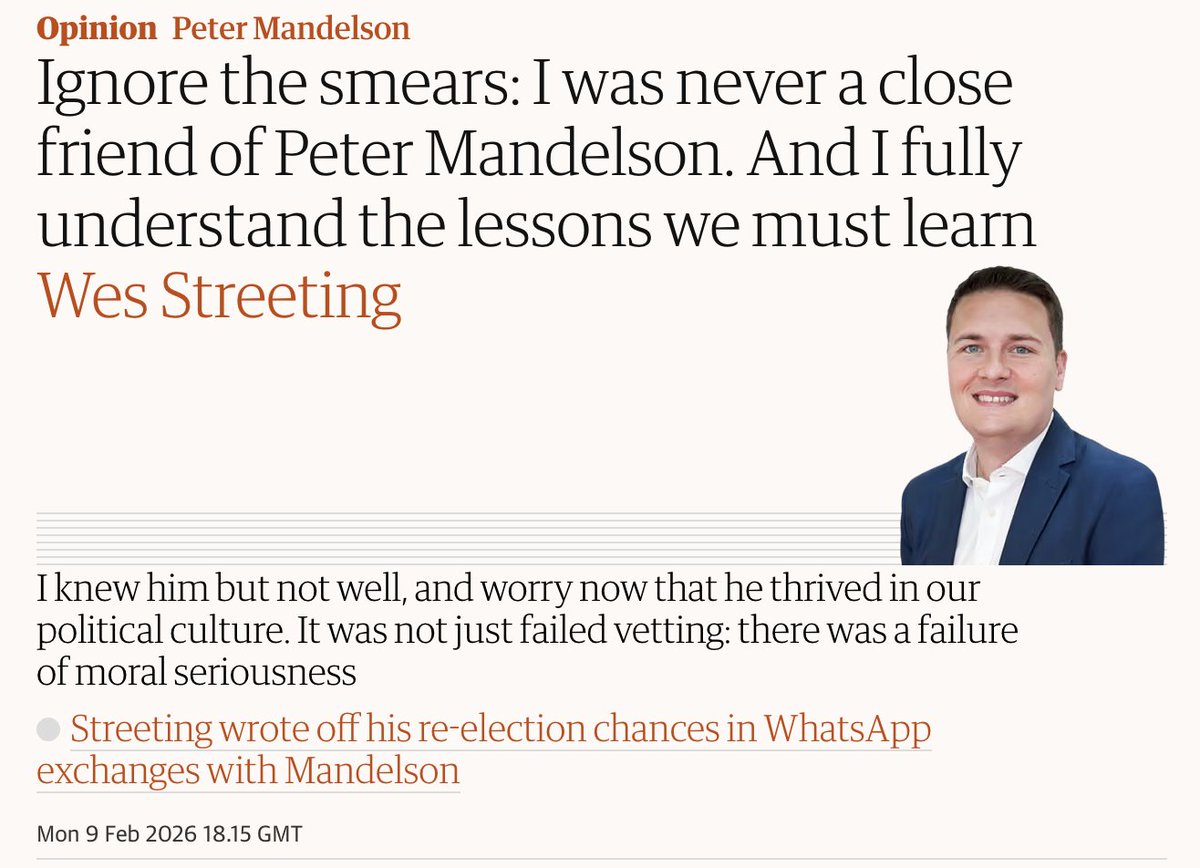
@andrewlawrence Because nothing says conspiracy as much as briefly holding someone, checking their story, releasing them and clearing them of all suspicion.
Whether it is Tony Blair’s interventions, the bond market’s reaction or privatised utilities warning of doom, the pattern is the same.
When anyone suggests progressive change, those with wealth and power push back. Whether the figure in question is @AndyBurnhamGM or @ZackPolanski, progressives need to understand what we are up against, and how to defeat it.
Very often, I find, science fiction names what politics struggles to. In James SA Corey’s series of novels the Expanse, the violent dystopian streets of Baltimore are given a name for what happens when the old order breaks down faster than people can describe it: the Churn. It is the brutal reorganisation of power, when familiar rules collapse and those who survive are the ones who read the signs early.
Britain is in one now. In fact, two churns are happening at once.
The first is electoral. May’s local elections were a rupture with the past. Labour lost roughly 1,100 councillors. Reform won 1,257 seats and 10 councils. The Greens won Hackney and Lewisham. In Makerfield, the parliamentary constituency where Andy Burnham is seeking a route back to the Commons, Reform took every council ward.
The progressive vote has fragmented and Reform has captured a large part of the anger. The container in which transformative politics could once be argued for and delivered – a dependable Labourmajority in the Commons – is visibly crumbling.
The second churn is deeper. Burnham named it when he said Britain had been “on the wrong course for 40 years”. That was a diagnosis of the political economy that has governed Britain since the late 1970s: financialisation, privatisation, hollowed-out public services and the transfer of wealth and power away from workers, communities and the public realm.
This is why the events of recent weeks matter. Burnham needs a state that is able to pay for big-ticket, social-democratic projects: council homes, clean energy, public transport, water, skills and resilience. Those things cannot be wished into being. They require public investment at scale.
That is where Rachel Reeves’s fiscal rules become more than an accounting device. In plain English, they are self-imposed limits on borrowing. They are political choices, not laws of nature. But they matter because they set the boundaries of what Labour says it can afford.
They matter for Burnham’s possible project for the country, because the current rules would inhibit the kind of public investment that a new settlement with the British people would require.
Yet he cannot simply announce he will tear them up. Governments borrow by selling gilts. If investors believe a government will borrow recklessly, they demand higher interest rates to lend to it. That raises the cost of all government borrowing and squeezes the money available for everything else. This is the discipline every Labour politician now feels.
Three weeks ago, Burnham tested the boundary. He floated a defence carve-out: the idea that extra borrowing for defence could sit outside the fiscal rules, as Germany has done by using special funds to increase military spending. It was a narrow proposal but one that raised larger questions about how we finance what we deem to be important. What followed is what some call “market discipline”. From the period around Burnham’s Makerfield announcement onward, the pound came under pressure and gilt yields rose as markets priced political uncertainty. Private creditors warned against Thames Water being brought into public ownership. Then, last Monday, Burnham’s team told Bloomberg he would make no changes to Reeves’s fiscal rules if he became prime minister. The defence carve-out was ruled out too.
I was not surprised by the retreat. Nor do I think it is useful to call it betrayal. Burnham cannot win a leadership contest if the markets are running against him before he has even started. But the retreat itself is the lesson. It illuminates what is standing in the way of a new social democracy. It is not simply “the markets”. It is the economic architecture Britain has built: Treasury rules, Bank of England decisions, pension fund structures and investor expectations combining to discipline any politics that threatens the settlement. What happened last week was a lesson in how power works.
Burnham matters not because he is a saviour. Progressives have had enough of saviours. He matters because he has said aloud what Westminster still avoids: Britain’s crisis is rooted in the economic settlement itself.
That settlement, what economists increasingly call rentier capitalism, is not abstract. It is a country where water bills rise while shareholders are rewarded, where housing wealth matters more than people having secure homes, and where democratic choices narrow whenever they threaten asset holders. Meanwhile, the state manages the fallout: crumbling infrastructure, higher costs and a cost of living crisis deepened by rentier extraction.
That is why the reaction to Burnham’s comments on the fiscal rules is revealing. Chancellors rewrite fiscal rules all the time when it suits them. Gordon Brown had his golden rule. George Osborne had his surplus target. Philip Hammond revised the framework. Rishi Sunak changed it. Jeremy Hunt changed it. Reeves has changed it again. The question is not whether fiscal rules can change. They plainly can. The question is who gets to change them, and for what purpose?
There are three fights progressives now have to pick.
The first is fiscal. Democracy must regain the power to invest. Public investment is still constrained less by national need than by what ministers think the bond market, the Bank of England and the Treasury will tolerate. A real shift would start from need, not nerves.
That means a Bank of England mandate that recognises a basic truth: inflation is not only caused by too much demand. It is also caused by too little capacity. When there are too few homes, rents rise. When public transport is weak, people are forced into expensive alternatives. When energy is costly and unreliable, bills rise. Investment is not the enemy of stability. Done properly, it is how stability is built.
The second fight is ownership. Public goods should be built and owned in the public interest. Thames Water entering special administration is the obvious place to start. Regional public housing corporationscould build at scale on public land, financed by rental income rather than annual Whitehall grants.
That is also why the language of “public control” – used increasingly by Andy Burnham – deserves scrutiny. Few want a return to top-down nationalisation. But franchising, as the Bee Network in Manchester demonstrates, is not public ownership. Private operators running Bee Network services made hundreds of millions in profit last year. The network is better than what came before – but it remains a private-profit, public-risk model. Control without ownership leaves the fundamental problem intact: the public absorbs the downside while shareholders take the gain.
The third fight is constitutional. Proportional representation for Westminster, an elected second chamber and deeper devolution are not procedural tidying-up. They are conditions for progressive power in a fragmented country. The forces ranged against transformation do not need PR: they already have the City, the rightwing press, corporate lobbying, the Treasury worldview and the bond market. Progressive Britain has no equivalent machinery. PR is the glue that could allow a broad majority to govern together.
Burnham was right: Britain has been on the wrong course for 40 years. But last week showed the harder truth. The old settlement will not politely bow out for its replacement. It will price the risk, police the boundaries and demand reassurance before the argument has even begun. The churn is far from over.
* Clive Lewis is the Labour MP for Norwich South
* Clive Lewis will be speaking about these issues and more with Andy Burnham at Change Now! Mobilising the Progressive Majority
Tony Blair is the living embodiment of what happens when political office becomes a down payment on future plunder. Ejected in 2007 by his own MPs as a massive liability, he bequeathed Britain a wild casino economy primed for the 2008 crash. And when the British economy crashed and burned, Mr Blair kept quiet while honing his skills at securing power by other means.
His first job, after his ejection from 10 Downing Street, was as the West’s Middle East envoy, with a supposed emphasis on Gaza. It took six painful years for Mr Blair’s tenure to prove a failure so profound it amounted to active complicity in Israel’s ethnic cleansing, in Palestinian erasure, and in paving the ground for the ongoing genocide.
Soon after, the Chilcot Inquiry demolished Blair’s Iraq lies, exposing him as a liar, a chancer and a war criminal responsible for countless corpses of Iraqis, but also of British soldiers.
Then came Blair’s real innovation: the financialisation of the ex-premiership itself. The Tony Blair Institute, fuelled by £130 million from Oracle's Larry Ellison—coincidentally, the largest individual donor to the Friends of the IDF—became a shadow state, brokering governance contracts for autocrats and companies like Palantir that weaponise AI to produce mega-death abroad and full-on surveillance of Western populations.
Now, in May 2026, this corporate fixer issues a 5700 word tantrum demanding that Labour embrace Trump even more than Starmer already has, denounce what is left of Labour’s betrayed Green New Deal, and trash the remnants of workers' rights. This is not the wisdom of an aging statesman. It is the frantic squirming of a man fearing his grip on oligarchic power might soon wane and whose entire post-10 Downing Street existence depends on preventing the many from ever reclaiming what the few have plundered.
https://t.co/1Onlpx9Nkh
Westminster may finally be about to have the argument it has spent 40 years avoiding.
If Andy Burnham returns to Parliament, the political class will know how to cover it. A leadership drama. Who is up, who is down, whether Keir Starmer can survive, whether Labour is once again turning inward. The familiar machinery of Westminster psychodrama will whirr into life.
That framing misses the larger point. Burnham’s possible return matters not because of what it says about Labour’s leadership, but because of what it reveals about the British state: what it can still do, what it has forgotten how to do, and what kind of country it must become if it is serious about resilience.
Britain is finally having a more serious conversation about national security. The Strategic Defence Review, the pivot back towards Europe, the recognition that hybrid warfare turns citizens, infrastructure and civic institutions into part of the front line: all of it marks a real shift in how the state thinks about its own survival.
But at the centre of that conversation lies a question that the defence establishment, and most of Westminster, still does not want to answer. What kind of society do you need to be before resilience is possible?
Finland is now the model everyone cites. Comprehensive security. Whole-of-society defence. Civilian preparedness woven into military planning. British strategists admire the Finnish system and ask how it might be copied. But the admiration stops short of the uncomfortable question: why does it work there?
The answer is not geography or history or some mysterious quality of Finnish national character. It is structural. Nearly 80% of Finns say they would defend their country if attacked. In Britain, the figure is closer to 33%. That gap is not an accident. It exists because Finland has spent decades building a society in which people have a genuine stake in what they are being asked to defend. Energy is affordable. Housing is available. Public services function. Institutions command trust. The Nordic welfare state is not a sentimental add-on to Finnish security policy. It is the foundation of it. You cannot ask people to defend a country that does not work for them.
Britain has spent 40 years building the opposite. The privatisation of essentials – energy, water, transport, housing – transferred wealth upwards from households to shareholders while making the basics of everyday life more expensive. The state, stripped of the tools to control costs at source, has been reduced to compensating after the fact.
Out of every pound the Government spends on housing, 88p goes to subsidising private rents. Just 12p goes to building homes. When energy prices spiked in 2022, the Government spent £40bn in a single winter cushioning the blow, not because it had a resilient energy system but because it lacked one. Debt interest now consumes more than £100bn a year. Britain has the highest debt servicing costs in the G7: the compounding price of financing failure rather than eliminating it at source.
This is what bond market dependency actually looks like. It is not an abstract fiscal condition. It is the consequence of a state that has been stripped of the supply-side tools that would let it cure the problems it now pays, indefinitely, to manage. And here is the paradox the Treasury refuses to confront. The countries that borrow most cheaply are often those that have retained the public investment model Britain abandoned. The spread between UK and Dutch borrowing costs has widened sharply not because markets fear public investment, but because they have lost confidence in a model that borrows to subsidise private failure while never addressing its causes.
This is the connection Britain’s defence debate is missing. The familiar framing, that social spending is what must be sacrificed to meet the NATO target, is not merely politically toxic. It is strategically illiterate. Cutting the foundations of social cohesion to fund the hardware of national defence is self-defeating. You end up with planes and no pilots, submarines and no crew, an army that cannot recruit because the society it is meant to protect has stopped believing in itself.
I think Burnham understands this. That is why his programme is more interesting than the leadership gossip suggests. What he has been building in Greater Manchester – public control of transport, expanded social housing, investment in the productive foundations of the city economy – is not a nostalgic rerun of postwar nationalisation. It is a proof of concept for a different kind of state.
The Bee Network is the most visible example, but the argument behind it travels. A state that can shape markets is not condemned to subsidise their failures. A state that produces affordable energy through public generation does not need to spend tens of billions cushioning every price shock. A state with a serious public housebuilding programme does not need housing benefit to rise endlessly in line with private rents. A state that builds institutions people can see, use and trust begins to restore the civic confidence on which resilience depends.
The real constraint on Britain is not money. It is capacity: the workers, institutions, supply chains and public purpose needed to turn national will into national renewal. Britain’s tragedy is not that it has run out of money. It is that after 40 years of hollowing out the state, it has made itself less able to act.
Burnham’s critics will reach for the familiar warning. Borrow more, spend more, spook the gilt markets, repeat the Truss disaster. But this misunderstands both the problem and the opportunity.
Bond markets do not have ideological preferences. They have functional ones. They prefer clarity, credible revenue streams, productive investment, and a state with a plan. What they punish is not public ambition but incoherence. A properly designed productive state programme would not be a leap into fiscal fantasy. It would be an attempt to end the much costlier fantasy that Britain can keep borrowing to compensate for broken markets while refusing to repair them.
The defence conversation and the economic conversation need to become the same conversation. Finland did not build national resilience by choosing between welfare and security. It built resilience by understanding that they are inseparable: that a country in which the basics work, where people trust one another and the institutions around them, is one that can face danger with something more than anxiety.
That is the deeper argument Burnham represents. Westminster will be tempted to treat him as a leadership story. It should resist the temptation. The question is not whether Burnham can return to parliament. It is whether Britain can return to the idea that the state should make life work. Because a country that cannot command the confidence of its people cannot truly defend itself.
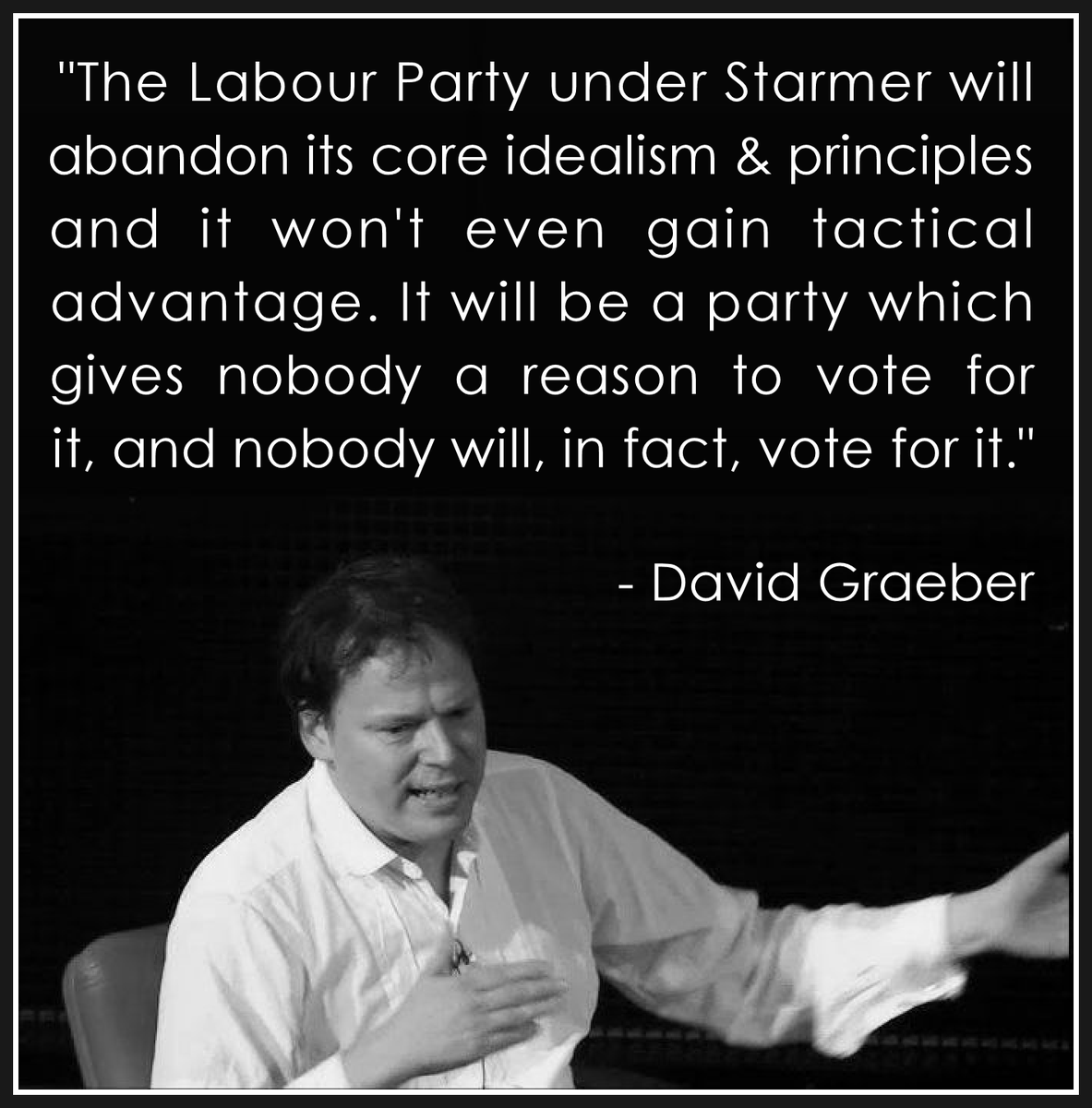
My reaction to Keir Starmer's last ditch press conference - an unsurprising reaction but possibly a helpful one (at least to those who, like me, consider him an abysmal PM).
Like many, I approached Keir Starmer's prime ministership with deep-seated pessimism, my expectations already set at rock bottom. Yet, I confess: I failed to foresee the clinical precision with which he and his inner cabal would sabotage their own administration and scar Britain.
The crux of their debacle lay, first, in a distinctly dictatorial, authoritarian reflex. And second—crucially—in a seething contempt for those who lent them their votes, while simultaneously performing a grotesque pantomime of flattery toward those who never would, and never will, support them.
Having exorcised from the Labour Party its most authentic voices—people of unimpeachable integrity, such as Ken Loach and Jeremy Corbyn, a purge that eluded even Tony Blair’s repertoire—Starmer embarked on a rampage:
He slashed disability benefits; armed and fed intelligence to the Israeli government as it executed genocide in Gaza; channeled his own inner Farage, perhaps his inner Enoch Powell, to vilify migrants and treat refugees as vermin; gutted international aid to masquerade as a defender of defence spending; bulldozed wildlife and their habitats; unveiled a new lexicon of draconian anti-protest laws; left trans people suspended in legal limbo; clung with religious fervour to absurd, socially ruinous fiscal rules; allowed Rachel Reeves to squander £100 billion covering the Bank of England’s outrageous and wholly unnecessary Quantitative Tightening losses—a gift that keeps giving to the City’s banks—while imposing yet another round of austerity on government departments and public services.
Once the great hope of the downtrodden, Starmer’s Labour has become the villain - the genuinely nasty party.
Once a human rights lawyer, he has single-handedly plunged Britain into a shoddy, incompetent authoritarianism.
https://t.co/wIjnc9NfmJ
An Iranian man left this comment on my YouTube channel. This is without a doubt the single best explanation of the reality facing Iranian people today👇
"As an Iranian, I can tell you the situation is no longer just political—it's existential. We are trapped between two collapsing structures: one internal, one external. On one hand, we face a deeply dysfunctional government, led by the Supreme Leader and the Islamic Republic’s unelected institutions.
Decades of economic mismanagement, suppression of dissent, and brutal ideological control have alienated multiple generations. No one believes in reform anymore—because every attempt has either been co-opted or crushed. But here's the paradox: We are also terrified of regime collapse—because we've watched the aftermath of Western intervention in countries like Iraq, Libya, Syria, and Afghanistan. Each was promised freedom; each descended into chaos, civil war, or foreign occupation.
So no, we don't trust the U.S. or Israel. Not because we support our regime—but because we know how imperial powers treat ‘liberated’ nations in the Middle East.
Freedom, in their language, often means vacuum, fire, and permanent instability. Right now, many Iranians live with three truths at once: The Islamic Republic is morally and politically bankrupt. The alternatives offered by foreign actors are not liberation—they’re collapse.
A bad government is survivable. No government is not. We are not silent because we agree. We are cautious because we’ve learned—too well—what happens when superpowers decide to "help." In a sentence: Iran is a nation held hostage by its own regime, but haunted by the fate of its neighbors. We are stuck in a house we hate, surrounded by fires we fear more."
When Muammar Gaddafi was overthrown, Libyans celebrated in the streets.
When Saddam Hussein was overthrown, Iraqis celebrated in the streets.
When the Taliban was driven from power, Afghans celebrated in the streets.i
And after the celebrating in the streets, between those US-backed conflicts, millions of people were killed and tens of millions were displaced.