The national security crackdown surrounding the Tai Po fire goes beyond just arresting individuals. Things have now moved on to the making of veiled threats.
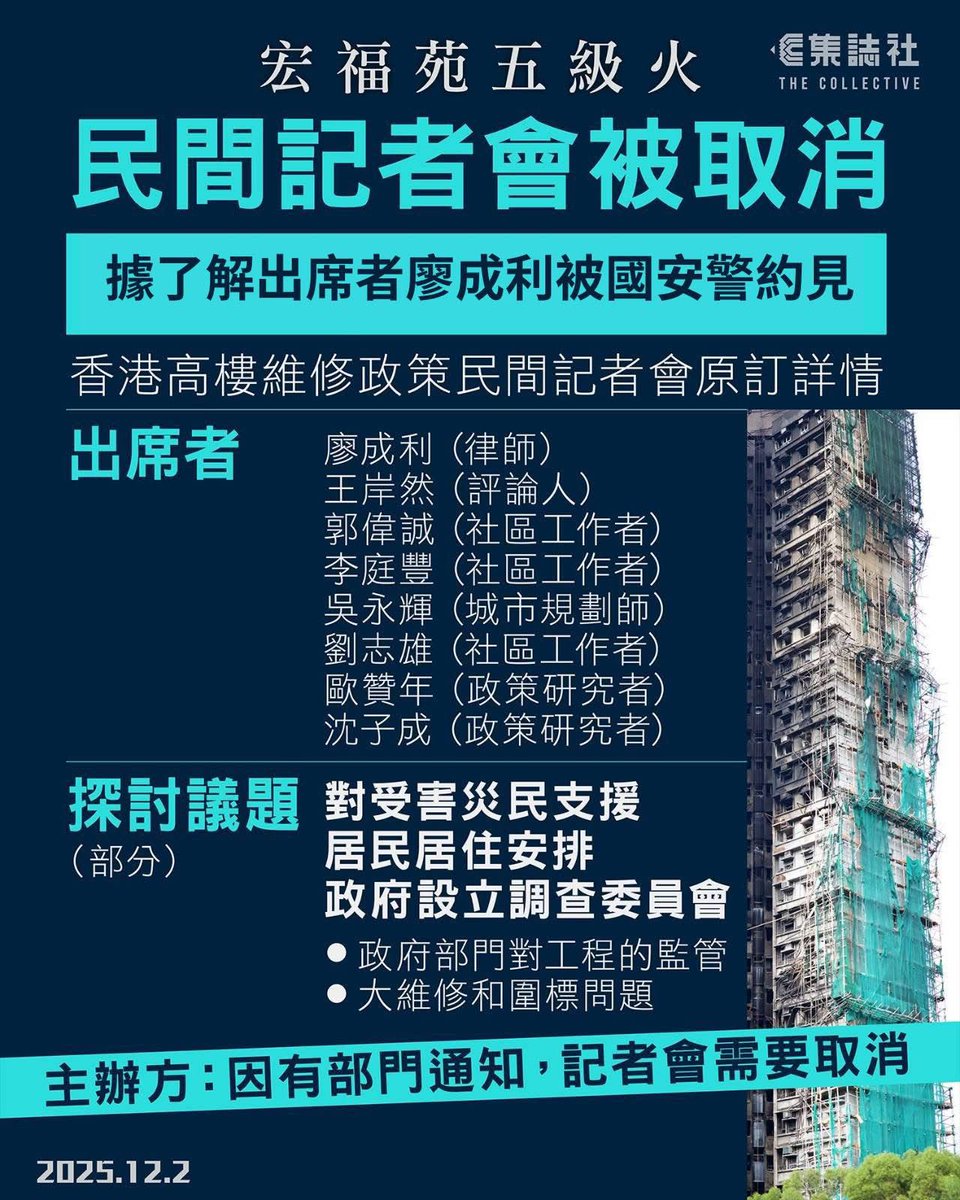
A group of experienced Hong Kong legal, town planning, social work and public policy professionals had organised a press conference for this afternoon Hong Kong time to discuss issues arising from the Tai Po fire. But it had to be cancelled after National Security Police asked to see one of the attendees.
Miles Kwan, a fifth-year student at the Chinese University of Hong Kong (CUHK), was arrested for alleged sedition by national security police on Saturday.
His close friends shared a poignant memory of him with me.
This type of community mobilization drove the 2019 protest movement. No surprise authorities quickly shut it down here, despite the charitable purposes. In China, any kind of organizing outside official government auspices is seen as subversive.
The arrest of the student who launched a petition over the deadly Tai Po fire shows how little free speech #HongKong really has. The CCP tolerates mourning, but anyone who dares to seek accountability or hold criticism is treated as a "national security" threat and crushed.
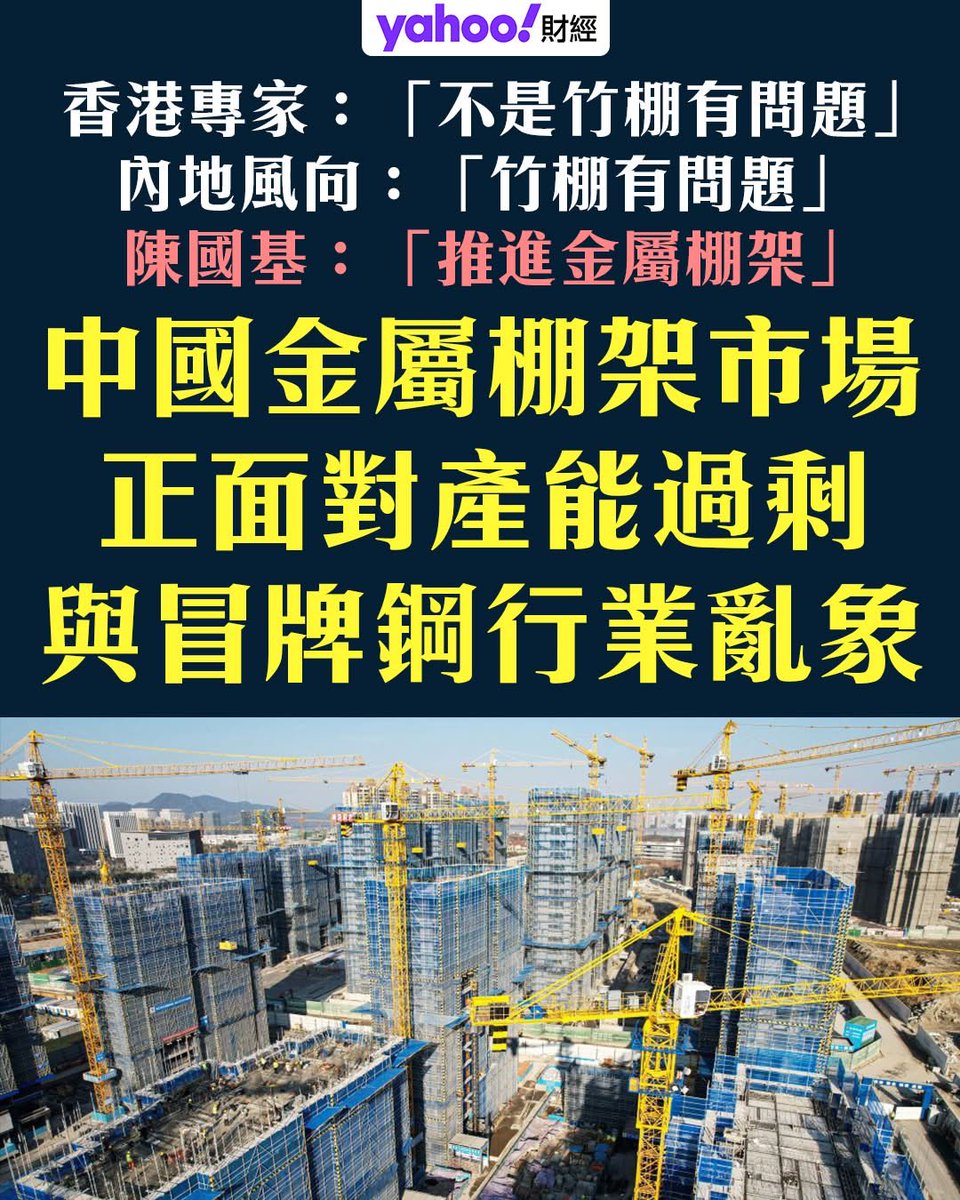
Yahoo Financial News reports that Hong Kong experts’ opinions about bamboo scaffolding being safe are being ignored by PRC netizens as the Hong Kong Government seeks to ram through mandated use of metal scaffolding. Unsurprisingly enough, this has coincided with a record glut in the PRC metal scaffolding materials market, amidst multiple scandals over fake steel being used in making scaffolding materials.
Article link: https://t.co/FRA7spa3Tv
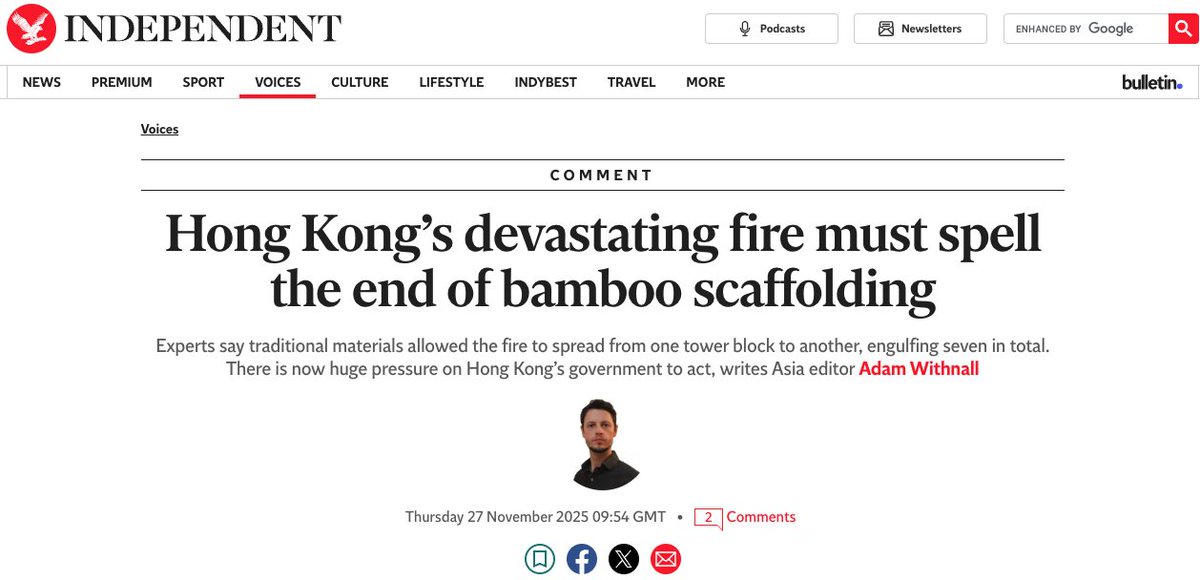
.@adamwithnall's piece does something deeply irresponsible: it takes a tragedy and uses it to push a simplistic conclusion--“the bamboo has to go” without evidence, without understanding HK’s construction practice, and with a clear cultural bias. It is Orientalism.
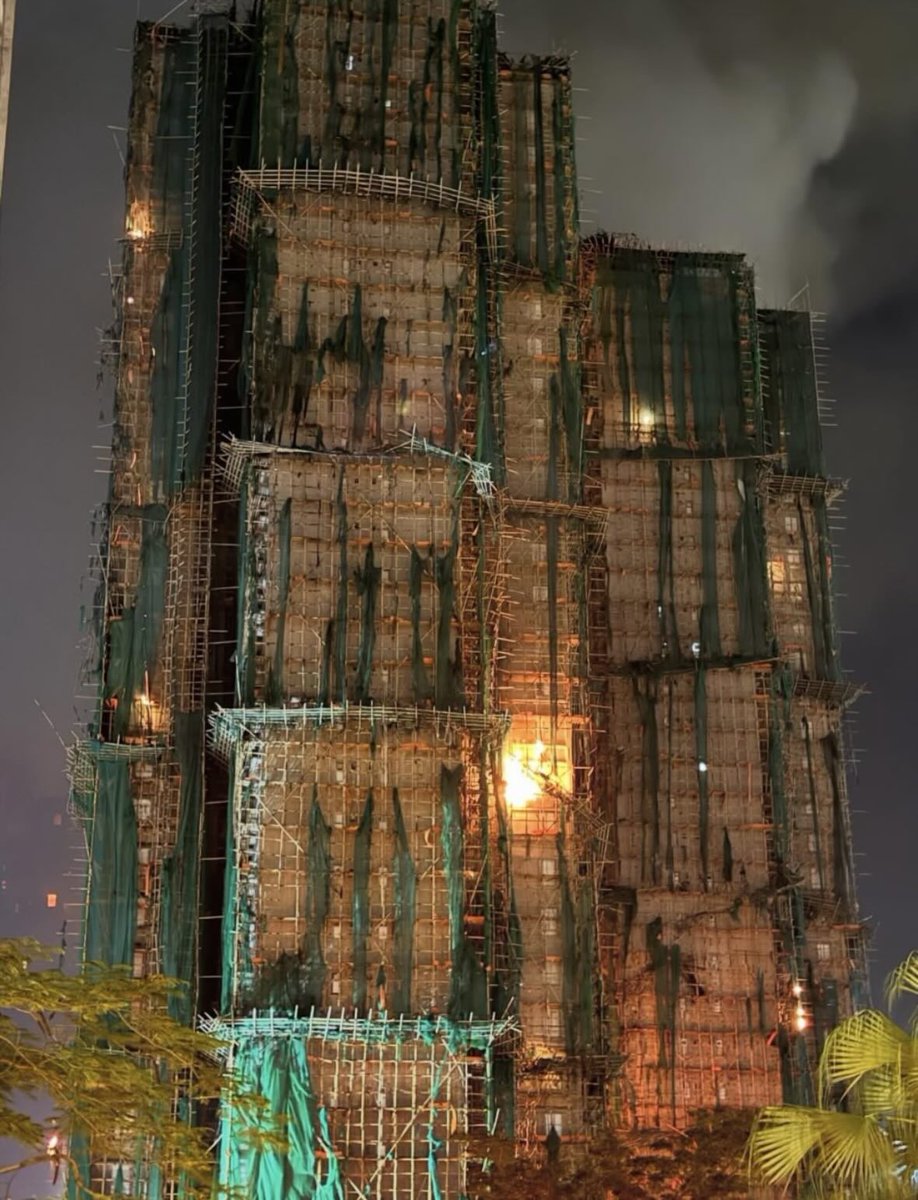
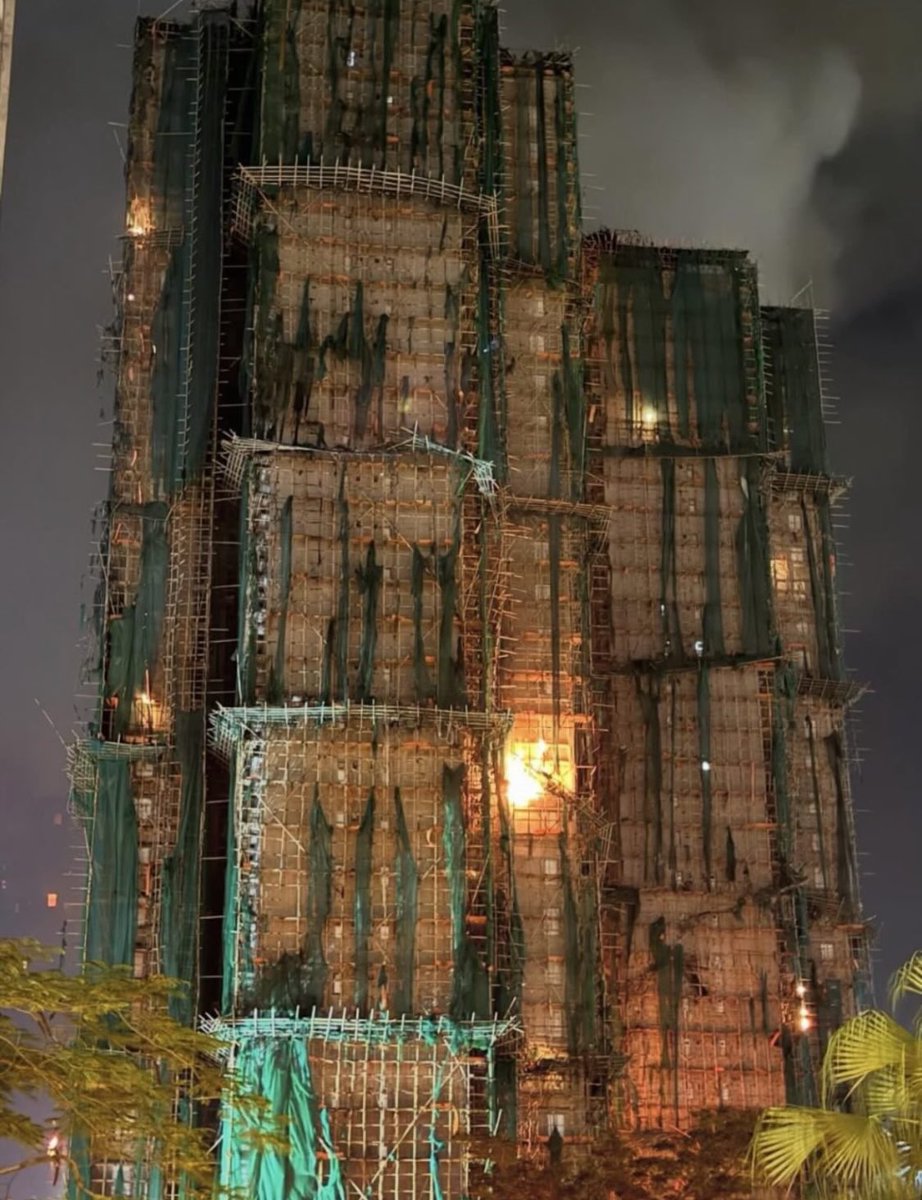
Anyone who has watched even one video knows the white plastic/fabric netting ignited first. It is highly flammable. It burns fast and drips fire.
The bamboo, by contrast, is still standing on multiple blocks even after the blaze. If bamboo were the problem, it would have collapsed.
Claiming bamboo “spread the fire” is simply false.
Bamboo isn’t a quaint “quirky throwback.”
It is a highly skilled, engineered system honed across decades, one that works specifically well because Hong Kong’s dense, humid, high-rise environment. If bamboo scaffolding were as unsafe as the article implies, Hong Kong would have had constant large-scale fires. We haven’t. This was the first Level 5 fire in 17 years.
Blaming bamboo because it “looks traditional” is lazy and prejudiced reporting.
Calling bamboo “quirky,” a “throwback,” and suggesting that Hongkongers should fear the sight of scaffolding the next morning is pure Orientalism. This is a textbook Western lens:
Western methods = modern, safe
Local methods = outdated, dangerous
Hong Kong uses bamboo because it works, not because the city is nostalgic or backward.
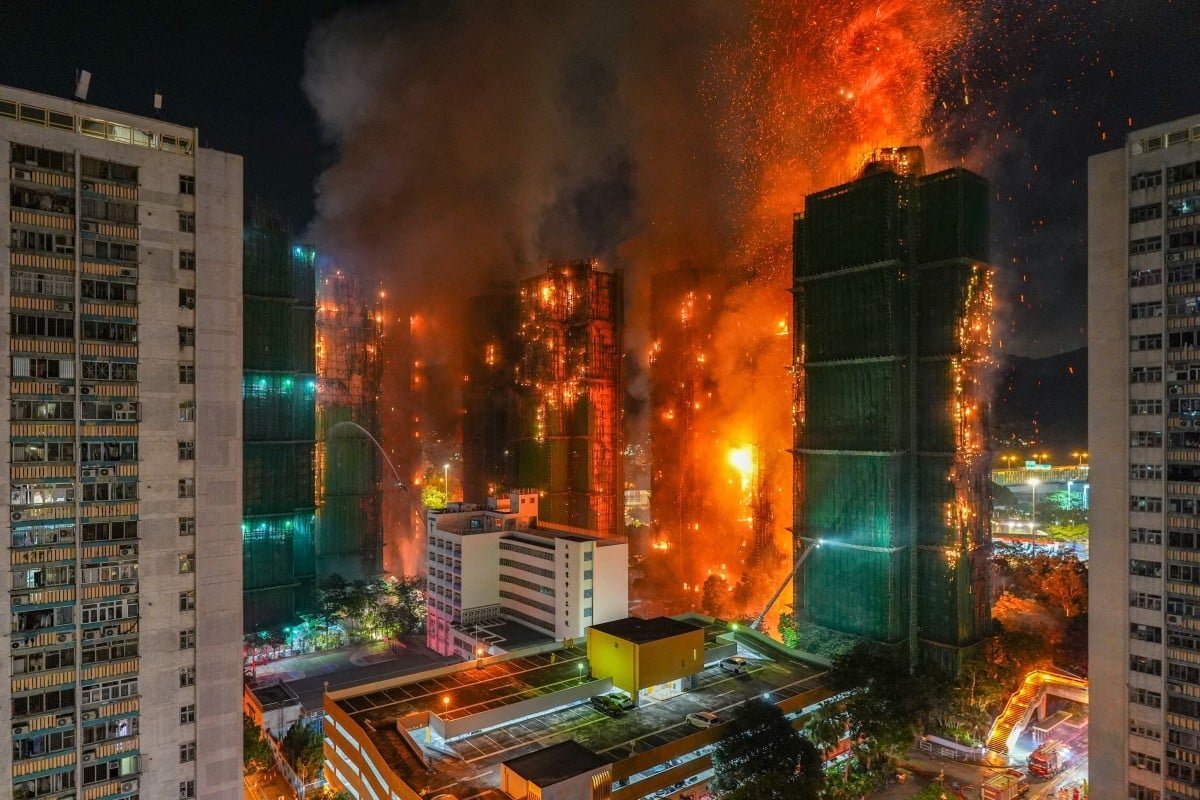
Police officers from the Disaster Victim Identification Unit (DVIU), dressed in white, arrived at Wang Fuk Court in Tai Po on Friday afternoon, after at least 128 people were killed in what has become Hong Kong's deadliest blaze in decades.
At around 5pm, DVIU officers followed firefighters and prepared to enter Wang Cheong House, where authorities believed the fire initially started on Wednesday, and where casualties were concentrated.
Security chief Chris Tang told reporters that around 200 people were still missing and he did not rule out the possibility of more bodies being discovered after police officers enter the buildings to investigate.
In full: https://t.co/lX1w8wx2XK
Photo: Kyle Lam/HKFP.
These videos surprised a lot of people: bamboo does burn, but not the way social media describes it.
It doesn’t explode. It doesn’t melt. It chars slowly — similar to timber — and sometimes even stays standing.
So maybe the question isn’t:
‘Why is HK still using bamboo?’
But:
‘Why don’t we separate the performance of bamboo from the failures of safety around it?
Engineers, builders, HK folks — what do you think after seeing the videos?
1/ I don’t often speak in my professional capacity as a Hong Kong–born, UK-chartered construction professional (MRICS, MAPM, NECReg, among others). But I need to address inaccurate reporting about bamboo scaffolding in the Hong Kong Tai Po fire.
(1/9)