“Don’t spend your energies on things that generate worry, anxiety, and anguish. Only one thing is necessary: Lift up your spirit and love God.”
St. Padre Pio
Fr. Ripperger: “There is a direct proportion between your level of prayer and your happiness in this life. If you’re not happy, it’s because you’re either not praying or you’re not praying well. It’s that simple.”
Recorded in Dublin, my full interview with Fr. Mike Schmitz, in which he shares how he once hated the Church before ultimately devoting his life to it. We also talk about love, faith, and his first visit to Ireland.
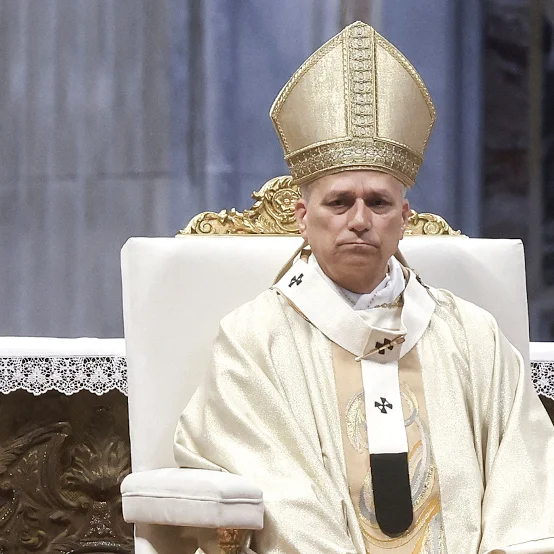
Breaking: Pope Leo XIV tells states that Catholic Colleges and Universities must teach "sound doctrine" and that it is not enough to teach intellectual truths but they must teach the "Truth that is Christ."
Artificial intelligences do not undergo experiences, do not possess a body, do not feel joy or pain, do not mature through relationships, and do not know from within what love, work, friendship or responsibility mean. Nor do they have a moral conscience, since they do not judge good and evil, grasp the ultimate meaning of situations, or bear responsibility for consequences. They may imitate or even simulate, but they do not understand what they produce, for they lack the affective, relational, and spiritual perspective through which human beings grow in wisdom. #MagnificaHumanitas
Winston Churchill fought his depression with bricks. He'd lay them for hours at his country home in Kent. He joined the bricklayers' union. And in 1921 he wrote about why it worked. It took psychology another 75 years to catch up.
He called his depression the "Black Dog." It followed him for decades. His method for fighting it back was as basic as it sounds: laying brick after brick, hour after hour.
Churchill spelled out his theory in a long essay for The Strand Magazine. People who think for a living, he wrote, can't fix a tired brain just by resting it. They have to use a different part of themselves. The part that moves the eyes and the hands. Woodworking, chemistry, bookbinding, bricklaying, painting. Anything that drags the body into a problem the mind can't solve by itself.
Modern psychology now calls this behavioral activation. It's one of the most-studied depression treatments out there. Depression sets a behavior trap. You feel bad, so you stop doing things, and doing less means less to feel good about. Feeling worse makes you do even less. The loop tightens until you can't breathe inside it.
Behavioral activation breaks the loop from the action side. You schedule the activity first, even when every part of you doesn't want to. Doing it produces small rewards: a wall gets straighter, a painting fills in, a messy room gets clean. Those small rewards slowly rewire the brain. Action comes first, and the feeling follows.
Researchers at the University of Washington put this to the test in 2006. They studied 241 adults with major depression and compared three treatments: behavioral activation, regular talk therapy, and antidepressants. For the people who were most severely depressed, behavioral activation matched the drugs. It beat the talk therapy. A 2014 review of more than 1,500 patients across 26 trials backed up the result.
Physical work like bricklaying does something extra on top of this. It crowds out rumination, the looping bad thoughts that grind people down during the worst stretches of depression. Bricklaying needs both hands and gives feedback brick by brick: each one is straight or crooked. After an hour you can see exactly how much wall you built. No room left for the mental chewing.
The line George Mack used in his post, "depression hates a moving target," is good poetry. The science behind it is sharper. Depression hates a brain that has somewhere else to be.
An award is called an award because only a few get it—the best and the brightest. But when almost everyone receives an award, it is no longer an award. It becomes a token or a consolation, not an award.
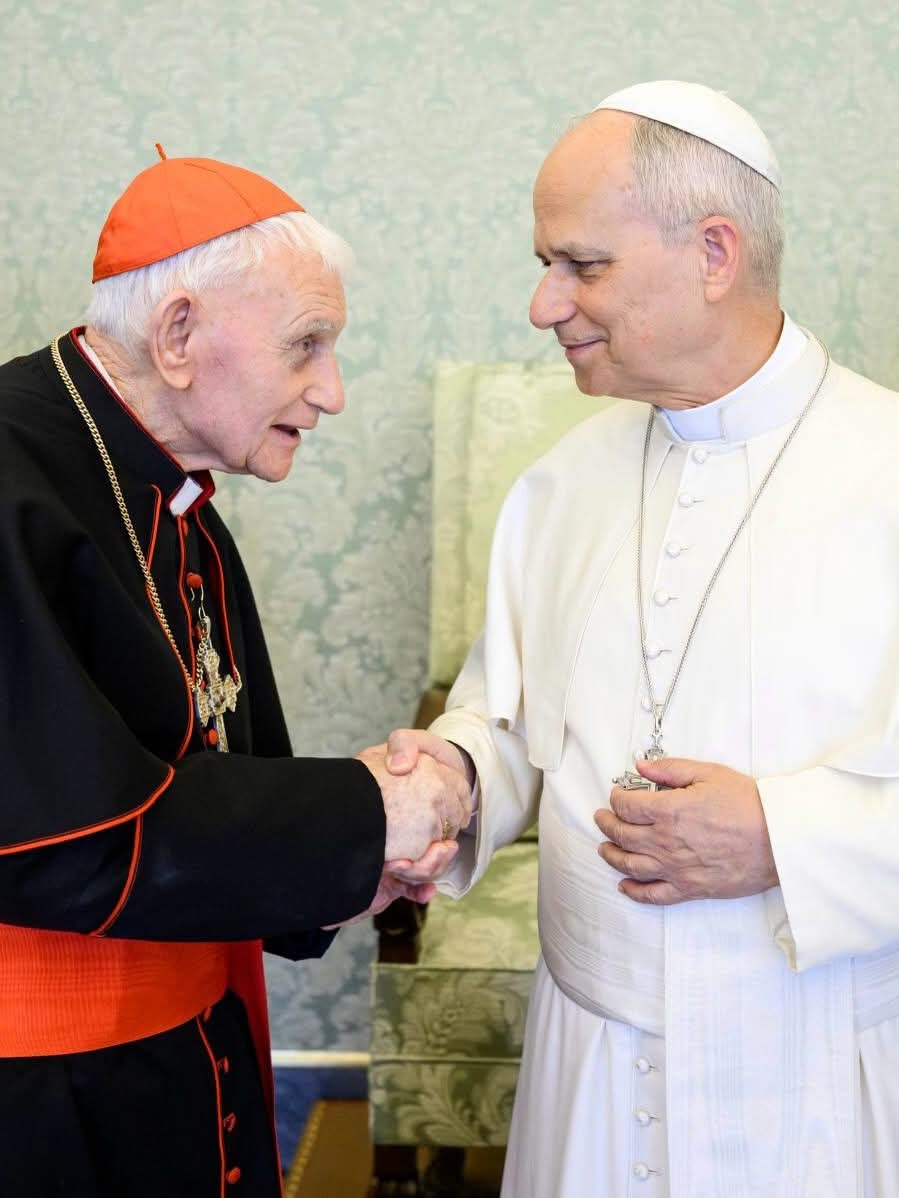
Cardinal Ernest Simoni is a 97-year old hero of the viciously persecuted Albanian Church.
In 1963, as a young priest, Cardinal Simoni was arrested, tortured, and sentenced to death by the Communist authorities for offering Mass for the soul of John F. Kennedy.
His sentence was later converted to life imprisonment of hard labor. Communist authorities offered to free him if he renounced his faith. He didn’t and after 28 years of penal labour, he was eventually freed.
Pope Francis heard his testimony during his trip to Albania in September 2014, visibly moved to tears by the words of this priest, whom he always called a “living martyr”. In 2016, Pope Francis named him a Cardinal, thanking him for this testimony "that does good for the Church." He chose the motto: “My Immaculate Heart will Triumph.”
Cardinal Simoni celebrated the 70th anniversary of his priestly ordination on April 7, 2026.