3️⃣ Neuromuscular Coordination
This trains the “brain-to-muscle” connection. It increases motor unit recruitment (firing more muscle fibers at once) and builds better balance, stability, and control during high-speed movements.
2️⃣ Reactive Strength & Efficiency
By training the Stretch-Shortening Cycle (SSC), your body learns to store and reuse elastic energy. This makes your movements more efficient—allowing you to move faster while using less effort.
1️⃣ Increased Explosive Power
Plyos improve your ability to produce force rapidly. This translates directly to higher vertical jumps, faster sprinting speeds, and more explosive changes of direction during a game.
Chapter 2: Plyometric Training For Sports Performance
To be explosive, your muscles and tendons need to act like springs. Plyometric training is the most efficient way to develop power, speed, and coordination:
3️⃣ Aerobic System (Oxidative Phosphorylation)
Uses oxygen to turn carbs, fats, and protein into ATP.
Works for long-duration exercise.
Slower, but sustainable.
Getting tired too fast?
It’s not your effort.... it’s your energy system 🔋
Today Starts Our First Monday Of Diving Into The Mind And Body Of An Athlete Called: The Science Behind The Athlete
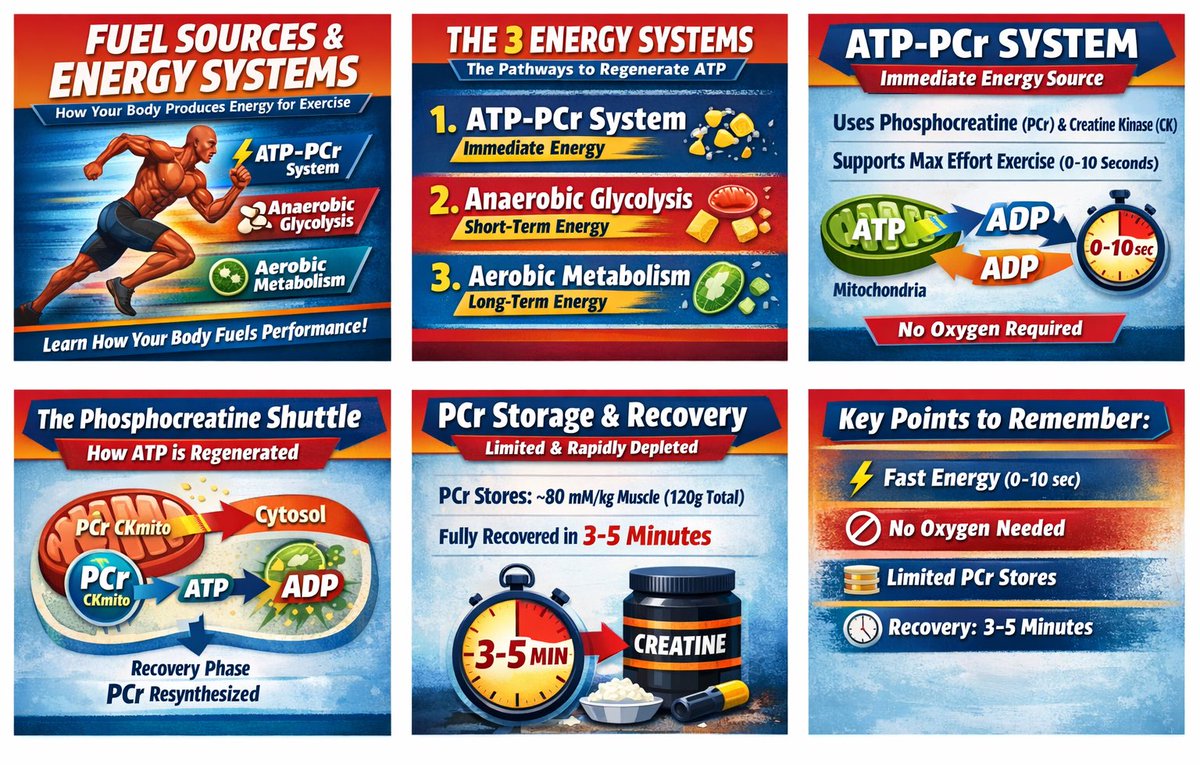
🧠 Chapter: 1 Energy Systems Training For Sports Performance
1️⃣ a ATP-PCr System
Uses phosphocreatine (PCr) to quickly rebuild ATP.
Works without oxygen → perfect for sprints or explosive movements (~10 sec max).
PCr stores are limited, so it’s best for short, intense bursts.
Muscles need ATP to contract, but the ATP in your cells only lasts a few seconds. Your body has 3 main energy systems to rebuild ATP so you can keep moving:
Following his appearance in the HBCU Legacy Bowl, Bryce showcased his explosiveness, leverage, and relentless motor against top HBCU talent — proving he belongs in the next-level conversation.