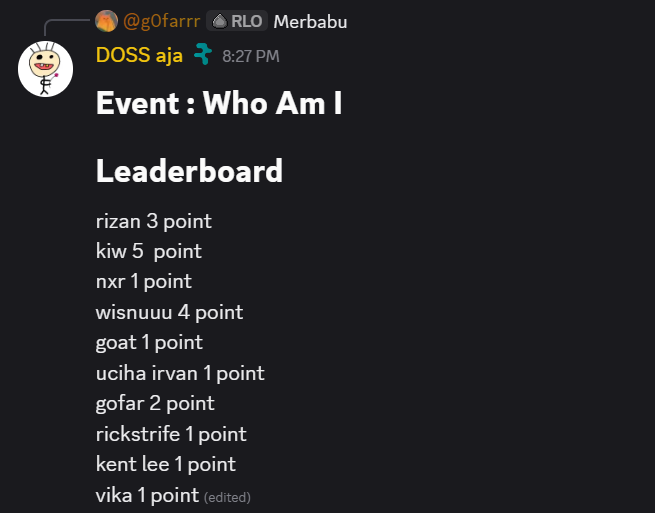
What a fun night!
It was a pleasure hosting the Who Am I event with @rzstwnn_ and @OnatEth . I was genuinely impressed by how fast and sharp the Rialo community was some of the answers came in instantly.
Congratulations to our three winners: @notkiws , @Wisnu100802 , and @0xrizann You all are amazing. Thanks to everyone who joined and made the event such a success. See you at the next one! 🚀
3. Traditional blockchain: executes when you tell it to.
Reactive blockchain (Rialo): executes when conditions are met.
One depends on external systems to stay alive. The other carries automation inside consensus same trust guarantees as every other onchain operation.
1. Traditional blockchains only execute when someone pushes a transaction.
No push, nothing happens. Every automated operation in DeFi liquidations, rebalancing, funding rates depends on bots and keepers doing the pushing.
That's not decentralization. That's outsourced automation
Grialo! @RialoHQ 🙌
Event Mind Clues: Who Am I?
Get your logic ready and prepare to laugh together, because there will be plenty of fun riddles and unexpected answers! 😆
📅: Saturday, July 4
⏰: 8:00 PM WIB
🌏: Indonesia Region
🎙️ : Hosts: me, @DossRawrr and @OnatEth
What happens after a state changes? Rialo's execution pipeline handles the rest. From state updates to transaction execution, everything is processed natively by validators eliminating the need for bots and external coordination.
@RialoHQ
Reactive Transactions begin with predicates. Instead of relying on bots to monitor conditions, validators evaluate predefined rules during block execution and automatically trigger transactions when those conditions are met. This is the foundation of native automation.
@RialoHQ