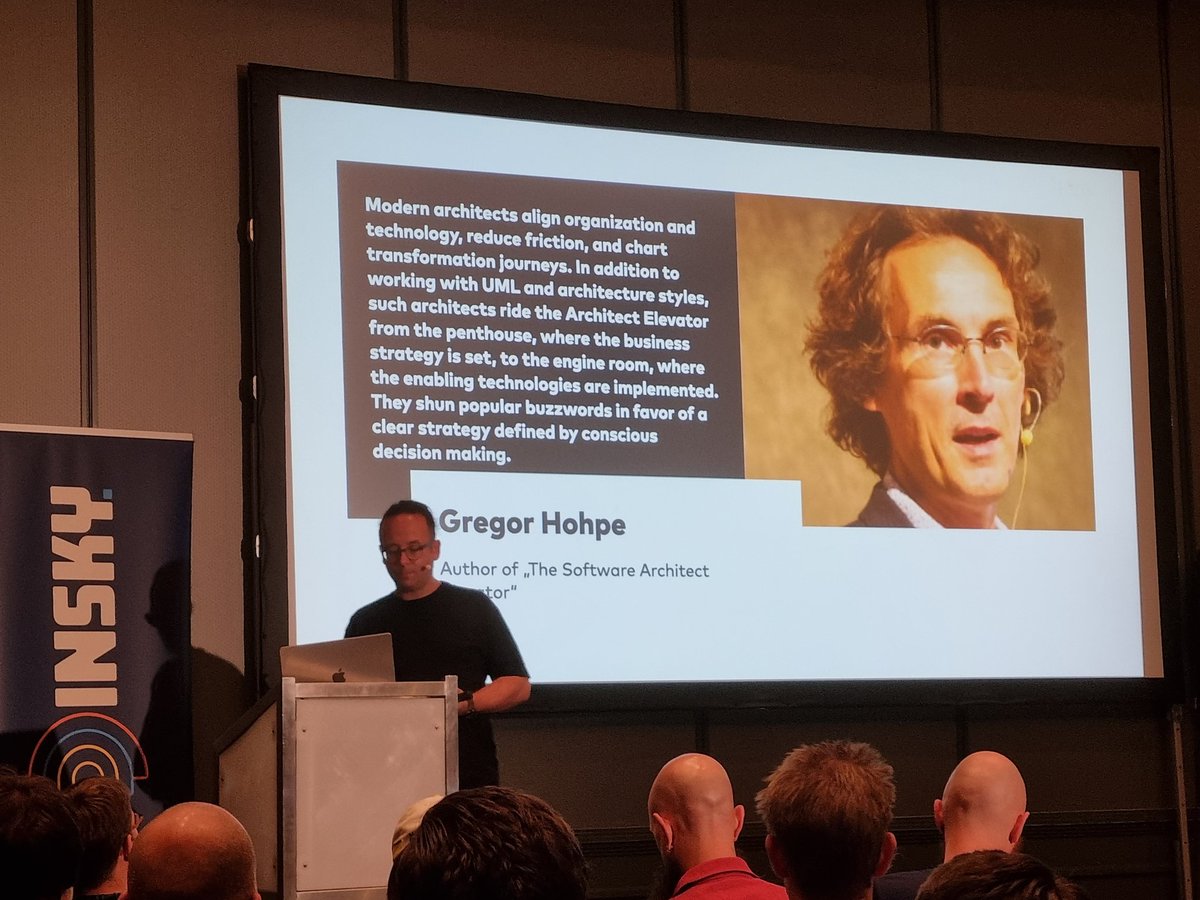
This definitively wasn't my usual @Devoxx talk, but I enjoyed a lot both preparing and giving it, and in case you watch it I'd love to know what you think.
https://t.co/6C0DDLAewz
ONE: SMILES AND HANDSHAKES
One of the luckiest things that has ever happened to me professionally was the opportunity to work at the International Air Transport Agency (IATA) in the late 1990’s.
Before that I was an experienced manager, and I had accumulated some important management principles, but nothing compared to what I was about to learn at IATA.
What made it so special was two things:
1. IATA has no commercial (profit) motive.
2. It is a global organization, with employees from over 75 countries.
Without a profit motive to align employees to a single direction it is easier to observe how personality, culture, and human nature drive behaviors.
Because the employees came from many different countries, it was possible to see what behavior was cultural, and what was basic human nature, shared by all cultures. It was the perfect place for me to observe and learn.
Another thing that made IATA special (for me) was that I found a mentor. Someone with a solid foundation for navigating large corporations, learned at the knee of his father, an executive at Coca-Cola. And someone with the patience required to pass that foundation on to me (I was not easy to teach). I will call him Michel, because that is his name. We are still friends to this day.
On my first day at work Michel told me something that I never forgot. I have since found this to be true in most large organizations, whether for profit or not. What he said was:
This company runs on Smiles & Handshakes.
He went on to explain that a Smile & Handshake was when my division head ran into one of his peers or superiors in the hallway, and they would smile, stuck out their hand and say: “Bob, nice to see you.”
The opposite of Smiles and Handshakes, was Noise. Noise was when one of my boss’s peers or superiors ran into them in hallway, frowned, and said: “I’ve been meaning to talk to you. I am concerned about …”
My mission, he said, was to think before acting and ask myself if what I was doing would produce Smiles & Handshakes, or if it would create Noise.”
I will tell you an easy way to do this later in the book, but for now I will tell you what he told me: Almost nothing creates more noise than going over budget.
So Rule #1 that Michel gave to me “me was:
Smiles & handshakes, no noise, meet or beat budget.”
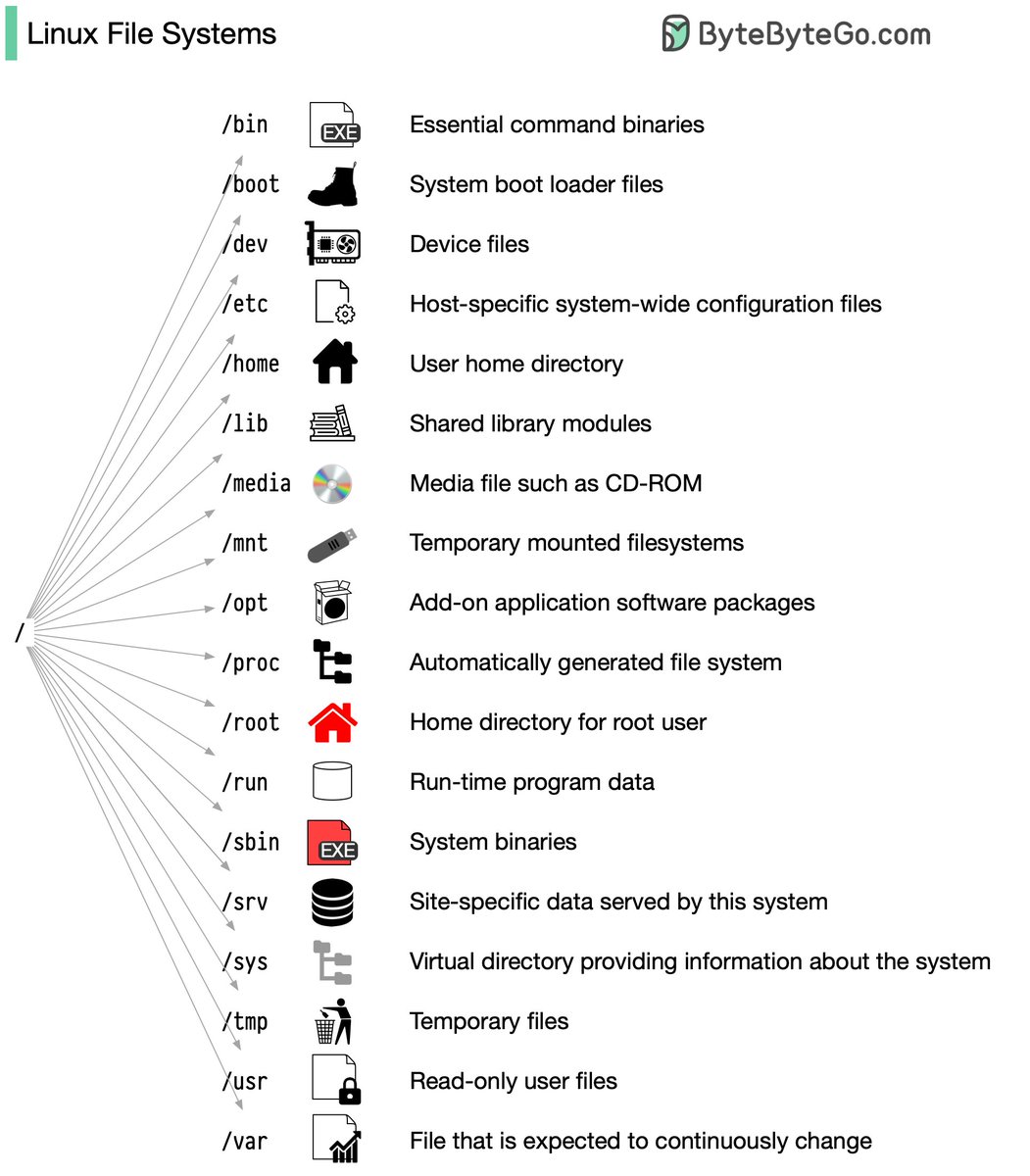
Linux file system explained.
The Linux file system used to resemble an unorganized town where individuals constructed their houses wherever they pleased. However, in 1994, the Filesystem Hierarchy Standard (FHS) was introduced to bring order to the Linux file system.
By implementing a standard like the FHS, software can ensure a consistent layout across various Linux distributions. Nonetheless, not all Linux distributions strictly adhere to this standard. They often incorporate their own unique elements or cater to specific requirements.
To become proficient in this standard, you can begin by exploring. Utilize commands such as "cd" for navigation and "ls" for listing directory contents. Imagine the file system as a tree, starting from the root (/). With time, it will become second nature to you, transforming you into a skilled Linux administrator.
Have fun exploring!
Over to you: which directory did you use most frequently?
--
Subscribe to our weekly newsletter to get a Free System Design PDF (158 pages): https://t.co/4QcX8btXGL
I'm a bit late to the party (just one year, give or take). But this is a fun read by Christine Karman.
Van Gogh goes Scrum by @Xtien https://t.co/MFRjqQIRni
Testing Without Mocks: A 🧵.
So a few days ago I released this massive update to my article, "Testing Without Mocks: A Pattern Language." It's 40 pages long if you print it. (Which you absolutely should. I have a fantastic print stylesheet.)
In case you missed it, here is the recording for last week's #ScrumPulse webinar with PSTs Evelien Roos and Laurens Bonnema - 50 Frequently Asked Scrum Master Questions Answered - https://t.co/cH1m4vHDQS @evelienroos2 @laurensbonnema
I've seen a lot of people asking "why does everyone think Twitter is doomed?"
As an SRE and sysadmin with 10+ years of industry experience, I wanted to write up a few scenarios that are real threats to the integrity of the bird site over the coming weeks.
A quick rage-thread about credentials. When security auditors just say things like "Critical credentials need to be rotated every 90 days" you need to fire them into the sun with urgency. Here's what you actually need ...
How do you take a legacy system toward fast flow of change? @suksr takes us through an evolution
using wholistic approaches including DDD, Wardley Mapping, and Team Topologies #QConLondon