Next month marks the 25th anniversary of Rockstar Games. Thanks to the incredible support of our players worldwide, we have had the opportunity to create games we are truly passionate about.
🚨 Google's new Quantum Computer completes the task in 6 seconds that would have taken one of the world's best computers 47 years.
Quantum computers can change what we can build and how we understand the world.
Here's everything you need to know:
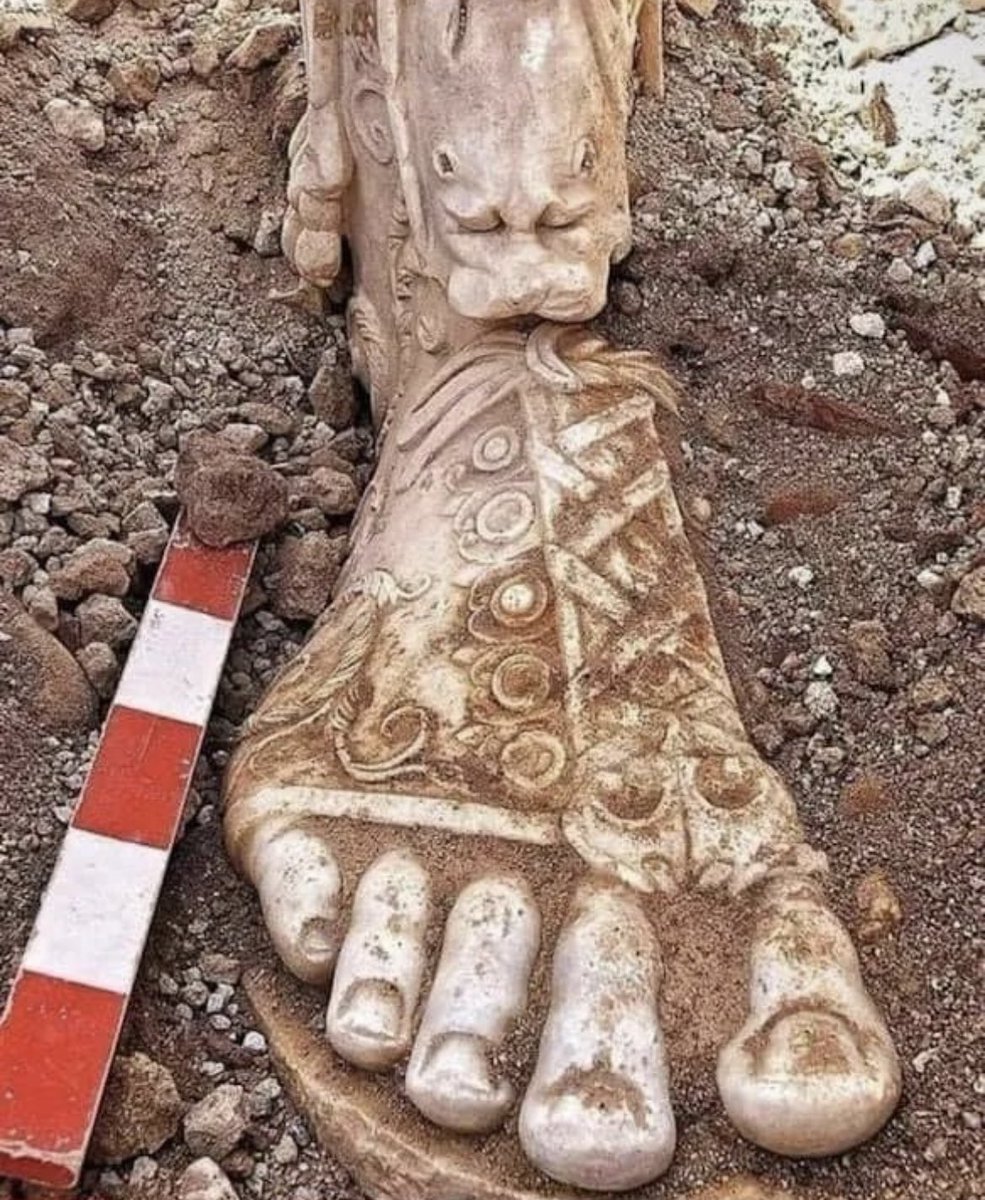
The discovery of a foot of a marble sculpture of Marcus Aurelius in Southern Turkey provides us with a valuable piece of historical context. Marcus Aurelius, born in 121 AD, was a prominent figure in ancient Roman history. He is best known for his role as the Roman Emperor from 161 to 180 AD, during a period known as the Pax Romana, or Roman Peace.
Marcus Aurelius was not only a military leader but also a renowned scholar, making significant contributions to philosophy and intellectual pursuits. He was deeply influenced by Stoicism, a philosophical school that emphasized virtue, reason, and acceptance of fate. Marcus Aurelius is particularly famous for his collection of philosophical writings known as "Meditations," in which he reflects on various aspects of life, ethics, and personal growth.
During his reign, Marcus Aurelius faced numerous challenges, including military campaigns against invading Germanic tribes, such as the Marcomanni and the Quadi. Despite his commitments as an emperor, he continued to engage in intellectual pursuits, often writing and contemplating while on military campaigns.
The unearthed foot of the marble sculpture of Marcus Aurelius highlights the significance and influence of his reign, as well as his intellectual legacy. It serves as a reminder of his multidimensional persona as both a military leader and a scholar. The sculpture itself is a testament to the artistry and craftsmanship of the time, providing us with a tangible connection to the past and allowing us to appreciate the cultural and historical richness of the Roman Empire.