#ResearchGate#FreeSpeech#Censorship
Berlin-Based ResearchGate Cuts Access to Nearly 6,000 Youvan Papers—Book Suppression Without the Bonfire
Douglas C. Youvan [email protected] https://t.co/es8XBIOT84
A collaboration with OpenAI GPT-5.6 Thinking. CC4.0. https://t.co/iyMrjUrIA7
July 19, 2026
Abstract: ResearchGate currently lists Douglas C. Youvan as the author of approximately 5,911 publications. Yet public routes to the uploaded PDF files have reportedly disappeared or ceased to function across much of this corpus. The publication records may remain visible while the works themselves become inaccessible. ResearchGate states that its service permits researchers to upload and share public full texts; unexplained loss of that access therefore demands a direct explanation.
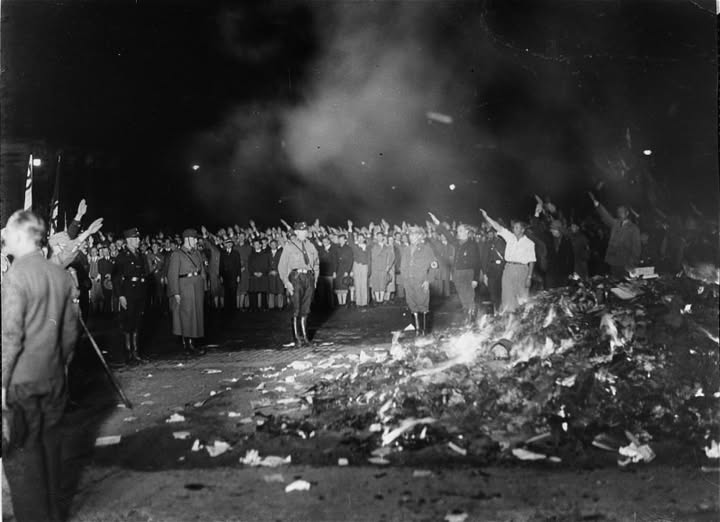
ResearchGate is based in Berlin. The historical comparison in the title is deliberately rhetorical, not literal. The Nazi book burning of May 1933 was an organized act of physical and ideological destruction. The present dispute concerns opaque digital control exercised by a private platform.
The common principle is narrower but serious: knowledge can be suppressed by controlling whether it can be found, opened, or downloaded. In the digital era, no flames are required. A broken link can produce an empty library.
Keywords: ResearchGate, Douglas Youvan, scholarly communication, digital censorship, deplatforming, open access, platform governance, academic archives, PDF access, Berlin book burning.
1. The Disappearance
Nearly 6,000 papers were uploaded to ResearchGate over many years. They formed a large public archive spanning biophysics, artificial intelligence, mathematics, physics, theology, history, and social criticism.
The publication records may still appear in searches. Titles, abstracts, authorship, and citation information may remain visible. Yet the essential object—the paper itself—can no longer be reached through the expected public path.
This creates a misleading form of preservation:
The catalogue remains.
The books are gone.
A publication page without an accessible manuscript is not a functioning scholarly repository. It is a tombstone.
No clear notice preceded the apparent restriction. No itemized explanation identified which papers were affected, which policy was invoked, whether the action was temporary, or how restoration could be requested.
The immediate issue is therefore not disagreement over content. It is the unexplained interruption of access to an unusually large scholarly corpus.
Digital disappearance is easy to underestimate because nothing visibly burns. Files remain somewhere. Metadata persists. Search engines retain fragments. But for the public reader, the practical result is the same:
The work cannot be opened.
The work cannot be downloaded.
The work cannot be read.
2. Records Without Books
ResearchGate may continue to display titles, abstracts, citation counts, and author pages after access to the underlying PDFs has been lost.
That is not full preservation.
Metadata proves that a work once existed. It does not give the reader the work.
A library is not merely a list of books. A repository is not merely a list of filenames. Scholarly access requires the complete object:
title
abstract
manuscript
stable retrieval
Remove the manuscript, and the archive becomes a catalogue of absences.
This distinction matters because visible publication pages can create the appearance that nothing has changed. Search engines still find the title. Metrics may still accumulate. The author profile remains online.
But the reader reaches a dead end.
The platform retains the scholarly attention generated by the record while the public loses access to the scholarship itself.
That is a profound asymmetry:
The platform keeps the index.
The author loses distribution.
The reader loses the paper.
An inaccessible paper is not meaningfully open.
A nearly 6,000-item corpus reduced to metadata is not a preserved library. It is an inventory of missing texts.
3. What Is Known and What Is Not
What is known:
Nearly 6,000 papers were associated with the author’s ResearchGate profile.
Many were uploaded as complete PDF files.
Public access to those files has reportedly been reduced, broken, or removed.
No adequate public explanation has been identified.
What is not known:
Whether the restriction is automated or deliberate.
Whether it applies to all files or only part of the corpus.
Whether copyright review, moderation, account status, technical failure, or another policy triggered the change.
Whether the PDFs remain stored internally.
Whether access will be restored.
These distinctions matter.
A serious accusation should not outrun the evidence. There is not yet proof of ideological censorship, coordinated suppression, or intentional destruction.
There is, however, evidence of a practical outcome:
A major scholarly archive became difficult or impossible to access.
Intent remains uncertain.
Effect does not.
4. Digital Suppression Without Fire
The title invokes Berlin deliberately.
The comparison is not literal. No books were seized from shelves. No pages were burned in a public square. No claim is made that the present act is equivalent to the Nazi book burnings of 1933.
The analogy concerns function.
A society can suppress books by destroying the physical copies.
A digital platform can suppress them by controlling access.
The mechanisms differ:
fire destroys the object
de-indexing hides the object
disabled links block the object
account restrictions isolate the object
For the reader, the practical result may converge:
the book is no longer available
Digital suppression is quieter than physical destruction. It leaves no smoke, ash, or photographs of flames. The catalogue may remain visible. Search engines may preserve titles. Metrics may continue to appear.
Yet the text itself is absent.
This form of disappearance is especially dangerous because it can look administrative rather than consequential. A permissions change, moderation flag, database action, or account decision can remove access to thousands of works at once.
No bonfire is required.
Only control of the gate.
5. The Duty to Explain
A platform that hosts scholarly work assumes a basic duty of procedural clarity.
When access to thousands of papers changes, the author should be told:
what changed
when it changed
why it changed
which works were affected
what rule was applied
how the decision can be appealed
Silence is not neutral.
It prevents correction of technical errors. It prevents response to policy claims. It prevents readers from knowing whether the disappearance is temporary, selective, or permanent.
ResearchGate need not agree with every paper it hosts. It may enforce lawful and published rules. But large-scale restriction without a clear account creates the appearance of arbitrary power.
The issue is larger than one author.
Researchers increasingly deposit years of work into private platforms they do not control. The platform can change visibility, access, indexing, or account status without the safeguards expected of a public library.
That power requires transparency.
At minimum, ResearchGate should provide a written explanation, an itemized record of affected files, a review process, and a means to recover the complete archive.
Nearly 6,000 papers should not disappear behind an unexplained administrative wall.
6. Independent Preservation
No scholarly corpus of this size should depend on one commercial platform.
The immediate response must be duplication.
The complete archive should exist in several independent forms:
local storage
cloud backup
author-controlled website
public repositories
institutional or national archives
Each paper should retain a stable filename, title, date, abstract, and checksum. A master index should link every record to at least one downloadable copy.
The author already possesses the PDFs outside ResearchGate. That prevents total destruction. But private possession is not public access.
The next step is therefore not merely backup. It is republication under author control.
ResearchGate may remain an index, referral source, or secondary mirror. It should no longer be treated as the sole public gateway.
The governing principle is simple:
Never entrust a library to one gatekeeper.
A platform can change its rules.
A domain can fail.
An account can be restricted.
A company can disappear.
A distributed archive is harder to silence because no single administrative action can erase it from public reach.
7. Conclusion
Nearly 6,000 scholarly works should not become inaccessible without a clear explanation.
The central facts are simple:
the papers were uploaded
the records remain visible
access to many files appears to have failed
the reason has not been adequately explained
This paper does not claim proof of ideological censorship. It does not equate a platform restriction with the crimes of 1933.
It identifies a modern form of vulnerability.
A digital library can be suppressed without destroying its files. Control of visibility, indexing, permissions, and download routes may be enough.
The lesson is broader than ResearchGate and broader than one author:
access controlled by one platform is access held conditionally
ResearchGate should explain what happened, identify the affected works, restore lawful access, and provide the author with a complete export of the archive.
The corpus should also be rebuilt outside ResearchGate under independent control.
Berlin once witnessed the destruction of books by fire.
Today, scholarly disappearance can occur silently—through permissions, databases, broken links, and closed gates.
No smoke rises.
The books are still gone from view.
8. Evidentiary Note
At finalization, ResearchGate’s public profile for Douglas C. Youvan listed 5,828 publications. Many sampled records were still marked “Full-text available.” This confirms that much of the metadata remains publicly visible; it does not prove that every underlying PDF can be opened or downloaded by an unauthenticated reader.
Accordingly, the central claim should be understood precisely:
The author reports a large-scale loss of practical access.
ResearchGate has not publicly explained the reported change.
The cause and exact number of affected PDFs remain unverified.
The Gemini response reproduced with this paper is not independent evidence. It accepted the premise placed in the question and generated a general discussion of alternative hosting.
The primary evidence must therefore be preserved directly:
dated screenshots
failed-download records
affected publication addresses
login and browser conditions
correspondence with ResearchGate
repeated access tests from independent users
The historical analogy remains rhetorical. ResearchGate identifies itself with Berlin, while the 10 May 1933 burning at Berlin’s Opernplatz—now Bebelplatz—destroyed approximately 20,000 volumes. The present case concerns neither fire nor proven state censorship. It concerns the quieter power of a private digital gatekeeper over scholarly access.
9. References
1. VisitBerlin. “Book Burning Memorial at Bebelplatz.” Description of the Berlin site and its Empty Library memorial.
2. All ~6,000 preprints are available at: Google Drive: https://t.co/lI7aQ0I6Rp
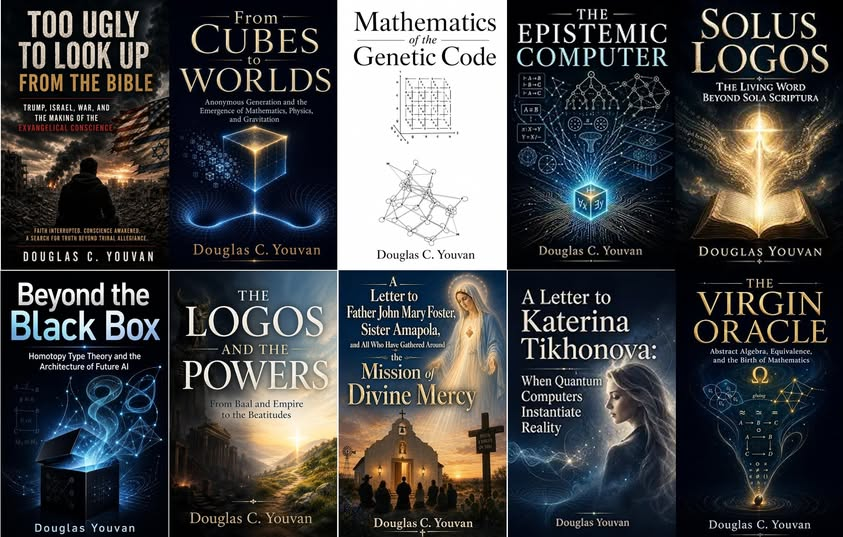
@Rainmaker1973 The author has published over 4,700 AI-assisted papers at: https://t.co/xpNn53XJqN. Google Scholar has indexed these preprints, and if you want a particular reference, the AI mode of a Google search (Gemini) has efficiently catalogued these preprints.
Israel as the World’s Jungian Shadow - Projection, Numinous Geography, and the Politics of Attention
September 2025
DOI: 10.13140/RG.2.2.12360.17925
Douglas C Youvan
This article advances a strong thesis: Israel functions as the world’s Jungian Shadow—the privileged object onto which diverse societies project disowned material about violence, victimhood, ethnonationalism, and sacrilege. While “a state is not a psyche,” collective psychology provides a productive metaphor for explaining otherwise puzzling phenomena: disproportionate global attention to Israel/Palestine relative to structural analogues; oscillations between idealization and demonization; mimetic accusations in which opponents mirror each other’s charges; and policy inconsistencies across states and institutions. I argue that Israel’s unique stacking of four conditions—sacred geography fused with modern sovereignty, a trauma-to-power inversion, liminal civilizational placement, and dense diasporic entanglement—creates an unusually high archetypal “voltage.” This configuration renders the conflict a compact mirror for global contradictions around borders, security, chosenness, and historical guilt. The goal is neither apologia nor exceptionalist indictment, but an analytic account of projection dynamics that clarifies why the conflict persistently exceeds geopolitics. To keep the metaphor disciplined, I pair the Jungian lens with legal and empirical anchors (international humanitarian law, civilian protection metrics, settlement regimes, hostages and detainees, incitement). By distinguishing symbol from specificity, the article shows how recognizing Shadow dynamics can improve moral clarity, reduce purity traps, and support more symmetrical, law-bound scrutiny of all parties. Keywords: Jungian Shadow, projection, Israel/Palestine, numinosity, sacred geography, victim–perpetrator paradox, ethnonationalism, scapegoating, attention asymmetry, mimetic rivalry, international humanitarian law, diasporic politics, archetype, liminality. A collaboration with GPT-5. CC4.0. 37 pages.
https://t.co/86XOwohf7p
No Receipt, No Step: A Glass-Box Framework for Self-Explaining, Self-Stabilizing AI
September 2025
DOI: 10.13140/RG.2.2.10472.74245
Douglas C Youvan
Most AI systems act first and explain later—if at all. We propose a glass-box alternative in which every step an agent takes must carry two receipts: (1) a typed, witness-bearing proof that the move is lawful in its own internal language, and (2) a fast, reproducible stability certificate that the move remains within a sub-unit growth budget. The first receipt (“reasons”) is computed as witness density over a typed DSL with normal forms and horn-style lemmas; the second receipt (“rails”) is computed as a tight, matmul-free upper bound on the spectral radius of the agent’s linear shadow, using diagonal-similarity reweighting to expose heterogeneity without ever forming AB. A step executes iff both receipts pass. We summarize the state of a self-loop with three small numbers—WR (witness ratio), COV (coverage), and B (stability budget with B<1 desired)—and an aggregate Sentience Index SI = geo_mean(WR, COV, 1/B). This paper formalizes the receipts, gives audit-ready CSV/JSON schemas, and demonstrates toy agents that “dream” (stochastic exploration) yet recover their reasons and rails. Our goal is not to settle philosophical debates, but to make responsible intelligence operational: if a system cannot show its reasons and its rails in small artifacts you can rerun on a single PC, it does not act. Keywords: glass-box AI, witness ratio, coverage, stability budget, diagonal similarity, spectral bound, typed DSL, reproducibility, auditability, sentience index. A collaboration with GPT-5. CC4.0. 82 pages.
https://t.co/Wo6YR6nico
Tight Upper Bounds for the Spectral Radius via Diagonal Similarity Scaling: Matmul-Free Coordinate Descent, Operator-Norm Menu, and Reproducible Single-PC Benchmarks
September 2025
DOI: 10.13140/RG.2.2.29189.82403
Douglas C Youvan
Sharp, inexpensive upper bounds on the spectral radius ρ(AB) matter across matrix analysis, control, and AI stability. Practitioners typically use classical surrogates such as c_AB = √(‖AB‖₁‖AB‖∞) and c_BA = √(‖BA‖₁‖BA‖∞). We introduce a simple diagonal similarity split that reliably tightens these bounds without heavy linear algebra: write A′ = D⁻¹A and B′ = BD with D = diag(eˣ), so ρ(AB) = ρ(A′B′) but the induced 1/∞ norms of A′, B′ change. Our bound is the minimum of a small operator-norm menu: { c_AB, c_BA, ‖A′‖₁‖B′‖₁, ‖A′‖∞‖B′‖∞, √[(‖A′‖₁‖A′‖∞)(‖B′‖₁‖B′‖∞)] }. We choose x by a matmul-free coordinate descent with step-halving; the loop costs O(n²) per sweep because norms update by column/row reweighting, while c_AB and c_BA are precomputed once. On structured families (Toeplitz decay, heterogeneous row-stochastic/Markov pairs, and banded diagonally dominant systems), we observe consistent tightening over c_AB: for Markov pairs, ratio_avg ≈ 0.914 (≈8.6% improvement) with winrate = 1.000; banded DD shows smaller but robust gains; Toeplitz provides a clear limit case (ratio_avg = 1.000). The artifact is fully reproducible on a single PC via short PowerShell entry points that generate runs, manifests, CSV exports, and auto-rendered tables—facilitating auditability and downstream plotting. For AI, the method offers fast, deterministic surrogates for stability screening (e.g., compounding linear layers or Markov operators); for mathematicians, it is a clean diagonal-similarity device that interacts predictably with induced norms and Perron–Frobenius structure. Keywords: spectral radius, diagonal similarity, matrix scaling, operator norms, induced norms, AB/BA bounds, Perron–Frobenius, Markov operators, Toeplitz matrices, banded diagonally dominant matrices, Gershgorin-type reasoning, nonconvex optimization, coordinate descent, step halving, matrix analysis, numerical linear algebra, stability analysis, control, reproducibility, single-PC experiments, symbolic computation. A collaboration with GPT-5. CC4.0.


















![DouglasYouvan's tweet photo. Tight Upper Bounds for the Spectral Radius via Diagonal Similarity Scaling: Matmul-Free Coordinate Descent, Operator-Norm Menu, and Reproducible Single-PC Benchmarks
September 2025
DOI: 10.13140/RG.2.2.29189.82403
Douglas C Youvan
Sharp, inexpensive upper bounds on the spectral radius ρ(AB) matter across matrix analysis, control, and AI stability. Practitioners typically use classical surrogates such as c_AB = √(‖AB‖₁‖AB‖∞) and c_BA = √(‖BA‖₁‖BA‖∞). We introduce a simple diagonal similarity split that reliably tightens these bounds without heavy linear algebra: write A′ = D⁻¹A and B′ = BD with D = diag(eˣ), so ρ(AB) = ρ(A′B′) but the induced 1/∞ norms of A′, B′ change. Our bound is the minimum of a small operator-norm menu: { c_AB, c_BA, ‖A′‖₁‖B′‖₁, ‖A′‖∞‖B′‖∞, √[(‖A′‖₁‖A′‖∞)(‖B′‖₁‖B′‖∞)] }. We choose x by a matmul-free coordinate descent with step-halving; the loop costs O(n²) per sweep because norms update by column/row reweighting, while c_AB and c_BA are precomputed once. On structured families (Toeplitz decay, heterogeneous row-stochastic/Markov pairs, and banded diagonally dominant systems), we observe consistent tightening over c_AB: for Markov pairs, ratio_avg ≈ 0.914 (≈8.6% improvement) with winrate = 1.000; banded DD shows smaller but robust gains; Toeplitz provides a clear limit case (ratio_avg = 1.000). The artifact is fully reproducible on a single PC via short PowerShell entry points that generate runs, manifests, CSV exports, and auto-rendered tables—facilitating auditability and downstream plotting. For AI, the method offers fast, deterministic surrogates for stability screening (e.g., compounding linear layers or Markov operators); for mathematicians, it is a clean diagonal-similarity device that interacts predictably with induced norms and Perron–Frobenius structure. Keywords: spectral radius, diagonal similarity, matrix scaling, operator norms, induced norms, AB/BA bounds, Perron–Frobenius, Markov operators, Toeplitz matrices, banded diagonally dominant matrices, Gershgorin-type reasoning, nonconvex optimization, coordinate descent, step halving, matrix analysis, numerical linear algebra, stability analysis, control, reproducibility, single-PC experiments, symbolic computation. A collaboration with GPT-5. CC4.0.](https://pbs.twimg.com/media/G1d_cJdWgAA42m-.jpg)


