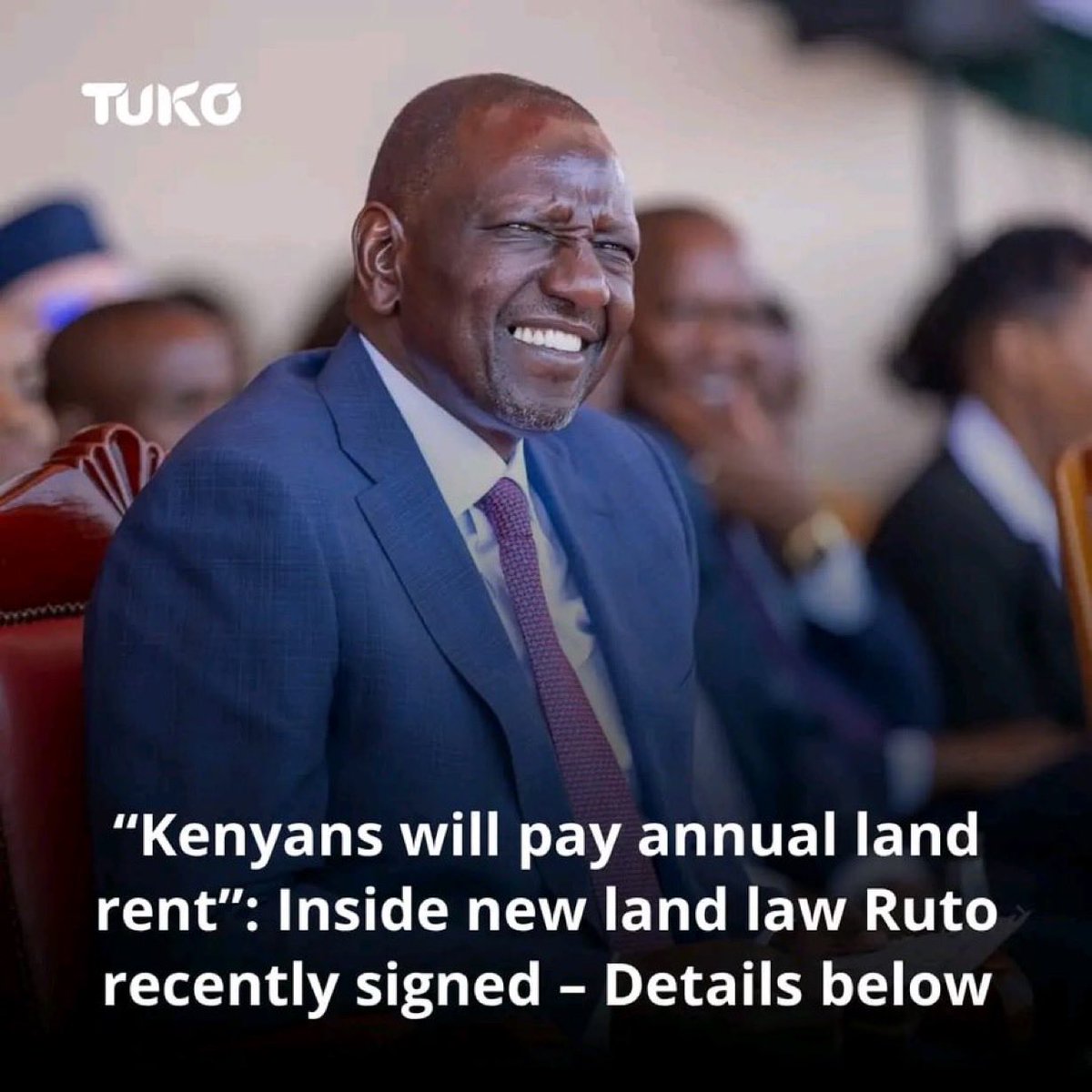
The land question in Kenya remains one of the most sensitive and least honestly discussed issues of our time. Land is not merely property, it is identity, inheritance, history, and survival. For many families, especially in rural Kenya, ancestral land is the only asset passed from generation to generation.
The Constitution of Kenya recognizes land rights and the historical injustices surrounding land ownership. Yet proposals or systems that place additional burdens on freehold ancestral land raise a serious moral and social question: should people be forced to continuously “pay” to retain what their forefathers already fought for, occupied, protected, and passed down?
How does a jobless father in the village, struggling to feed his family, become a debtor on his own ancestral land? At what point does ownership become conditional? At what point does inherited freedom become a recurring financial obligation?
A nation must distinguish between taxing wealth creation and penalizing existence. Because if a citizen must perpetually pay to keep land that has belonged to generations of their family, the contrast begins to resemble a modern form of economic servitude: not ownership, but conditional occupancy.
Kenya’s land history is already scarred by displacement, dispossession, and injustice. Any system that risks pushing vulnerable families from ancestral land must be questioned aggressively. Land rights should protect people, not create new pathways for exclusion.
The land conversation cannot remain silent. It is not just an economic issue. It is a dignity issue.
Update: Kenyans are planning nationwide protests over soaring fuel prices and the worsening cost of living, with calls growing for a total shutdown on Tuesday, April 21, 2026. #RejectFuelPrices
The continued rise in cooking gas and fuel prices is placing an unsustainable burden on citizens. It is important for both current leaders and those now in opposition to recognize that this generation is informed, aware, and attentive. June 25, 2024 marked a turning point, a reminder that accountability must be consistent. Those who once supported policies contributing to today’s challenges cannot simply rebrand themselves without addressing their past positions.
Leadership must be grounded in responsibility, transparency, and genuine commitment to the people not convenience.
@NdindiNyoro