Recovering lawyer/aspiring author. Firmly devoted to accuracy in my posts & replies and citing the sources of my information. Civil discourse; no name calling.
Somehow I’m no longer surprised by very smart people doing very stupid things. In case this hasn’t been repeated and emphasized enough: “Dance like no one’s watching; email like every word you write will be read to you during your deposition.”
https://t.co/pGvKZQo3yq
@3YearLetterman You do realize that sales taxes support state and local governments, not the federal government. If you want to take action concerning the federal shutdown, perhaps you should refuse to have your employer withhold federal tax payments from your paycheck.
@ZohranKMamdani To the presumptive Mayor of New York elect: My niece attended Bank Street School four years behind you, which meant you were one of her class’s “reading buddies.” She sent me your 8th grade class photo, in which you appear.
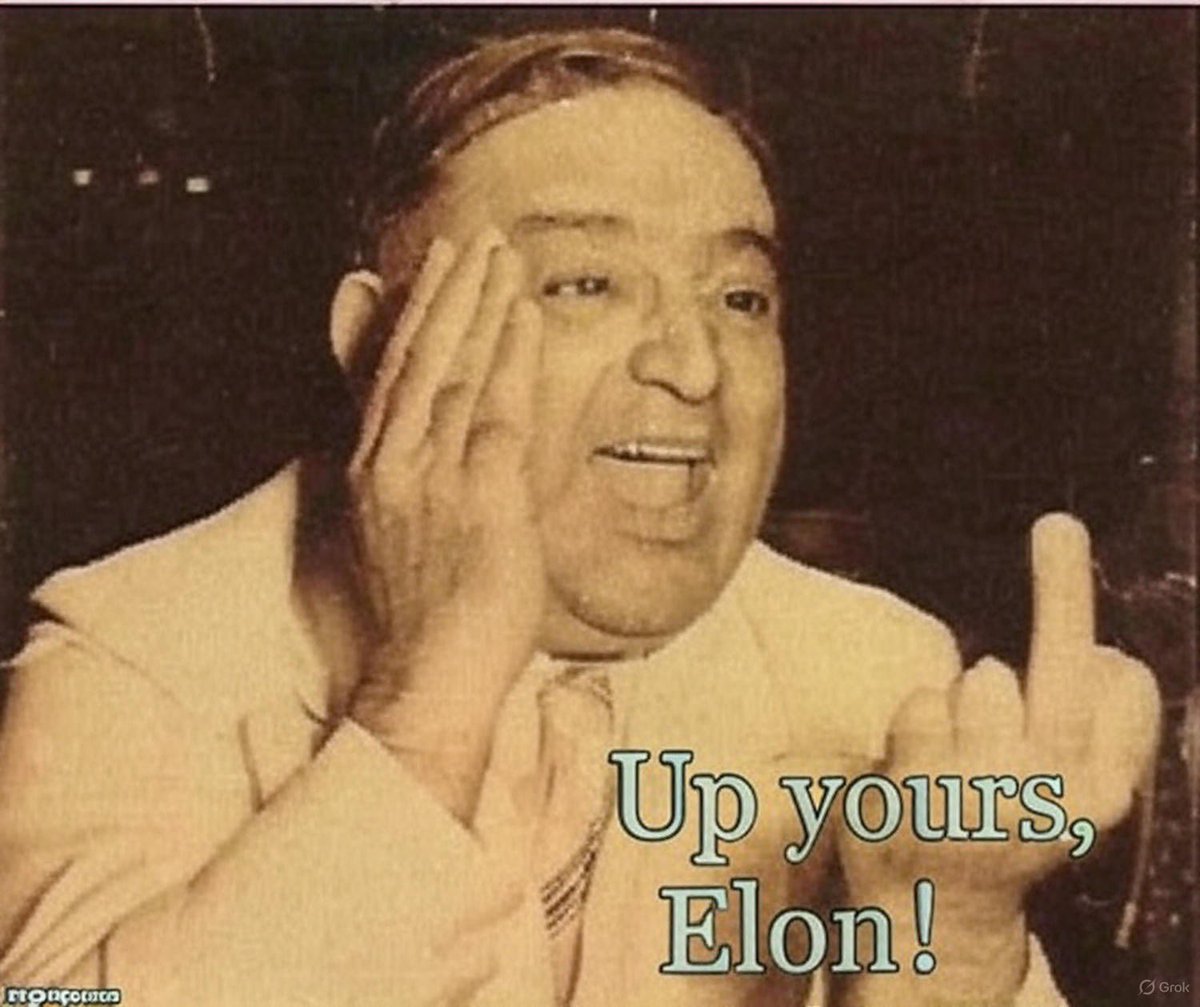
@elonmusk NY has "fusion voting" where a candidate can run on multiple party lines. It’s had this system for well over a century. The fusion candidate who won the mayoral election in 1933, despite being labeled as a dangerous radical, has a message for you.
That’s bull, and you know it.
(1) States, not the federal government, have plenary power to make their own election laws. There is no basis to believe that a Harris administration would have interfered with those states whose laws require voter ID.
(2) Congress does have Constitutional power under Article I, Section 4, clause 1 to enact laws altering state regulations as to “The Times, Places and Manner of holding Elections for Senators and Representatives,” but the President has no such authority under the Constitution.
(3) Even with a majority in both houses and a Republican president, Congress hasn’t enacted the SAVE Act, which would go significantly beyond voter ID, but instead would require proof of United States citizenship to register an individual to vote in elections for federal office. H.R. 22 has passed the House but has yet to be taken up by the Senate.
Apart from the quite overblown rhetoric of “literally” saving the nation, It’s interesting how you credit Elon Musk with preventing Kamala Harris from becoming president. That’s quite a confession.
That’s bull, and you know it.
(1) States, not the federal government, have plenary power to make their own election laws. There is no basis to believe that a Harris administration would have interfered with those states whose laws require voter ID.
(2) Congress does have Constitutional power under Article I, Section 4, clause 1 to enact laws altering state regulations as to “The Times, Places and Manner of holding Elections for Senators and Representatives,” but the President has no such authority under the Constitution.
(3) Even with a majority in both houses and a Republican president, Congress hasn’t enacted the SAVE Act, which would go significantly beyond voter ID, but instead would require proof of United States citizenship to register an individual to vote in elections for federal office. H.R. 22 has passed the House but has yet to be taken up by the Senate.
Apart from the quite overblown rhetoric of “literally” saving the nation, It’s interesting how you credit Elon Musk with preventing Kamala Harris from becoming president. That’s quite a confession.
Anyone named Chad got a hard time then. The best book I’ve read about the controversy surrounding the unfortunate 2000 Presidential election is Breaking the Deadlock by Judge Richard Posner (2001). I don’t fully agree with analysis of the Supreme Court’s decision, but his prescriptions on ballot reforms to avoid future conflicts over election outcomes were sound and should have been followed.
The reason I call the 2000 election unfortunate isn’t because I think Bush did a poor job as president (although I do think that), but because the Supreme Court’s intervention in the Florida recount began the deep slide in the Court reputation of being above politics, particularly since it decided the case (and ultimately the election) by the narrowest of margins (5 to 4) along very clear ideological (conservative/liberal) lines.
(2.2/2.2) I agree that ballots definitely need to avoid being confusing. My parents retired to Palm Beach County and voted as Florida residents in 2000. By far the worst instance of a confusing ballot was the one they had to use that year — the notorious “butterfly ballot.” There’s debate to this day whether Bush won the presidency as a result of elderly Democrats mistakenly punching the hole for Pat Buchanan because it seemed to align with Al Gore’s name when you inserted the card into the hole punch device.
(2/2.1) I didn’t find the cross-party endorsement system in New York at all confusing, but then I’d grown up with it. I also know that party affiliation is a bigger deal there, and having the candidates’ listed by party, even when it means duplication, serves a purpose. Parties that reach a certain threshold of votes qualify for the ballot next election and sometimes that’s the criterion for whether they’re required to hold a primary (as opposed to nominations by party conventions, caucuses, or committees). Voters in some states (NY is one) have to declare a party preference when registering in order to participate in primaries. Others (like Washington State) have open primaries where the top two vote getters advance regardless of party. Both systems have their pros and cons.