🇦🇺in 🇬🇧 | Public law and policy | Associate Professor @BlavatnikSchool @UniofOxford | Running, cycling and field hockey
Also: @dradamwebster.bsky.social
📢 Attention university students! 📚
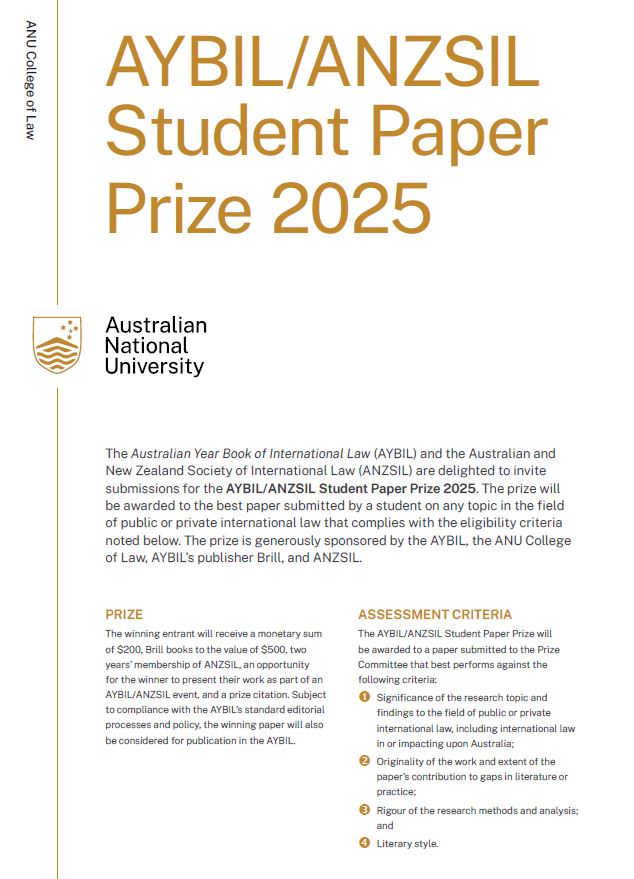
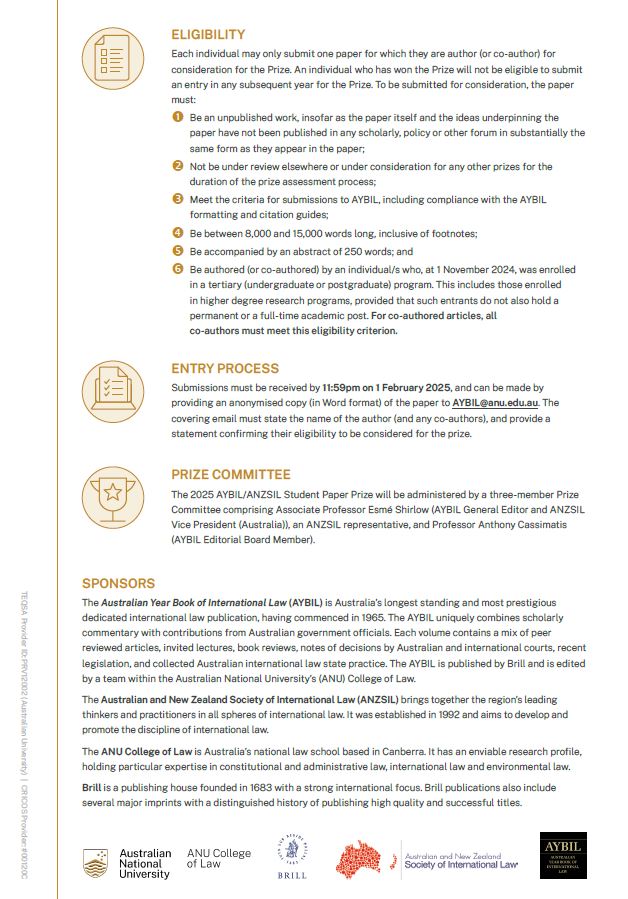
Are you working on a paper in the field of public or private international law? Interested in amplifying your original research to a wider audience? Enter The AYBIL-ANZSIL Student Paper Prize!
@AusintheUS Much can be learned from Aussie elections beyond the democracy sausage: the benefits of the wonderful @AusElectoralCom (and esp. their social media team), compulsory voting and polling day on a Saturday. 😊
@Dr_Joe_McIntyre That might be right, and I see the point on a federal level. On a state level, I do think SA fails to see the benefit and impact the unis have and their great potential for the state (both in terms of teaching and research).
@Dr_Joe_McIntyre I think if universities reframed education as an “industry” it would be viewed differently and easier to develop these coalitions. Australia has some of the best universities in the world and I don’t think most people realise this.
@fhumpires I also think giving some time between the end of the match and the discussion is helpful. The U.K. approach means it’s easier to have these conversations later, and there is not an immediate rush to leave after the match.
@fhumpires@SwanseaHC Hockey culture in the U.K. is very civilised. Is there any other country where both teams and officials have afternoon tea after the match? 😊
@jamiesmart 2:00-4:00am (U.K. time), which is rather annoying. I tend to go to bed with the radio on, listen through the night, and then get up early to watch on TV.
@johngetstrong It takes me 40 mins to feel fully warmed up. If I’m feeling sluggish I run at least 40 mins and 9/10 I then feel better and keep running!
@logyAussie@Ocidibin And SSM is a good example of where a public vote was unnecessary. It was political tactic. Parliament had power and there were already many opinion polls that told MPs what the general public’s view was. Also hard to reconcile this against social issues not put to public vote.
@logyAussie@Ocidibin Yes…. But it’s still not possible to determine a set of principles as to which matters should go to a public vote based on previous examples
@logyAussie@Ocidibin Yes… it’s hard to discern a set of principles of what issues should go to a public vote based on the odd range of issues that have been put in the past (conscription to daylight saving). Also odd in the context of social issues not put to a public vote.
@logyAussie@Ocidibin Odd in the sense that public votes are often on issues of great constitutional moment. Also odd given public votes have not been held on things like the national flag. Perhaps “weird” is the wrong word 😊Hard to reconcile these against things Parliament does deal with.