In an international collaboration, we develop and validate a deep learning-based AI system for plaque quantification, stenosis grading, and risk prediction from #YesCCT
Published today: https://t.co/MUKP5ZddsF
@damini_dey @imagingmedsci @MarcDweck @ProfSNicholls@Steph_Achenbach
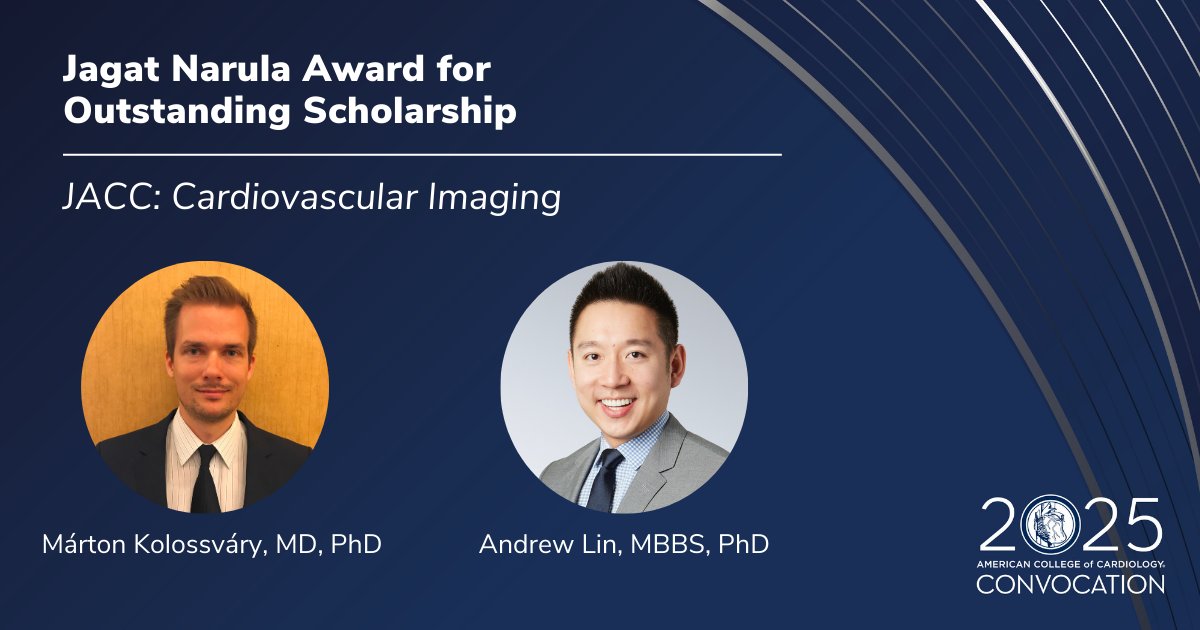
#JACCIMG honors Drs. Márton Kolossváry & Andrew Lin with the Jagat Narula Award for their groundbreaking research on coronary plaque radiomic phenotypes predicting fatal or nonfatal MI! 🎉
📎: https://t.co/vUM1wFziVt
#ACC25#TheFaceOfCardiology#cvMI#cvImaging@MKolossvary
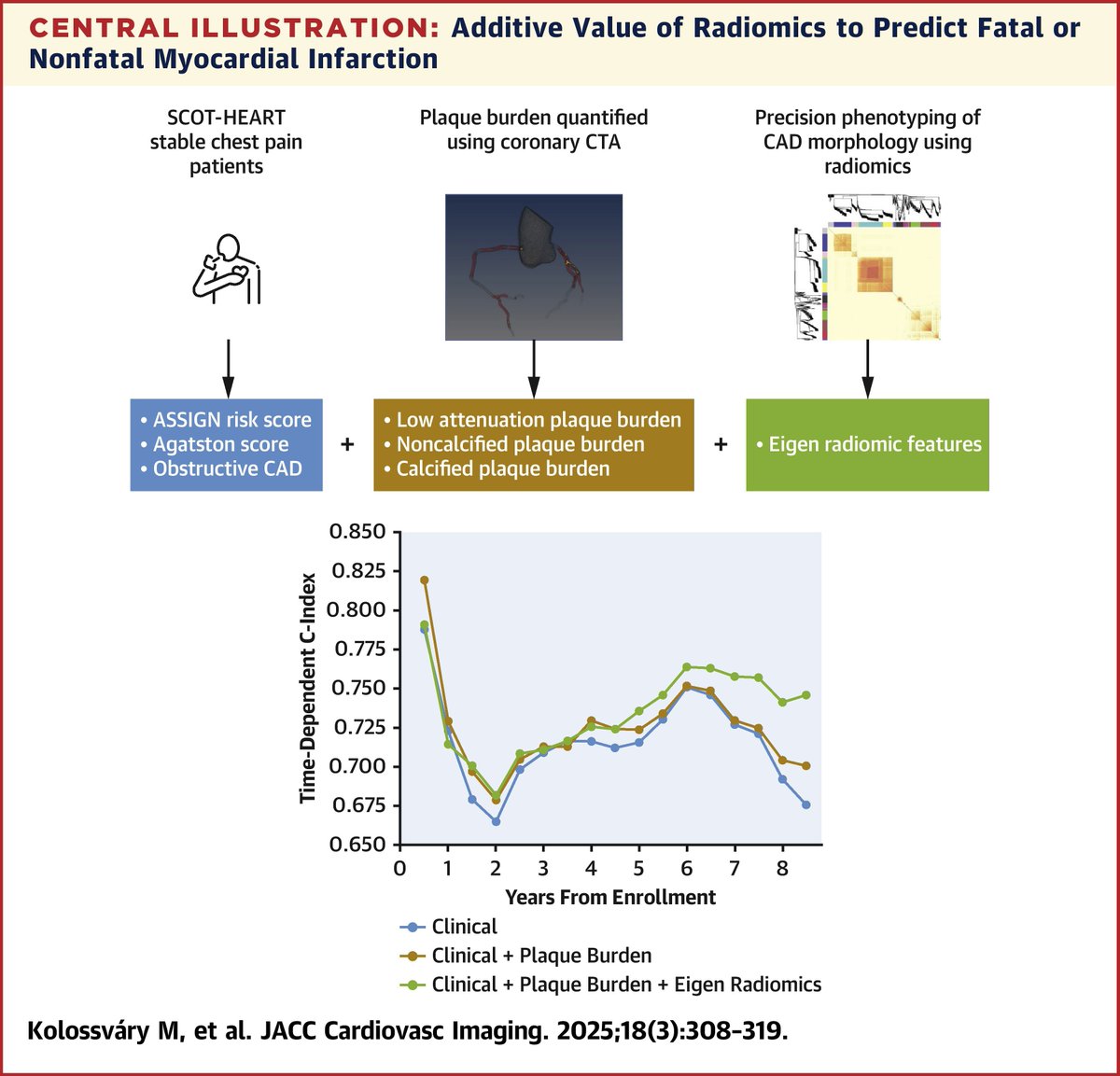
Radiomics – seeing deeper into CCT plaque? Radiomics-based precision phenotyping of coronary plaque morphology improved prediction (c-statistic 0.7 to 0.74) of #cvMI by #YesCCT over & above clinical factors & plaque burden in the SCOT-HEART trial. https://t.co/vUM1wFziVt #JACCIMG
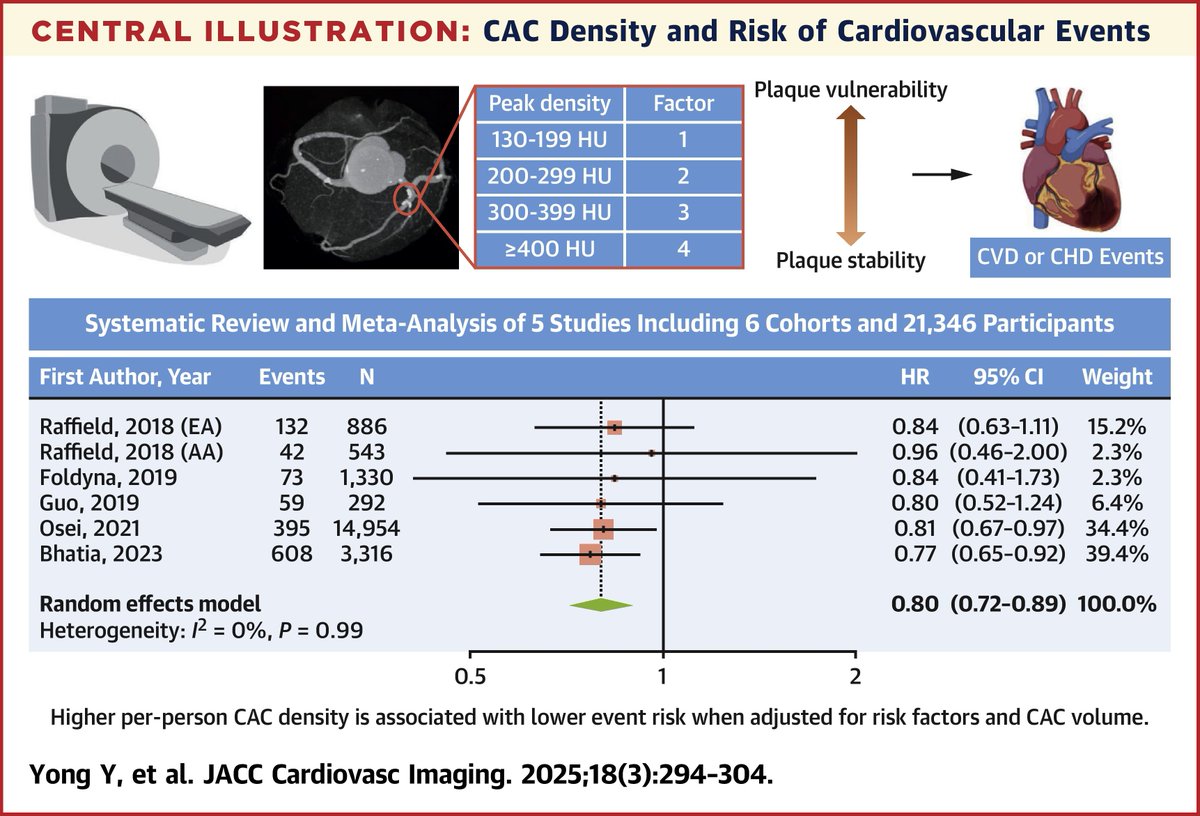
Higher density, lower risk #cvCAD plaque? Higher #CAC density confers a lower risk of future #CVD events with a ~20% lower risk for each standard deviation increase in density in this systemic review and meta-analysis https://t.co/kkMCjQdq1c
#YesCCT#JACCIMG@DrAndrewLin
Can #radiomic phenotypes help improve MACE prediction beyond plaque burden? Does plaque morphology play a role in long-term outcomes? Long-term SCOT-HEART analysis 👇@DrAndrewLin@damini_dey @imagingmedsci
https://t.co/LsByithuPj
Dr Andrew Lin (@DrAndrewLin) from @MonashUni showing that inflammation inhibits local adipogenesis in pericoronary adipose tissue (PCAT) and this can be detected by AI-driven🤖algorithms on #YesCCT as an increase in CT attenuation of PCAT which improves prognosis #SCCT2023
@AllisonGHaysMD@damini_dey@cshenoy A6. The trial would then assess whether the ML score influences referral for downstream testing and revascularization, and ultimately patient outcomes. (2/2) #CircImgJC
@AllisonGHaysMD@damini_dey@cshenoy A6. One could design a pragmatic clinical trial in which patients are randomized to a group in which clinicians have access to the ML score versus a control group which is usual care. (1/2) #CircImgJC