Hear from @GIdietitian, @DrV_IBD, and @DrMadisonSimons providing evidence-based nutrition strategies for patients with #IBD. Learn practical guidance on collaborating with dietitians and multidisciplinary teams to improve patient outcomes. Register ➡️ https://t.co/ACEMaU4xbD
She saw five specialists in two years.
Gastroenterology. Neurology. Psychiatry.
“Nothing’s wrong.”
“Maybe it’s anxiety.”
“It’s the weed.”
She was throwing up weekly, bloated daily, and missing work.
This isn’t rare.
This is what it looks like when the system fails the complex.
The most common group of patients discharged from ERs in America today?
Not chest pain.
Not trauma.
Not asthma.
It’s the person writhing in pain, vomiting for hours, dehydrated, desperate, and told:
“Your tests are fine. Follow up with GI.”
Excited to share our @IBDJournals publication on food fears in #IBD: what are the drivers of fear/avoidance, how can we best help patients with #diet liberalization? Read on for specific strategies for your practice! @DrMadisonSimons#ARFID
https://t.co/HWH4e7Y6tj
Proud to share our new publication on food fear in IBD. We outline the neuroscience behind how fear of food develops in patients with GI symptoms and set the stage for a compassionate approach to reintroduction.
https://t.co/0ygpn3GmN2...
Thanks to @GIdietitian for initiating!
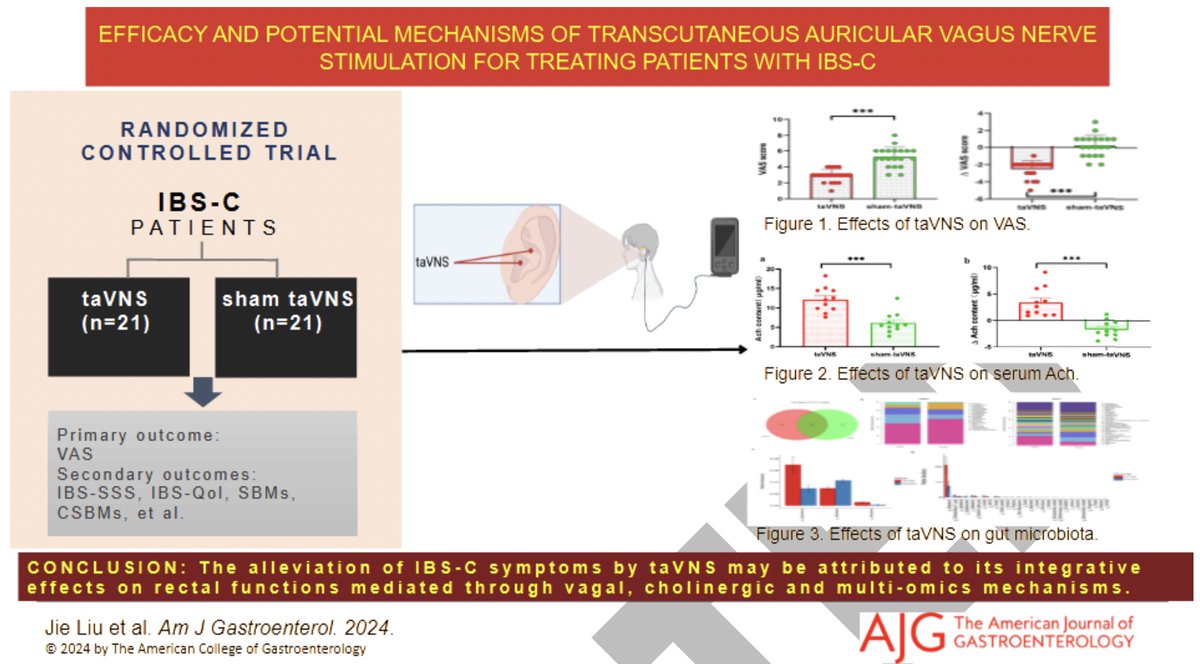
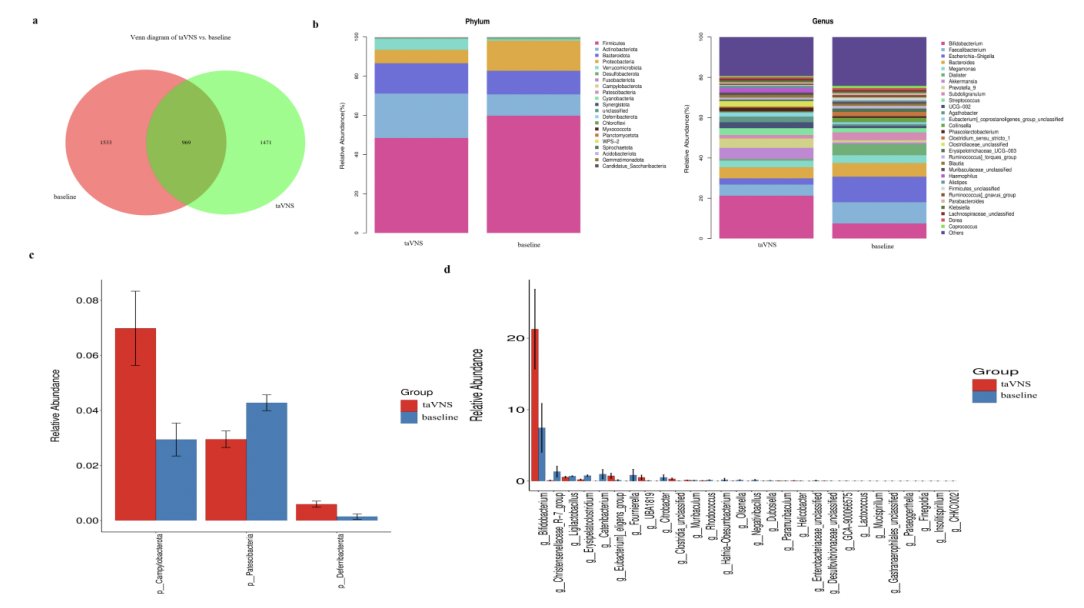
A 4week trial found that transcutaneous auricular vagus nerve stimulation (#taVNS) significantly improved constipation and abdominal pain in #IBS-C patients. Benefits include better rectal sensation, vagal activity, mental health, & gut microbiota balance. https://t.co/l9Sbv4S4yg
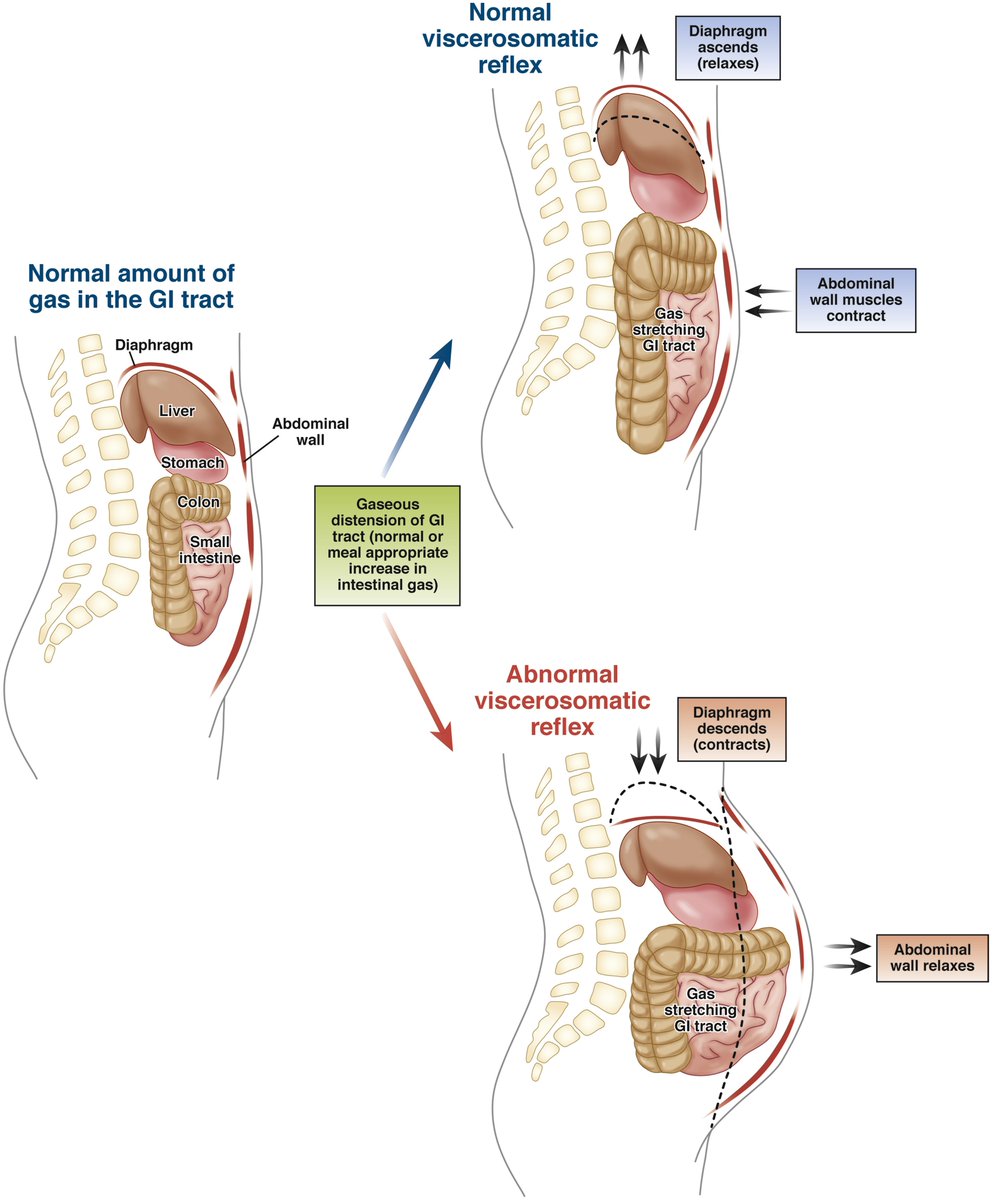
There are many reversible causes of bloating but abdominal distension to the point of looking pregnant is often refractory to simple treatments. Abdominophrenic dyssynergia (APD) is often implicated due to an abnormal viscerosomatic reflex, leading to an abnormal diabetic diaphragmatic contraction (descent) and abdominal wall relaxation.
A low FODMAP diet, while helpful for bloating, is unlikely to help with APD. In such cases, and when secondary causes have been ruled out (as with CT imaging in this case), biofeedback, diaphragmatic breathing exercises with abdominal wall core training seems to be of most help in my experience.
Check out this review on APD by @john_damianosMD
https://t.co/1C1yocdlWl
@SKhalilMD@MountSinaiNYC We will have an article out soon in @DDS_Journal about current trends practices & attitudes of GI providers for endometriosis screening in pts with chronic GI symptoms! @IrisWangMD@DrMadisonSimons @drlauriekeefer Moving the needle slowly ….
For some good news and progress: yesterday I saw two patients referred from our GI team here for menstrual related GI symptoms and query Endo. Both have deep disease. Collaborations and connections work. #Endo@EndoWhat@EndoEICE@PelvicPainOrg@jjfitzgeraldMD@nancynursez637
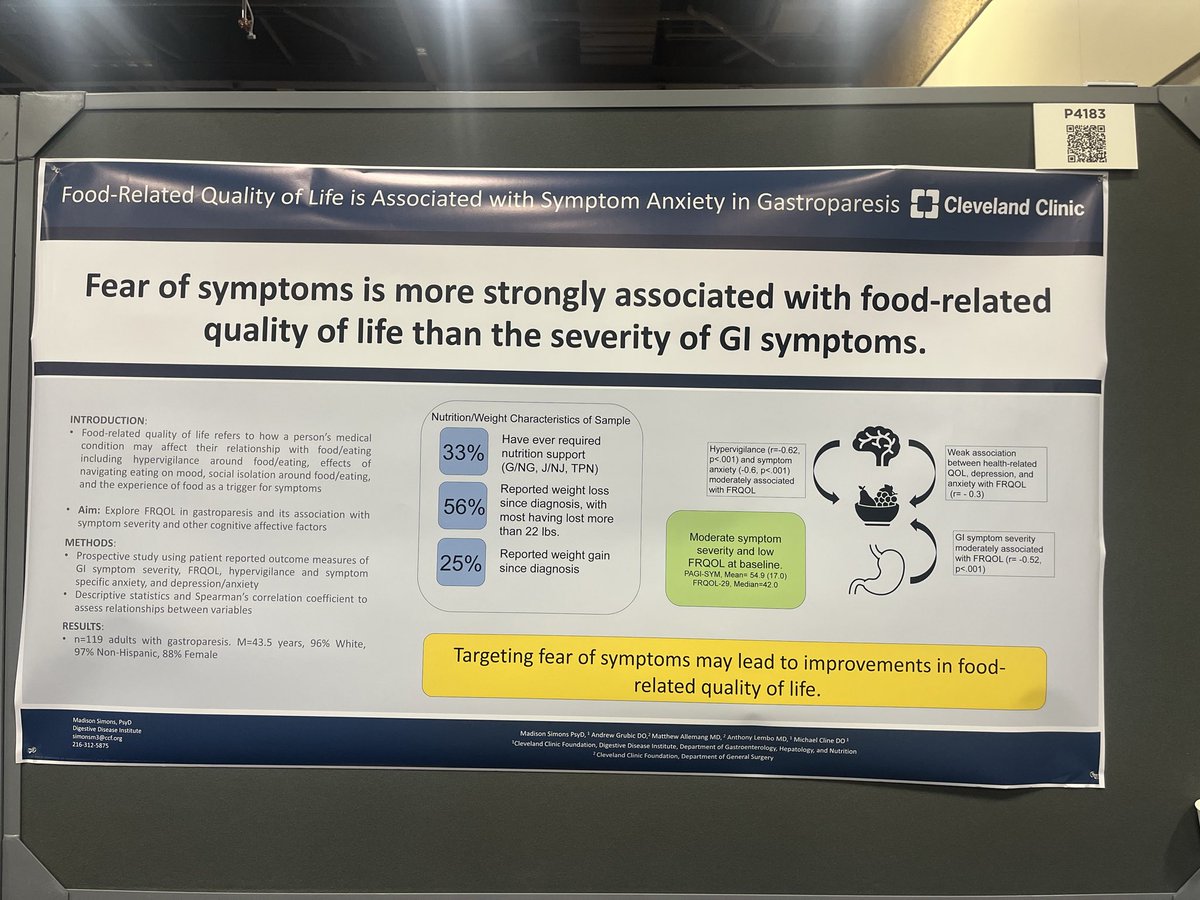
🥗Check out this study where @DrMadisonSimons from the @ClevelandClinic and team explore the food related quality of life for patients experiencing organic GI conditions (like IBD, celiac sprue, and eosinophilic esophagitis. Read more on JHND early view: https://t.co/o87EqGfjil
If you treat patients with gastroparesis (or have it yourself), check out this nutrition guide by @KateScarlata_RD on how to navigate food/eating with gastroparesis!
Diet change is your first line of treatment and then you stack others on top. https://t.co/OdvYyqcOqQ
@KakodkarSamir@IBD_Afzali@ClevelandClinic@Psylupe Lastly, some gastroenterologists may feel comfortable ordering the testing themselves. If this is you, I would encourage you to talk with the endo specialists at your institution about what imaging is available that might ⬇️ time to intervention by the time they see GYN
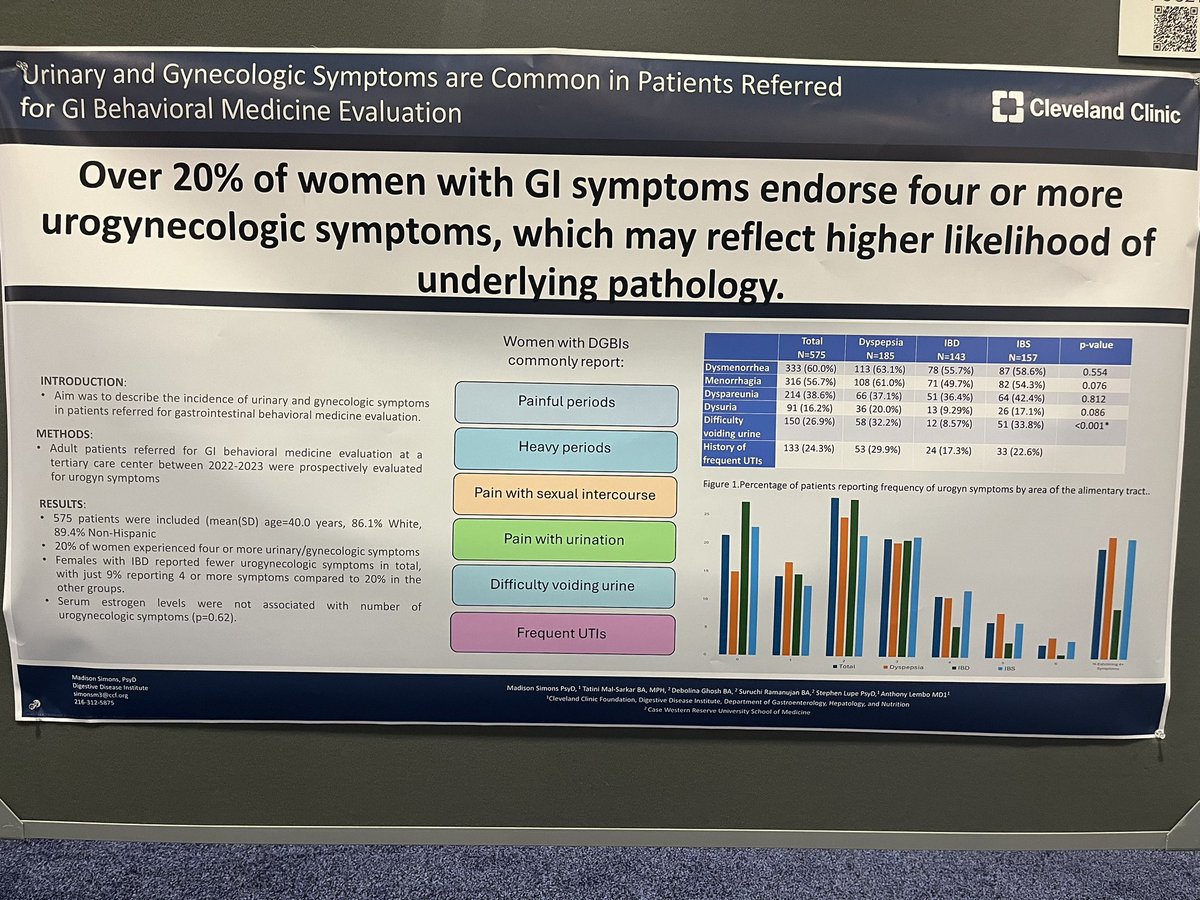
Why should you screen for endometriosis? 20% of patients with GI symptoms report 4 or more of these symptoms. This may reflect underlying urogyn pathology affecting the GI tract #ACG2024@ClevelandClinic@Psylupe
@KakodkarSamir@IBD_Afzali@ClevelandClinic@Psylupe As the GI dr, you may be helping patients manage flares of GI symptoms before/during the menstrual cycle or during ovulation. For example, I often see dyspeptic sx (including ⬆️ in N/V) in the days leading up to period. Sometimes being able to predict sx is helpful
@KakodkarSamir@IBD_Afzali@ClevelandClinic@Psylupe This abstract was shared from a group at Mt Sinai also about the impact of OCPs on GI symptoms- may be worth exploring with your pt if this is contributing to flare
Lastly, talk to your patients about how their symptoms affect their appetite, taste/smell of food, and fear around food/eating. This is especially prominent in patients with dyspeptic symptoms (nearly 50%)
#ACG2024@ClevelandClinic@Psylupe@EStaneffPsyD