Join GW's Disability Support Services as we continue to elevate the narratives of the disability community and share the responsibility of creating inclusive pedagogy, events, and workspaces on campus and beyond. All week we are sharing a few of our favorite resources.
Resource #3: Rooted in Rights and The Ford Foundation created an informative video detailing the nexus between Social Justice and Disability. #ADA31@gwdss1821
https://t.co/gHj5AEBUpg
As GW's Disability Support Services continues to celebrate #ADA31@gwdss1821 . We have another powerful resource to share:
Bell, C. M. (Ed.). (2011). Blackness and disability: Critical examinations and cultural interventions (Vol. 21). LIT Verlag Münster.
Andrews, E. E., Forber-Pratt, A. J., Mona, L. R., Lund, E. M., Pilarski, C. R., & Balter, R. (2019, February 14). #SaytheWord: A Disability Culture Commentary on the Erasure of “Disability”. Rehabilitation Psychology. Advance online publication.
https://t.co/TNZwI7WHUK
On July 26th, we celebrate the 31st anniversary of the Americans with Disabilities Act (ADA), the landmark civil rights law for people with disabilities.
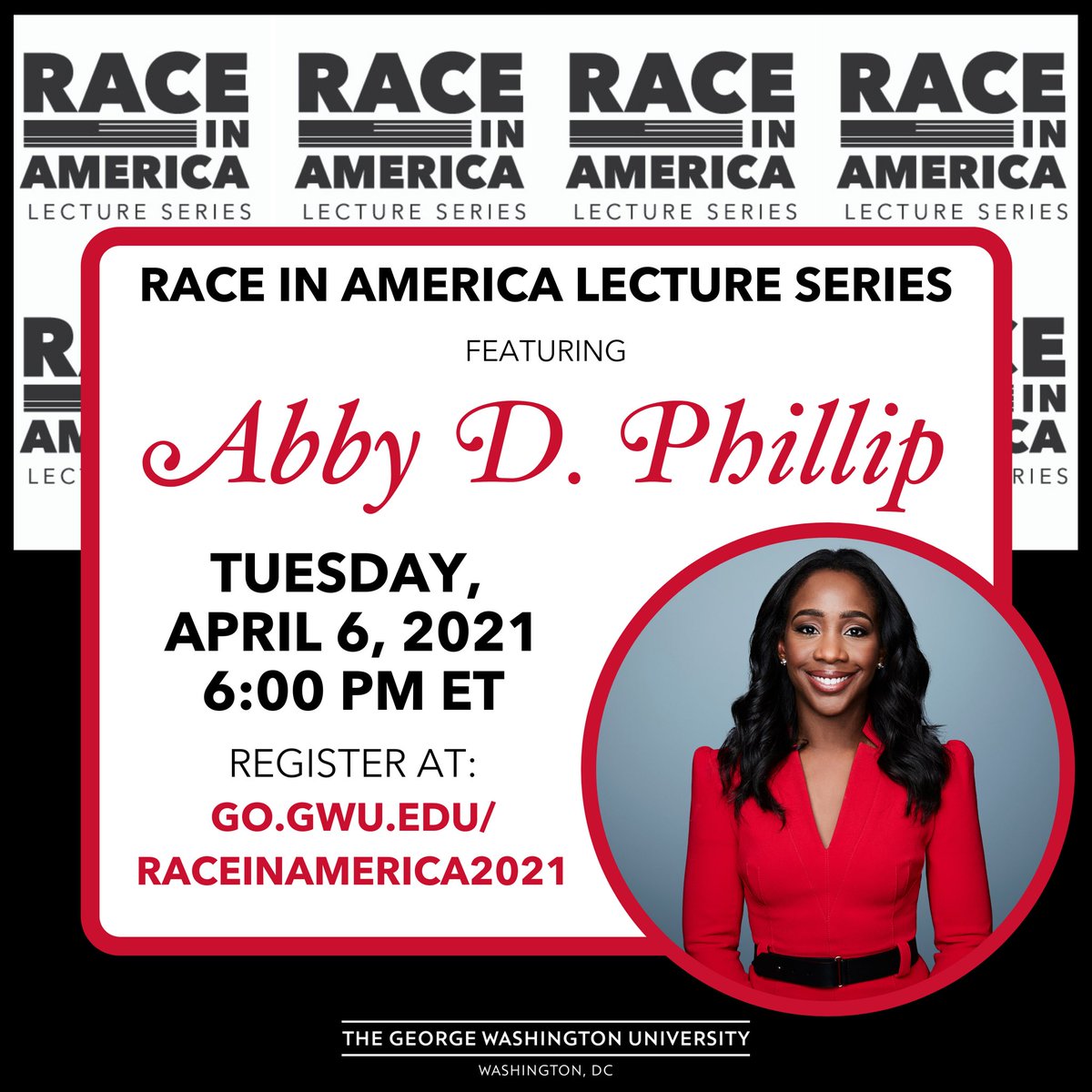
GW’s Race in America Lecture Series is back featuring @abbydphillip for a moderated discussion on Tuesday, April 6, 2021 at 6 PM ET. GW community members can register to join the conversation at https://t.co/aTGiNw75ly #GWRaceInAmerica
Congratulations once again to @VanderbiltU Peabody Professor @anjalifp & her co-authors on receiving the Harold Yuker Award for Research Excellence from the @APA for her #RehabPsych paper on #disability culture! https://t.co/a9gJMShdJI #SaytheWord
From a county housing the nation’s 4th-largest city to a rural Great Plains community with a large immigrant population, we hope to understand how a community’s past may affect its present as they respond to challenges presented by the COVID-19 pandemic. https://t.co/4nC7oBmClu
.@VictorDzau and @DrRichBesser talk about the importance of disaggregating COVID data so communities can examine data by race, ethnicity, gender, disability, income, or neighborhood. https://t.co/mCe8fzxS1L
Hey #DisabledAcademics I've started a (virtual) @UCUcedd Disability Research Lab. Around 8 members so far-majority of us are disabled. If you need/want a home for support/mentorship w your research, DM me.
#Leadership Best traits of remote leaders? Being organized, dependable and productive vs. confidence & extroversion that moved workers into exec suites. Those doing the work to get projects done vs most dynamic voices in the room do best. #LIWP@APA
https://t.co/osT1MSjmmw
Disabled people sparked many of the technologies we use today, from keyboards to email. #Disability drives innovation. Love does, too, if you find the strength to overcome #ableism. This @Time video has captions & a descriptive transcript. #TIME100Talks https://t.co/GchSHyID7W
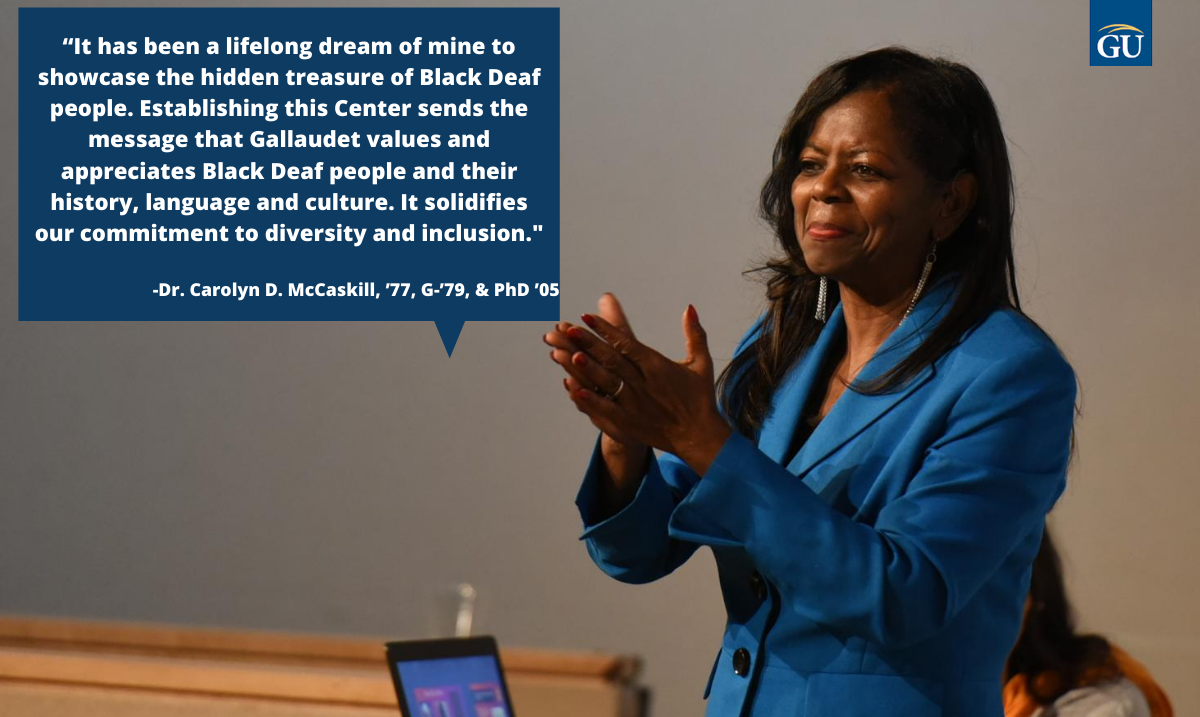
#GallaudetU has established a new Center for Black Deaf Studies and Professor Dr. Carolyn McCaskill has agreed to serve as the Center’s founding director.
The Center will support teaching, learning, and research in Black Deaf Studies. Read more at https://t.co/YE4Daj8O6a.
Another way to build inclusion into practice is to ensure we conduct and write our science/research in a bias-free manner. APA's Committee on Disability Issues in Psychology recently contributed a guide for bias-free language in writing:https://t.co/geIEhT0CgL @APAPublicInt
Today we celebrate the 30th Anniversary of the Americans with Disabilities Act. As we acknowledge the accomplishments of the legislation, we must also continue to identify opportunities to build inclusion in all segments of society(e.g., healthcare, education, workforce).
One way to build inclusion into your organization is by adopting the principles of universal design. Review APA's Resolution for Support of Universal Design and Accessibility in Education, Training, and Practice:https://t.co/q7PAyuhjmW