Registration is free and now open for the 2026 World Town Planning Day Online Conference!
Hear from keynote speaker Shubhagato Dasgupta of UN-Habitat on November 6, 2026 (8:00 a.m. – 6:00 p.m. CT).
Opportunities to earn multiple CM credits.
#WTPD#WTPD2026@IntlPlanning@CIP_ICU
https://t.co/zykS61rkAi
🤖¿Cómo la inteligencia artificial podría abrir las posibilidades a la participación ciudadana y cuáles serían sus límites?
Un piloto realizado por ProBogotá en Sabana Occidente fue el objeto de un estudio internacional sobre participación e inteligencia artificial.
¿Qué mostraron los resultados? Te contamos BienContado:
🤖¿Cómo la inteligencia artificial podría abrir las posibilidades a la participación ciudadana y cuáles serían sus límites?
Un piloto realizado por ProBogotá en Sabana Occidente fue el objeto de un estudio internacional sobre participación e inteligencia artificial.
¿Cuáles fueron los resultados? Abrimos hilo:
📚 Puede leer el artículo completo "Automating Consultation? Urban Planners and Chatbot-Based AI-Mediated Participation", de Jonathan Dortheimer, Michelle L. Oren y Aaron Sprecher en el Journal of Urban Technology.
🔗 https://t.co/8bZzNuZtzP
🤖 Para construir el Plan Estratégico de Sabana Occidente 2051 @ProbogotaRegion creó Charli, un chatbot basado en un modelo de lenguaje e integrado a WhatsApp que se utilizó para conversar con habitantes de El Rosal, Facatativá, Funza, Madrid y Mosquera.
Las conversaciones giraron en torno a cómo las personas se imaginaban el futuro de la Región, cuáles eran sus preocupaciones y qué proyectos consideraban prioritarios.
🤖¿Cómo la inteligencia artificial podría abrir las posibilidades a la participación ciudadana y cuáles serían sus límites?
Un piloto realizado por ProBogotá en Sabana Occidente fue el objeto de un estudio internacional sobre participación e inteligencia artificial.
¿Cuáles fueron los resultados? Abrimos hilo:
🤖¿Cómo la inteligencia artificial podría abrir las posibilidades a la participación ciudadana y cuáles serían sus límites?
Un piloto realizado por ProBogotá en Sabana Occidente fue el objeto de un estudio internacional sobre participación e inteligencia artificial.
¿Qué mostraron los resultados? Te contamos BienContado:
“We are called to assist the earth, to heal her wounds, and in the process heal our own.”
After becoming the first woman to earn a doctorate degree in East and Central Africa, Wangari Maathai started a movement that led to the planting of 50 million trees, a more democratic society and the Nobel Peace Prize.
In 1976, Wangari Maathai became involved with the National Council of Women in Kenya. She suggested that they should start community-based tree planting to combat deforestation and desertification. In 1977, she developed her idea into a grassroots movement organisation called the Green Belt Movement (GBM).
Maathai began the project by planting nine trees in her own yard – as it grew it became the largest tree planting project Africa had ever seen, encouraging women to plant trees in “green belts” around their towns and villages and to think ecologically. Her movement grew and spread to other African countries. With the GBM, Maathai hoped to promote sustainability as well as create jobs for women and empower them to gain economic and social power.
Besides giving jobs to women and planting more than 50 million trees, the movement also became a symbol for a democratic struggle and a token of peace. According to widespread African tradition, trees are used as white flags during disputes. In Wangari Maathai’s own words: “The tree also became a symbol for peace and conflict resolution, especially during ethnic conflicts in Kenya when the Green Belt Movement used peace trees to reconcile disputing communities.”
In 2004, Maathai was awarded the Nobel Peace Prize "her contribution to sustainable development, democracy and peace." She was the first African woman to receive the peace prize.
Photo by Micheline Pelletier / Getty Images
“We the peoples of the United Nations determined to save succeeding generations from the scourge of war...”
These words from the Preamble of the @UN Charter remain as relevant in 2025 as they were in 1945. https://t.co/euR2hg7XDb
How is AI & 3D modeling revolutionizing #MineAction?
Our experts explore how new technology is making communities safer & helping to rebuild lives in our latest #UNOPSInsights 👇 https://t.co/LeDFcXA2Wr
“I pledge to stand with all those who are working to forge a more peaceful, equal, stable and healthy future for all people.
Together, we can make 2025 a new beginning.”
@antonioguterres shares a message of hope at the start of the New Year.
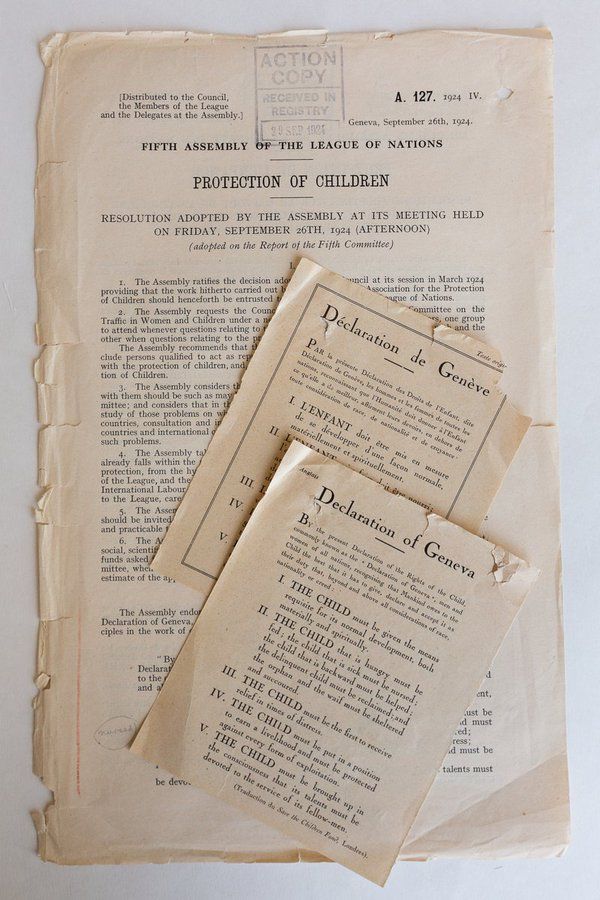
"The child that is hungry must be fed.
The child that is sick must be helped.
The orphan must be sheltered and succoured.
The child must be the first to receive relief in times of distress"
100 years of the Declaration of the Rights of the Child: https://t.co/BA0JtEh8PV
Every year on this day, the international community marks the International Day of Solidarity with the Palestinian People.
The @UN will continue to stand in solidarity with the Palestinian people and their inalienable rights to live in peace, security and dignity.
@CraigMokhiber@UN A test of ‘tolerance’. It raises a profound question: at what point does tolerance cease to be a virtue? Furthermore, what, if anything, should remain beyond the bounds of tolerance?
Created by Otávio Roth in 1981, this powerful artwork featuring Article 1 of the Universal Declaration of #HumanRights, is exhibited at UN Geneva as part of a series celebrating these fundamental values. #TourTuesday