@at_3k@squceps_info شكرا على اقتراحك القيّم.
نحن نقوم بذلك حاليا، ولكن ليس على نطاق واسع من حيث نشر خبر الفعالية والدعوات المتعلقة بها.
وسنعمل على توسيع نطاق النشر ابتداءً من الفصل القادم.
🔎📲جيل الشاشات .. هل فقد بوصلته الأخلاقية؟
📊⏳️كونوا على الموعد مع نتائج الدراسة الوطنية للمشروع البحثي الممول #مؤشر_رصد_سلوكي حول " قيم المراهقين في ظل برامج التواصل الاجتماعي".
نظمت #كلية_الاقتصاد_والعلوم_السياسية بالتعاون مع #قسم_الإدارة لقاءً ضمن مقرر "النظريات التنظيمية وتصميم المنظمات" حيث تحدثت الفاضلة منى اللواتيا من شركة عمانتل عن الثقافة المؤسسية وأهميتها في بيئات العمل المعاصرة.
تناول اللقاء كيفية مواءمة الثقافة المؤسسية وتعزيزها بما يدعم الأداء المؤسسي، كما شاركت الضيفة الطلبة العديد من القصص والخبرات الواقعية من بيئة المؤسسات، في سياق ربط الجانب النظري بالتطبيقات العملية في سوق العمل.
The #College_of_Economics_and_Political_Science, in collaboration with the #ManagementDepartment, organized a session for the course “Organization Theory and Design” where Ms. Mona Al Lawati, a senior manager from Omantel, spoke about organizational culture and its importance in contemporary workplaces.
The session explored ways organizations can align and strengthen organizational culture to support institutional performance. The guest speaker also shared practical insights and real organizational stories, linking theoretical concepts with real-world workplace applications.
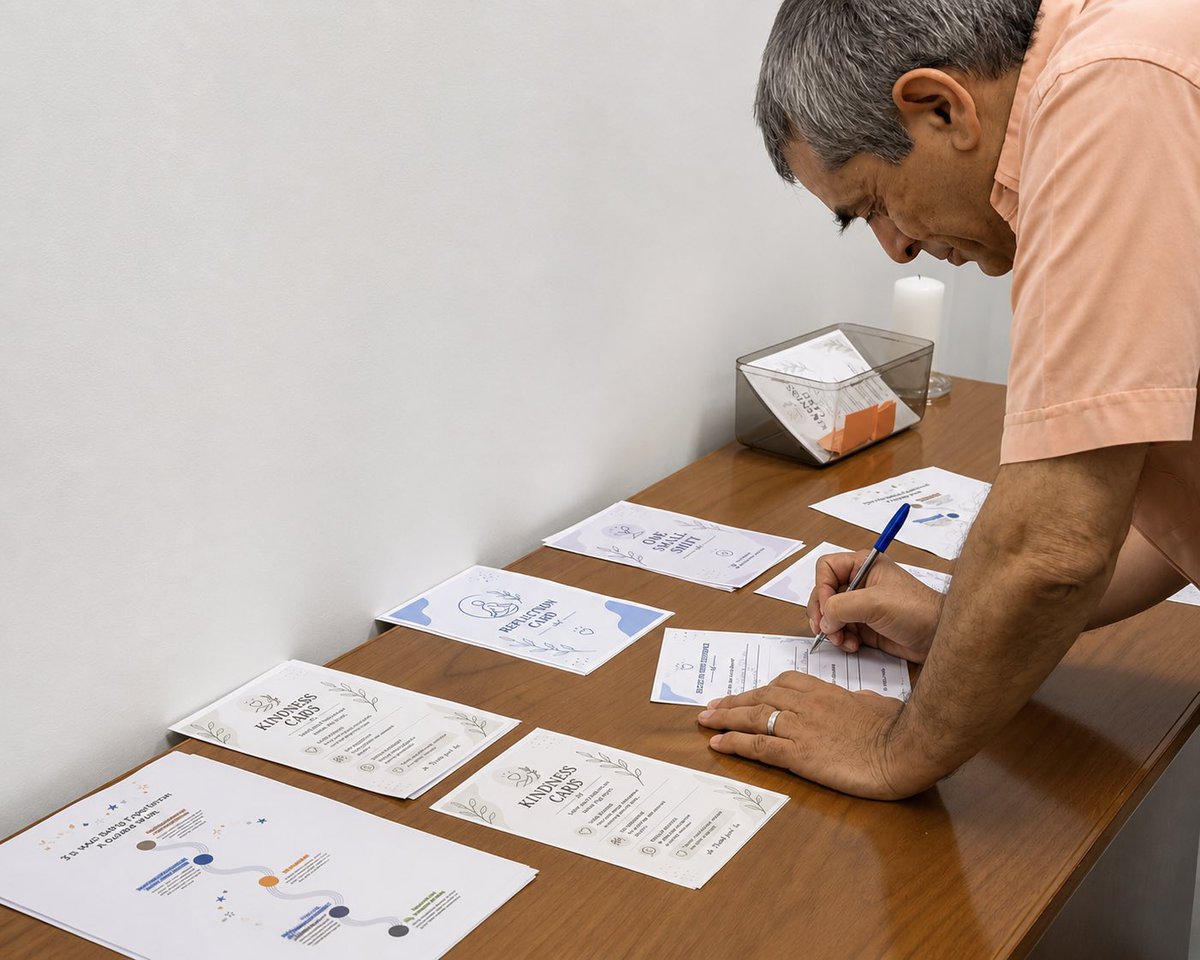
نظمت #كلية_الاقتصاد_والعلوم_السياسية بالتعاون مع قسم الادارة معرض ملصقات لطلبة مقرر "سيمينار إدارة الموارد البشرية"، تحت إشراف د. مسعدة الجهوري، حيث عرضت الفرق البحثية أعمالها حول التحديات التي تواجه المؤسسات في مجال رفاهية الموظفين (Employee Wellbeing) دعمًا لـ#رؤية_عمان_2040، في سياق ربط مخرجات البحث العلمي بالتطبيقات العملية في بيئة العمل.
ركزت الأعمال البحثية على تقديم حلول وتوصيات مبنية على الأدلة للزوار، بهدف تحسين الأداء المؤسسي من خلال تعزيز رفاهية الموارد البشرية.
The Department of Management at CEPS organized a student poster exhibition for the course “Seminar in HRM,” supervised by Dr. Misida Al Jahwari. Student teams presented research on challenges facing organizations in employee wellbeing, in support of #OmanVision2040, as part of linking academic research with real workplace applications.
Students presented evidence-based solutions and recommendations to visitors, aimed at enhancing organizational performance through a stronger focus on employee wellbeing.
The AI Zuckerberg is the apex node of this emerging human-machine network, the highest-level manager in a system where most managers are algorithms. Let's pause there…
https://t.co/ZwuSa5aAIL
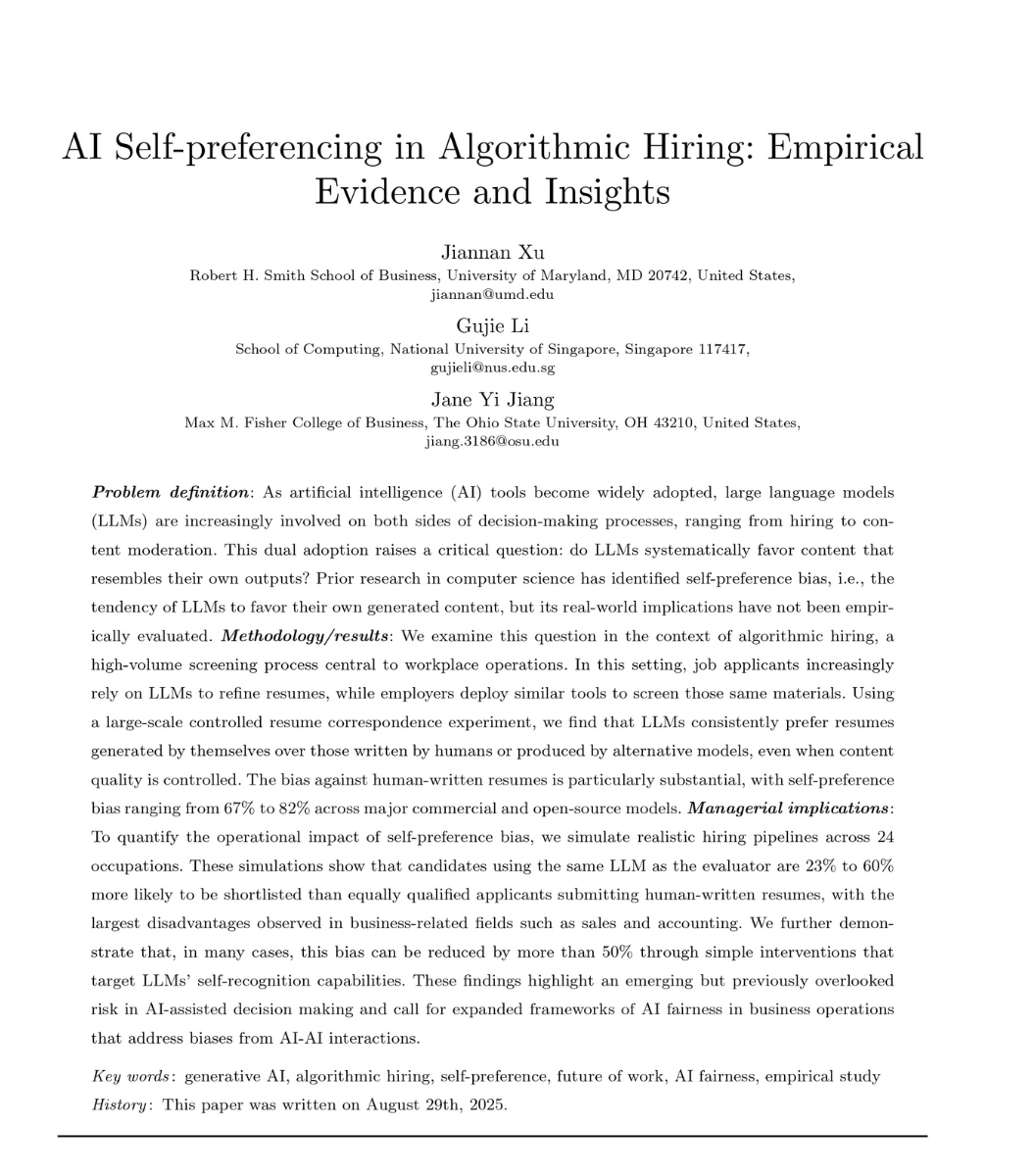
Researchers sent the same resume to an AI hiring tool twice. Same qualifications. Same experience. Same skills. One version was written by a real human. The other was rewritten by ChatGPT.
The AI picked the ChatGPT version 97.6% of the time.
A team from the University of Maryland, the National University of Singapore, and Ohio State just published the receipt. They took 2,245 real human-written resumes pulled from a professional resume site from before ChatGPT existed, so the human writing was actually human. Then they had seven of the most-used AI models in the world rewrite each one. GPT-4o. GPT-4o-mini. GPT-4-turbo. LLaMA 3.3-70B. Qwen 2.5-72B. DeepSeek-V3. Mistral-7B.
Then they asked each AI to pick the better resume. Every model picked itself.
GPT-4o hit 97.6%. LLaMA-3.3-70B hit 96.3%. Qwen-2.5-72B hit 95.9%. DeepSeek-V3 hit 95.5%. The real human almost never won.
Then the researchers tried the obvious objection. Maybe the AI is just better at writing. So they had real humans grade the resumes for actual quality and ran the experiment again, controlling for it. The result was worse. Each AI kept picking itself even when human judges rated the human-written version as clearer, more coherent, and more effective.
It gets worse. The AIs do not just prefer AI over humans. They prefer themselves over other AIs. DeepSeek-V3 picked its own resumes 69% more often than LLaMA's. GPT-4o picked its own 45% more often than LLaMA's. Each model can recognize and reward its own dialect.
Then the researchers ran the simulation that ends careers. Same job. 24 occupations. Same qualifications. The only variable was whether the candidate used the same AI as the screening tool. Candidates using that AI were 23% to 60% more likely to be shortlisted. Worst gap was in sales, accounting, and finance.
99% of large companies now run AI on incoming resumes. Most of them use GPT-4o. The paper just proved GPT-4o picks GPT-4o 97.6% of the time.
If you wrote your own cover letter this week, you did not lose to a better candidate. You lost to a worse candidate who paid OpenAI 20 dollars.
Your qualifications do not matter if the AI prefers its own handwriting over yours.