@DrNeil_C will be presenting at our Environmental Public Health & Housing Update on the 27 November. Dr Cunningham's presentation is titled "A One Health approach to the prediction and prevention of foodborne pathogen outbreaks".Don't miss out & book now https://t.co/Z3YDeHLXFM
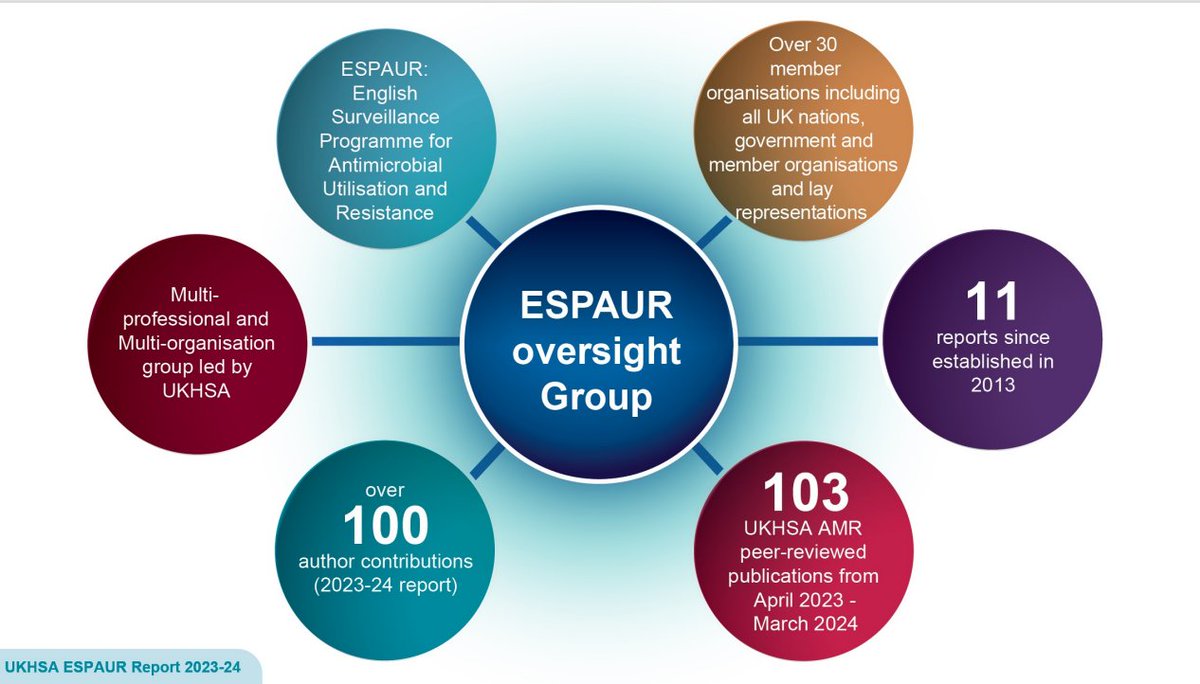
PUBLISHED: The 2023-24 English surveillance programme for antimicrobial utilisation and resistance (ESPAUR) report https://t.co/cyE1WCdprs
Register to find out more about the findings in the report at the webinar we are hosting on 20th November: https://t.co/PCrqcNYAfX
Today's Lancet climate and health report presents 56 indicators of health and climate change across FIVE domains. (Download the report for free from the Lancet website). Here is a thread of some of the key findings. #Lancetclimate24 (1)
Raw onions seem to be the culprit, even the safest food handling doesn’t protect from the risk from bacterial infection in food that isn’t cooked
Wonder if there was any localised flooding in Colorado in the weeks preceding the onion harvest 🤔
https://t.co/DoGDE3hYY5
@GSTTnhs will begin flying pathology samples between its labs in London Bridge and Waterloo sites by drone. @Apianaero trail blazing the future of healthcare logistics
Trip between Guys and Thomas’ cut down to 2min. Connecting the 2 labs by drone means samples analysed faster
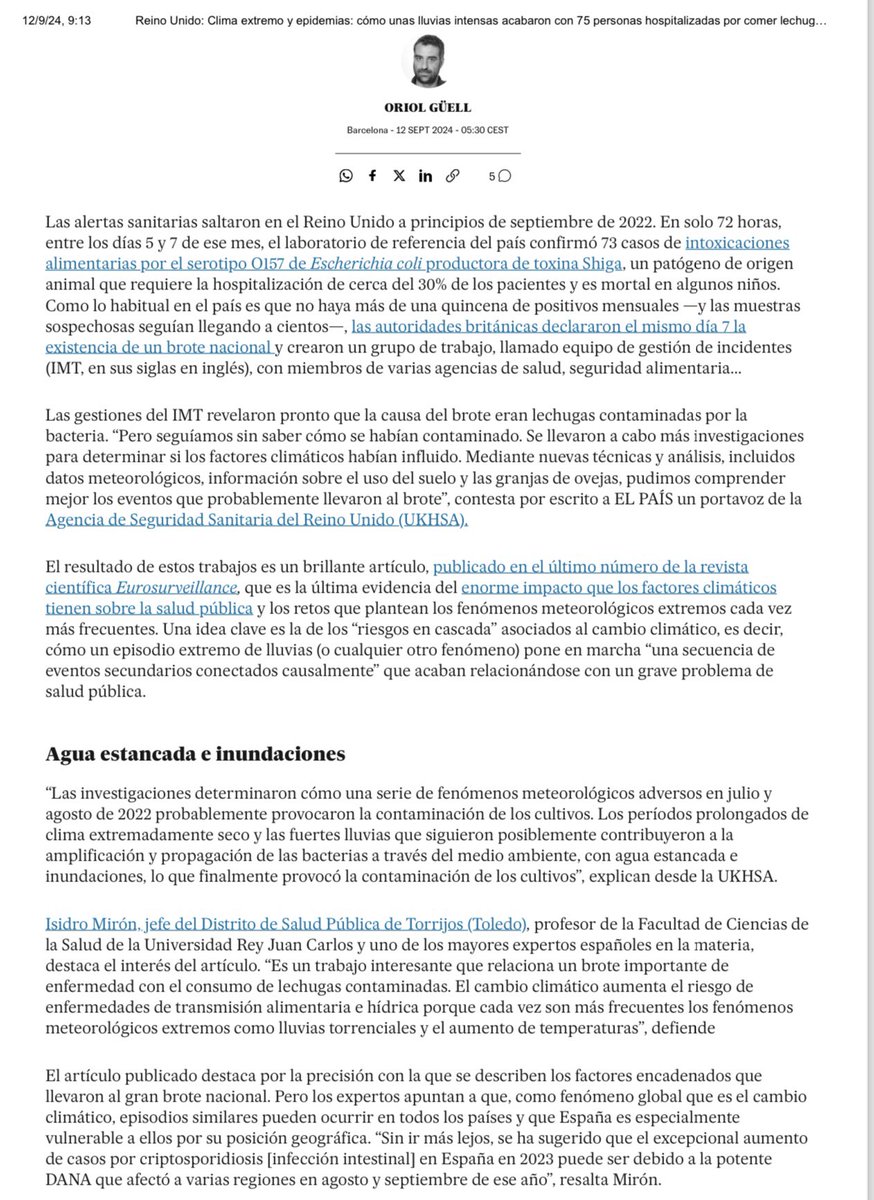
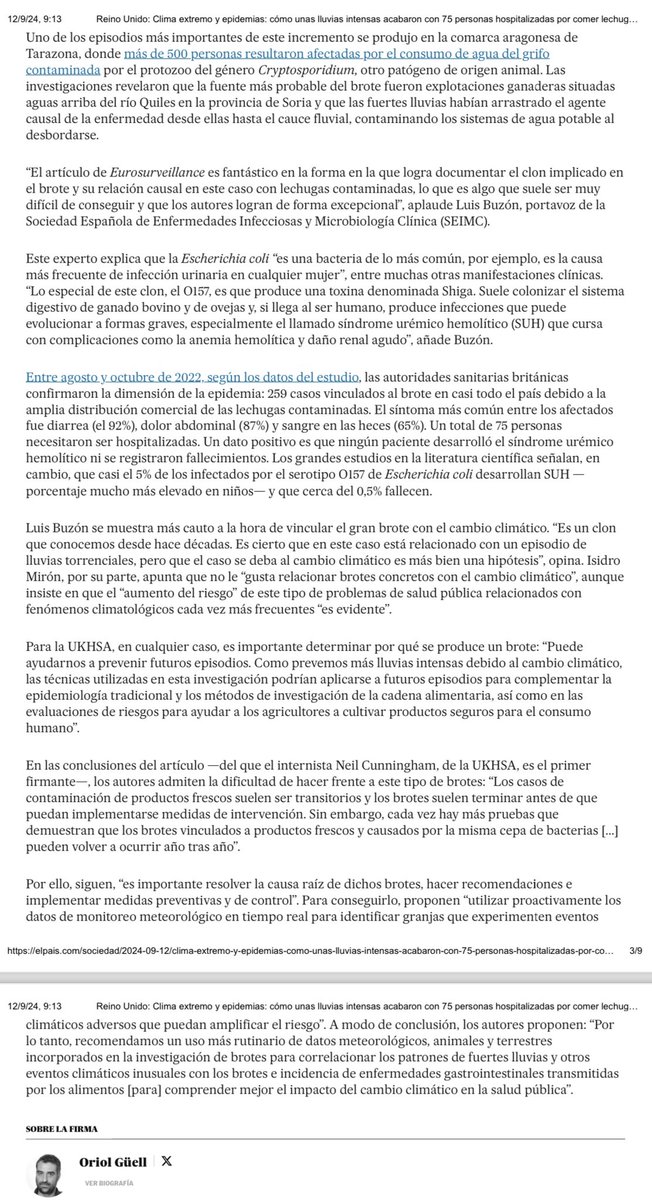
Thanks @oriol_guell for highlighting this important work in @Eurosurveillanc !
“la última evidencia del enorme impacto que los factores climáticos tienen sobre la salud pública y los retos que plantean los fenómenos meteorológicos extremos cada vez más frecuentes.”
Clima extremo y epidemias: cómo unas lluvias intensas acabaron con 75 personas hospitalizadas por comer lechuga contaminada
Un estudio alerta del papel los fenómenos extremos como causa d brotes e intoxicaciones. España, entre los países más vulnerables
https://t.co/vdYDSbImcW
2) There is no doubt that extreme weather events make the STEC situation worse, as the micro floods bring the contaminated topsoil into neighbouring fields and the chain of contamination speeds up from there. In Irish public health units, we always know that we’ll be really busy with STEC when the spring and summer rains are very heavy.
But it’s difficult because the solutions are difficult politically.
1) You see this bug in countries with high density sheep and cattle (Denmark recently overtook us as the STEC capital of Europe). We can’t just blame farmers, but we do need a serious discussion about farming and the environment. Because you rarely see this bug in areas that don’t over-farm.
So this paper gives is really strong evidence to advocate for structural change. We have so much STEC/VTEC in Ireland. And we see so much illness from it. We have to keep infected children out of crèche for often very long periods if they become chronic carriers of this bug, which is disruptive for their parents and damaging for their child. We keep low paid workers (who frequently don’t have sick pay) out of their food handling and caring jobs if they become chronic carriers. These people often can’t pay their bills because of this bug.
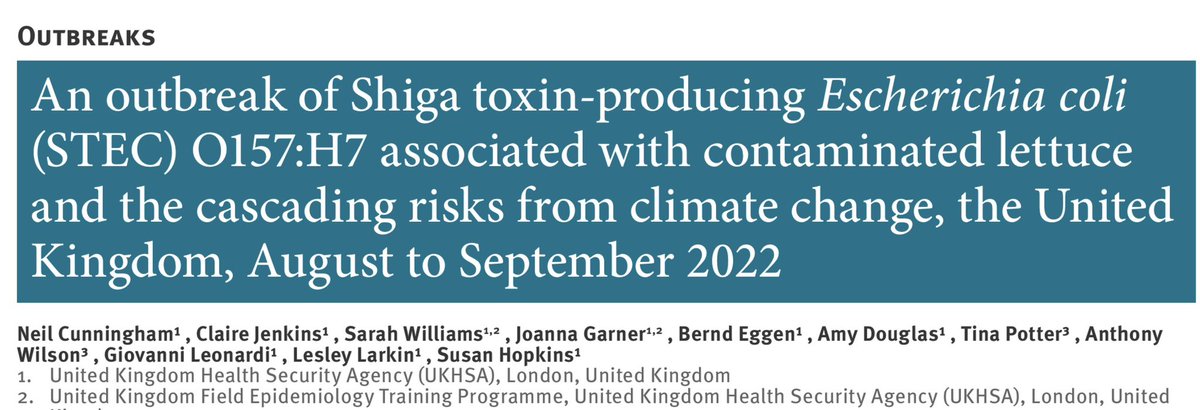
This is a fascinating paper in the current edition of @Eurosurveillanc carried out by public health colleagues in @UKHSA It relates to the journey towards a large STEC\VTEC outbreak in the UK in 2022. It’s really relevant to the Irish experience because we have one of the highest rates of STEC in Europe, but we don’t routinely have access to these types of environmental surveillance tools for our investigations. However, the story of this outbreak is reflected in our experience here….that climate change, overfarming and lack of access to mains water outside Dublin are all causing human disease….
The latest issue of Eurosurveillance is out, and features articles on:
➡ a note from the editors celebrating #WorldFieldEpidemiologyDay
➡ an investigation on a #STEC outbreak in 🇬🇧 using an innovative #OneHealth approach
🗞 Read it here: https://t.co/bb3UI5OkwY
Our study investigating the role of climate change, extreme weather events 🌦️, and sheep 💩 on the large 2022 STEC outbreak in the UK now published in @Eurosurveillanc 🧵 (1/15)👇🏻
https://t.co/w4ekZY0Dcb
#OneHealth#InfectiousDisease#STEC@UKHSA
…and 2. Help inform risk assessments and risk management strategies for food safety regulators, industry and farmers growing fresh produce for people to eat