Dr. Roy is a retired academic whose hobby is Astrophotography - I take pictures of the deep sky/planets from my backyard in a rainy cloudy southern england.
An Oxford lecturer is still posing in fake breasts despite criticism.
“There’s no evidence that this man identifies as a woman, but transgender demands muddy the water so that normal standards of behaviour are undermined.” @DerryBanShee in @jan_murray’s latest for [Un]Captured.
https://t.co/ezeQ7p2uVg
Image of #NGC7635 the Bubble nebula - a simple narrow band image using Celestron Edge HD ASI 294 camera. 40x300 secs Ha/OIII and 30x420 secs SII/OIII. Processed in #pixinsight#astrophotography
It must be annoying to software providers such as Siril and Pixinsight that their work and ideas, grounded in sound engineering and mathematical understanding, is duplicated and then announced as original, simpler, easier and free as an advantage over their work. #pixinsight
Pixinsight are a very small organisation and they are not obligated to regression test anyone else’s software. If they can they should inform interested parties but their release schedule cannot dictated by third party addons they have not developed.
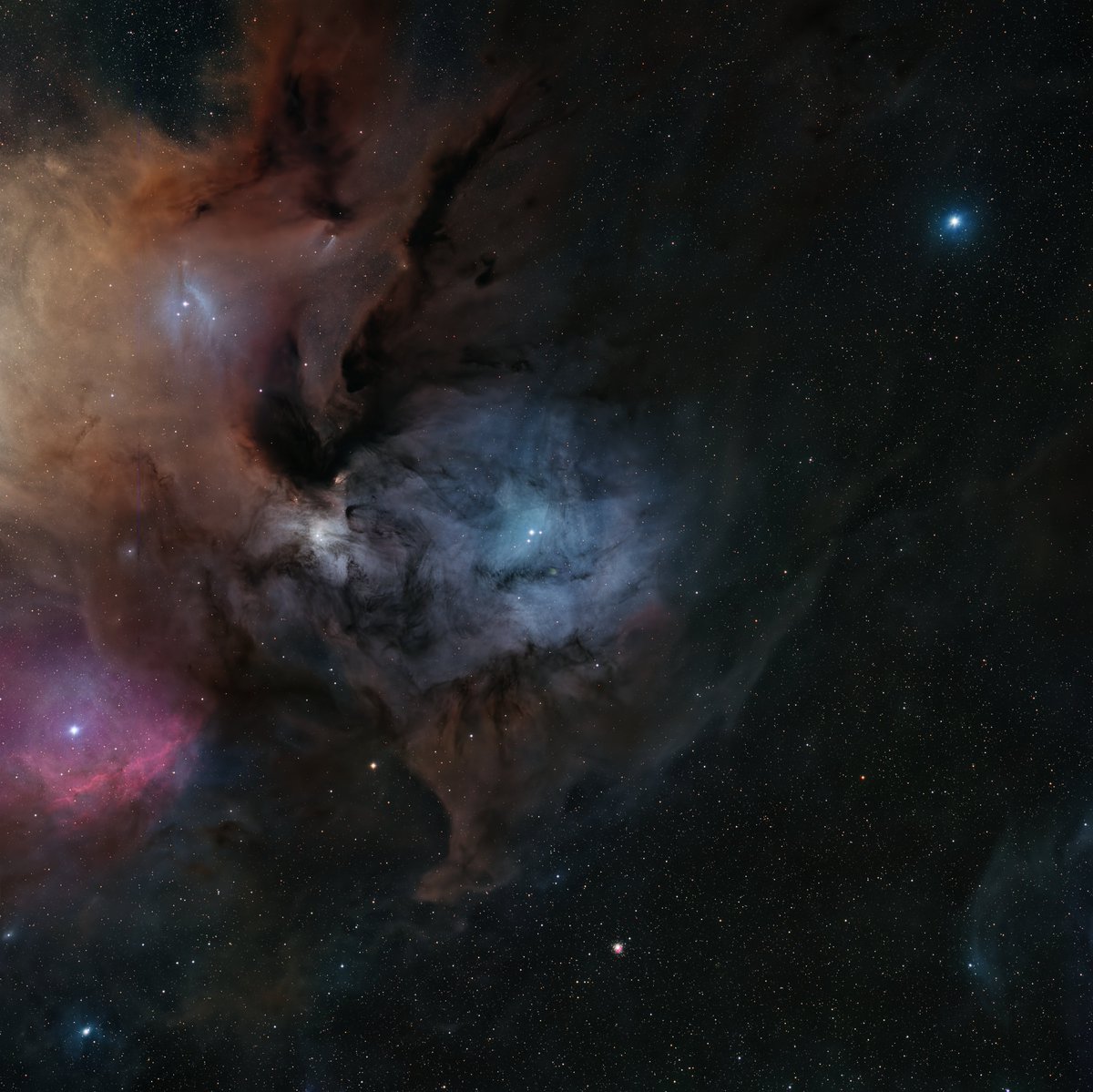
Behold the Rho Ophiuchi cloud complex – our closest star-forming nursery at ~390-460 light-years away! This image reveals young Sun-like stars bursting from cosmic dust, protoplanetary disks, and chaotic jets carving through the gas #Astronomy#Astrophotography pls 🩷and RP
M16 the Eagle Nebula LRGBHa data from Telescope Live 38x 120,300 and 450 second exposures processed in Pixinsight. You can see the Eagle swooping down to grab the poor unsuspecting Meerkat (pillars of creation). #Astrophotography#Nebula
Time-lapse video of AR4325 as it crossed the face of the sun - captured from SDO data processed in ImPPG and DaVinci pro. #Astrophotography#solarimages Please ❤️ and RP
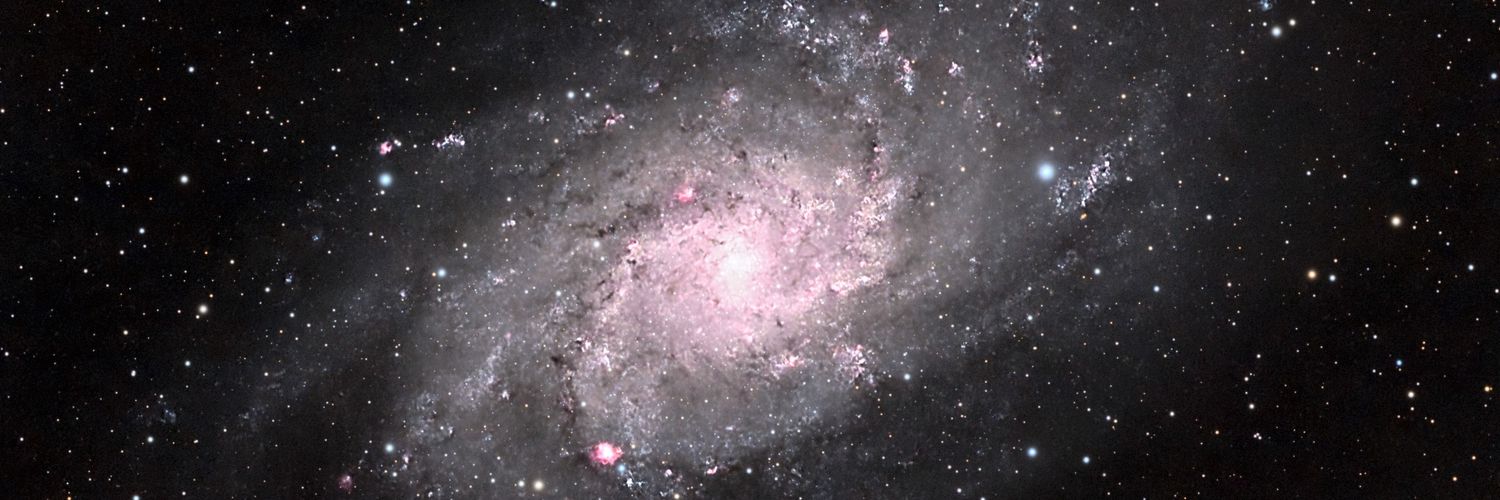
The Triangulum Galaxy (M33). I shot this with an ASI294MC Pro on a Celestron Edge HD. The red areas are intense star-forming regions in this galaxy, some of which are deep sky objects in their own right. #Astrophotography#galaxy Please ❤️ and RP.
The Orion Nebula (M42) is the cosmic fire of creation for the Maya of Mesoamerica and blazes brightly in the constellation Orion. The nebula is only 1,500 light-years away, making it the closest large star-forming region to Earth. #astrophotography#nebula
The "Squid Nebula" is a bipolar emission nebula located within the larger, reddish Flying Bat Nebula in Cepheus. Approximately 2,300 light-years away, it is distinguished by a faint blue glow caused by doubly ionized oxygen. #astrophotography#nebula pls ❤️ and RP
The Southern Pinwheel Galaxy is a barred spiral galaxy 15 mlys away in the constellation Hydra. M83 spans about 40,000 light-years and boasts a bright core + graceful spiral arms dotted with star-forming nebulae and young massive stars. #astrophography#galaxies pls ❤️ and RP
Behold the Seahorse Nebula (Barnard 150)! This shadowy dark nebula, 1,200 light-years away in Cepheus, coils like a cosmic seahorse—dense dust blocking starlight, cradling star-forming cores. A silhouette against the Milky Way's glow! #Astronomy#Barnard150#astrophography
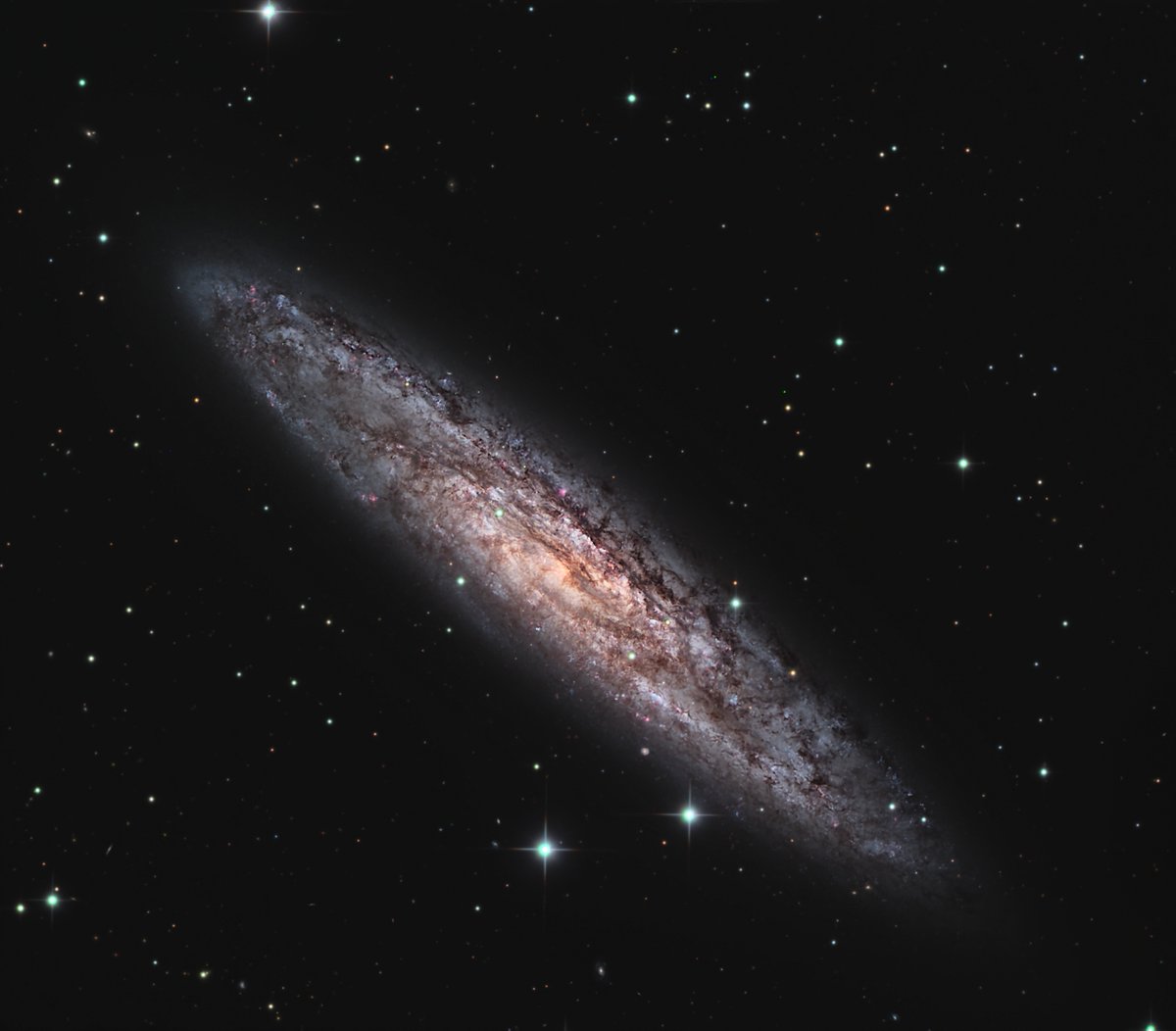
NGC 253, the Sculptor Galaxy! This stunning spiral, 11.4M light-years away, dazzles with starburst regions and a dusty core. Visible in small telescopes under dark skies, it’s a cosmic masterpiece in the Sculptor constellation. #Astronomy#NGC253#astrophography#pixinsight
Fish Head or Northern Bear Nebula IC1795 imaged in narrow band. Edge HD 800 on EQ6R pro 48x300 sec ASI294MC pro processed in pixinsight. Please ❤️ and RP. #astrophotography#nebula
Full Face white light image of sun taken on 30th August 0900 UTC - six panel mosaic processed in Autostakkert, ImPGG and Affinity Photo. please ❤️ and RP. #astrophotography#SOLAR
The Crescent Nebula,NGC 6888, a strong emission nebula in Cygnus. There is a Wolf-Rayet star whose intense stellar winds are colliding and lighting up the slower moving wind formed when the star became a red giant. Please 💖 and RP