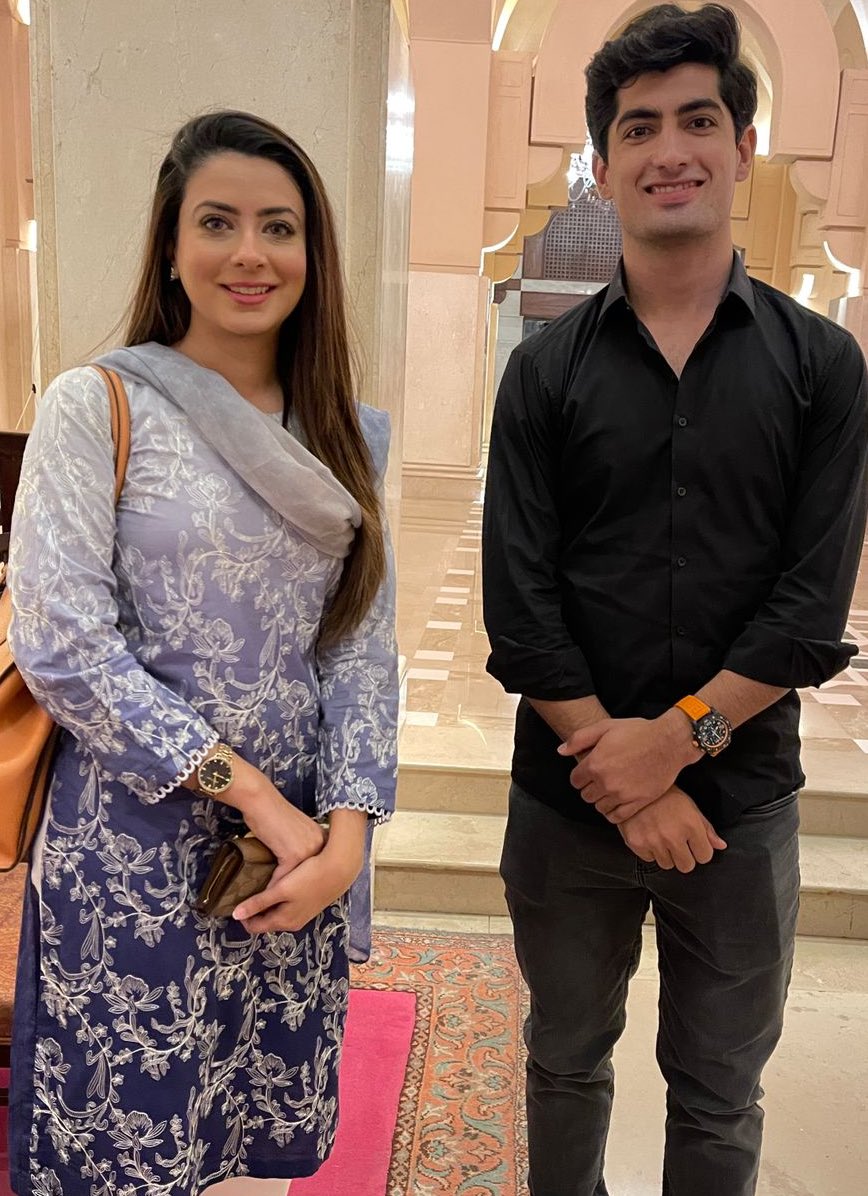
Standing with the most expensive player of Pakistan Super League’s first-ever auction @iNaseemShah
A recollection from the past with ‘Prince at the Lord’s’.
@rashidkhan_19 Please don't play the victim Card and Stop Doing terrorism in our country. This is what your country and the Taliban did to innocent people in Pakistan a few days back.
How to pray #Tahajjud
1. Timing of Tahajjud
•Tahajjud is a night prayer after `Isha and before Fajr.
•It is recommended to pray in the last one-third of the night, as this is the time when Allah descends to the lowest heaven and answers prayers (based on Hadith).
•Ibn Taymiyyah emphasized praying in the last third, calling it the best time for voluntary night prayer, as it is the most likely time for supplication to be accepted.
2. Number of Rak’ahs
•There is no fixed number. Common practice: 2 rak’ahs at a time, repeated as many times as one wishes.
•Some scholars pray 8 rak’ahs in total based on the Sunnah of the Prophet ﷺ.
•Witr is strongly recommended after Tahajjud (1, 3, 5, 7, or 9 rak’ahs).
Ibn Taymiyyah’s approach:
•He encouraged flexibility: pray as many rak’ahs as one can with khushu’ (humble focus), emphasizing quality over quantity.
•Always end with Witr.
3. Method of Prayer
•Start with intention (niyyah) in heart: for Tahajjud prayer.
•Pray in sets of 2 rak’ahs.
•Perform Qiyam, Ruku, Sujood like regular prayer.
•Recite long Surahs after Al-Fatiha if able (like Surah Al-Mulk, As-Sajdah, Al-Insan).
•Dua:
•Make supplications (dua) in sujood.
•Ibn Taymiyyah highlighted asking Allah for forgiveness and guidance during Tahajjud.
4. Witr Prayer
•Must be prayed after Tahajjud.
•Can be 1, 3, 5, 7, or 9 rak’ahs, prayed odd-numbered.
•Scholars recommend 3 rak’ahs like the Prophet ﷺ usually prayed.
•Ibn Taymiyyah emphasized Witr as essential to complete the night prayer.
5. Additional Tips
•Focus on sincerity and humility, not just numbers.
•Perform Tahajjud regularly, even if a few rak’ahs. Consistency matters.
6. Difference between Qiyam al-Layl and Tahajjud
•Qiyam al-Layl = any voluntary night prayer after `Isha until Fajr.
•Tahajjud = a specific type of Qiyam al-Layl:
•Performed after sleeping for a portion of the night.
•This sleep distinguishes Tahajjud from general night prayers.
Key point: All Tahajjud is Qiyam al-Layl, but not all Qiyam al-Layl is Tahajjud.
•The Prophet ﷺ is reported to have slept after `Isha and before rising for Tahajjud.
•The reward of Tahajjud is connected to struggling to wake up from sleep for worship.
•If someone prays at night without sleeping, it is still Qiyam al-Layl, but not Tahajjud.
Ibn Taymiyyah’s View:
•Ibn Taymiyyah emphasizes sleep as part of Tahajjud:
“The one who sleeps and then wakes up to pray at night has a special reward. Those who pray without sleeping are performing Qiyam al-Layl, not Tahajjud.”
•The essence of Tahajjud is the effort of leaving sleep for prayer.
7. Practical Steps for Tahajjud
•Perform `Isha prayer.
•Sleep for a portion of the night (even a short sleep is sufficient).
•Wake up in the last third of the night.
•Pray 2 rak’ahs at a time, as many as you wish.
•End with Witr prayer.
And Allah knows best.





![Al__Quraan's tweet photo. “Do not be afraid, I am with you all the time, listening and seeing.”
— Al Qur’aan [20:46] https://t.co/uQTNyQ753u](https://pbs.twimg.com/media/HGXBvUabUAARSRr.jpg)