Striving to increase Rheumatology awareness , Consultant Rheumatologist # Narayana Health City~Bluru, Proud alumni Bangalore Medical College and St John’s
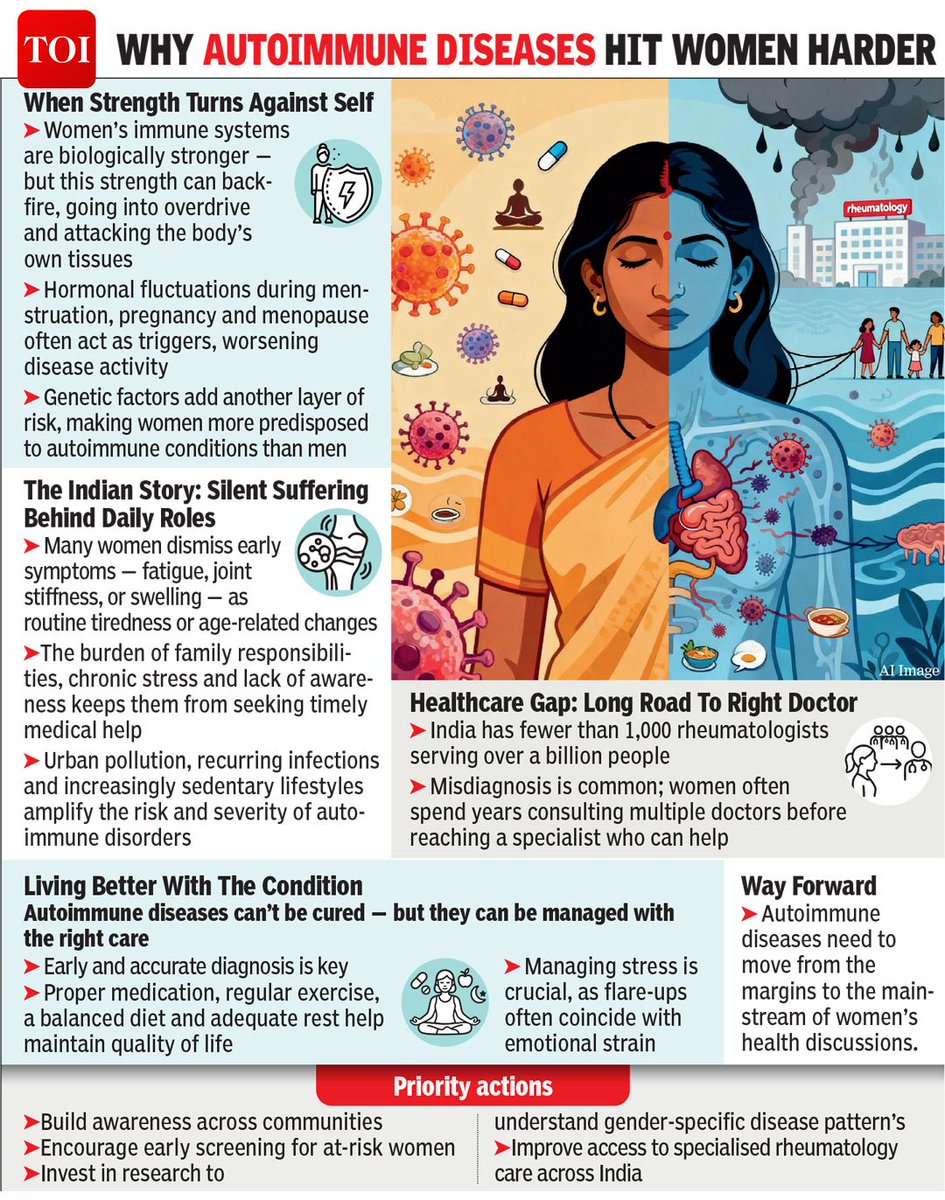
🧨Autoimmune diseases like lupus , systemic sclerosis , myositis and rheumatoid arthritis are more common than we think !
🚶♀️👱♀️Women are more commonly affected because of their genetic, hormonal influence etc
😩🦿🦵Arthritis is not ONLY the disease of the old…… ! @thisis_drgsp
@blrcitytraffic@BlrCityPolice
Please teach your place officers to have some patience and human friendly nature
I am waiting for cars to clear out clinic in electronic city to park my car in the basement
This electronic City sub inspector called Mr Anand r took photo of car
I grew up on Bangalore’s Brunton Cross Road.
I still live on the same road.
When I first came here as a 15-year-old beginning college in 1966, it was one of the most beautiful streets in the city. Tree-lined, shaded, peaceful. Bungalows stood amid gardens. There were pavements one could actually walk on. It was a residential neighbourhood, not a traffic corridor.
Today, almost every bungalow has disappeared, replaced by apartment blocks. The gardens are gone. The road has become a two-way thoroughfare carrying a relentless stream of vehicles. What was once a neighbourhood has become an artery.
The photographs below tell the rest of the story.
Broken pavements. Open drains. Excavated roads. Construction debris left strewn about. Garbage accumulating around work sites. Hazardous walkways. Traffic forced through improvised bottlenecks. Senior citizens pick their way through rubble simply to cross the street.
For more than a year, the authorities have ostensibly been repairing the road and drainage infrastructure. Yet the result has been months of disruption, chaos and inconvenience with little visible evidence of systematic planning or timely execution.
The issue is not that roads need repair. Every city requires maintenance. The issue is how it is done.
Why are roads dug up and left exposed for weeks and months? Why are drains left uncovered? Why are pedestrians treated as an afterthought? Why are debris allowed to remain on public land? Why are traffic diversions so poorly managed? Why is there no visible sense of sequencing, coordination or accountability?
These are not problems of poverty.
They are problems of governance.
India’s urban crisis is often discussed in terms of infrastructure deficits, but what I see outside my own front gate is something more basic: a deficit of civic management.
We build flyovers, metro lines and technology parks, yet struggle to maintain a pavement.
We speak of becoming a developed country, yet tolerate public spaces that would be unacceptable in much poorer societies.
This is why comments from outsiders such as Peter Thiel, however provocative, sometimes strike a nerve. When he describes India as “messed-up”, many of us instinctively object. Yet standing on Brunton Cross Road amid broken concrete, open trenches and unregulated traffic, one cannot entirely dismiss the criticism.
The uncomfortable truth is that our cities often function despite the system rather than because of it.
What is especially frustrating is that the solutions are neither revolutionary nor prohibitively expensive.
Road projects should be coordinated and completed within fixed timelines.
Pavements should be continuous, safe and accessible.
Residential roads should be protected from becoming uncontrolled traffic corridors.
Traffic rules should be enforced.
Construction waste should be removed immediately.
Public infrastructure should be maintained before it collapses rather than repaired after it does.
Most importantly, citizens should not have to negotiate danger merely to walk down their own street.
The decline of roads like Brunton Cross Road is not simply about nostalgia for a vanished Bangalore. Cities change. Growth is inevitable.
But growth without planning produces disorder. Development without civic discipline produces dysfunction.
A city is not measured only by the value of its real estate, the number of its startups, or the sophistication of its technology sector. It is measured by the quality of everyday life it offers its residents.
Bangalore still possesses extraordinary strengths: talent, enterprise, creativity, greenery and a climate most cities would envy.
What it increasingly lacks is the orderly civic management that allows those strengths to flourish.
Looking at these scenes outside my home, I cannot help but wonder: when did we begin to accept disorder as normal?
And more importantly, when will we decide that we deserve better? #Bengaluru #UrbanIndia #CityPlanning
Because of oil smoke,in Garbagraham,wheezing.
Because of standing long hours in water,cracked feet ( fissures). Varicose veins.
Because of fasting,irregular time in food intake,ulcers.
Late hours during uthsavam
Early morning duty during special months like Dhanur Masam,simha masam...many more obstacles,challenges.
Central obesity and sugar, physical and mental stress in managing Madapalli, many Sannadhis, village mentality and individual expectations etc.,
Each Temple Kurukkal,Sivacharyal is subject to ordeal of several kinds.
Yet he doesn't have health insurance,no safety.
One of the Archagars in Rajamannargudi Rajagopala swamy temple,in 1970, was murdered in the sanctum sanctorum in open day light because he tried to stop the robberer from removing the Sengamala Thayar's most valuable ornaments. DMK period.
Despite his Neck bleeding,the Archagar ran behind the robberer, till a particular spot, trying to alert the people around within the temple premises. He felled down profusely bleeding. The robberer escaped through the side Compound wall in the west,but Archagar died on the way to the hospital. Raghava Dikshithar.
Where is the security for Temple Archagar.
Organizations perform Kumbabhishegam ,but who is going to support the archagar monetarily who continues his work during mandalabhishegam?
Focus must be on the temple Kurukkal,
to consolidate, to stabilize his life first.
He must be given good care. We must make him cherish what he is doing because he is doing without expecting anything in return.
The reality is different.
We are losing this valuable resource. They are slowly disappearing.
I am only referring to the ultra rural,micro interior temple Kurukkals.
Not about city based,metro based.
But what about the mammoth temples,in a micro interior village and the Kurukkal who is doing Kaingaryam over there selflessly.?
Please Help.
My sincere request to each one.
Please give and share the above.
Thank you.
Namaskaram.
Sorry to hear this Kshitij!
Getting land in India should not be more difficult than literal space technology.
May have better luck in Andhra, Telangana, or Gujarat (Ahmedabad). Have seen a lot of founders gravitating towards those states instead of building in Bengaluru.
This is the part that stings: the patient data she'd entrusted to the platform? Practo had quietly started using it to sell medicines directly to her patients. Medical records as a business model.
Full story: https://t.co/80a3RqSAK0
Unlike OPD, hospital emergency departments don't function on a first come first serve basis. Instead patients are seen based on severity of the problem and urgency. This process is called triage and it's done to maximize the chances of saving lives with the available resources.
If you came with a fracture of a toe and some scratches and another patient with a heart attack, he will be seen first.
Expecting a resident in a busy government hospital A&E to explain to you why that other patient is seen first even though he came second is unrealistic. Infact every minute a doctor explains the sorting process to you is a minute lost in saving another life.
The only sensible option is to wait for your turn.
If you have been in Bangalore since a few years, you must have observed the changing climate and reducing green cover in the city.
Many streets in Koramangala and HSR are still so densely green and breezy that one enjoys just walking there without any purpose.
Thanks to the previous generations of Bangaloreans who planted these trees.
Now it's our time to act!
On 27th June, a tree planting drive is being conducted where you will not only get to plant trees, but will also be given refreshments, snacks, etc.
Let's join hands and make the city greener!
Details in next tweet ⬇️
PGI is a tertiary care hospital that’s overflowing with patients. Every patient comes there for “timely treatment”.
When someone says “I only asked for timely treatment for my patient” what they mean is “I want to jump the queue”.
Doctors WILL NOT agree to that, no matter how you ask. You are NOT entitled to special treatment because you are a journalist.
If you attempt to throw your weight around, you will only get snubbed. Residents there don’t expect help, but don’t be hindrance.
Obstructing a Goverment servant from discharging his public duty is an offence under BNS 221, punishable upto 3 months of imprisonment.
It’s high time doctors asked for the same in medicine too, to put an end to this menace of entitlement.
In the 1980s when I joined CMC Vellore @CMCNephrology
This young lady came from Delhi AIIMS to Vellore @cmcvelloreoff
for kidney transplantation as AIIMS refused to do the Transplant as she was hepatitis B positive
We at Vellore did the Transplant as she had normal liver functions
and she did well for many years after kidney transplantation
This was in the Before Cyclosporine Era BC era and she was on Azathioprine and Prednisolone
In the BC era if there was Liver function abnormalities we used Cyclophosphamide instead of Aza
Hepatitis B positive donor to Hepatitis B negative recipient
Good information from my brilliant colleagues
@sonalasthana and @thisis_drgsp
Nearly 20 years ago we had this Jain Sadhvi who needed kidney transplantation
The only available suitable donor was her well to do follower who was Hepatitis B positive
Thanks to my renowned Gastroenterologist friend and colleague Naresh Bhat
@Nareshbhat14 we did the Transplant
The Recipient had high anti hbs titres and Naresh felt we can go ahead with the Transplant
Even after 18 years the patient is hepatitis B negative with normal liver functions
@DeccanHerald
Intervention Nephrology is the Need of the Hour in #Nephrology Speciality
But resources are the major Obstacles in #LMIC and #LIC countries
Here is our experience about safety and efficacy of "Bedside placement of Tunnel catheters"
Happy to contribute some literature 🙏🙏
What a day for Bharat! 🚀🔥
- We just broke into the Top 5 global manufacturers $473B+ output and climbing fast! 📈
- Merchandise exports surged 18% YoY to a record $45.2 billion in May 2026. 🚢
- Sarvam AI hits unicorn status with major funding, sovereign AI dreams accelerating. 🦄
- Adani + Jabil announce GW-scale AI data centre hardware manufacturing platform in India for global exports. 🥰
- Gujarat launches Industrial Policy 2026 - massive push for semiconductors, EVs, green tech & mega investments. 🚛
The future’s so bright, we gotta wear shades 😎
Keep building!
This is our decade. 🇮🇳♥️
10% bump up (₹30 Lakhs extra loan limit) under Emergency Credit Line Guarantee Scheme (ECLGS) approved! 🙏🏾🙏🏾
Huge thanks to @TheOfficialSBI for the quick support.
GOI is actively backing MSMEs when it matters most. This truly helps businesses like ours weather the storm and keep moving forward with confidence.
Much appreciated @narendramodi ji 🙏
A relative of mine from to a reasonably prosperous family had started a posh restaurant in Hubli. He invested heavily, borrowed money from friends and relatives, and hoped the business would succeed. Unfortunately, things did not go as planned. Within two years, the restaurant was forced to shut down due to mounting losses. The debts kept piling up. Creditors began demanding repayment. Unable to see a way out, he left home and went underground as circumstances had overwhelmed him immensely. He was recently married then and thought of taking care while taking care of his wife and children should be his first priority. For years, he lived a modest life doing odd jobs, carrying the burden of failure and debt on his shoulders. Those who had lent him money continued to pursue him, and many believed his he might even take his life.
But life had other plans.A few years later, he joined hands with some friends and started a small-scale factory in Pune. This time, the business slowly gained traction. Through hard work, patience, and perseverance, it began generating steady profits. Over the next decade, he repaid every rupee he owed. Not a single commitment was left unfulfilled. Today, he owns a beautiful multi-storey house in one of the posh localities of Vijayanagar, Bengaluru.
Whenever I think about his journey, I am reminded of one simple truth: never make decisions based on temporary problems. Life can be brutally difficult, but it also gives people opportunities to rebuild, recover, and come back stronger. Hold on through the tough times. Your comeback may be closer than you think.
Caring for these young girls with autoimmune diseases is such a humbling experience
Stops u from cribbing over minor things
There’s a lot to learn from their grit, determination, commitment and positive outlook towards life
#rheumatology#musings#lupus#vasculitis#arthritis
The Kailasa Temple at Ellora defies the very definition of construction. It was not built; it was uncovered.
🔱🕉️
In the 8th century, Rashtrakuta artisans didn't stack stone upon stone. Instead, they took a solid basalt cliffside and performed the most audacious act of sculpture in human history: they carved from the top down, slicing away thousands of tons of rock to reveal a finished masterpiece hiding within the mountain.
A Masterclass in Subtractive Engineering:
This is not merely a temple—it is a monolith. Every towering vimana, every intricate pillared hall, every fluid elephant sculpture, and every delicate narrative relief was once part of the living rock.
🔺The Impossible Process: By carving downward, the architects had only one chance. There was no room for error; once a piece of rock was removed, it could never be replaced.
🔺A Fully Realized World: Beneath the open sky, you walk through gateway complexes, cross carved bridges, and wander through colonnades that were never assembled, but rather liberated from the earth.
🔺Artistry and Precision: The line between architecture and sculpture vanishes here. The structure, the surface, and the ornament are inseparable, carved with a level of precision that remains a staggering engineering feat over a millennium later.
At Kailasa, the mountain didn't just host a temple—the mountain became the temple. It stands today as an eternal reminder of what humanity can achieve when vision transcends the limits of traditional building.
📽️chapterofdesign
What happened to this child is heartbreaking, and if medical negligence occurred, it must be thoroughly investigated. My thoughts and prayers are with the patient and her family.
However, using this tragedy to spread misinformation about a surgeon's training and to attack all international medical graduates (IMGs) is both dishonest and irresponsible.
The surgeon in question, Dr. Ashok Muralidaran, did not simply graduate from medical school in India and immediately begin operating on children in the United States. He completed:
• Surgical residency at Maimonides Medical Center in New York
• Thoracic Surgery fellowship at Yale University/Yale New Haven Hospital
• Pediatric & Congenital Cardiac Surgery fellowship at Stanford University
• American Board of Thoracic Surgery certification
• Additional subspecialty board certification in Congenital Cardiac Surgery
That's well over a decade of rigorous postgraduate training in some of the most respected institutions in the United States. Every step involved examinations, evaluations, credentialing, and oversight by American training and licensing bodies.
Equally misleading is the statement that a person needs only 40% to pass exam in India, which is an F in the U.S." Academic grading systems vary across countries and cannot be compared in such a simplistic manner. Moreover, physicians who train and practice in the United States must pass standardized licensing examinations, complete accredited residency and fellowship programs, and meet the same professional standards as every other physician.
If mistakes were made in this case, they should be investigated based on facts, evidence, and expert review, not race, nationality, or where someone attended medical school decades ago.
One tragic outcome does not invalidate an entire career, nor does it justify smearing the hundreds of thousands of international medical graduates who care for millions of Americans every day. Many of these physicians serve rural and underserved communities where healthcare access would otherwise be severely limited.
Don't use a family's tragedy to push an anti-immigrant agenda. Demand accountability where warranted, but do so with facts, not prejudice and misinformation.
Yesterday, he was drunk at his fans' house in Kanakapura and unable to walk straight to Bangalore when gunmen took him to a car and made him sit.
We are blessed to have such a Chief Minister 🤣🤣