Do Nigerians know that after the massacre of 200+ people in Kwara two months ago, the terrorists also kidnapped 170+ women and children, including pregnant wives?
They are yet to be released and the Nigerian government is yet to do anything about it.
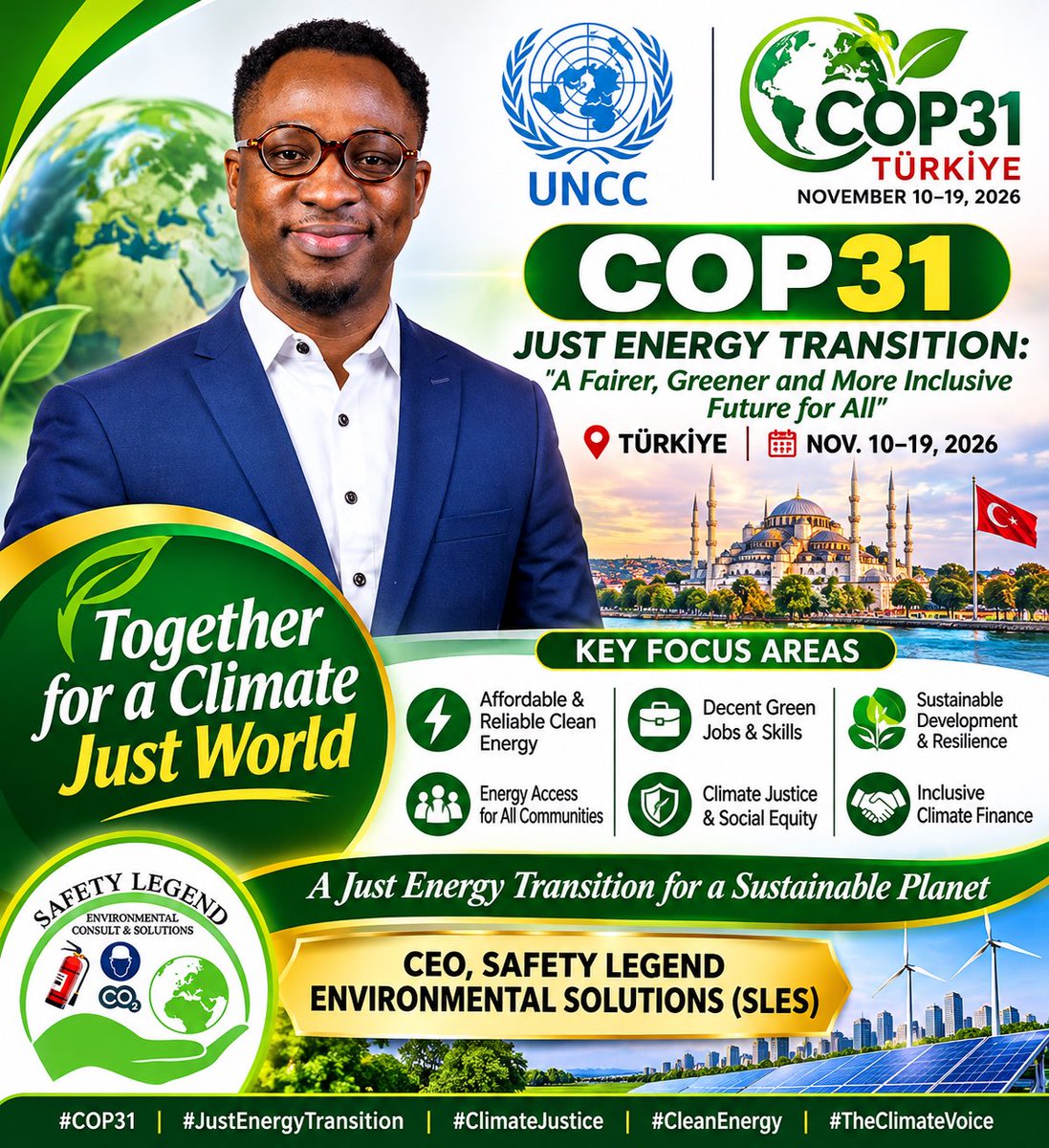
COP31: A JUST ENERGY TRANSITION MUST MOVE BEYOND PROMISES TO PRACTICAL IMPLEMENTATION IN AFRICA.
As the world approaches COP31, we must challenge ourselves to ask a more fundamental question: What does a just energy transition actually mean if the communities most affected by energy poverty, climate change and environmental degradation continue to see little or no improvement in their daily lives?
A just energy transition must be more than replacing fossil fuels with renewable energy, announcing ambitious climate targets, signing international agreements or pledging billions of dollars in climate finance. It must be about delivering measurable, visible and lasting change, particularly across Africa, where the gap between global climate commitments and local realities remains significant.
Africa does not need another cycle of climate conversations without implementation. Africa needs solutions that work on the ground.
For COP31, the focus must shift from promises to practical action. This means developing renewable energy infrastructure that reaches underserved rural communities, expanding decentralised solar power systems, investing in reliable electricity for hospitals, schools and small businesses, and supporting affordable clean cooking technologies.
It also means creating local manufacturing and technology ecosystems so African countries are not permanently dependent on importing renewable energy equipment, expertise and solutions. Our transition must build African industries, strengthen technical capacity, empower local innovators and create decent, sustainable employment for young people.
Equally important, communities whose livelihoods depend on existing energy and natural-resource industries must not be abandoned in the name of decarbonisation. Workers need retraining, alternative employment pathways, social protection and meaningful participation in decisions that affect their economic future.
Climate finance must also be redefined by its outcomes, not merely its announcements. Giving out money, making financial pledges and establishing international funding mechanisms are not enough. We must ask: How much funding actually reaches local communities? How many households gain reliable electricity? How many jobs are created? How many local enterprises receive support? How much technology and knowledge is transferred? And what measurable improvements are being recorded in people’s lives?
Africa needs accessible, predictable and affordable climate finance, with transparent accountability, reduced bureaucratic barriers and stronger direct investment in community-led projects. Funding must translate into functioning infrastructure, productive enterprises, resilient livelihoods and economic opportunities.
COP31 must also recognise that a just energy transition cannot follow a single global blueprint. African countries have different energy needs, development priorities, natural resources and economic realities. Their transition pathways must reflect national circumstances while remaining consistent with climate responsibility and sustainable development.
Above all, Africa must not remain a passive recipient of global climate decisions. African governments, researchers, engineers, entrepreneurs, indigenous communities, civil society organisations and young climate innovators must be active architects of the solutions.
The true measure of COP31 will not be the number of speeches delivered, declarations signed or billions pledged. It will be the number of lives transformed, communities empowered, industries strengthened and practical solutions successfully implemented.
A just energy transition must deliver energy security without deepening poverty, climate action without economic exclusion, and environmental protection without sacrificing human dignity.
The time has come to move from climate ambition to climate delivery, from financial pledges to measurable impact, and from global negotiations to local
@aniky_bee Like I said you are not smart, you couldn’t process a simple statement, YOU ARE NOT WORTH MY TIME.
UNDERLINE WORTH.
YOUR FATHER & MOTHER ARE VERY VERY DULL TO HAVE A DULLARD LIKE YOU! WASTED SPERM CELL
Women deserves Garden of flowers.
Nothing compares to labor pain .
God bless every mother.
Me, please place a high value on the mother of your child/Children.
Just imagine going through this for 5times.
RT
AfriCHI 2027 is coming to Nigeria! 🇳🇬
Call for Full Papers — Now Open!
We're excited to welcome the African and global HCI research community to Lagos, Nigeria, from 28 June to 2 July 2027, for AfriCHI 2027!